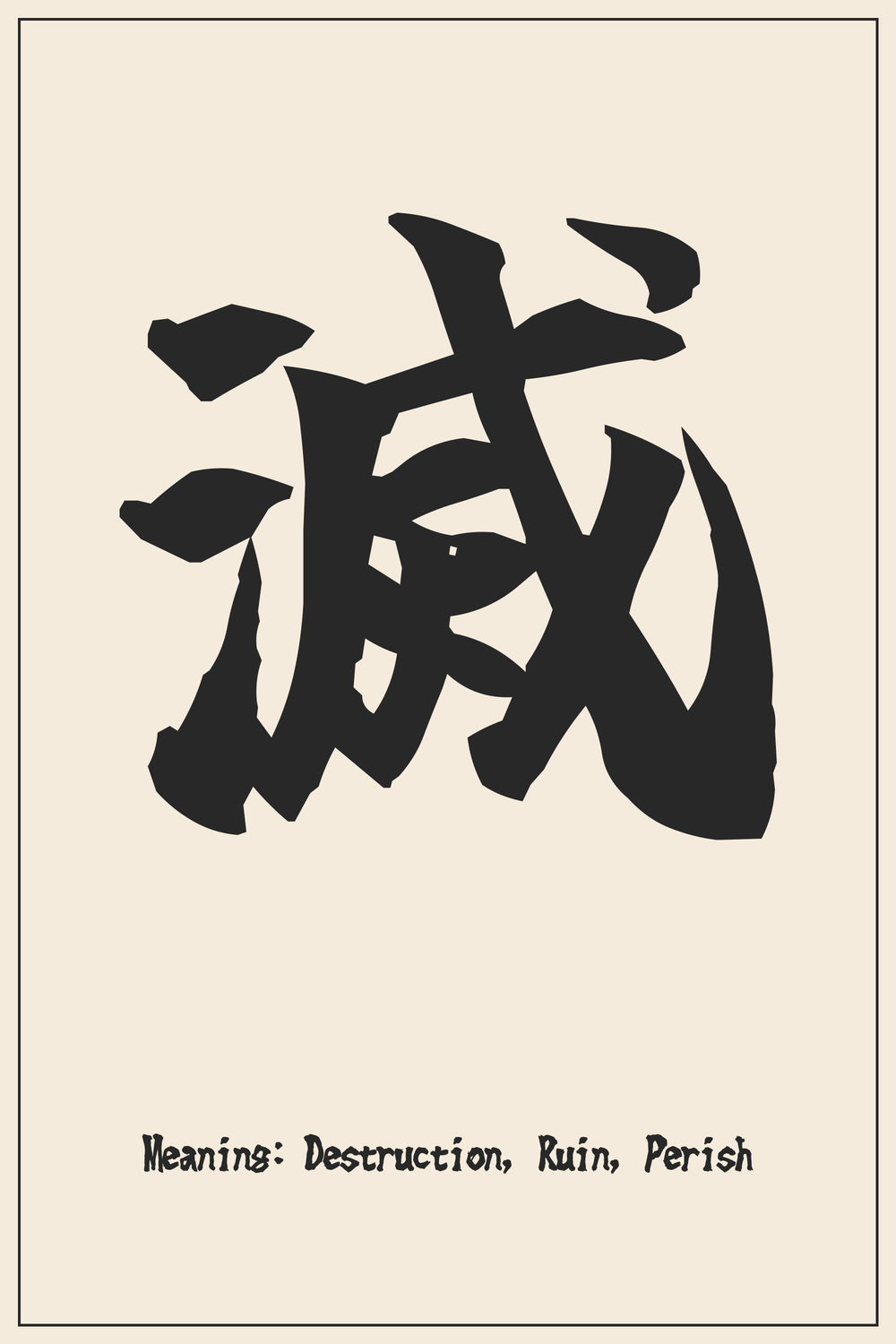
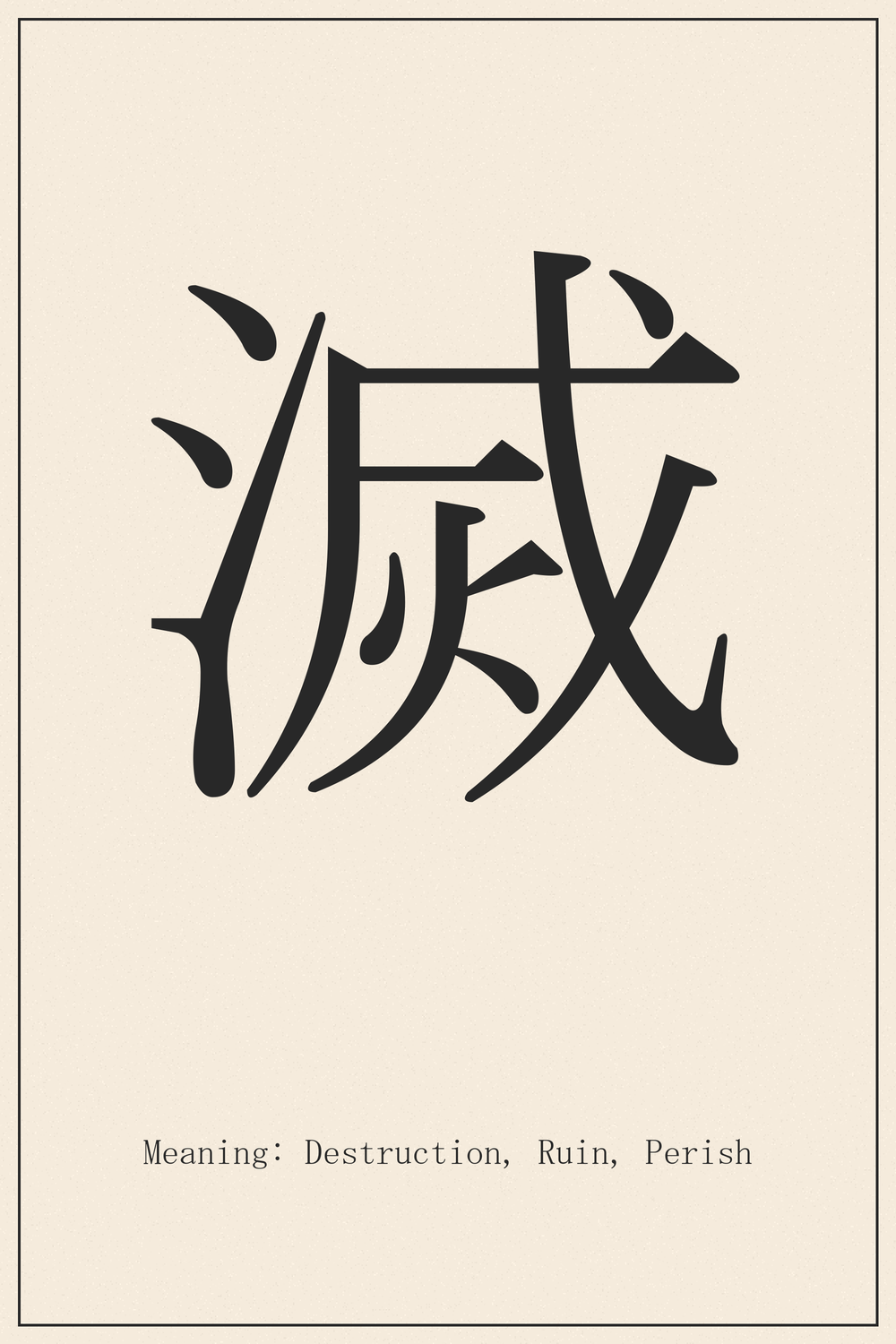
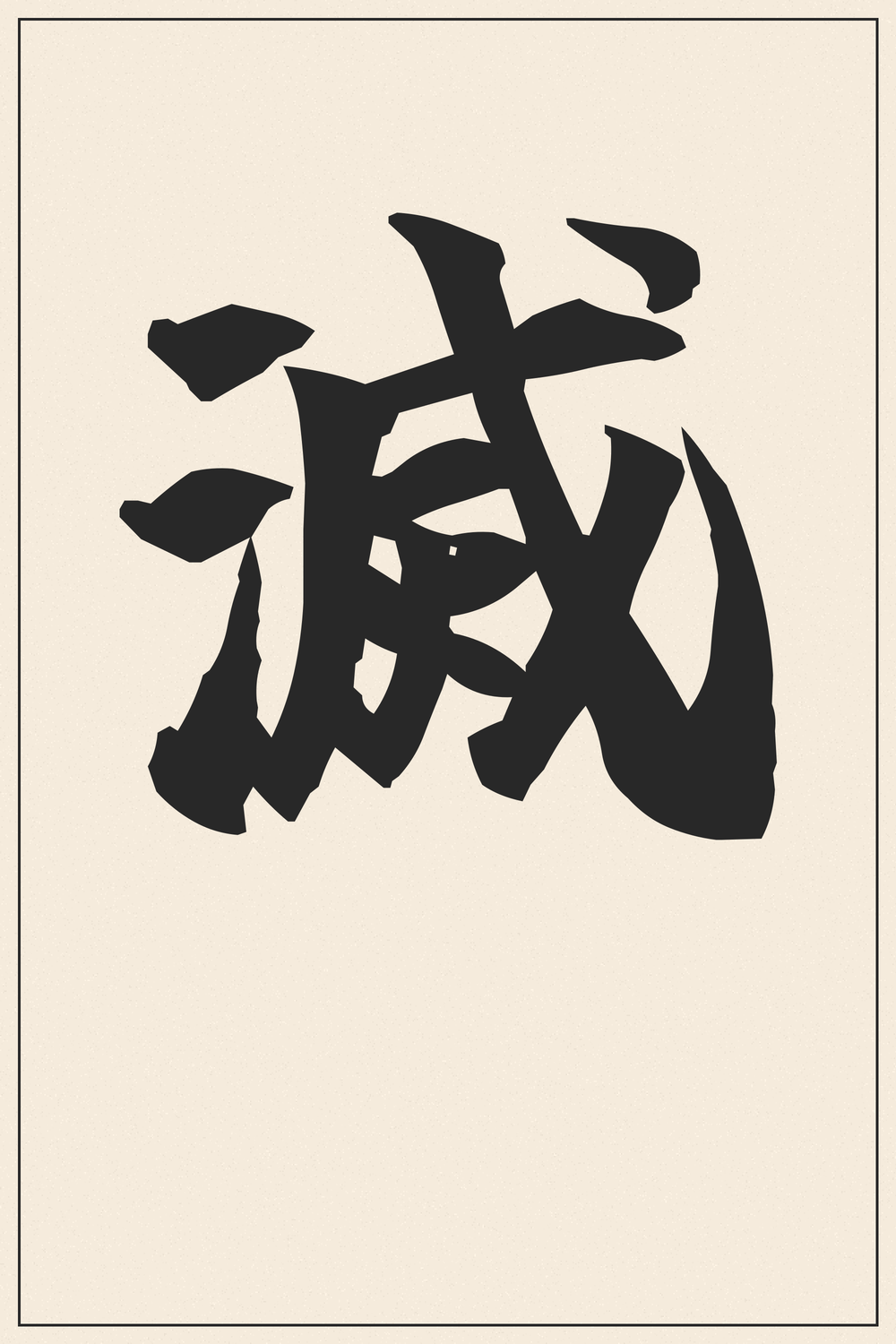
The Kanji 滅 (Metsu) powerfully encapsulates the concepts of destruction, ruin, and perishing. It represents the ultimate cessation, a forceful end that often signifies a complete transformation or annihilation.
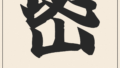
The atmosphere of a Kanji character changes dramatically depending on the font style. A character that looks elegant in a brush style might look bold and modern in a different font.
Recommendation:
Since a tattoo is permanent, we strongly recommend comparing various font styles beyond what is shown here. Use our designs as a trusted reference for the correct structure, but feel free to explore different artistic variations to find the perfect match for your vision.
The Deep Meaning Behind 滅
The Kanji 滅 (Metsu) traces its origins to ancient Chinese characters, depicting a complex idea of eradication. Its structure implies a thorough and decisive ending, often signifying the complete absence of something that once was.
Culturally, 滅 is prominently featured in Buddhist philosophy, particularly in concepts related to suffering and liberation. The term ‘滅諦’ (mettai), for instance, refers to the cessation of suffering as one of the Four Noble Truths. This gives the Kanji a nuanced depth beyond simple destruction, associating it with the potential for enlightenment through the extinguishing of desire.
Kanji Breakdown
The character 滅 (Metsu) is a phono-semantic compound, meaning it combines a semantic (meaning) component with a phonetic (sound) component.
Meaning: Water radical. This radical often indicates liquids, flowing, or actions involving water, such as dousing or overwhelming. In 滅, it suggests the idea of extinguishing or washing away.
Meaning: Dog / Ninth Earthly Branch. While primarily a phonetic component here, providing the ‘metsu’ sound, 戌 also has ancient connotations related to war, weapons, or the end of a cycle (as the eleventh sign in the Chinese zodiac), subtly reinforcing the idea of a conclusive end or destruction.
Conclusion
The Kanji 滅 (Metsu) is a powerful symbol of destruction, ruin, and cessation, carrying significant weight in both its literal and philosophical interpretations. Its presence in Buddhist thought lends it a dual nature, representing not just an end, but also the path to liberation through extinguishing attachments.
For those considering a tattoo, careful reflection is advised. While its stark message of finality can be compelling, its predominantly negative connotation requires a deep personal understanding to be worn meaningfully. It stands as a profound reminder of impermanence and the cycles of existence.
Comments