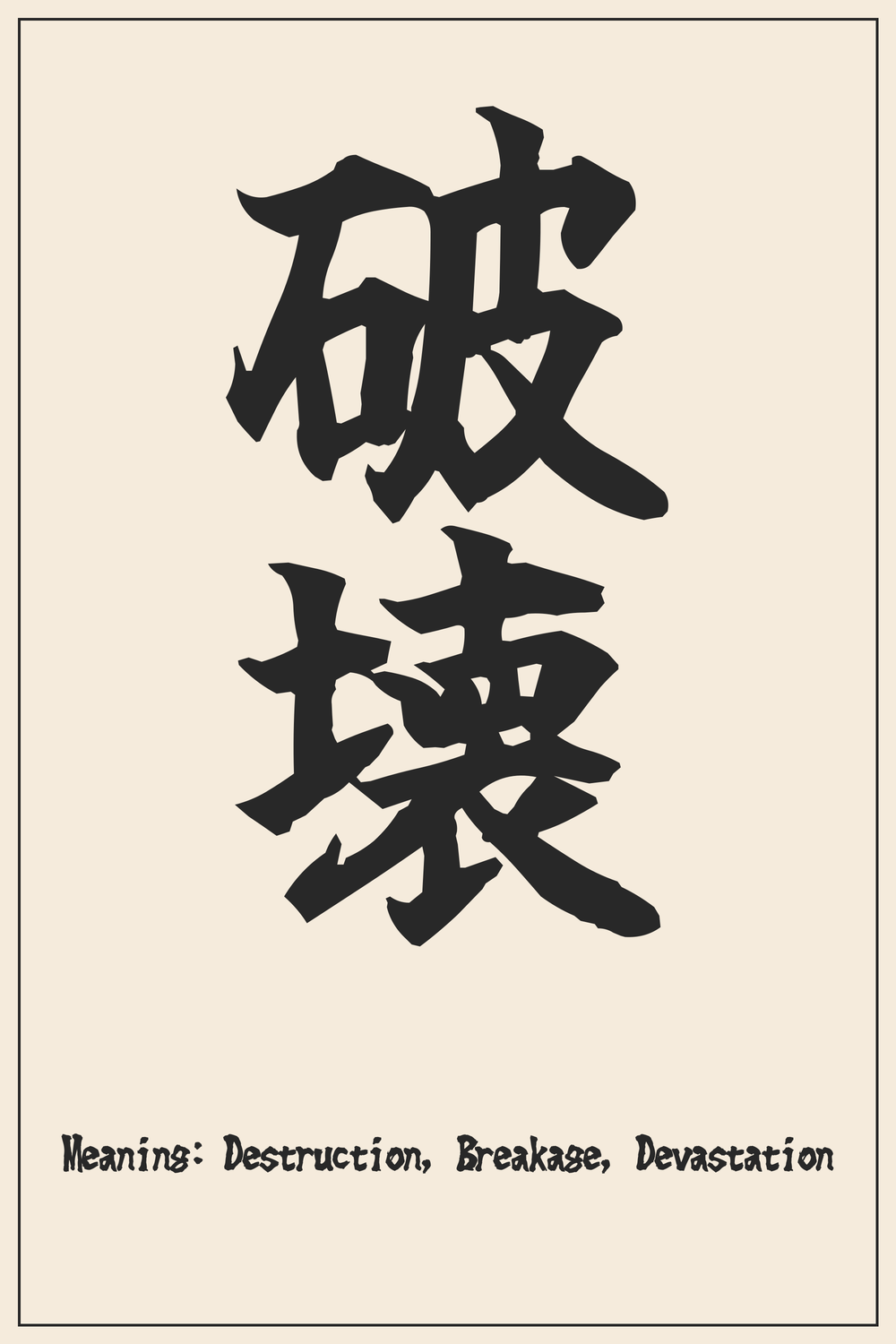
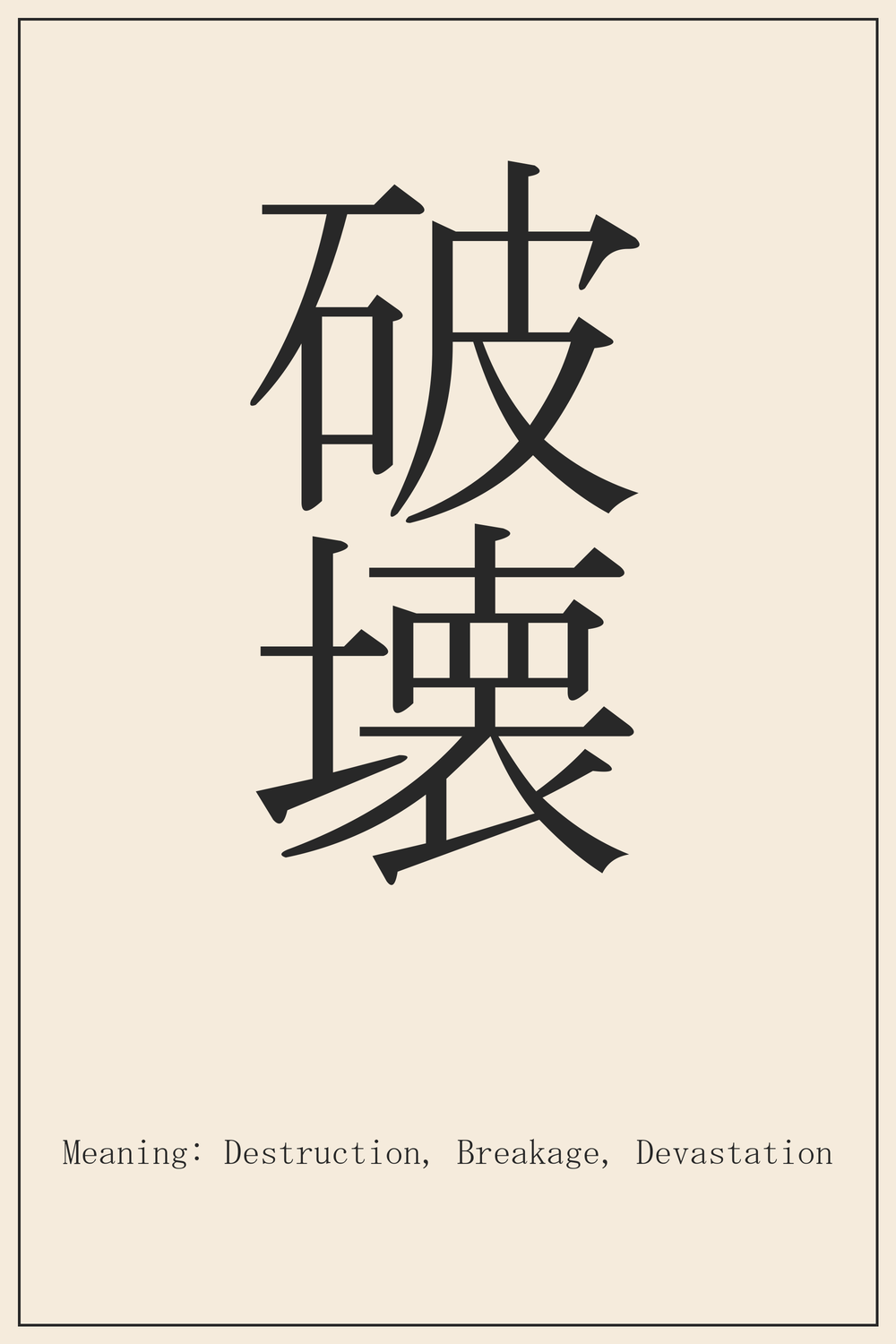
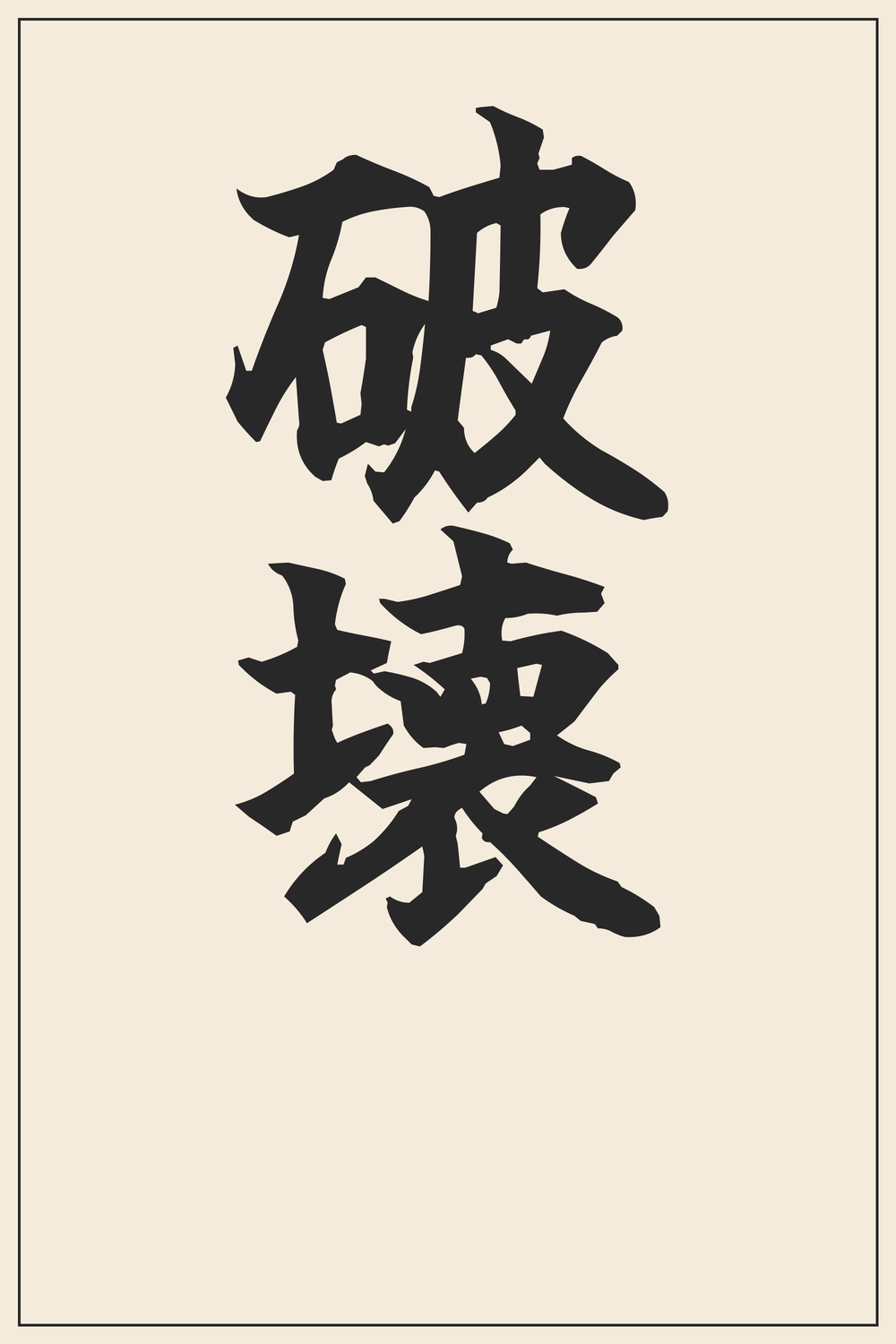
The Kanji 破壊 (Hakai) embodies the powerful and often transformative concept of destruction. It represents not just an end, but also the potential for new beginnings that often follow such force.
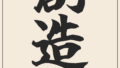
The atmosphere of a Kanji character changes dramatically depending on the font style. A character that looks elegant in a brush style might look bold and modern in a different font.
Recommendation:
Since a tattoo is permanent, we strongly recommend comparing various font styles beyond what is shown here. Use our designs as a trusted reference for the correct structure, but feel free to explore different artistic variations to find the perfect match for your vision.
The Deep Meaning Behind 破壊
The Kanji 破壊 (Hakai) is a compound term combining 破 (ha) and 壊 (kai). 破 originally depicted “stone” (石) combined with “skin” (皮), suggesting the tearing or breaking of a surface, often with force.
壊 combines “earth” (土) with a phonetic component, implying the collapse or crumbling of structures, like buildings returning to dust. Together, they form a powerful concept of comprehensive breaking and demolition.
Kanji Breakdown
The compound 破壊 (Hakai) consists of two distinct characters, each contributing to its profound meaning.
Meaning: To break, tear, or defeat. It often implies a forceful, outward action against something solid or intact.
Meaning: To collapse, crumble, or destroy. This character often suggests a more inward disintegration or the falling apart of something, such as a structure.
Conclusion
The Kanji 破壊 (Hakai) powerfully conveys the concept of destruction, representing both an end and a catalyst for change. It speaks to the impermanence of things and the potential for rebirth from ruin, embodying a fundamental force of nature and existence.
Choosing 破壊 for a tattoo signifies an embrace of life’s transformative forces, acknowledging that sometimes, things must break for new growth to occur. Its intricate strokes demand a skilled artist and a suitable size to ensure its profound meaning is beautifully and legibly captured.
Comments