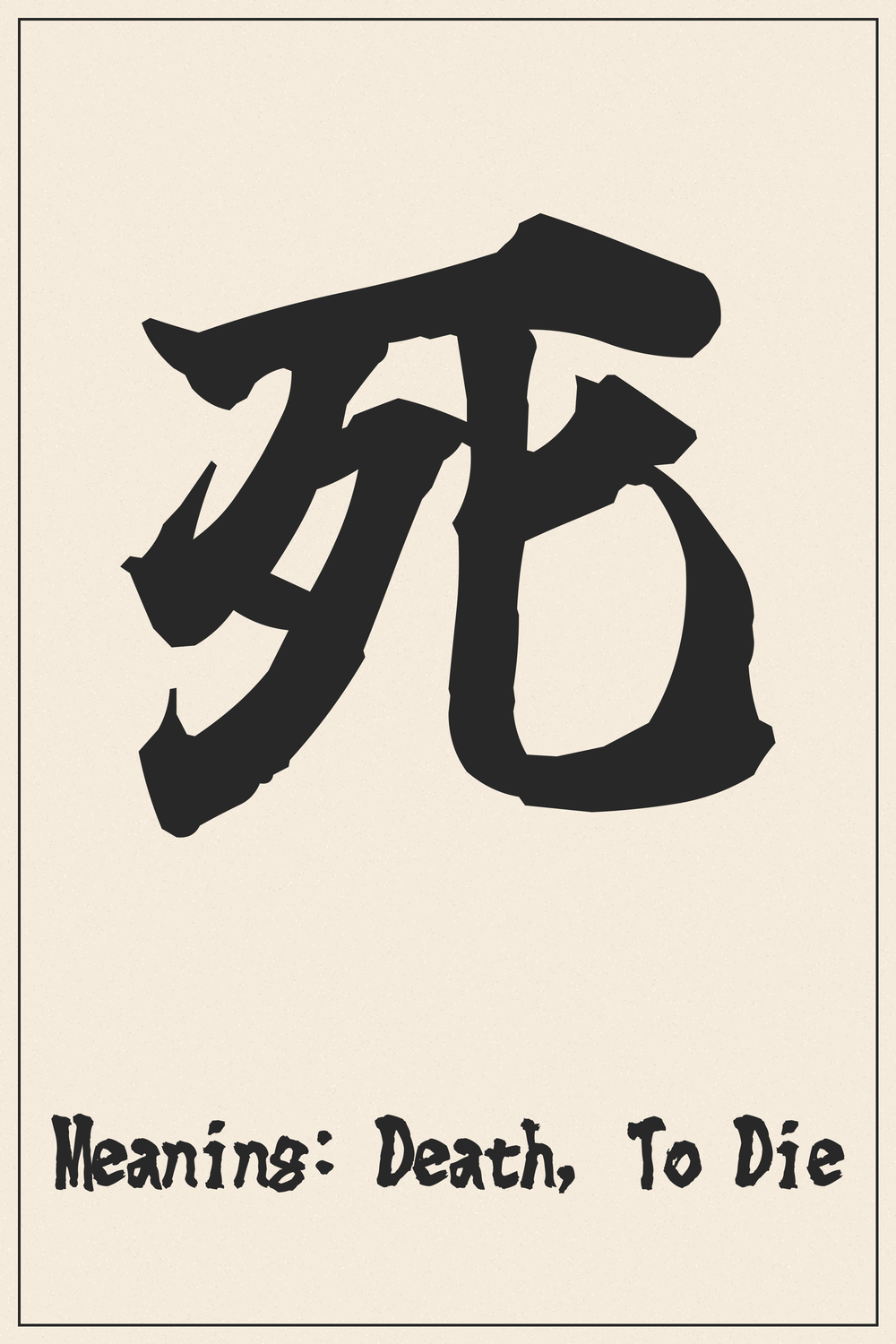
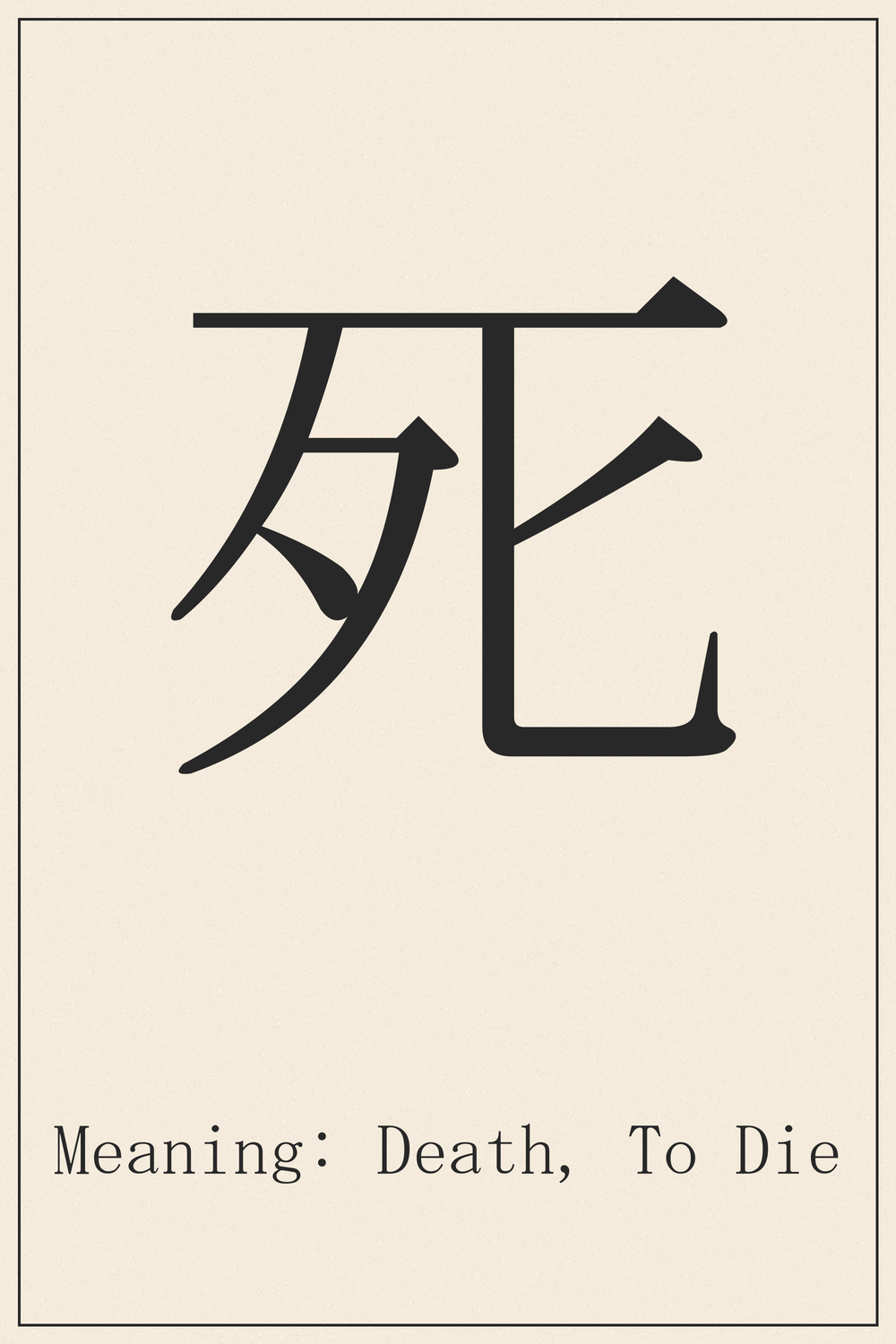
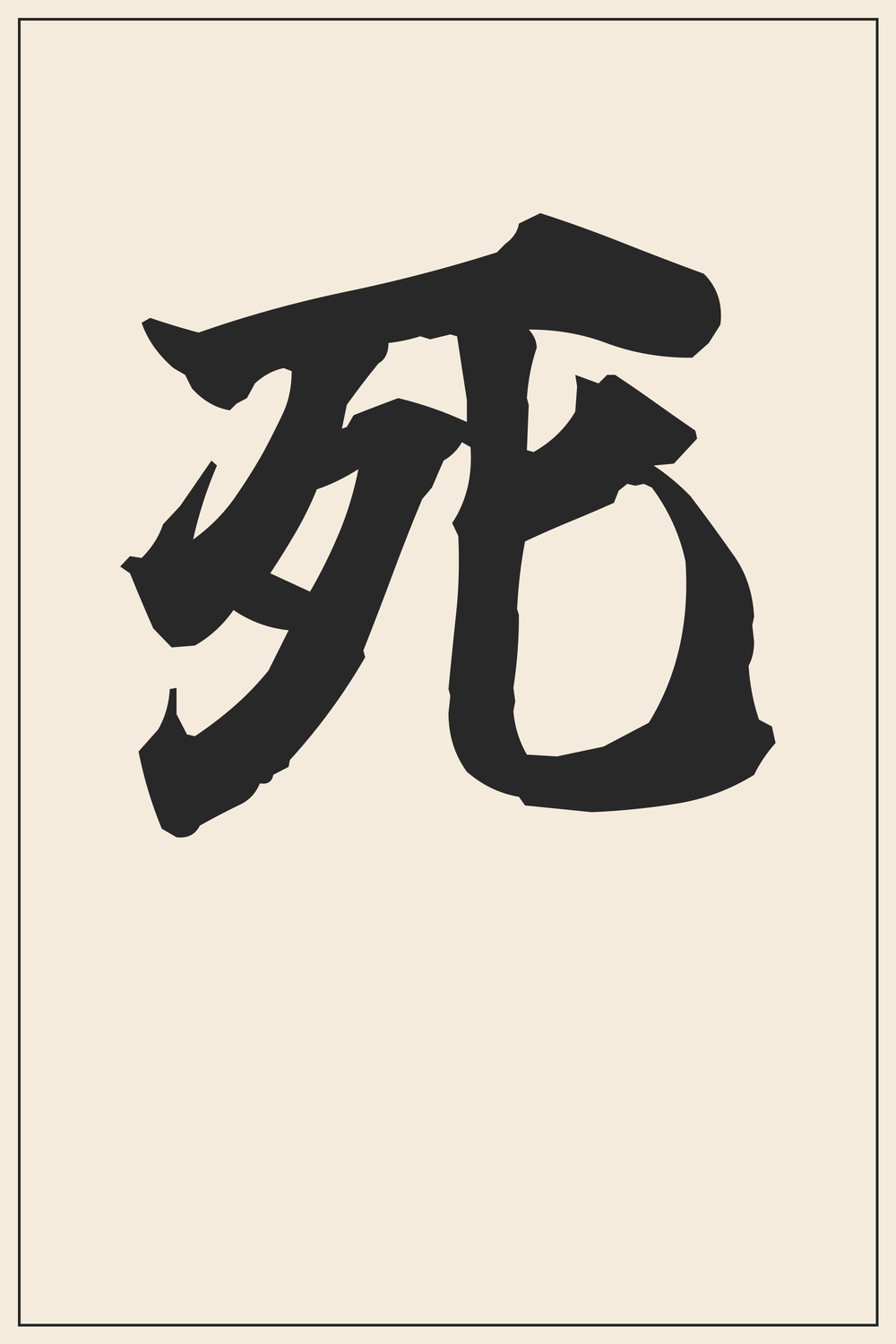
The Kanji 死 (shi) is a profound symbol, directly confronting the inescapable reality of mortality. Far from being merely a negative sign, it embodies the ultimate transition, forcing reflection on life’s ephemeral nature.
The atmosphere of a Kanji character changes dramatically depending on the font style. A character that looks elegant in a brush style might look bold and modern in a different font.
Recommendation:
Since a tattoo is permanent, we strongly recommend comparing various font styles beyond what is shown here. Use our designs as a trusted reference for the correct structure, but feel free to explore different artistic variations to find the perfect match for your vision.
The Deep Meaning Behind 死
The Kanji 死 traces its origins to ancient pictographs reflecting the concept of cessation. It is primarily composed of two elements: 歹 (gai), which represents a bone or skeleton, signifying decomposition and the remnants of life, and 匕 (hi), often interpreted as an inverted or transformed human figure, implying a person’s demise or departure.
In Japanese culture, 死 is not always viewed with absolute dread; rather, it often intertwines with the Buddhist concept of impermanence (無常 – mujou) and the cyclical nature of existence. It is a reminder of life’s preciousness and fragility, informing traditions like ‘bushido’ where a warrior confronts death without fear, embracing a transient existence with purpose.
Kanji Breakdown
The character 死 is formed from two distinct components that convey its ultimate meaning.
Meaning: Represents ‘bone’ or ‘death.’ This radical is commonly found in characters related to decay, suffering, or the end of life, grounding 死 in the physical reality of mortality.
Meaning: Often interpreted as an inverted human figure or a spoon. In the context of 死, it suggests a person in a state of transformation or collapse, symbolizing the act of dying.
Conclusion
The Kanji 死 is a potent and unambiguous representation of death. Its meaning extends beyond mere cessation, prompting contemplation on mortality, the cycle of life, and the inherent value of our transient existence.
For those considering 死 as a tattoo, it is a powerful statement. While its direct meaning requires careful personal introspection, it can serve as a profound memento mori, a reminder to live fully and appreciate every moment, or a commemoration of loss, worn with solemn understanding.
Comments