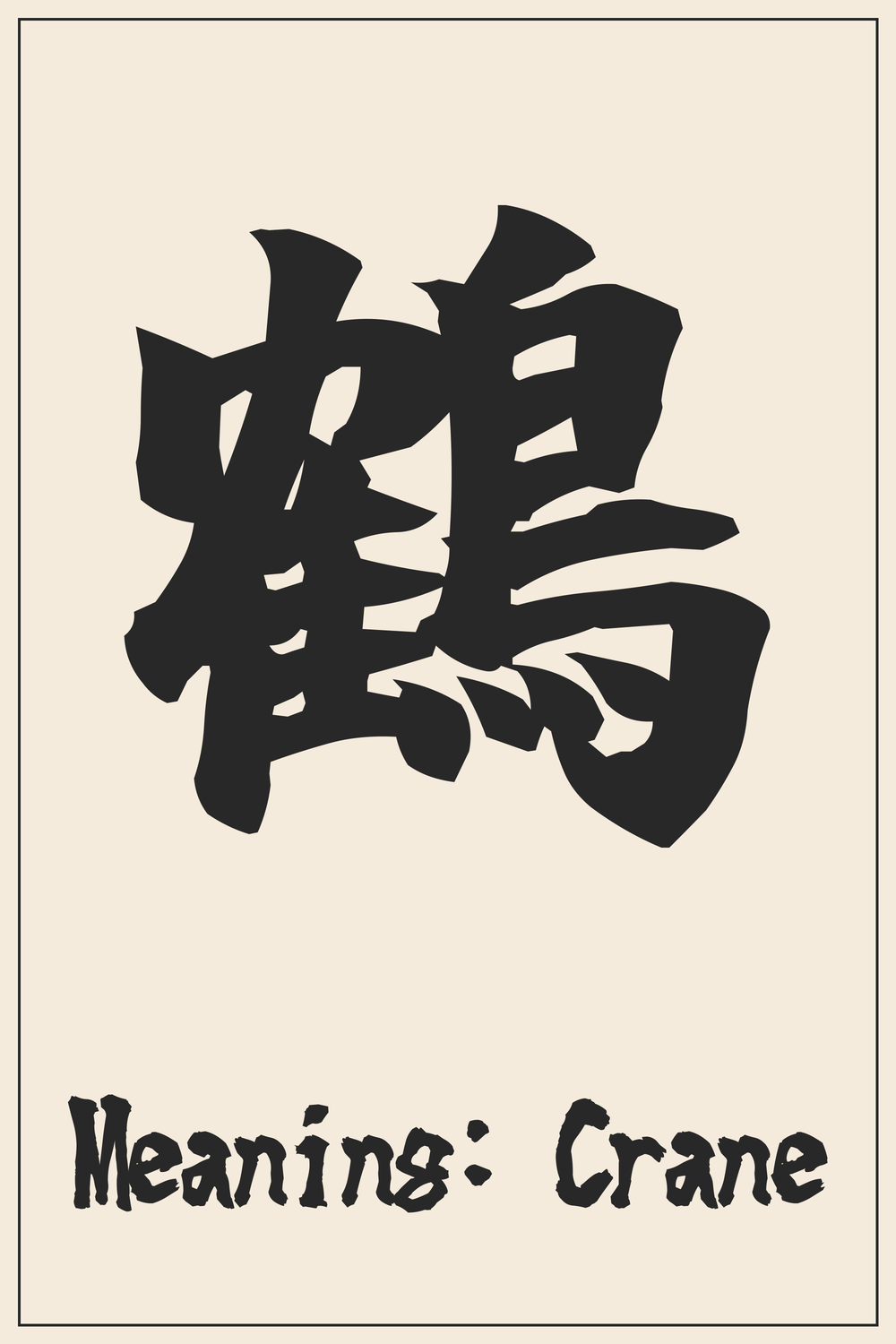
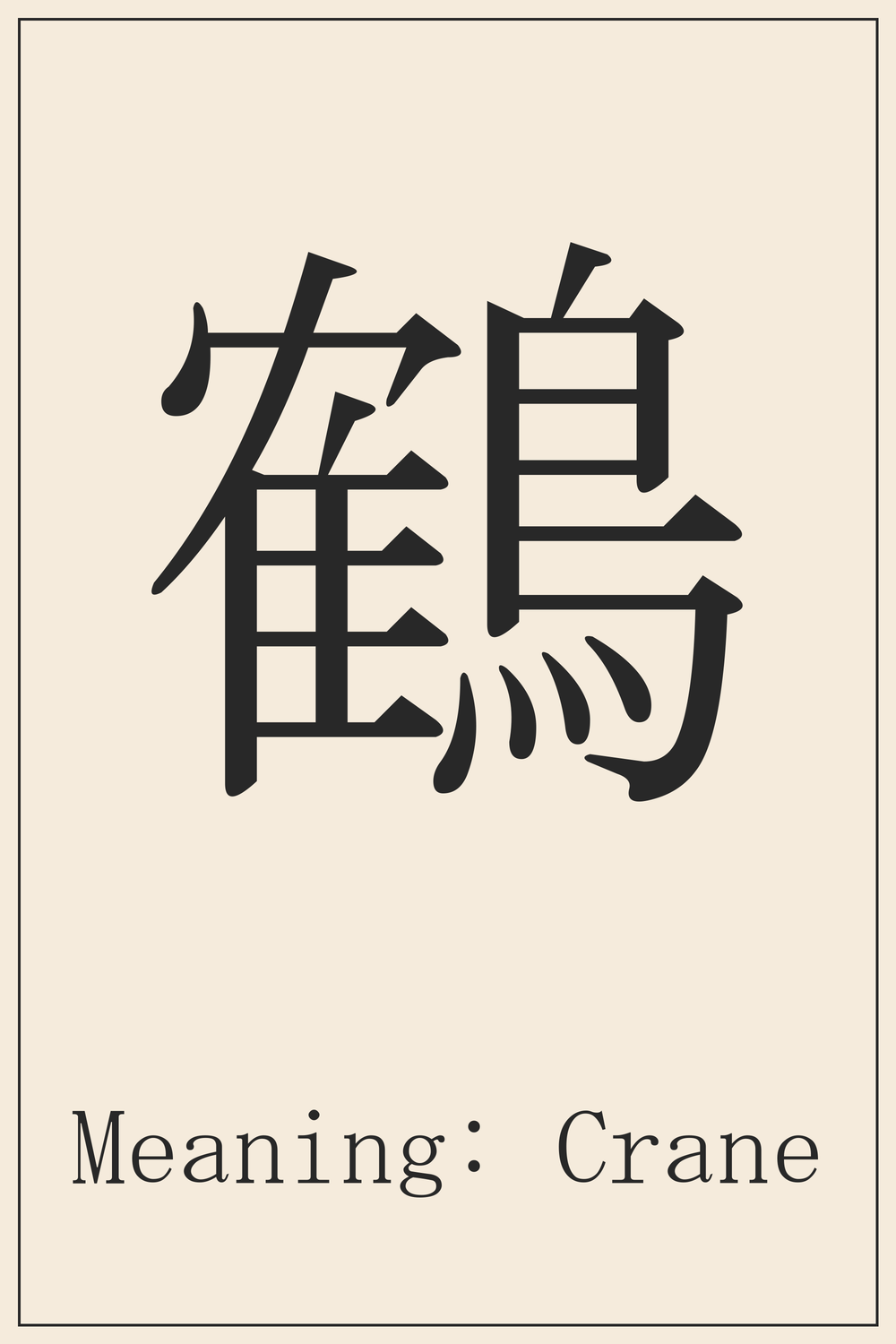
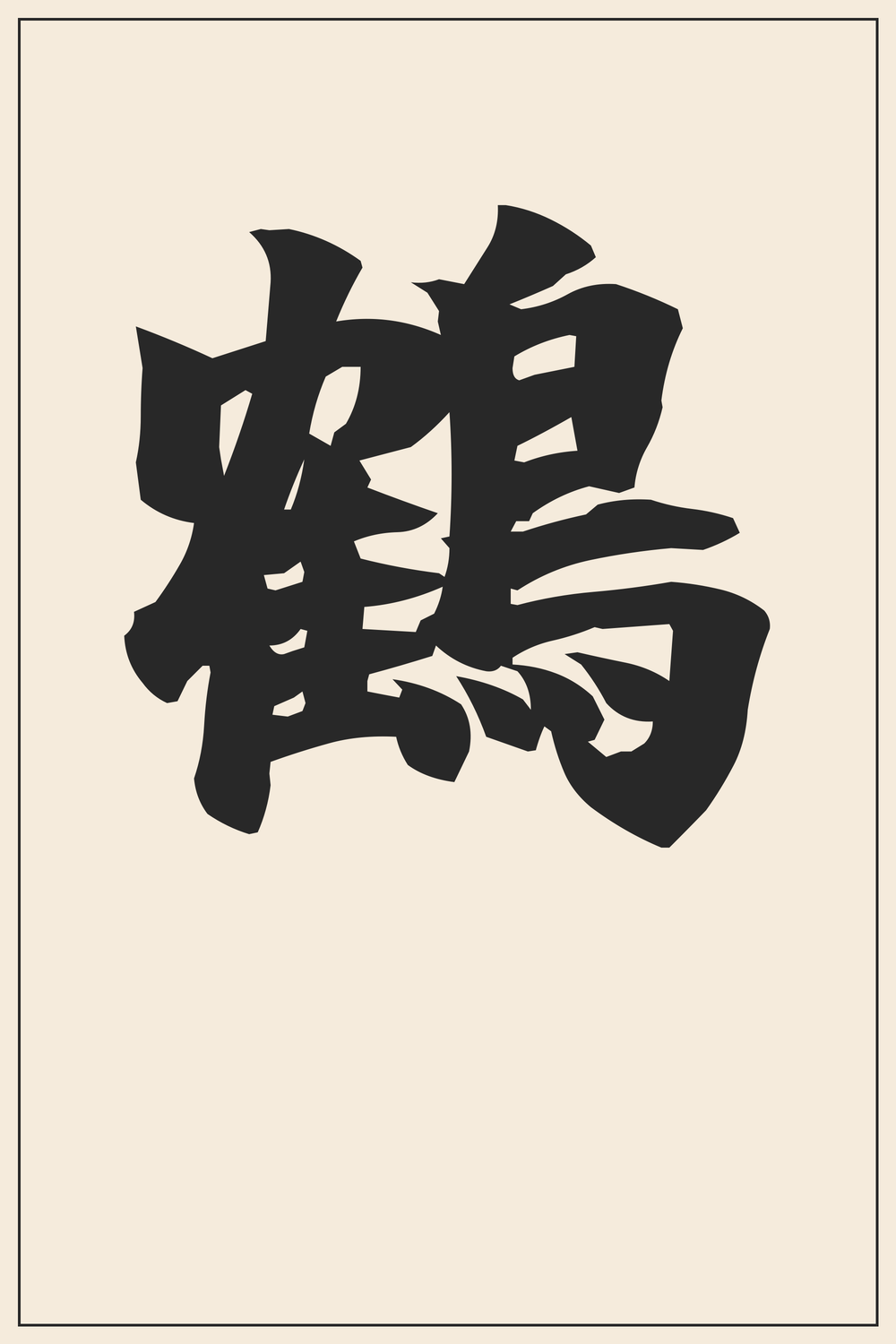
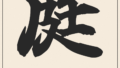
The Kanji 鶴 embodies grace and profound cultural significance, representing one of Japan’s most beloved and auspicious creatures. It is a symbol deeply woven into the fabric of Japanese tradition, art, and spirituality.
The atmosphere of a Kanji character changes dramatically depending on the font style. A character that looks elegant in a brush style might look bold and modern in a different font.
Recommendation:
Since a tattoo is permanent, we strongly recommend comparing various font styles beyond what is shown here. Use our designs as a trusted reference for the correct structure, but feel free to explore different artistic variations to find the perfect match for your vision.
The Deep Meaning Behind 鶴
The Kanji 鶴 is a phono-semantic compound. It combines 隺, an ancient character representing the sound and form of a crane, with 鳥 (tori), meaning “bird.” This construction clearly denotes a specific type of bird, emphasizing its avian nature and distinctive characteristics.
In Japan, the crane (tsuru) is revered as a symbol of longevity, good fortune, and fidelity. It is often depicted with pine trees and bamboo, further enhancing its association with endurance and prosperity. Cranes are also synonymous with peace and hope, notably through the legend of senbazuru (a thousand origami cranes), often made for wishes of recovery or world peace.
Kanji Breakdown
The character 鶴 is elegantly composed of two main elements, each contributing to its meaning and form.
Old character for crane / Bird flying high: This component phonetically represents the word for crane and visually hints at the bird’s elongated neck and stately posture. It conveys the essence of the creature.
Bird: As a radical, 鳥 explicitly categorizes the character as referring to a bird, leaving no ambiguity about the creature it represents. It provides a foundational semantic base.
Conclusion
The Kanji 鶴, or Tsuru, encapsulates more than just a bird; it represents a powerful cultural icon of longevity, unwavering loyalty, and auspicious tidings. Its presence signifies enduring hope and prosperity, making it a profound symbol.
Choosing 鶴 for a tattoo is to embrace a legacy of grace and deep cultural respect. When rendered thoughtfully, this majestic Kanji serves as a timeless emblem of good fortune and a connection to Japan’s rich symbolic heritage.
Comments