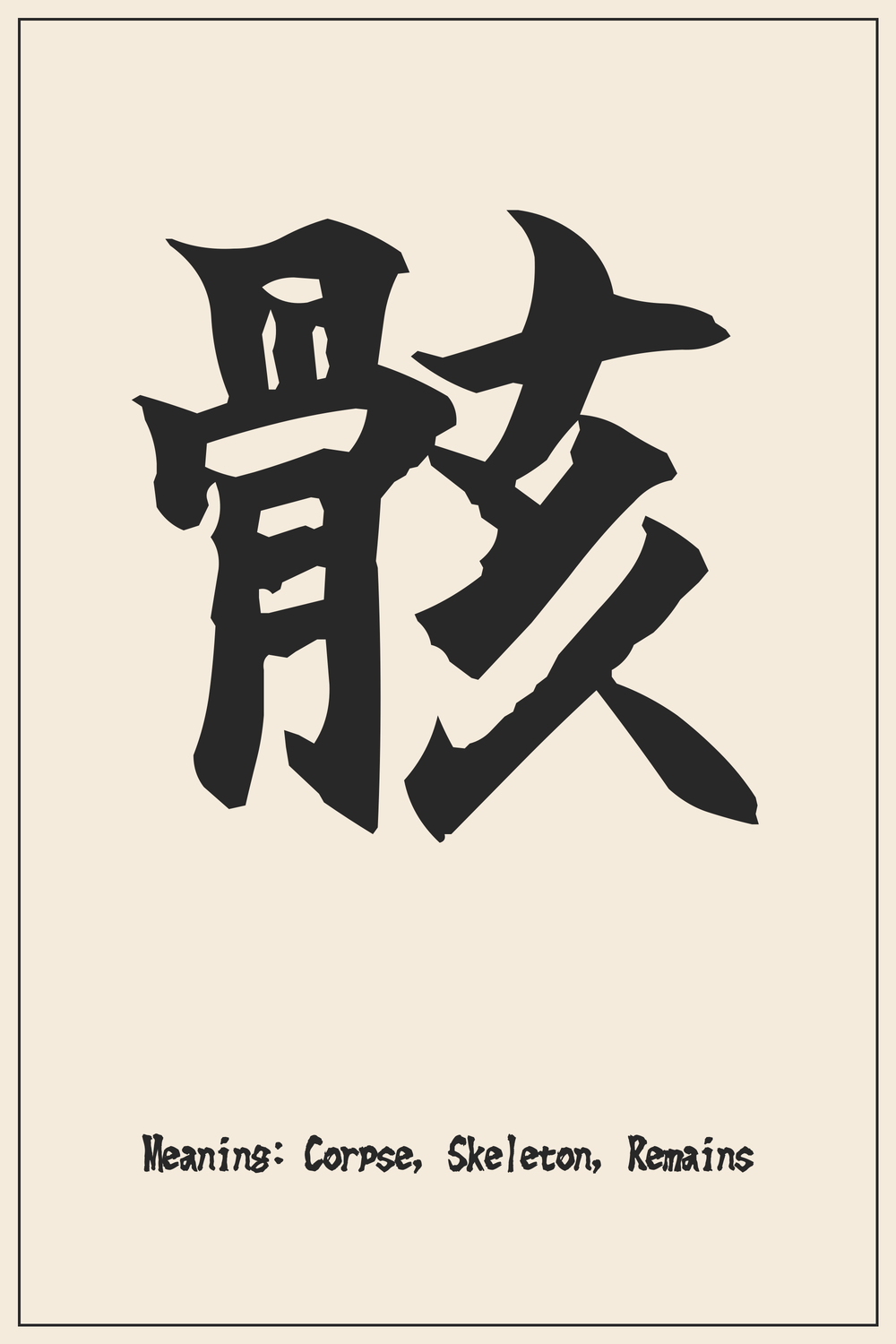
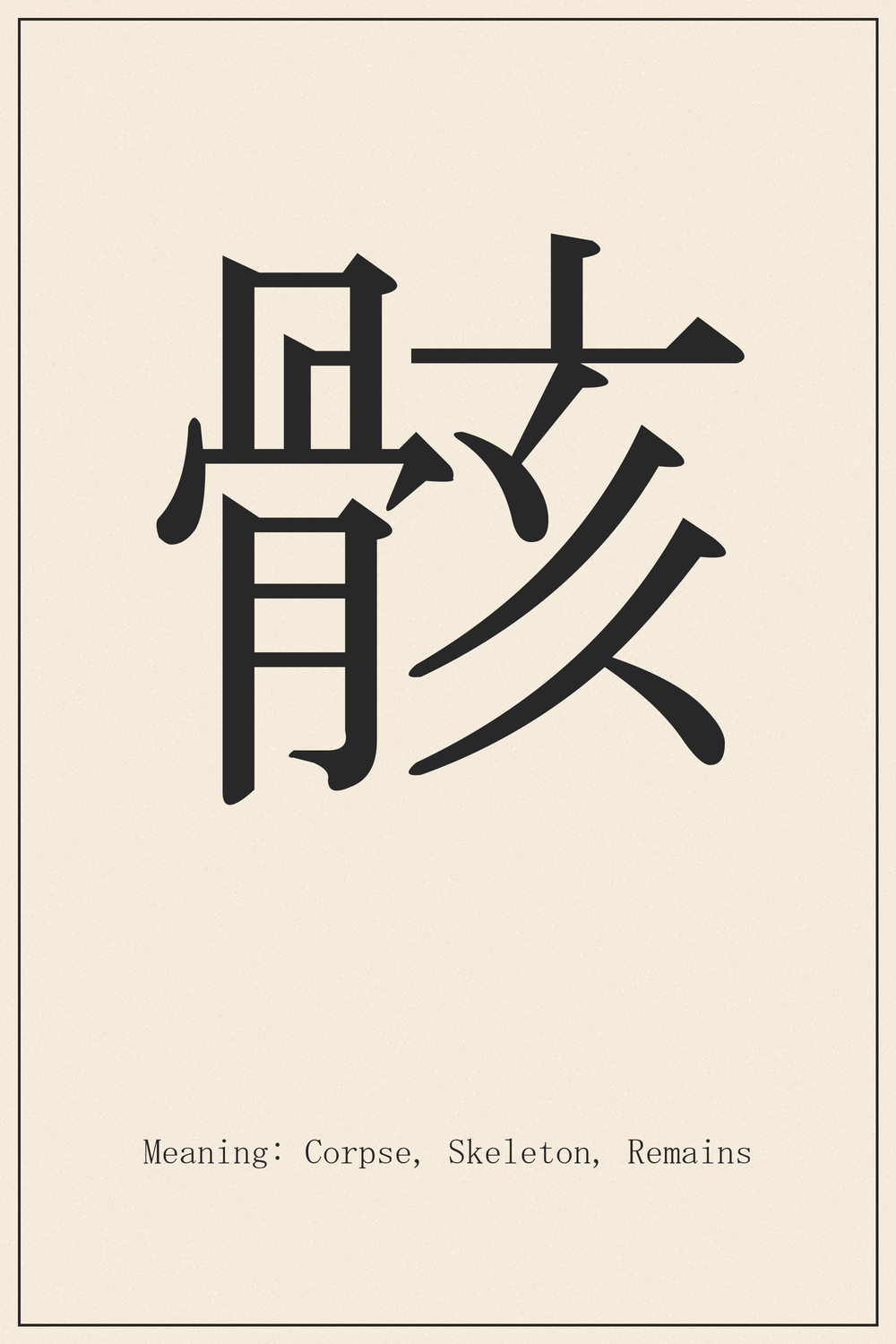
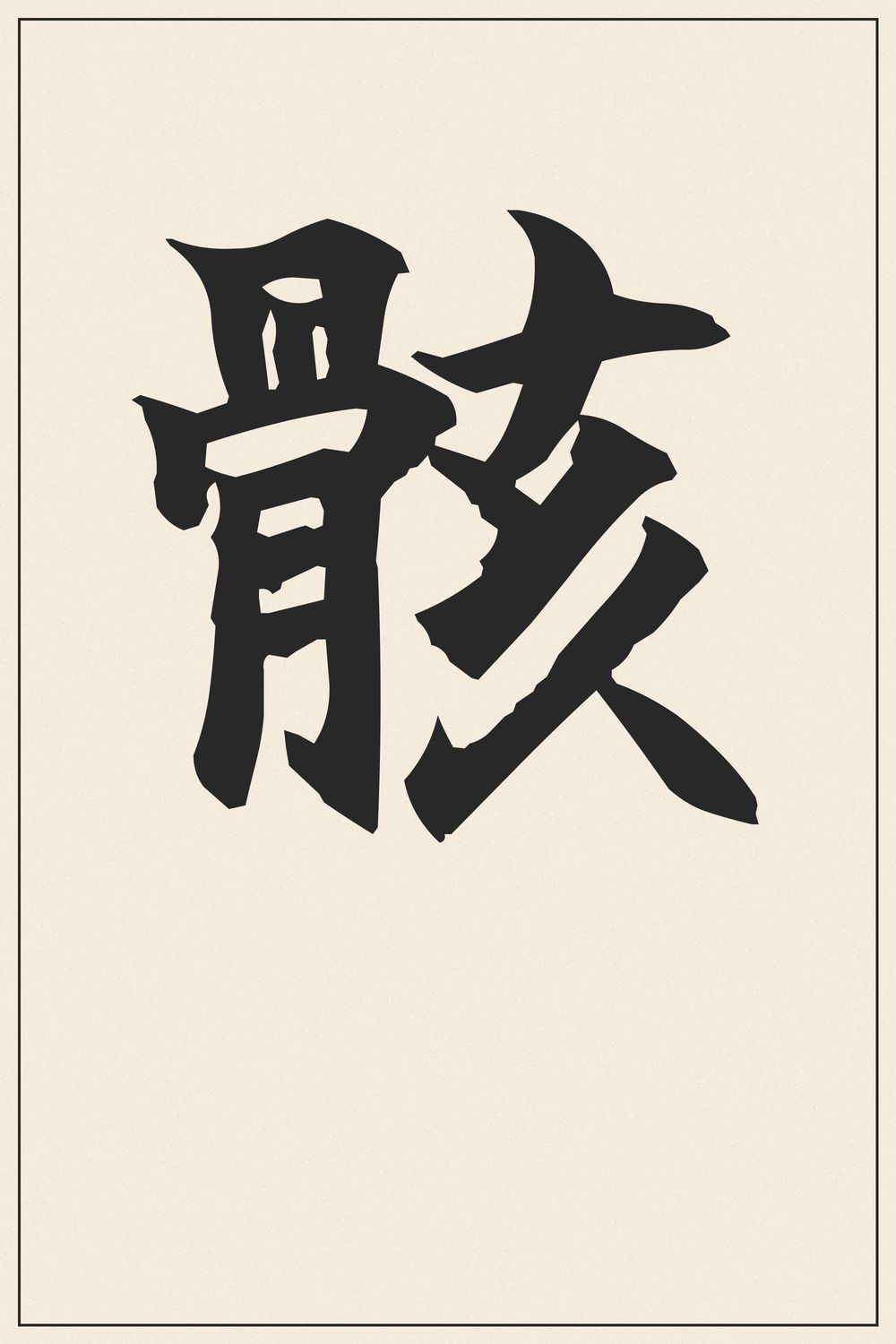
The Kanji 骸 (gai, mukuro) profoundly embodies the physical remnants of life, evoking deep contemplation on existence and mortality. It serves as a potent reminder of the transient nature of our physical form.
The atmosphere of a Kanji character changes dramatically depending on the font style. A character that looks elegant in a brush style might look bold and modern in a different font.
Recommendation:
Since a tattoo is permanent, we strongly recommend comparing various font styles beyond what is shown here. Use our designs as a trusted reference for the correct structure, but feel free to explore different artistic variations to find the perfect match for your vision.
The Deep Meaning Behind 骸
The Kanji 骸 (gai) is a phono-semantic compound. Its left component, 骨 (hone), means ‘bone’ or ‘skeleton,’ clearly indicating the semantic field of the character. The right component, 亥 (gai), serves primarily as a phonetic element to suggest the pronunciation, though it also represents the twelfth earthly branch, often associated with the pig.
In Japanese culture, 骸 often appears in contexts dealing with death, ruins, and the transient nature of the human body. It is a term that directly confronts mortality, used in literature and religious texts to reflect on the impermanence of existence and the ultimate fate of all living things. It emphasizes the physical remains, separating it from concepts of spirit or soul.
Kanji Breakdown
The character 骸 is composed of two primary elements, each contributing to its profound meaning and form.
Meaning: Bone, Skeleton.
This radical directly signifies the core meaning of 骸, referring to the skeletal structure or the remains of a body. It visually grounds the concept in the physical.
Meaning: Boar, Twelfth Earthly Branch (Phonetic Component).
While primarily a phonetic component contributing to the ‘gai’ reading, its ancient form also sometimes depicted a boar, an animal known for its robust physical presence. In 骸, it helps establish the sound while subtly hinting at a physical form, albeit no longer living.
Conclusion
The Kanji 骸 is a powerful and stark symbol of the physical aspect of death and the ephemeral nature of life. It encapsulates the ideas of a corpse, skeleton, or remains, prompting reflection on our ultimate mortality.
For those who seek a profound emblem of life’s transience or a memento mori, a tattoo of 骸 can be a deeply personal and meaningful choice. Its intricate strokes require an experienced artist to ensure clarity and longevity, making it a compelling yet challenging symbol for body art.
Comments