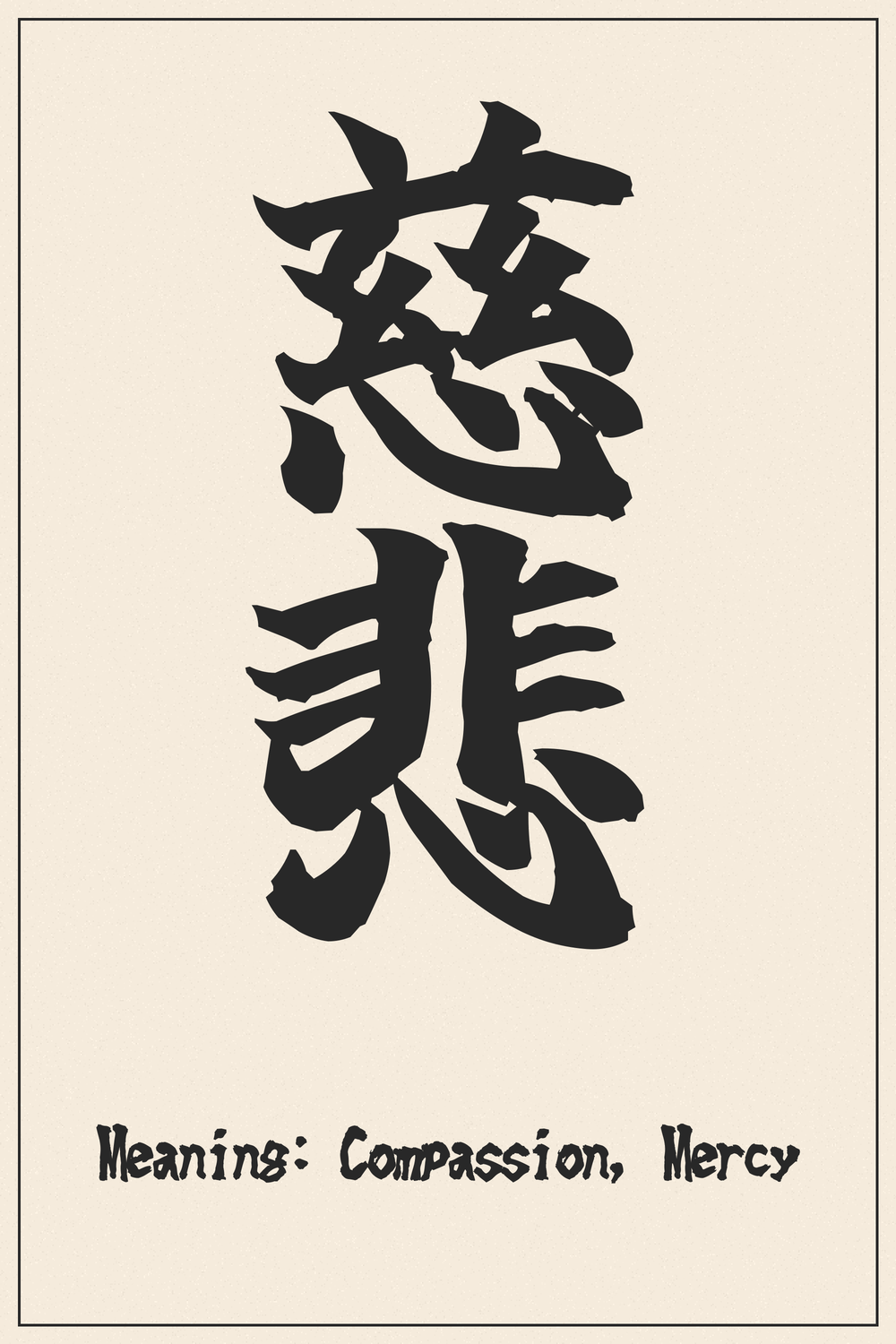
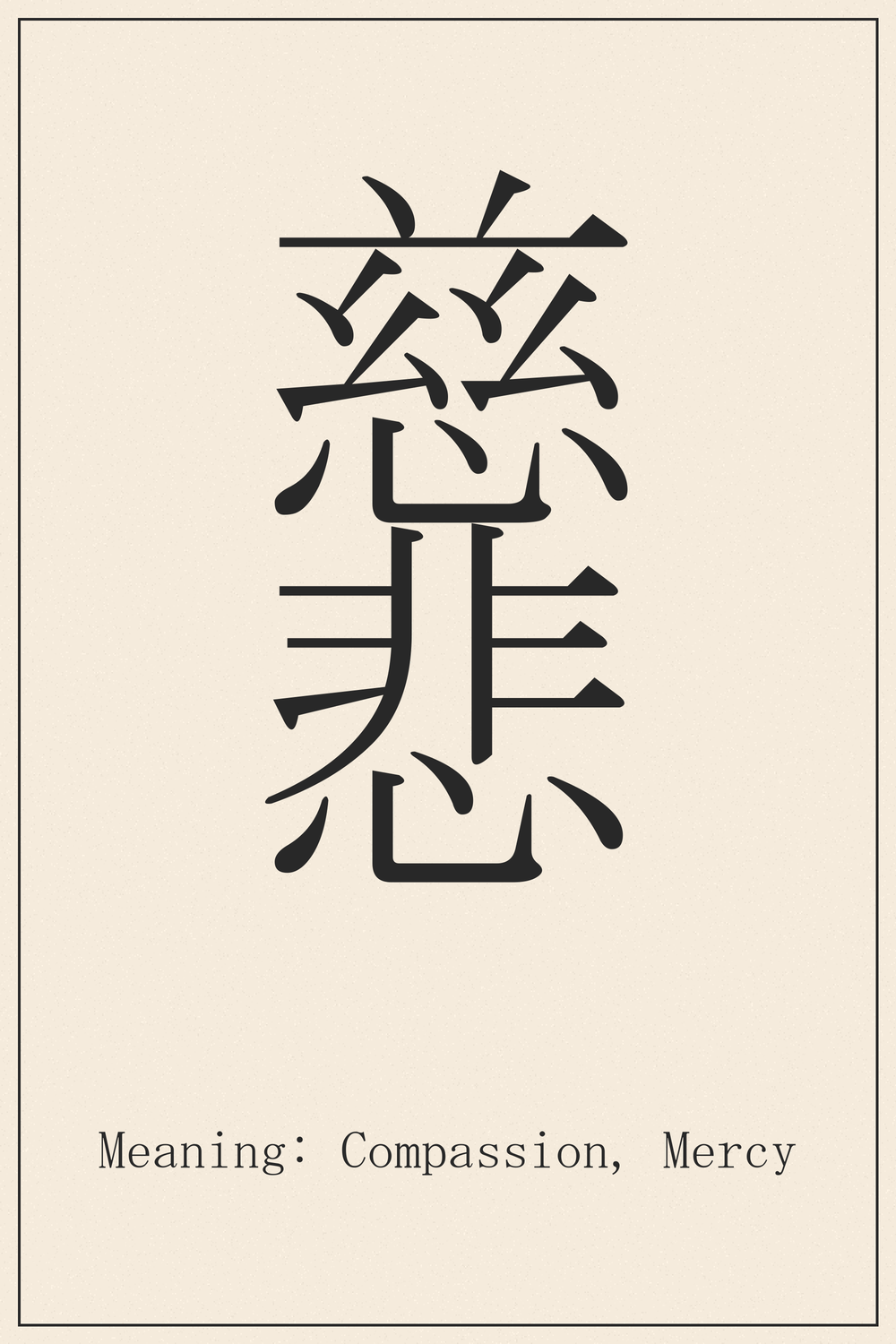
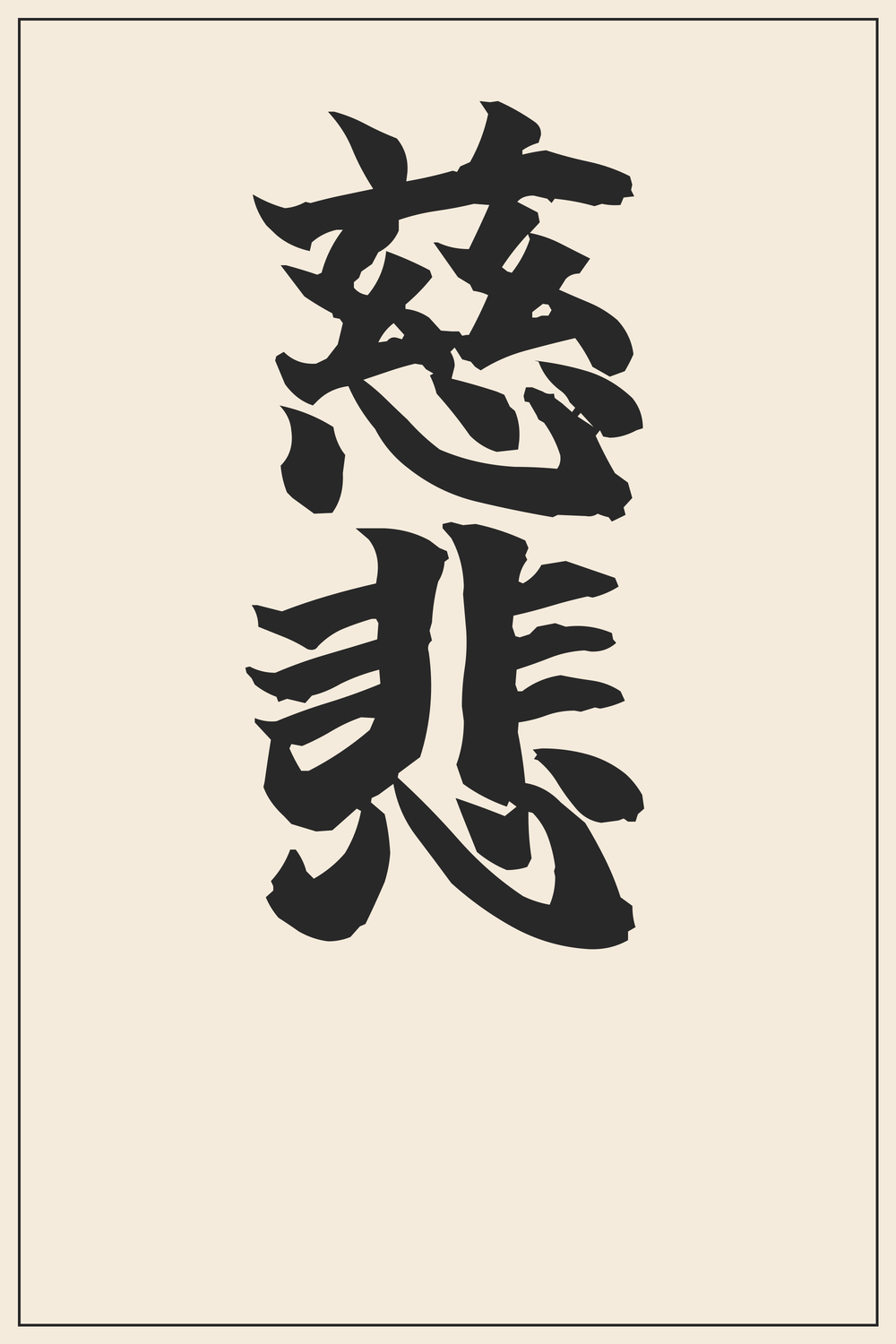
The Kanji compound 慈悲 (Jihi) encapsulates the profound essence of compassion and mercy, a cornerstone of spiritual and ethical thought. It represents an empathetic understanding of suffering and the active desire to alleviate it.
The atmosphere of a Kanji character changes dramatically depending on the font style. A character that looks elegant in a brush style might look bold and modern in a different font.
Recommendation:
Since a tattoo is permanent, we strongly recommend comparing various font styles beyond what is shown here. Use our designs as a trusted reference for the correct structure, but feel free to explore different artistic variations to find the perfect match for your vision.
The Deep Meaning Behind 慈悲
The term 慈悲 (Jihi) originates from Buddhist philosophy, specifically from the Sanskrit words ‘Maitri’ (慈, loving-kindness) and ‘Karuna’ (悲, compassion). It represents the aspiration to bring happiness to others and to alleviate their suffering, respectively.
In Japanese culture, 慈悲 extends beyond religious connotations to signify a universal ethical principle of benevolence and empathy. It is often invoked in discussions of humanitarianism, ethical leadership, and the fundamental human capacity for kindness towards all beings.
Kanji Breakdown
The compound 慈悲 is composed of two distinct characters, each contributing a vital layer to its comprehensive meaning.
Meaning: Loving-kindness, benevolence. Originating from characters meaning ‘abundant growth’ (茲) and ‘heart’ (心), 慈 embodies the warmth and affection akin to a mother’s love, wishing happiness upon others.
Meaning: Compassion, sorrow, pity. Composed of ‘not’ or ‘wrong’ (非) and ‘heart’ (心), 悲 represents a deep empathy for the suffering of others, feeling their pain as one’s own and desiring its cessation.
Conclusion
The Kanji 慈悲 offers a profound statement of universal compassion and mercy, reflecting a deep spiritual and ethical commitment. It signifies both the desire to bring joy and alleviate sorrow, embodying a holistic approach to benevolent interaction.
Choosing 慈悲 for a tattoo is a powerful affirmation of these timeless values. It serves as a constant reminder of empathy, kindness, and the aspiration for a more harmonious world, making it an excellent choice for those who resonate with its profound message.
Comments