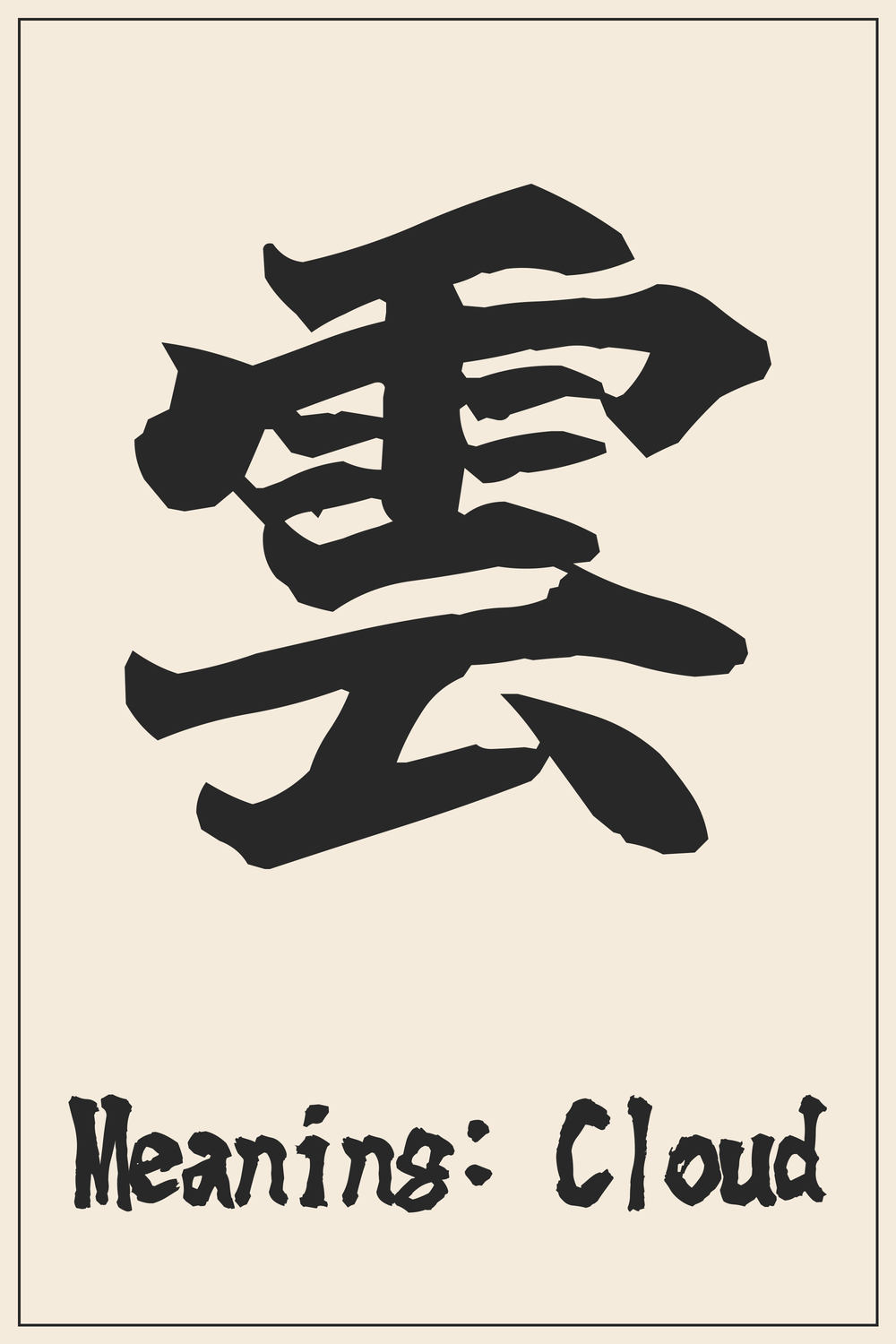
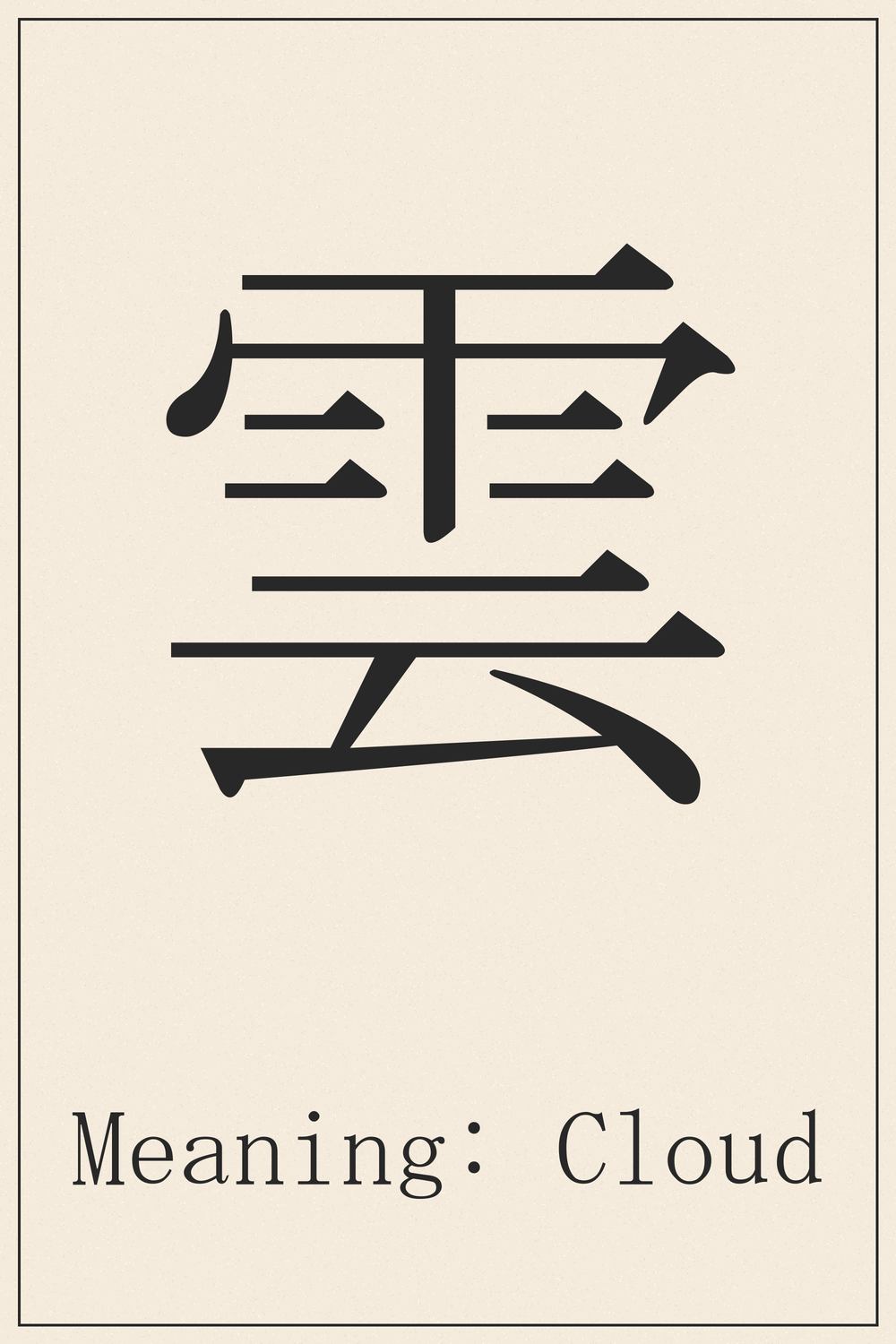
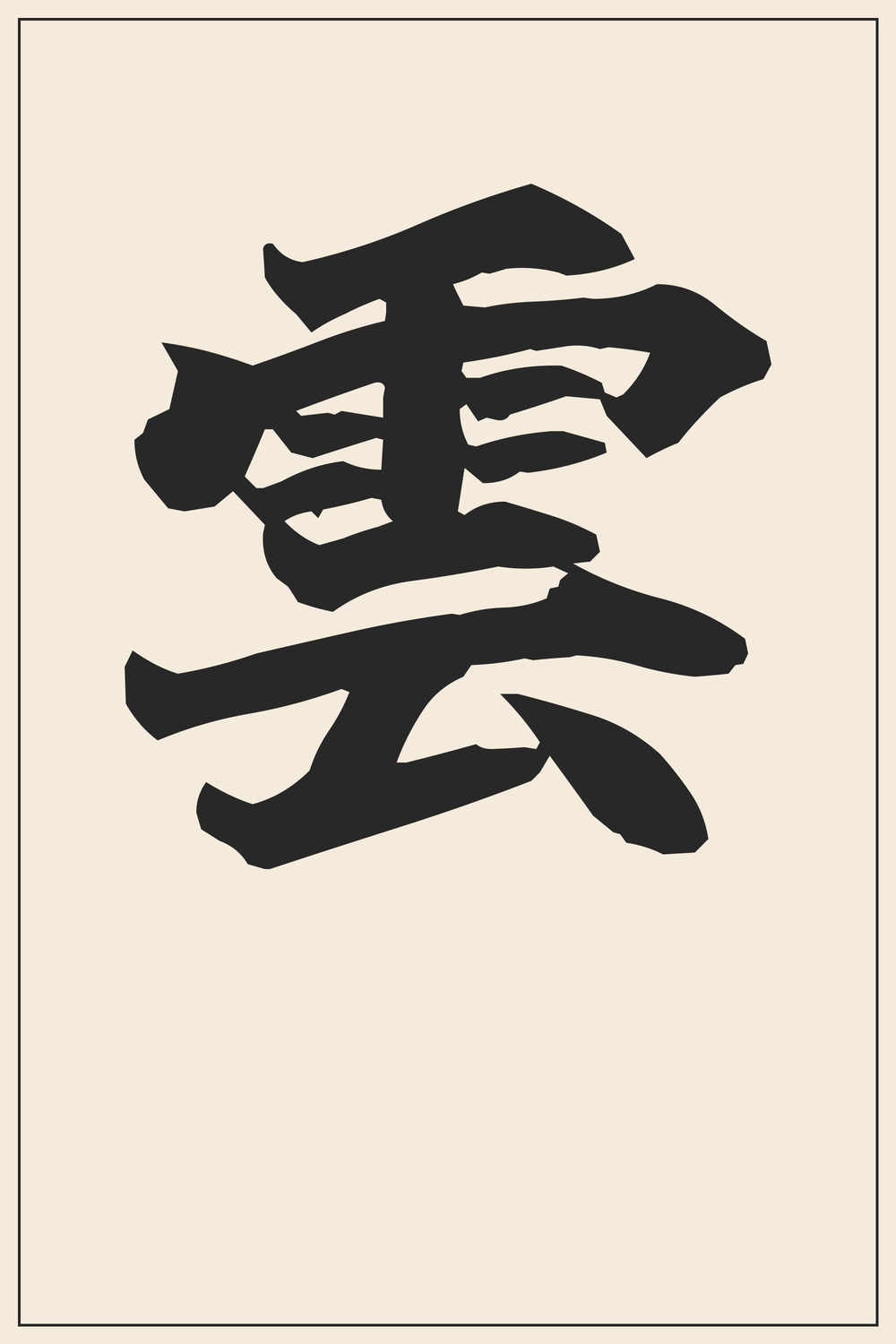
The Kanji 雲 (kumo) elegantly captures the essence of clouds, representing a world of natural beauty, transience, and ethereal presence. It evokes the ever-changing sky and its profound connection to human emotion and spiritual journeys.
The atmosphere of a Kanji character changes dramatically depending on the font style. A character that looks elegant in a brush style might look bold and modern in a different font.
Recommendation:
Since a tattoo is permanent, we strongly recommend comparing various font styles beyond what is shown here. Use our designs as a trusted reference for the correct structure, but feel free to explore different artistic variations to find the perfect match for your vision.
The Deep Meaning Behind 雲
The character 雲 (un, kumo) is a pictophonetic compound. Its ancient form depicted a cloud of vapor rising. The modern form combines the radical 雨 (ame), meaning ‘rain’ or ‘weather,’ at the top, with the character 云 (un), which originally meant ‘cloud’ or ‘to speak’ (like vapor rising from the mouth), at the bottom. This combination vividly illustrates a cloud as a phenomenon of the sky and atmosphere.
In Japanese culture, clouds symbolize much more than just atmospheric formations. They are often associated with the transient nature of life (諸行無常 – shogyō mujō), the heavens, and the divine. Clouds are a pervasive motif in traditional art, literature, and even garden design, frequently depicted alongside dragons as symbols of power and transcendence, or simply for their serene, ethereal beauty.
Kanji Breakdown
The Kanji 雲 can be understood through its primary components:
Rain: This radical sits atop 雲, directly linking it to weather and atmospheric phenomena. It visually represents droplets falling from the sky.
Cloud / To Say: Originally a pictograph for a cloud or rising vapor, its meaning evolved to ‘to say’ in classical Chinese. In 雲, it contributes the phonetic element and the core visual idea of something gaseous and elevated.
Conclusion
The Kanji 雲 is a poetic representation of clouds, embodying themes of natural beauty, impermanence, and the vastness of the sky. It reflects the constant flux of the world and the serene, yet powerful, forces of nature.
Choosing 雲 for a tattoo is to embrace a symbol rich in aesthetic grace and philosophical depth. It serves as a beautiful reminder of nature’s majesty and life’s evolving journey, making it a compelling and timeless personal emblem.
Comments