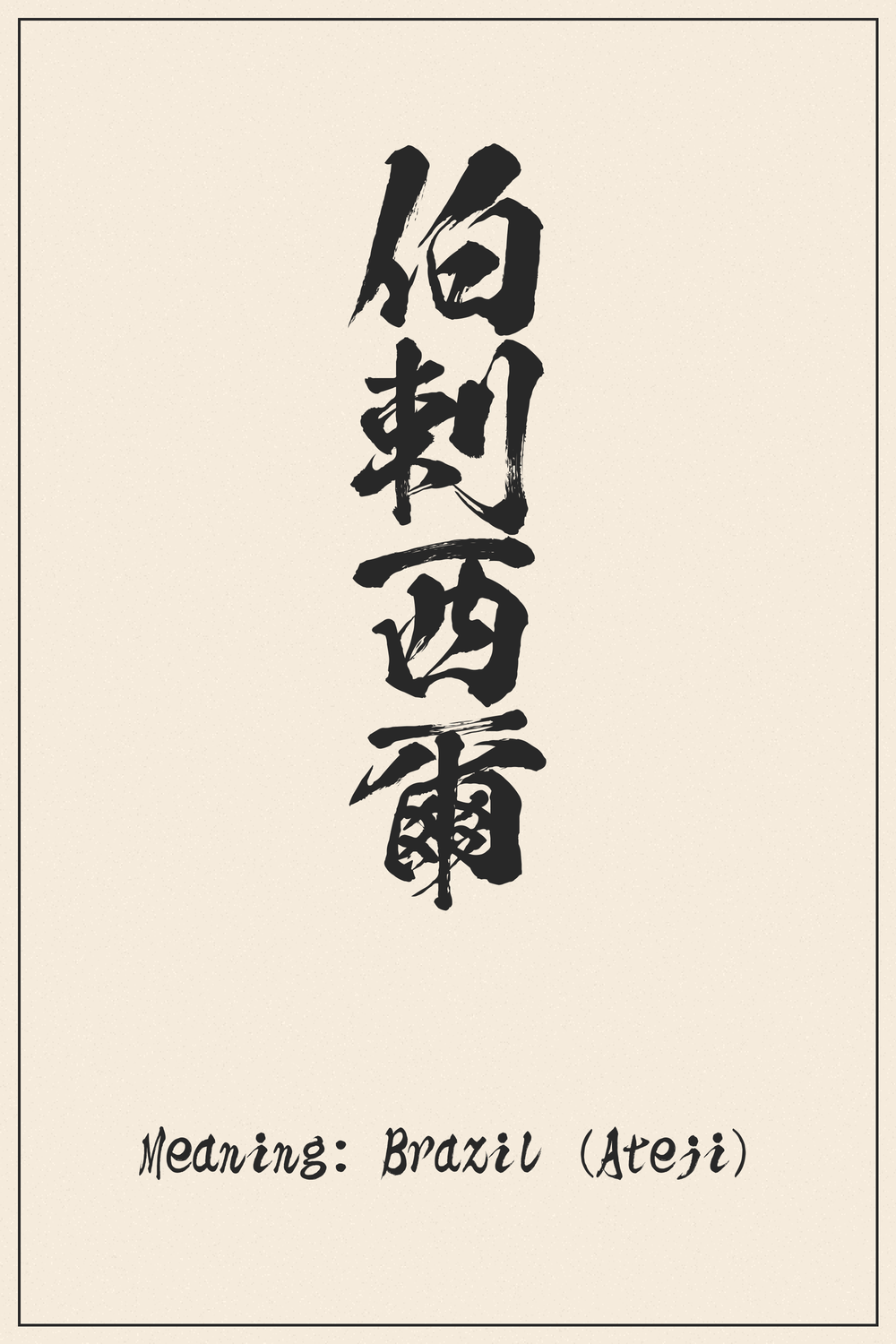
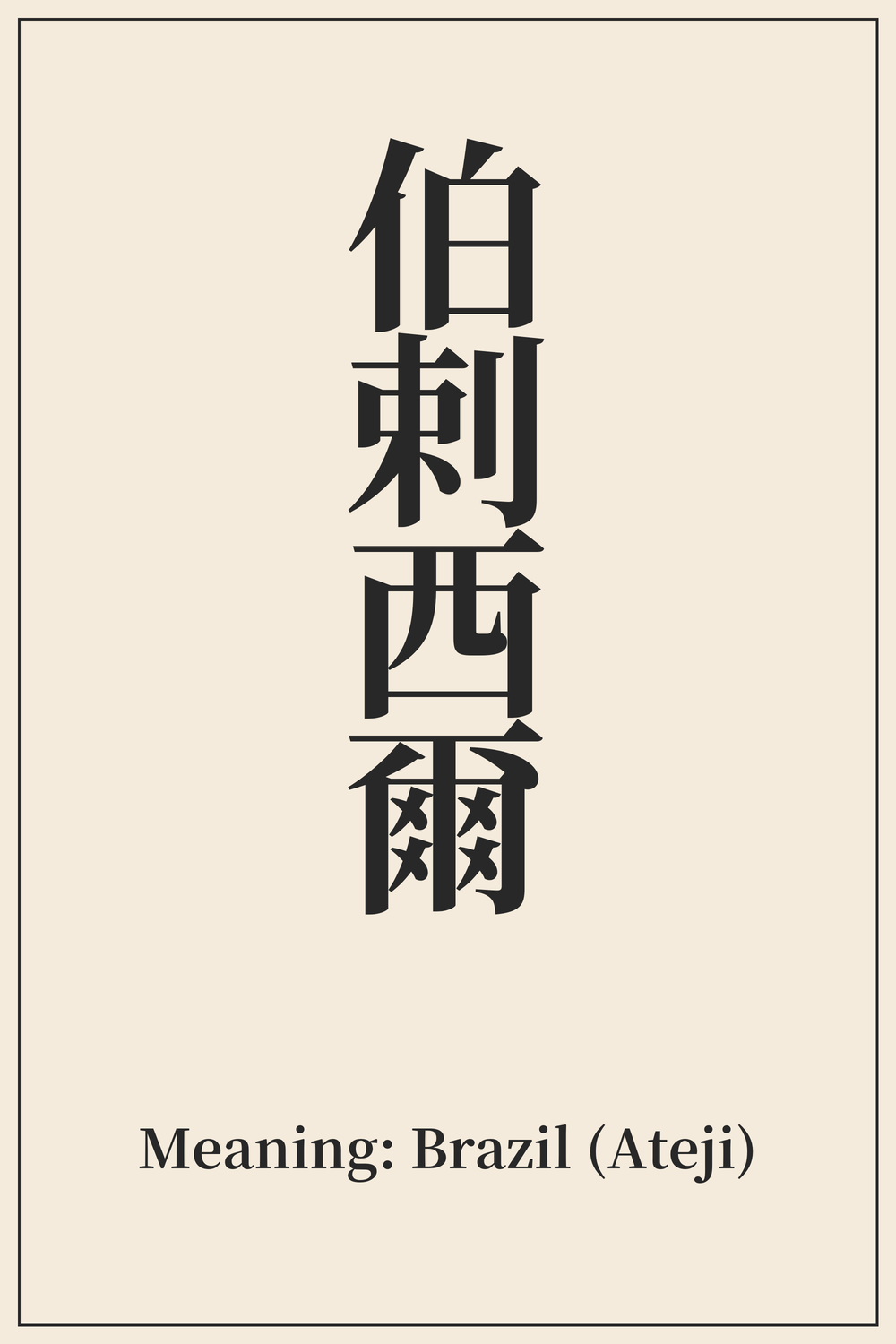
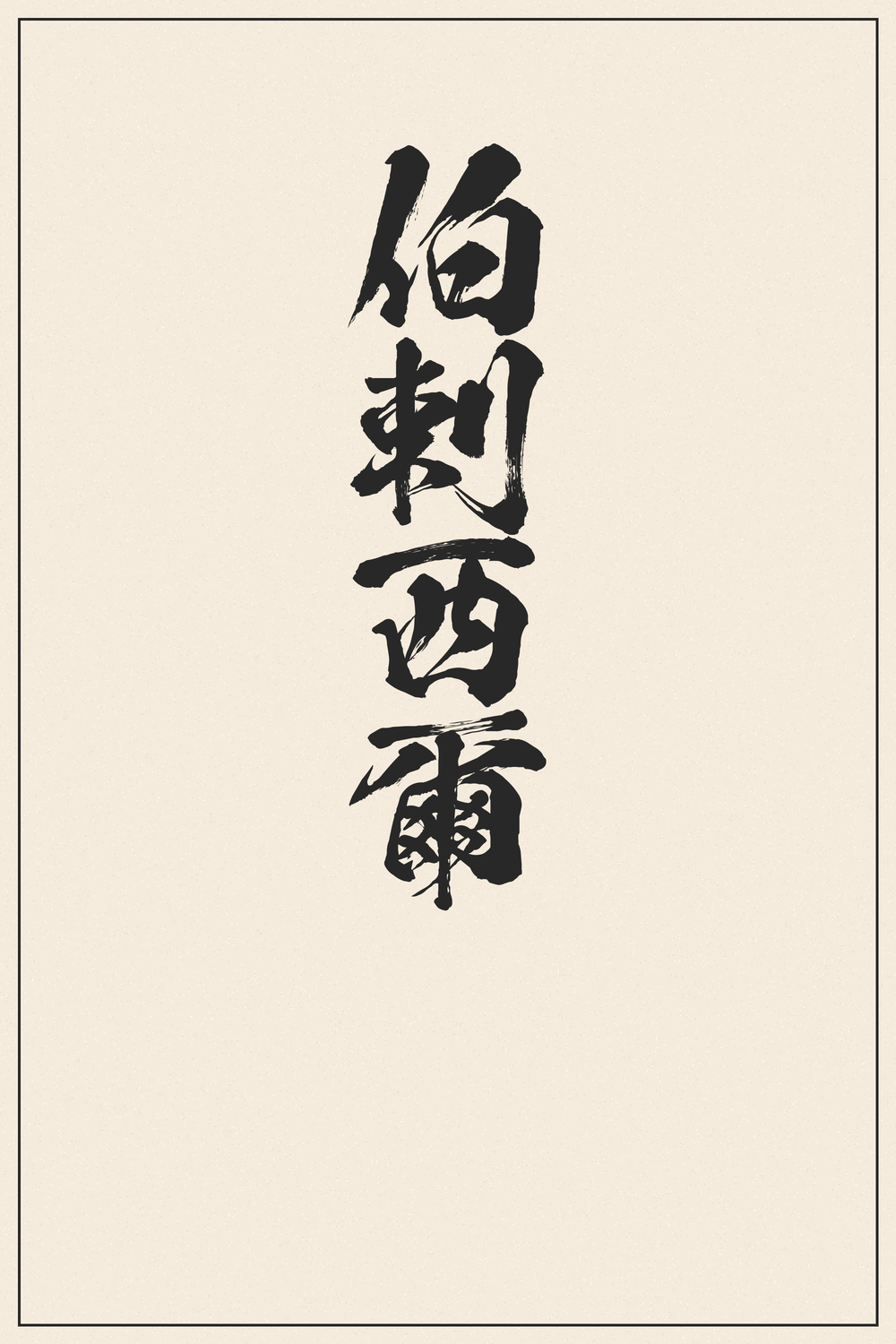
The Kanji combination 伯剌西爾 beautifully encapsulates the phonetic representation of a vibrant nation. While its characters hold individual meanings, their power together lies in their collective sound, forming a bridge to a distant land.
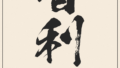
The atmosphere of a Kanji character changes dramatically depending on the font style. A character that looks elegant in a brush style might look bold and modern in a different font.
Recommendation: Since a tattoo is permanent, we strongly recommend comparing various font styles beyond what is shown here. Use our designs as a trusted reference for the correct structure, but feel free to explore different artistic variations to find the perfect match for your vision.
The Deep Meaning Behind 伯剌西爾
The Kanji sequence 伯剌西爾 (Burajiru) is a classic example of ‘Ateji’ (当て字), a Japanese system of using Kanji characters solely for their phonetic values to represent foreign words or names. In this case, these characters were carefully chosen to phonetically approximate the sound of ‘Brazil’, one of the world’s most populous and culturally rich nations.
Unlike Kanji chosen for their semantic meanings, Ateji like 伯剌西爾 are primarily a linguistic tool for transliteration. This demonstrates Japan’s historical approach to incorporating foreign concepts, adapting them into its own writing system while preserving the original sound. It highlights a fascinating aspect of language evolution and cultural exchange.
Kanji Breakdown
The characters comprising 伯剌西爾 are selected for their sounds rather than their individual semantic contributions to the overall meaning of ‘Brazil’.
Meaning: Elder brother, count, chief. This character often denotes a senior position, such as ‘count’ (伯爵 – hakushaku) or ‘elder brother’. In ‘Burajiru’, it serves a purely phonetic role for ‘bu’.
Meaning: Sting, pierce, spur. A relatively rare character in common use, 剌 primarily acts as a phonetic component here, representing the ‘ra’ sound. Its literal meanings are generally overlooked in this Ateji context.
Meaning: West. This common character literally means ‘west’. While it carries a clear spatial meaning, in the context of ‘Burajiru’, it’s primarily used for its ‘si’ (shi) sound.
Meaning: You, that, like; a suffix. 爾 is an archaic personal pronoun meaning ‘you’ or can function as a particle. In 伯剌西爾, it provides the ‘ru’ sound, completing the phonetic transliteration.
Conclusion
The Kanji 伯剌西爾 stands as a unique testament to linguistic adaptation, serving as the phonetic representation for the nation of Brazil. Its individual characters, though rich in their own meanings, are harmonized to replicate a foreign sound rather than convey a direct semantic message.
For those considering 伯剌西爾, understanding its nature as an Ateji is crucial. It represents a country through sound, embodying a historical and cultural bridge rather than a symbolic virtue. As such, it is a fascinating piece of linguistic history, making it a distinctive choice for those who appreciate the intricacies of language and global connections.
Comments