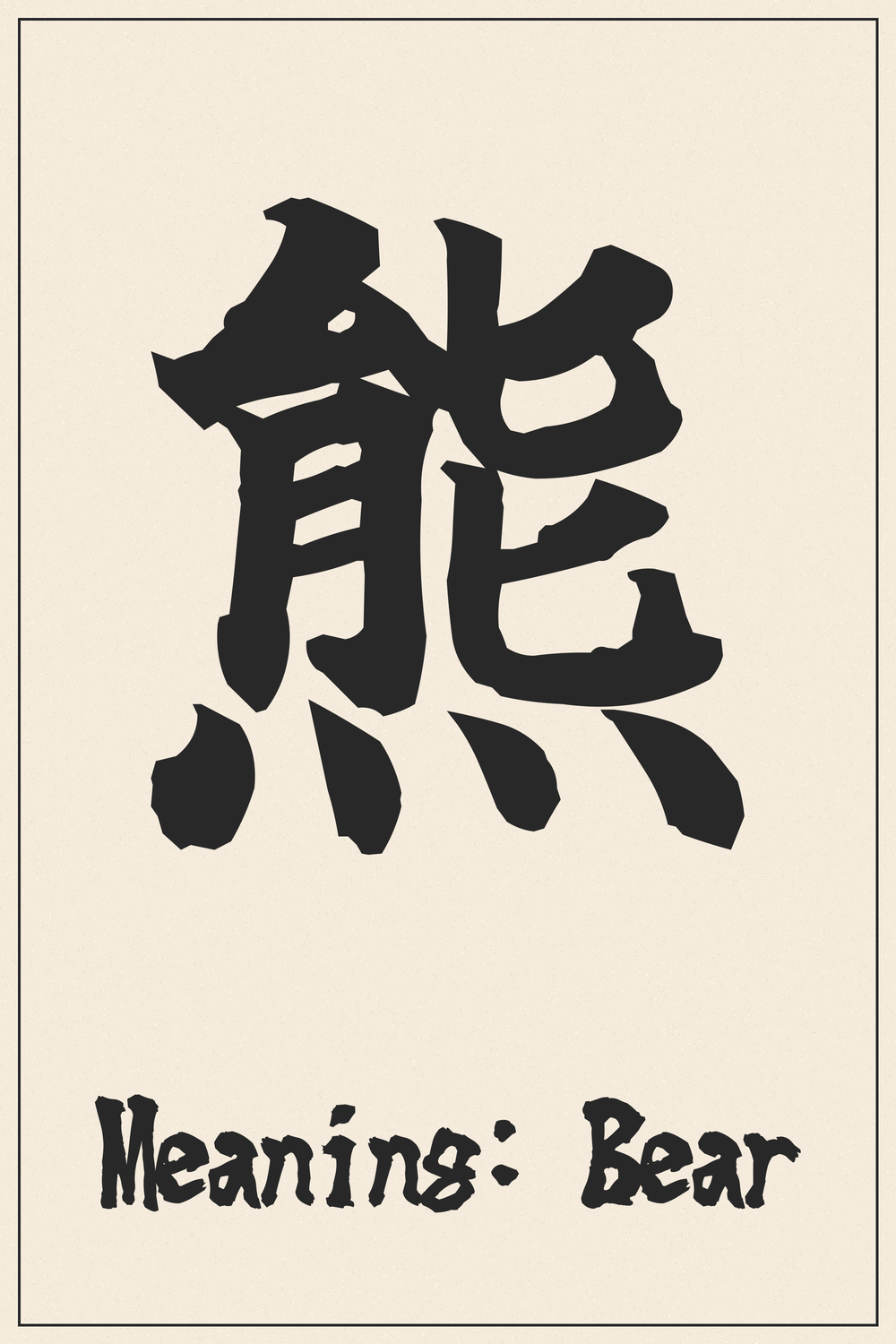
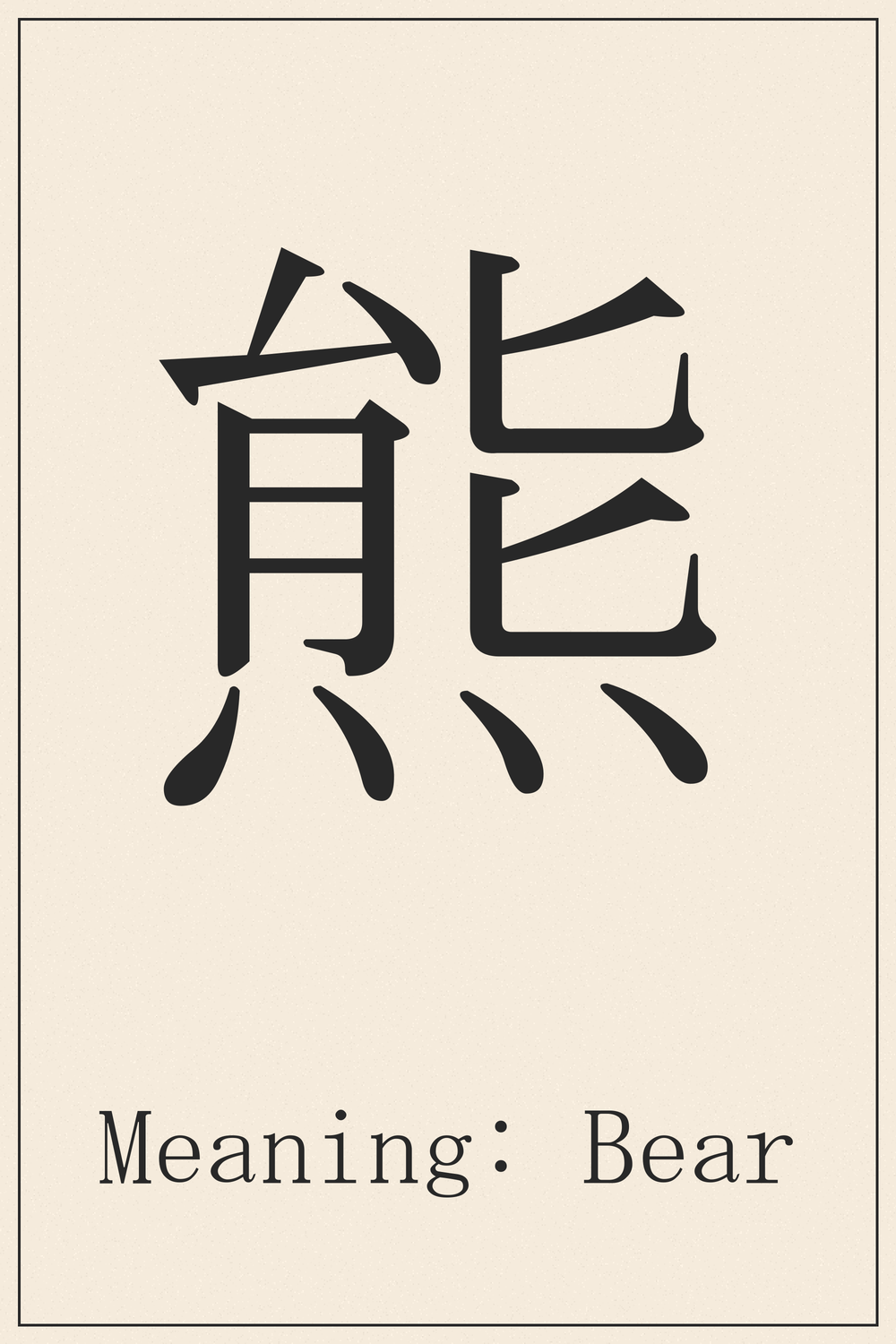
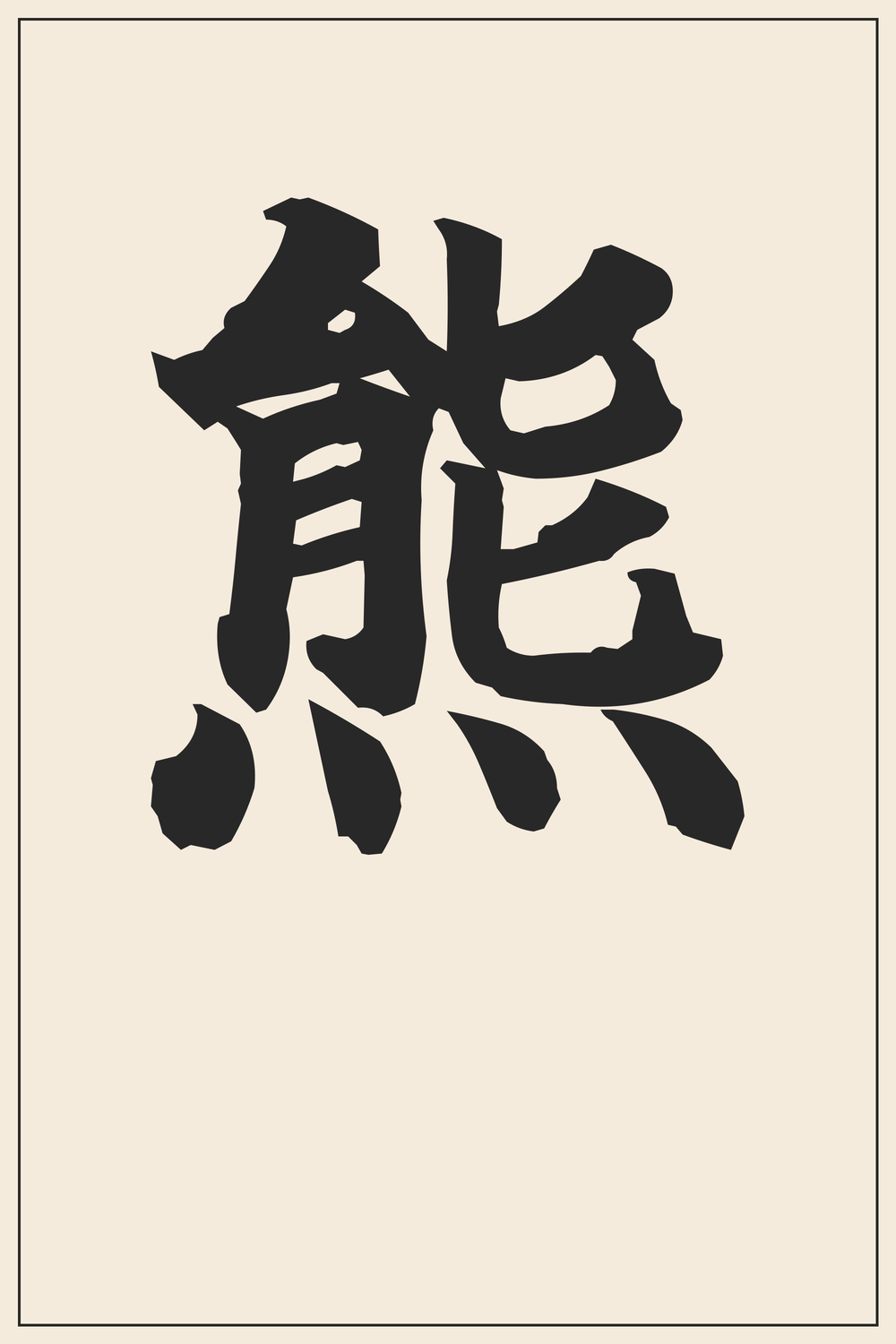
The Kanji 熊 (Kuma) embodies the raw power and stoic presence of the bear, a creature revered across cultures for its strength and resilience. It serves as a potent symbol for protection, primal nature, and quiet fortitude.
The atmosphere of a Kanji character changes dramatically depending on the font style. A character that looks elegant in a brush style might look bold and modern in a different font.
Recommendation:
Since a tattoo is permanent, we strongly recommend comparing various font styles beyond what is shown here. Use our designs as a trusted reference for the correct structure, but feel free to explore different artistic variations to find the perfect match for your vision.
The Deep Meaning Behind 熊
The Kanji 熊 is an ancient character, believed to be a pictographic representation of a bear, or a phonosemantic compound. Its earliest forms depicted the animal more directly, highlighting its powerful build and distinctive features.
In Japanese culture, bears (kuma) are viewed with a mix of awe and respect. They are powerful inhabitants of the wilderness, symbolizing strength, courage, and sometimes even the protective spirit of nature. The bear’s ability to hibernate also links it to themes of perseverance and renewal.
Kanji Breakdown
The character 熊 is composed of key elements that hint at its meaning and ancient origins, though its etymology is complex and debated.
Meaning: This component, ‘nou’ (ability) in modern Japanese, originally depicted a bear in ancient Chinese characters. It provides both the phonetic element and the semantic core, representing the bear’s powerful form and inherent capabilities.
Meaning: Known as renga (fire) or yottsuten (four dots), this radical often signifies fire or burning. In the context of 熊, it is often interpreted to represent the bear’s four paws, or perhaps its fierce, fiery nature and powerful energy.
Conclusion
The Kanji 熊 is a compelling symbol of primal strength, resilience, and the untamed spirit of nature. It embodies a quiet power, reflecting the bear’s formidable presence in the wild and its protective instincts.
Choosing 熊 for a tattoo signifies an appreciation for inner power, fortitude, and a connection to the natural world. Its balanced aesthetic makes it a powerful and meaningful statement, perfect for those who identify with the bear’s enduring spirit.
Comments