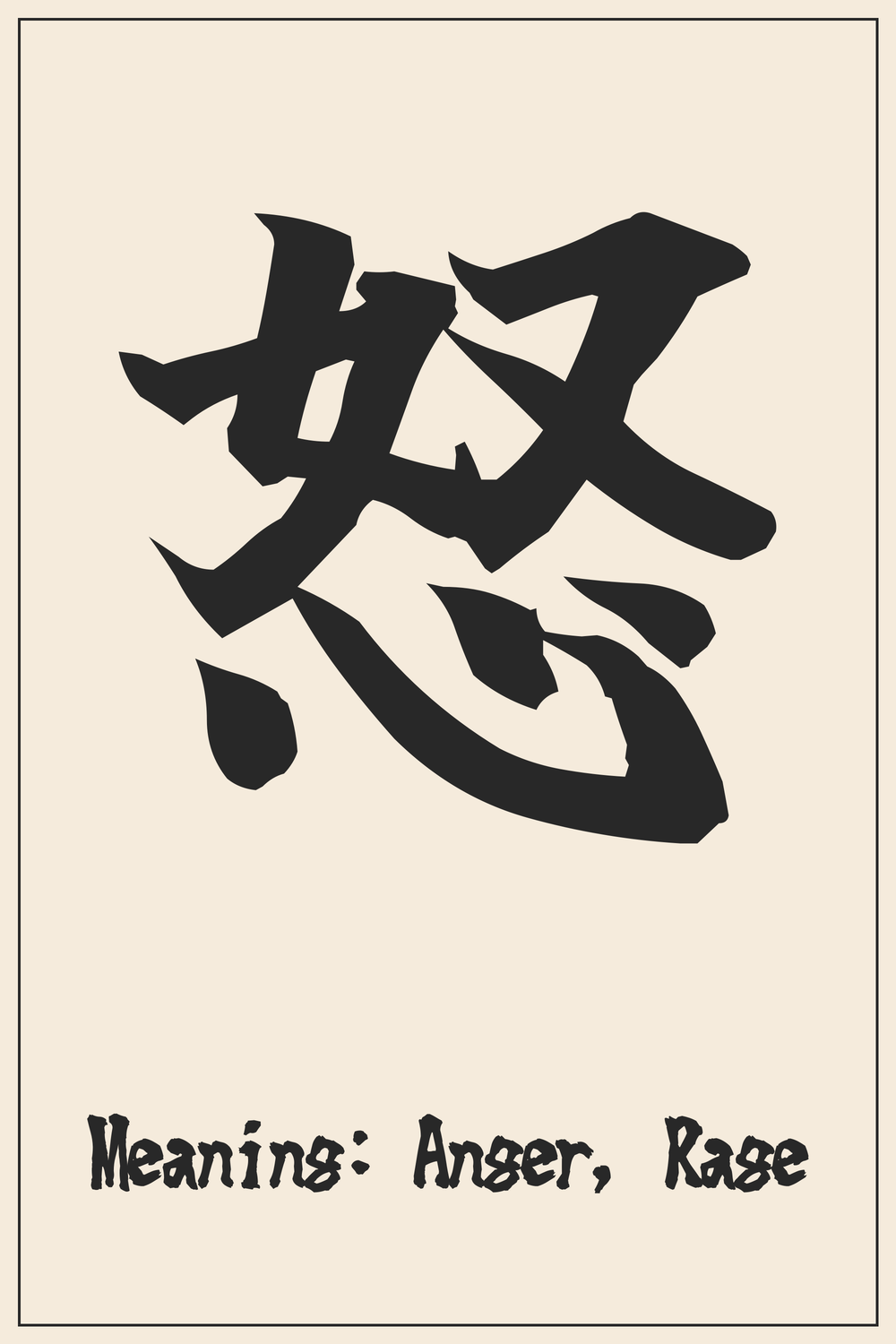
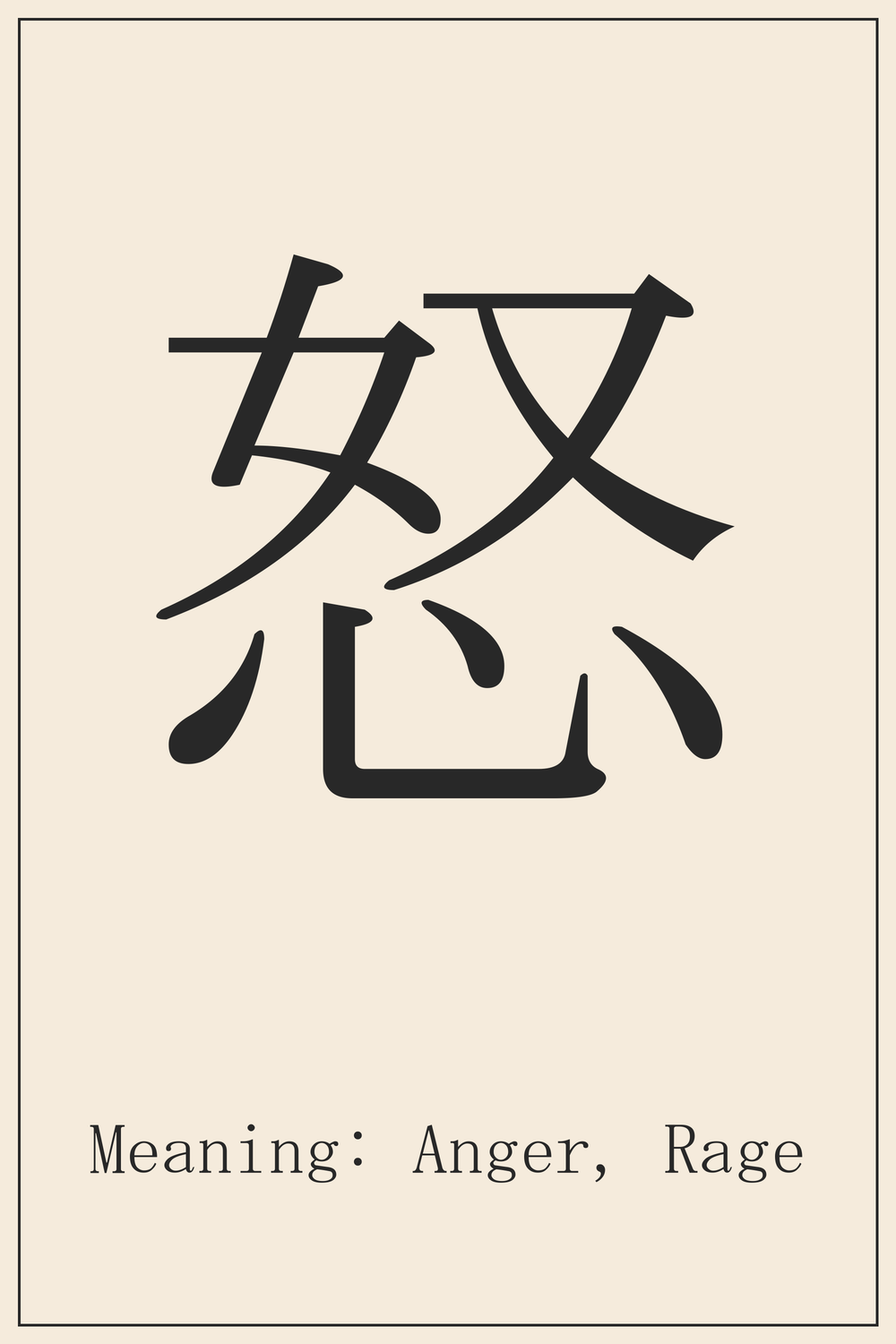
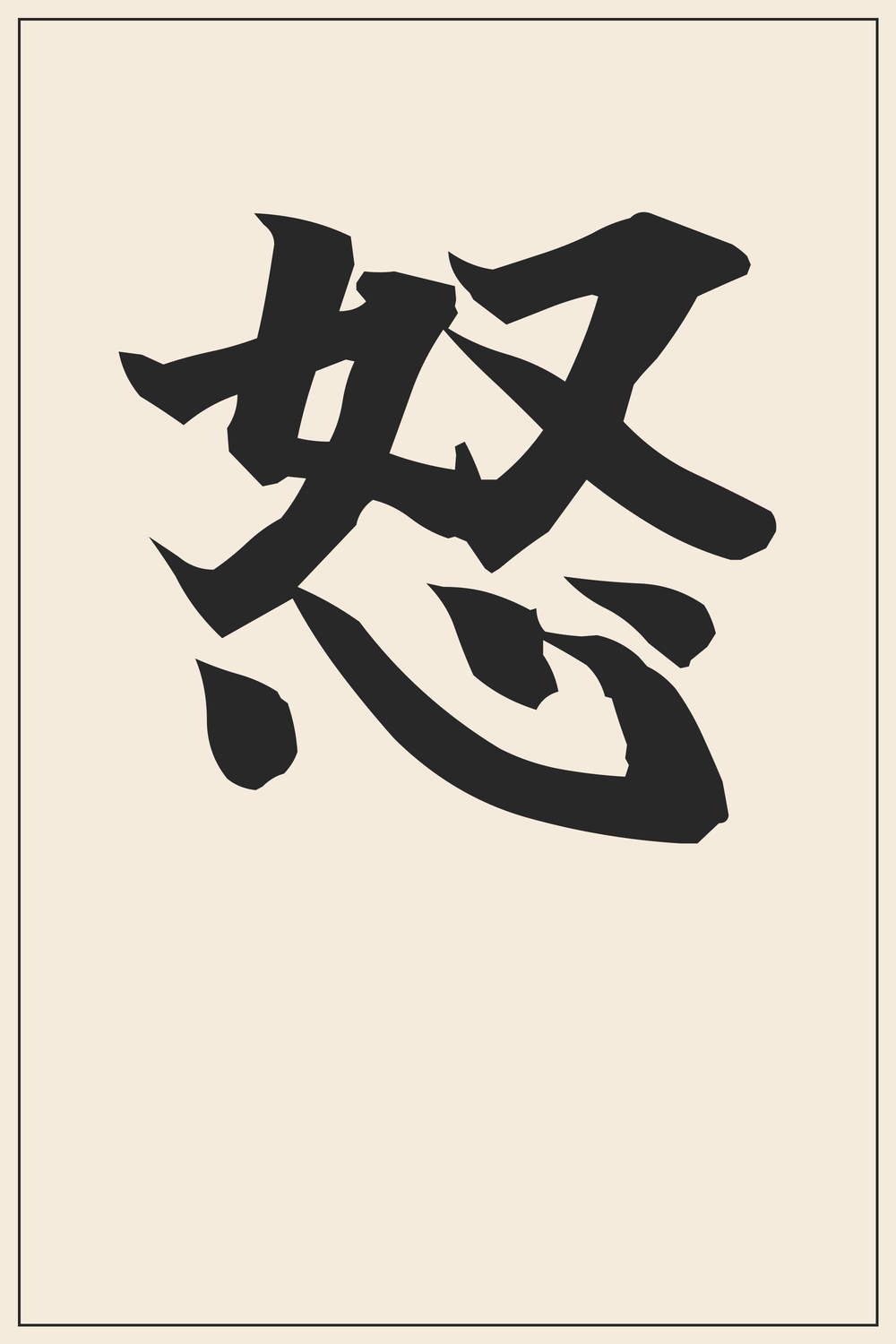
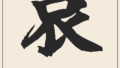
The Kanji 怒 encapsulates the raw power of anger, a fundamental human emotion. It speaks to both the intensity of rage and the potential for its controlled expression.
The atmosphere of a Kanji character changes dramatically depending on the font style. A character that looks elegant in a brush style might look bold and modern in a different font.
Recommendation:
Since a tattoo is permanent, we strongly recommend comparing various font styles beyond what is shown here. Use our designs as a trusted reference for the correct structure, but feel free to explore different artistic variations to find the perfect match for your vision.
The Deep Meaning Behind 怒
The Kanji 怒 (ikari) fundamentally represents the powerful emotion of anger or rage. Its etymological roots suggest a deep connection to the internal workings of the human heart and the physical manifestation of intense feeling. It is a symbol that acknowledges the raw, often overwhelming, force of human emotion.
In Japanese culture, while anger is acknowledged as a natural human response, there is often an emphasis on its control and appropriate expression. This kanji can thus symbolize not just the emotion itself, but also the inner struggle and the strength required to master one’s feelings, turning potential destructiveness into focused resolve or righteous indignation.
Kanji Breakdown
The character 怒 is composed of elements that reveal its underlying meaning:
Meaning: Heart, Mind. This radical indicates that anger is an emotion originating from within, deeply seated in one’s core being.
Meaning: Phonetic element, slave/servant. While primarily phonetic (for the ‘nu’ or ‘do’ sound), this component can subtly hint at the idea of being constrained, struggling, or even ‘enslaved’ by intense emotion, or the effort required to control it.
Conclusion
The Kanji 怒 is a profound representation of anger, encapsulating its intensity and its origin within the human spirit. It serves as a reminder of this powerful emotion and the constant internal battle to manage and channel it constructively.
For those considering it as a tattoo, 怒 can symbolize a personal connection to this fundamental feeling, perhaps signifying strength in overcoming rage, or acknowledging a passionate nature. Its bold strokes offer a strong visual statement that resonates with depth and emotional power.
Comments