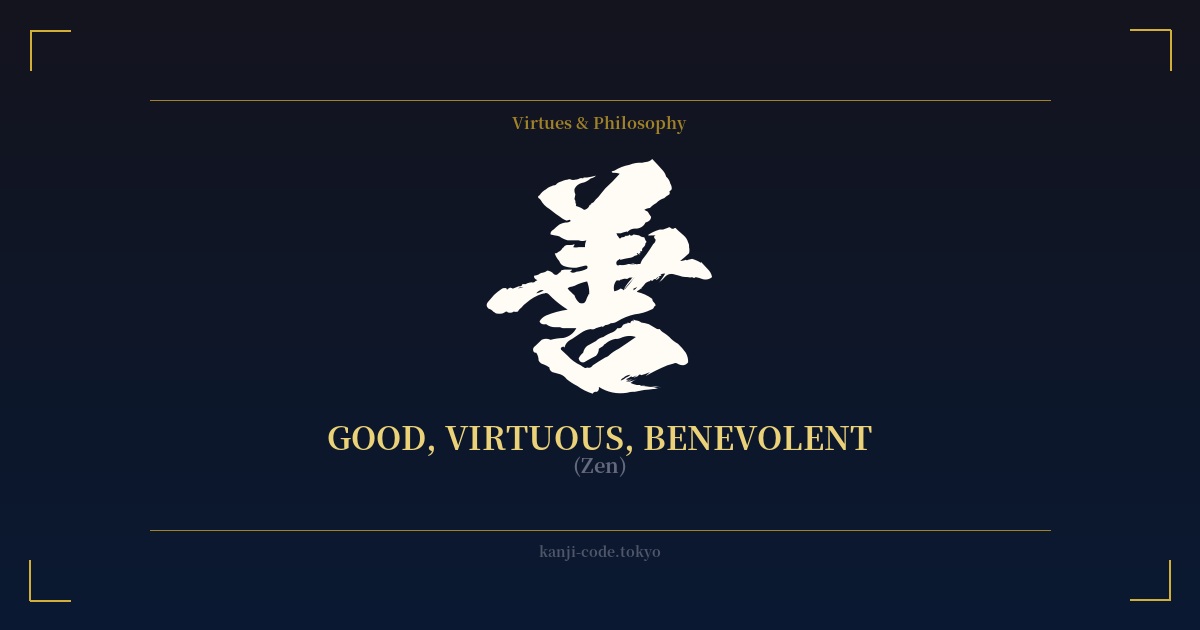
✍️ 善 (Zen) — Cultural Context
The kanji 善 (zen) is one of the most fundamental characters in East Asian thought, encapsulating a profound sense of moral and philosophical goodness that goes far beyond a simple compliment. Its meaning is deeply woven into the fabrics of Buddhism, Confucianism, and the Japanese cultural psyche.
Etymologically, the character offers a beautiful story. It is a pictograph combining 羊 (yáng/hitsuji), meaning 'sheep,' over 言 (gen/koto), meaning 'words' or 'speech.' In ancient Chinese culture, the sheep was not just livestock; it was a symbol of peace, gentleness, and auspiciousness, often used in sacred rituals. The combination suggests that 'goodness' is embodied by words that are as pure, gentle, and valuable as a sheep. It paints a picture of virtue as something spoken and enacted with a calm, benevolent spirit.
In Buddhism, 善 is a cornerstone concept. It represents wholesome, skillful, and karmically positive actions, thoughts, and intentions. It is the direct counterpart to 悪 (aku), or evil. The Buddhist path is often described as the practice of ceasing all evil, cultivating all good (諸悪莫作、衆善奉行 – shoakumakusa, shuzenbugyō), and purifying one's mind. Performing 'zenkō' (善行), or good deeds, is essential for accumulating positive karma and progressing toward enlightenment. It’s not about seeking reward, but about aligning oneself with the compassionate nature of the universe.
Confucianism also places immense value on 善. It is linked to the core virtues of 仁 (jin, benevolence) and 義 (gi, righteousness). For Confucius, a 'good' person was one who fulfilled their social roles with integrity, empathy, and a commitment to the well-being of the community. Goodness was an active, lifelong pursuit of self-cultivation and moral excellence.
In modern Japan, 善 appears in many essential words. 改善 (kaizen), meaning 'improvement' or 'betterment,' is a world-famous business philosophy centered on continuous, incremental good changes. 善意 (zen'i) means 'good will' or 'good intentions,' and the classic dichotomy of 善悪 (zen'aku) is used to discuss the nature of good and evil. As a tattoo, 善 is therefore not just an adjective; it is a declaration of a principle, a commitment to a path of virtue, kindness, and positive action.
🖌️ Font Styles for 善
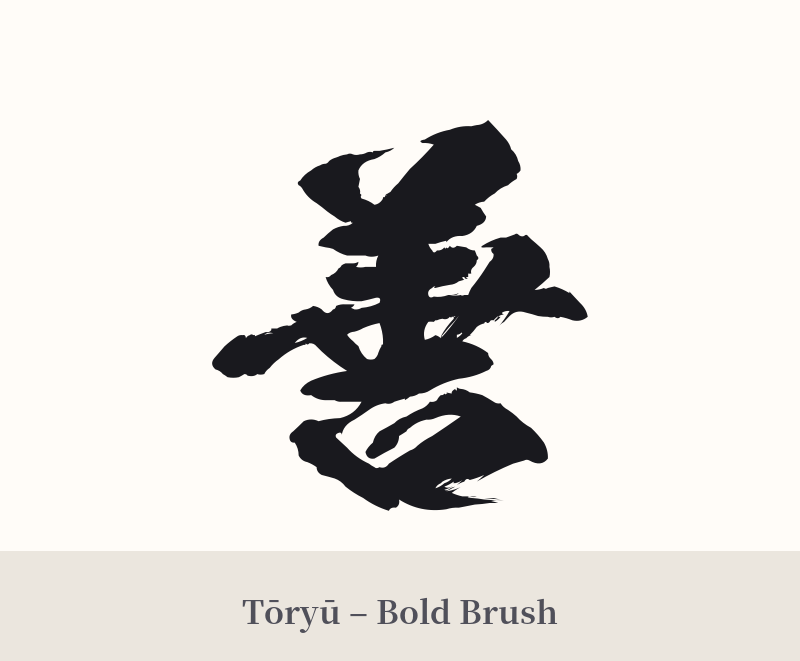
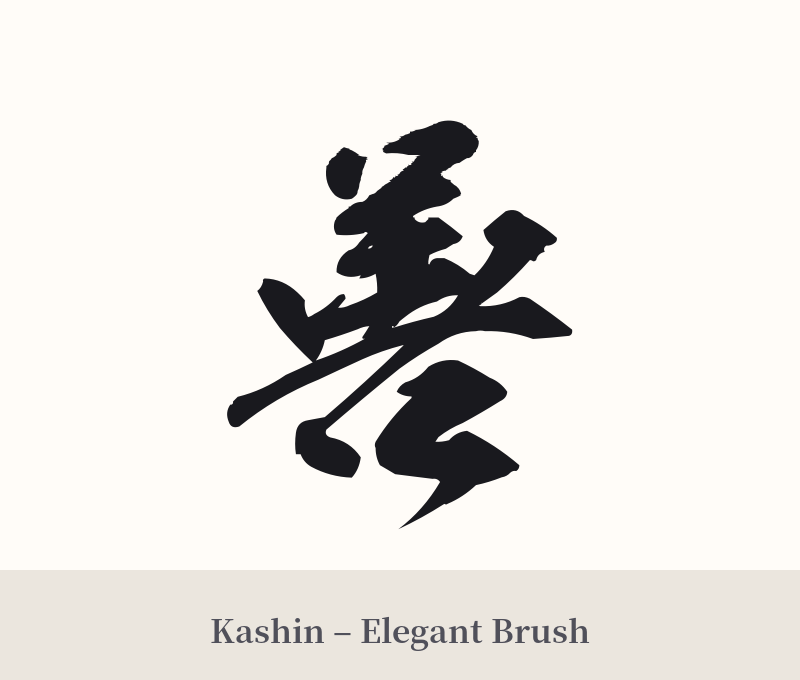
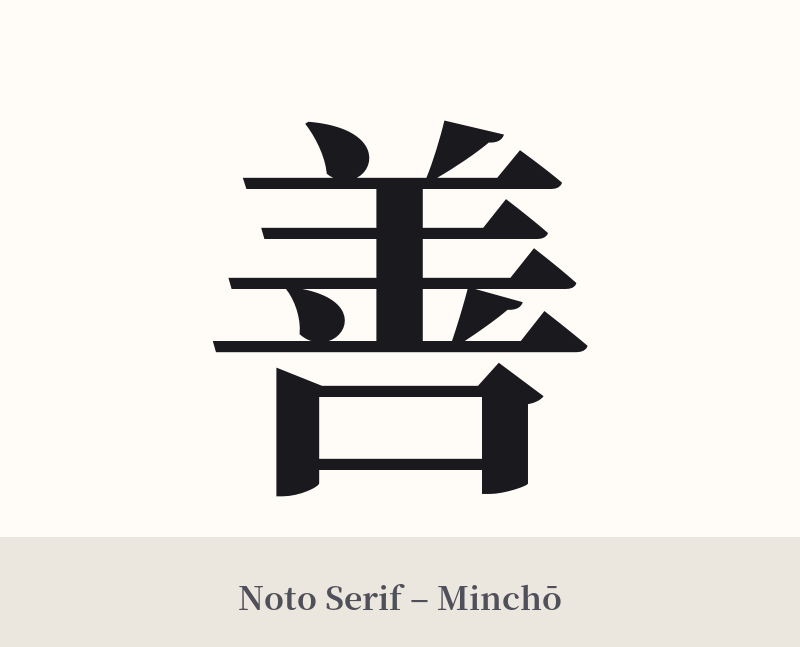
The same kanji can look dramatically different depending on the calligraphy style. Choose a font that matches the mood you want for your tattoo or design.
🎨 Tattoo Suitability
📐 Tattoo Design Guide
The kanji 善 offers wonderful versatility for a tattoo, allowing for both bold statements and subtle expressions of virtue.
For placement, consider areas that suit its balanced, squarish shape. The inner forearm, the back of the neck just below the hairline, or the center of the shoulder blades are excellent choices for a standalone piece. For a smaller, more personal tattoo, the wrist or behind the ear can work well.
Stylistically, you have several compelling options: – Kaisho (楷書): A standard, block-like script. This style gives the character a sense of stability, principle, and clarity. It's a powerful and unambiguous choice. – Gyōsho (行書): A semi-cursive script. This adds a touch of fluidity and personal expression, suggesting that virtue is not a rigid rule but a flowing, adaptable practice. – Sōsho (草書): A fully cursive, highly artistic script. This style is for those who want the meaning to be more abstract and personal, appearing almost like a sigil of intent. – Shodō Style: Ask the artist to incorporate stylistic elements of Japanese calligraphy, such as 'kasure' (かすれ), where the brush stroke appears to skip, or 'sumi' ink splatters. This adds authenticity and dynamism.
To enhance its meaning, 善 can be paired with other symbols. A lotus flower emerging from murky water is a classic Buddhist pairing, symbolizing purity and enlightenment achieved amidst worldly struggles. An Enso circle drawn around or behind the kanji can represent the totality and perfection of this virtuous state.

Comments