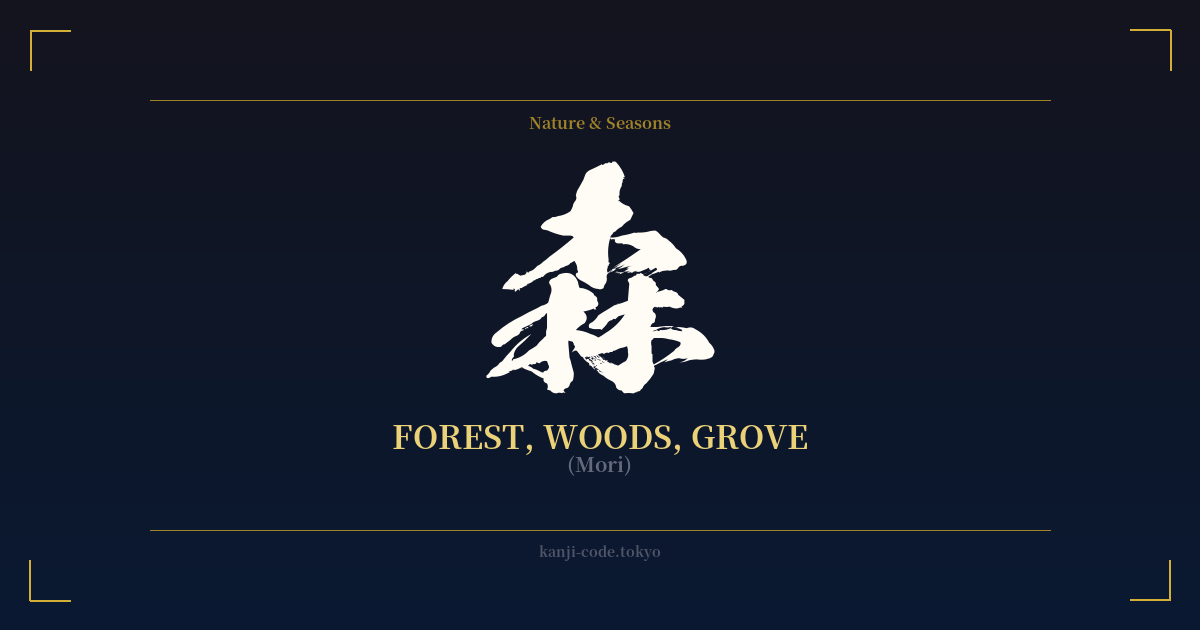
✍️ 森 (Mori) — Cultural Context
The kanji 森 (mori) is more than just a word for 'forest'; it is a window into the Japanese soul and its deep reverence for nature. Visually, its origin is brilliantly simple and profound. It is a pictograph composed of three 木 (ki) characters, meaning 'tree.' One tree is just a tree. Two trees, 林 (hayashi), suggest a grove or woods. But three trees, clustered together to form 森, evoke a dense, sprawling, primeval forest—a place of immense scale, life, and mystery.
This distinction between a 'hayashi' and a 'mori' is crucial. A 'hayashi' often implies a smaller, more managed, or human-accessible woodland, perhaps one planted for timber. A 'mori,' on the other hand, carries a sense of the wild, the ancient, and the sacred. It is the deep, dark woods of folklore, a world unto itself.
In the indigenous Shinto faith, forests are not merely scenery but sacred spaces. Many shrines are nestled within or preceded by a 'chinju no mori' (鎮守の森), a sacred grove believed to be the dwelling place of kami (deities or spirits). To enter a 'mori' was to enter the realm of the divine, a place for purification, reflection, and connection with the spiritual world. These forests were protected, their trees and life held as inviolable, embodying a harmony between humanity and nature.
This ancient reverence has found a modern voice in the practice of 'shinrin-yoku' (森林浴), or 'forest bathing.' Developed in the 1980s, it is a scientifically recognized form of therapy that involves immersing oneself in a forest environment to reduce stress and improve well-being. While the term is modern, the concept is ancient, tapping into the innate Japanese cultural understanding of the forest as a place of healing and restoration.
From the enchanting forests in Hayao Miyazaki's films like 'My Neighbor Totoro' and 'Princess Mononoke' to the mysterious woods in the novels of Haruki Murakami, the 'mori' continues to be a powerful symbol in Japanese art and literature. It represents a space of refuge, transformation, danger, and profound natural beauty, capturing the complex relationship between civilization and the wild.
🖌️ Font Styles for 森
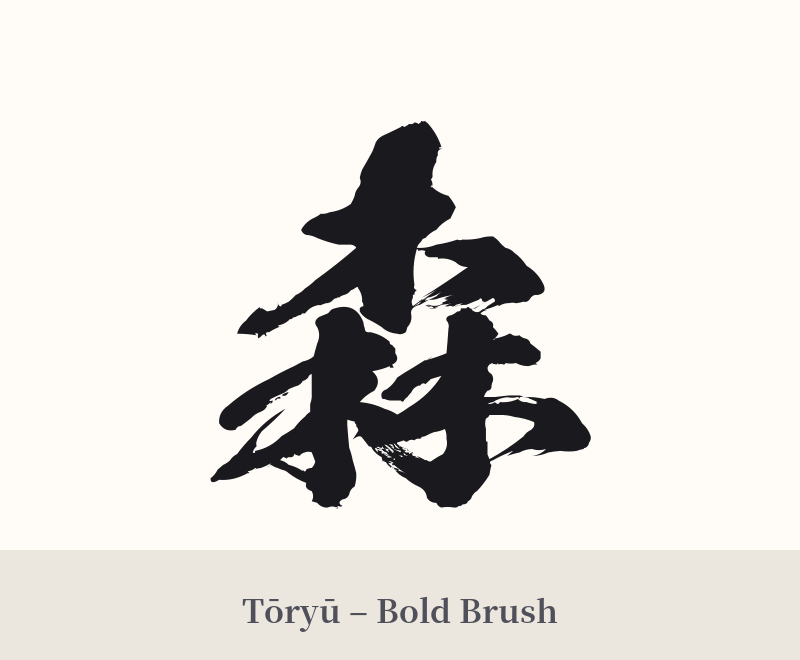
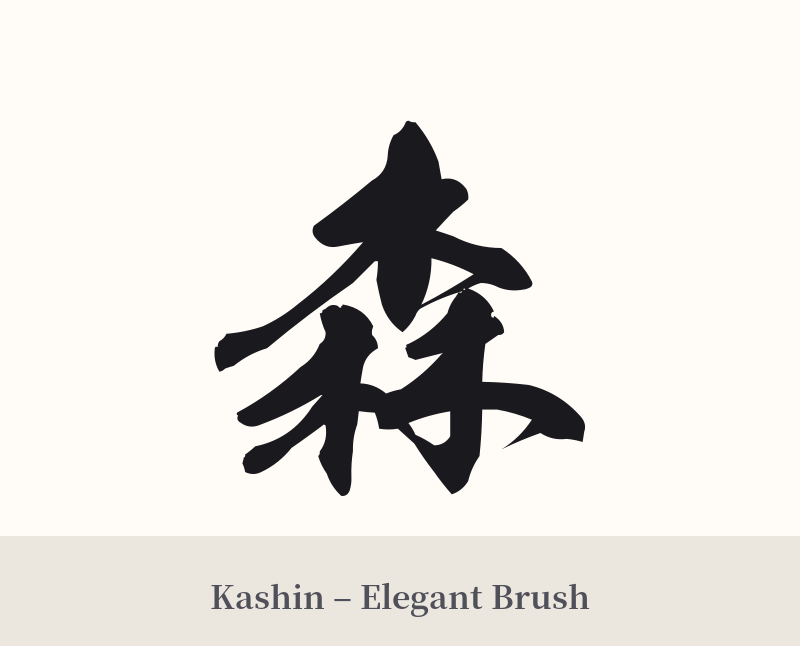
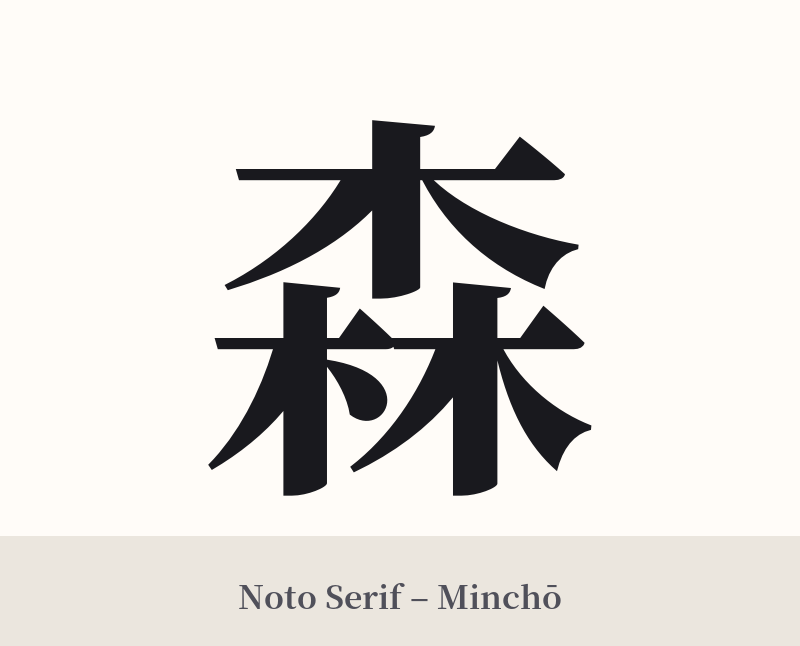
The same kanji can look dramatically different depending on the calligraphy style. Choose a font that matches the mood you want for your tattoo or design.
🎨 Tattoo Suitability
📐 Tattoo Design Guide
The kanji 森 is visually balanced and lends itself to a variety of tattoo designs.
– Placement: Its squarish shape works well on the forearm, calf, back of the neck, or centered between the shoulder blades. As a single, strong symbol, it can anchor a design or stand powerfully alone.
– Font Style: A traditional calligraphy or shodō style with bold, expressive brushstrokes can emphasize the organic, wild nature of the forest. Conversely, a clean, sharp Mincho or modern sans-serif font can give it a more stylized, contemporary feel.
– Visual Tips: Consider integrating the character into a larger scene. The three 'tree' elements of the kanji could bleed into an illustration of an actual forest. It can also be paired with other natural elements like a moon, a river, or animals like a fox (kitsune) or wolf (ōkami) to add another layer of meaning.
Comments