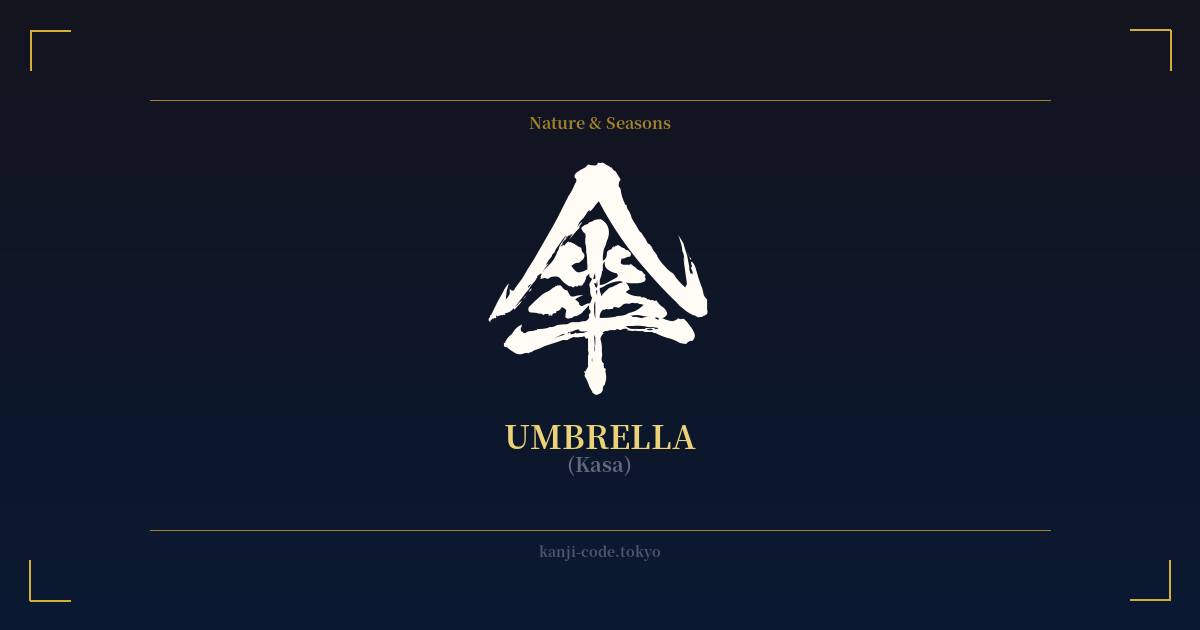
✍️ 傘 (Kasa) — Cultural Context
The kanji 傘 (kasa) is a beautiful example of a pictograph, a character that looks like the object it represents. At the top, a broad canopy provides cover. Beneath it, the character for 'person' (人) appears four times, huddled together for shelter. From its very structure, 傘 tells a story of protection, community, and refuge from the elements.
In Japan, the umbrella is more than just a practical tool for rainy days; it's an object of cultural and artistic significance. The traditional Japanese umbrella, or `wagasa` (和傘), is a masterpiece of craftsmanship. Made from bamboo, wood, and oiled `washi` paper, these umbrellas are known for their intricate designs, vibrant colors, and the gentle sound they make in the rain. They are not merely for protection from precipitation but are also used as parasols (`higasa`) against the sun and feature prominently in traditional arts like Kabuki theater, tea ceremonies, and festivals.
The `wagasa` is a powerful symbol in Japanese aesthetics. Its presence in a scene, whether in a painting or real life, evokes a sense of elegance, nostalgia, and `mono no aware`—a gentle sadness for the transient nature of things. This is perhaps most famously captured in countless `ukiyo-e` woodblock prints from artists like Hiroshige and Utamaro, where figures with umbrellas traverse snowy landscapes or stand in sudden downpours, their umbrellas adding a splash of color and a focal point of human vulnerability against the power of nature.
The umbrella also holds a place in Japanese folklore. The `Karakasa-obake` (傘おばけ) is a well-known `yōkai` (supernatural spirit), an old umbrella that comes to life after 100 years, sprouting a single eye and a long tongue, and hopping about on one leg. While mischievous, it's one of the more comical and less menacing figures in the pantheon of Japanese spirits.
Even in modern Japan, the umbrella carries social significance. The ubiquitous clear vinyl umbrellas, `biniiru gasa` (ビニール傘), are a hallmark of contemporary urban life. They are cheap, communal, and almost disposable, reflecting a society that values convenience and public order. A particularly romantic image is the `ai-ai gasa` (相合傘), which translates to 'sharing an umbrella'. It's a classic trope in Japanese media and a sweet, subtle symbol of intimacy and budding romance between two people.
🖌️ Font Styles for 傘
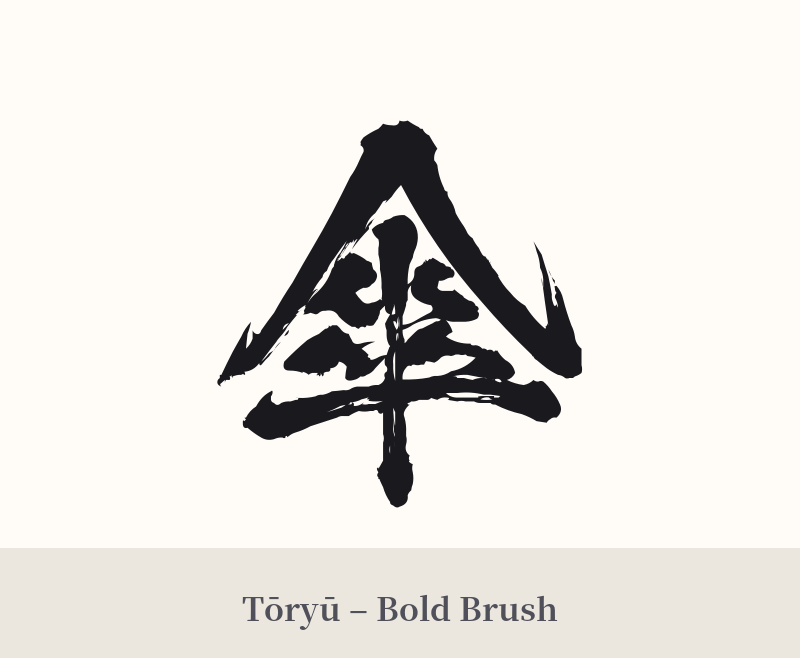
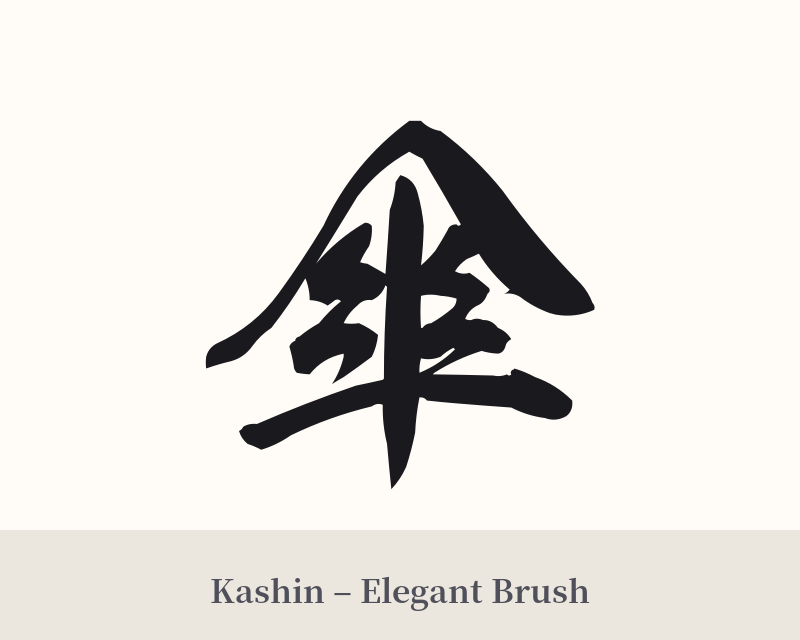
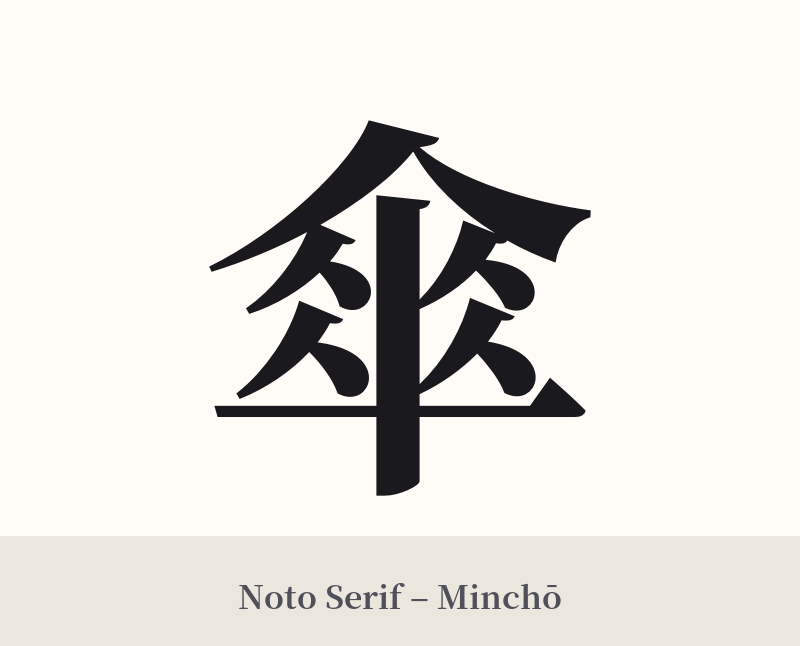
The same kanji can look dramatically different depending on the calligraphy style. Choose a font that matches the mood you want for your tattoo or design.
🎨 Tattoo Suitability
📐 Tattoo Design Guide
The kanji 傘 is visually striking and offers a lot of creative flexibility for a tattoo design.
– Placement: Its vertical and symmetrical shape works well on the forearm, calf, or along the spine. It can also be a beautiful piece on the back of the shoulder, where its 'canopy' can curve with the body.
– Style: For a traditional look, a bold, dynamic calligraphy (shodō) style is perfect. The brush strokes can mimic the flow of rain or the elegant structure of the umbrella itself. For a more illustrative approach, consider embedding the kanji within a larger image of a traditional wagasa, perhaps with rain or cherry blossom petals falling around it.
– Pairing: 傘 pairs naturally with other weather-related kanji like 雨 (rain) or 雪 (snow) to create a scene. It can also be combined with elements that represent what is being protected, such as a flower or another symbol important to the wearer.
Comments