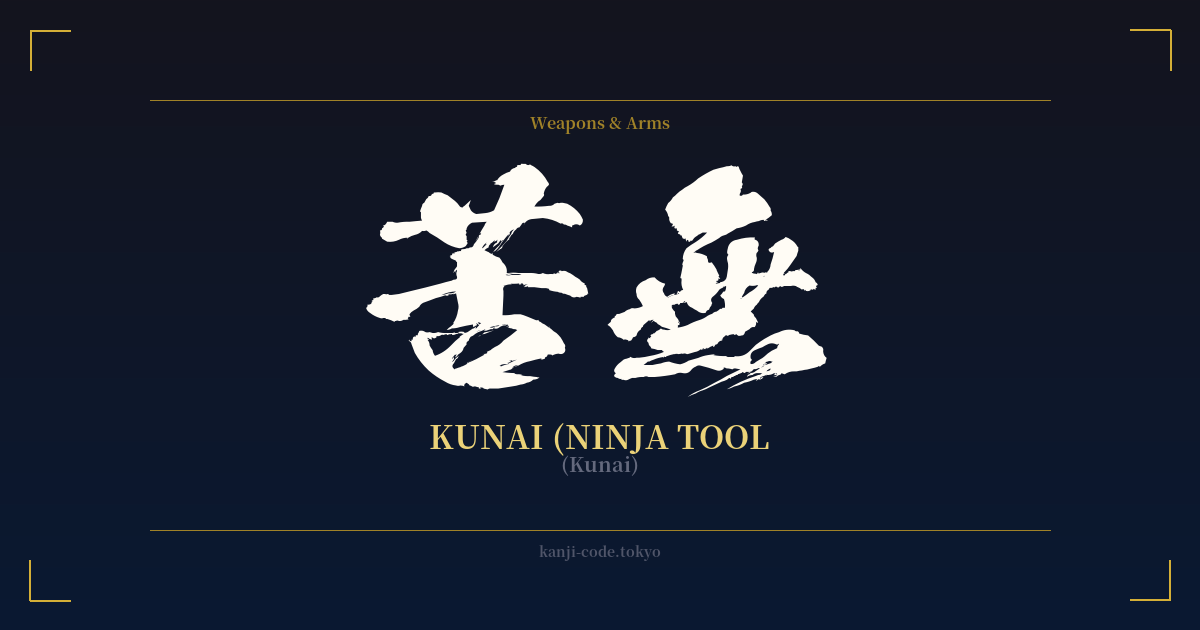
✍️ 苦無 (Kunai) — Cultural Context
In the modern imagination, the 苦無 (Kunai) is an iconic symbol of the ninja, a sleek, dagger-like throwing weapon hurled from the shadows. Popularized by global phenomena like the Naruto anime and manga series, the kunai is often depicted as the shinobi's go-to projectile, second only to the shuriken. This image, however, is largely a product of fiction, a romanticized evolution of a far more humble and practical tool.
Historically, the kunai was not a weapon at all. It began its life as a simple farming and gardening tool, akin to a trowel. Forged from iron, its leaf-shaped blade and ringed pommel were designed for digging, prying, and general manual labor. It was a versatile, everyday object found in the hands of masons, carpenters, and farmers throughout feudal Japan.
The genius of the shinobi, or ninja, was their ability to weaponize the mundane. A person carrying a sword was immediately identifiable as a warrior, drawing unwanted attention. But a figure dressed as a peasant or monk carrying a kunai would be completely inconspicuous. This allowed the ninja to carry a highly effective tool for infiltration without arousing suspicion.
For a shinobi, the kunai's primary purpose remained utilitarian. It was a master key for scaling walls, prying open doors, digging holes, and gouging wood. The ring at the end of the handle was perfect for attaching a rope, turning it into a grappling hook or an anchor. When combat was unavoidable, it served as a formidable close-quarters weapon for stabbing and parrying, its thick blade capable of blocking a sword strike. Its use as a throwing knife, while possible, was likely a last resort; a skilled warrior would be reluctant to throw away such a valuable multi-tool.
The kanji themselves, 苦無, are a point of common confusion. While they literally translate to 'suffering' and 'nothingness', this is a case of ateji, where kanji are chosen for their phonetic value rather than their meaning. The word 'kunai' likely predates this spelling, and the characters were simply applied to match the sound. Thus, the word does not carry the philosophical weight of 'no suffering,' but simply names the tool.
🖌️ Font Styles for 苦無
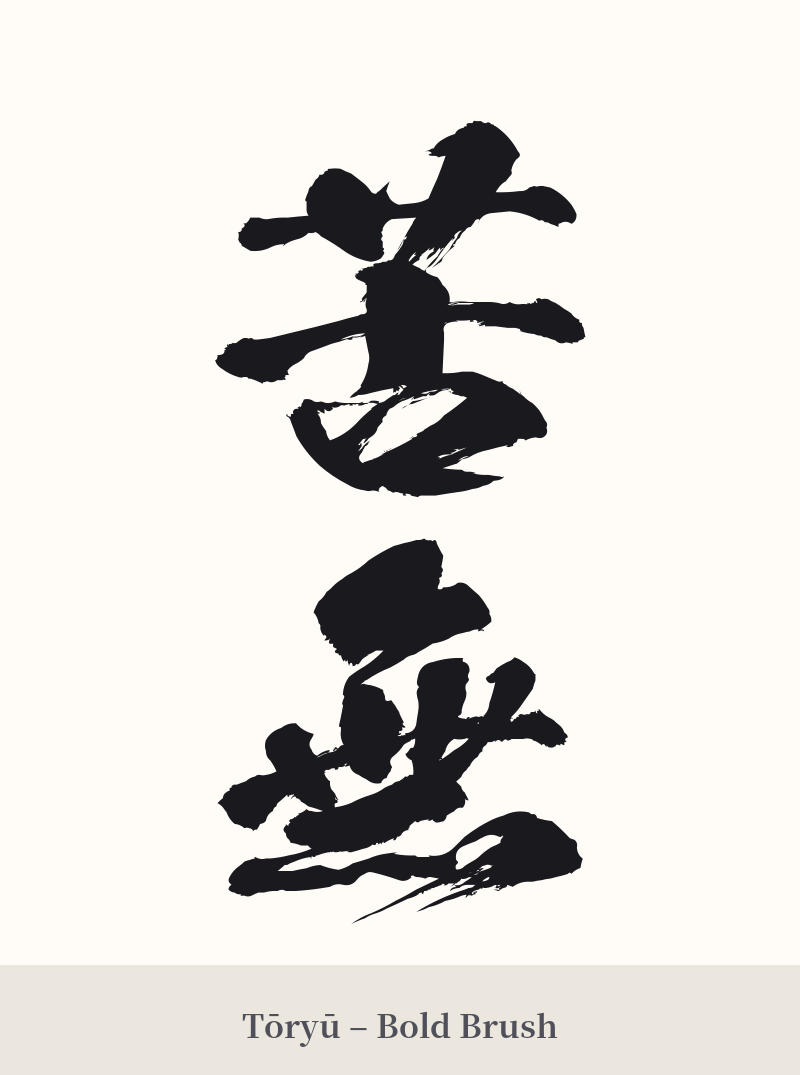
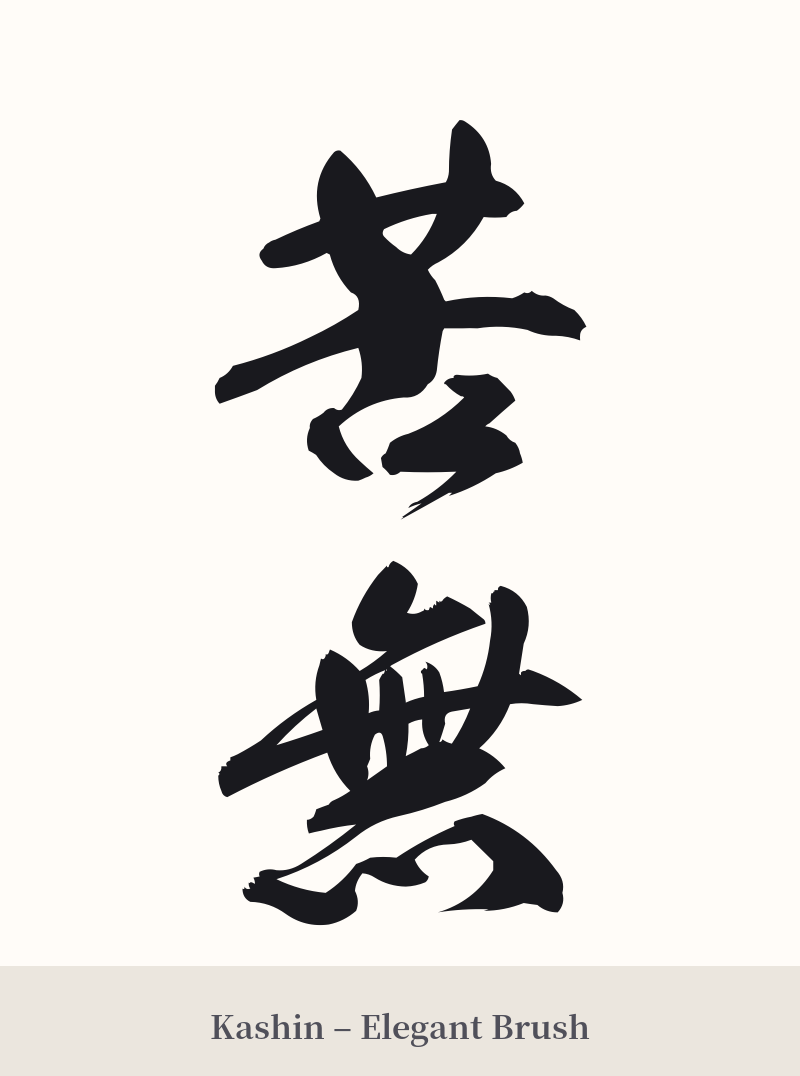
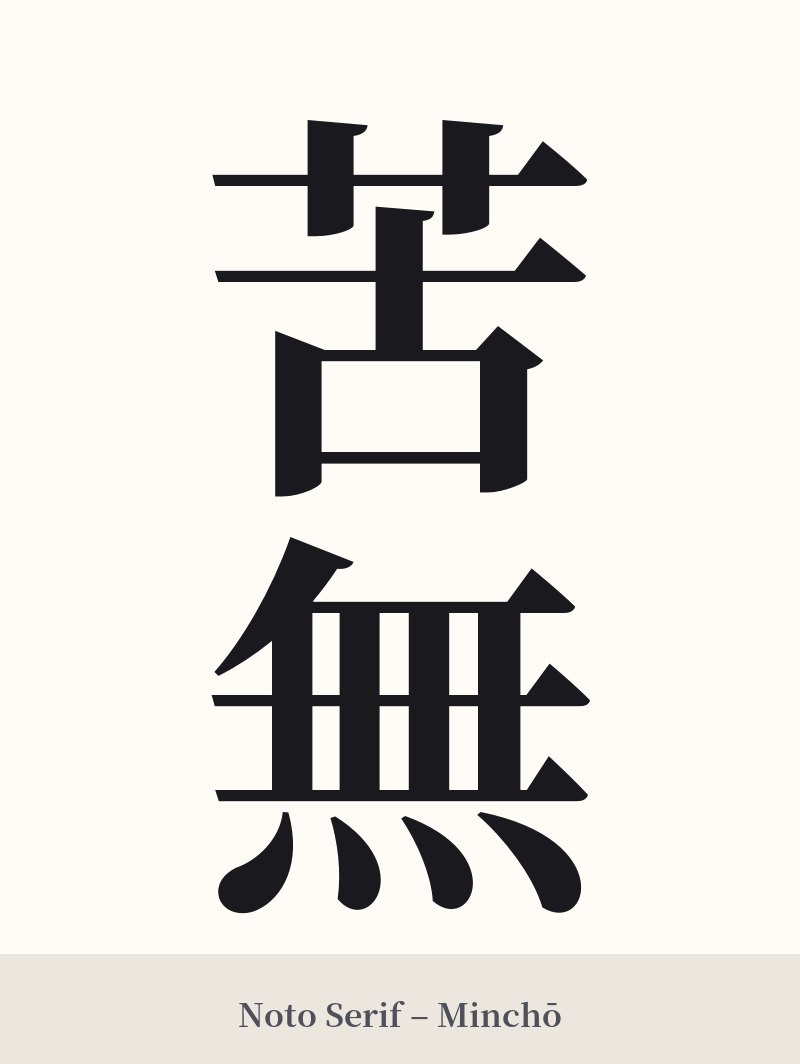
The same kanji can look dramatically different depending on the calligraphy style. Choose a font that matches the mood you want for your tattoo or design.
🎨 Tattoo Suitability
📐 Tattoo Design Guide
A 苦無 tattoo is a statement piece for those connected to ninja culture. Its design can be approached in several compelling ways.
– Font Style: For a sharp, aggressive look, a blocky Mincho or Kaisho script works well, mimicking the clean, forged lines of a blade. For a more dynamic and raw feel, a wild, splashy calligraphy (sōsho) style can represent the swift, chaotic movement of a ninja in action.
– Placement: Vertical placement is most natural for these two characters. The forearm, calf, or along the bicep are all excellent choices that provide a long, flat canvas. A placement down the spine can also create a dramatic, concealed-weapon effect.
– Visual Elements: Consider pairing the kanji with an illustration of the kunai tool itself. You could have the characters written on the blade or have a stylized kunai integrated into the calligraphy. Wrapping the kanji in the iconic handle wrap from popular anime, or adding a shuriken or a specific clan symbol, can add a layer of personal meaning and visual interest.
Comments