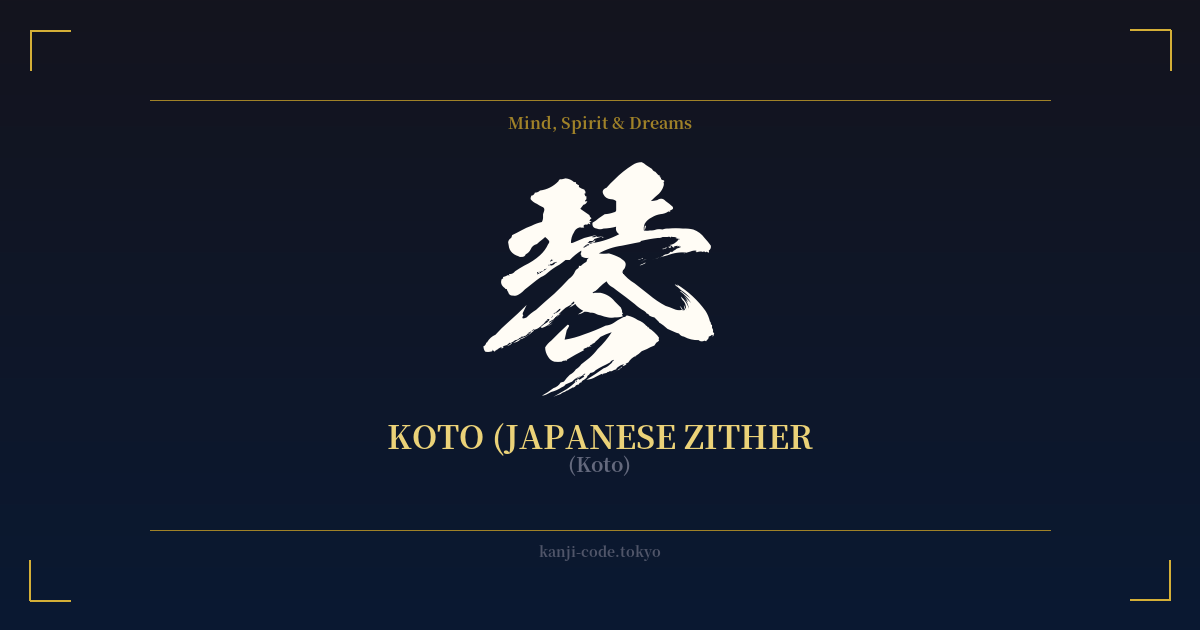
✍️ 琴 (Koto) — Cultural Context
The kanji 琴 (koto) is more than just a character; it is a vessel for centuries of Japanese art, music, and aristocratic refinement. It specifically refers to the Koto, the national instrument of Japan, a long, thirteen-stringed zither renowned for its delicate and evocative sound. The visual form of the kanji itself hints at its meaning. The top part, 玨, is a pictograph of two jade ornaments strung together, which beautifully mirrors the bridges (ji) that are moved to tune the koto's strings. It evokes a sense of preciousness and artistry.
The koto instrument arrived in Japan from China during the Nara period (710-794) as part of the gagaku court music ensemble. Initially an instrument of the imperial court and nobility, its mastery was a sign of high culture and education. During the Heian period (794-1185), the koto became deeply intertwined with the lives of aristocratic women, a symbol of their grace and sophisticated upbringing. It is famously featured in Murasaki Shikibu's literary masterpiece, "The Tale of Genji," where characters' personalities are often revealed through their skill and style of playing the koto.
Over the centuries, the koto evolved from an ensemble instrument to a solo one, with distinct schools of playing developing during the Edo period (1603-1868). The two most prominent schools, Yamada-ryū and Ikuta-ryū, established the foundations of modern koto performance. The sound of the koto is often described with poetic imagery, likened to the flow of water, the whisper of wind through pine trees, or even the mythical cry of a dragon. Its music can be both serene and meditative or powerful and dramatic, capable of expressing a wide spectrum of human emotion.
Today, the 琴 character represents not just the instrument but the entire aesthetic world associated with it: discipline, beauty, tradition, and a uniquely Japanese sense of elegance (miyabi). While deeply rooted in history, the koto is not a relic. Modern composers and musicians continue to push its boundaries, incorporating it into jazz, pop, and contemporary classical music, ensuring its resonant voice continues to captivate audiences worldwide. Choosing the kanji 琴 is an embrace of this rich artistic legacy.
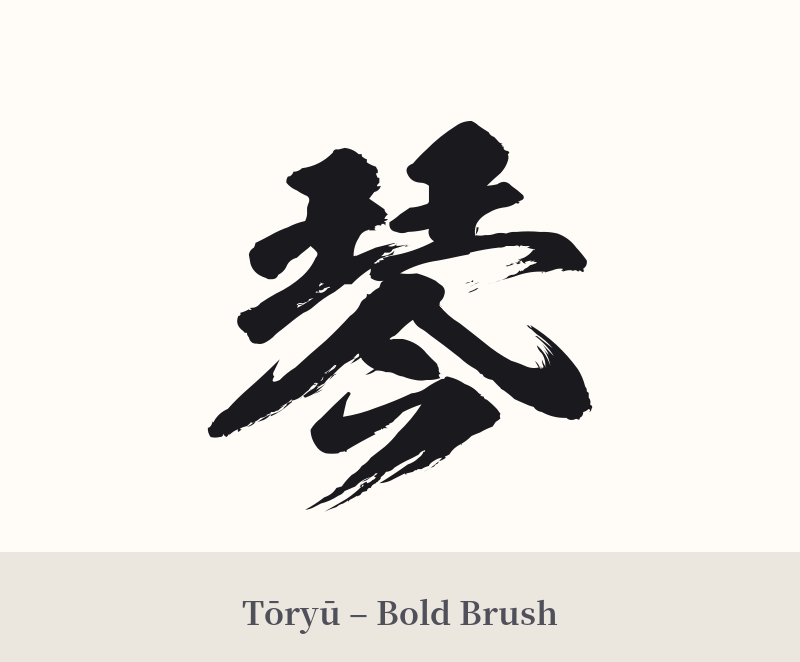
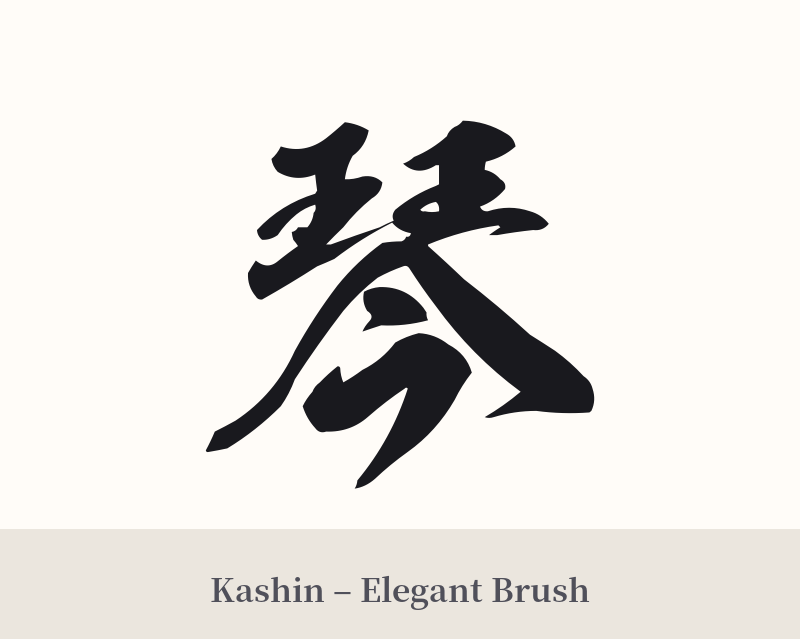
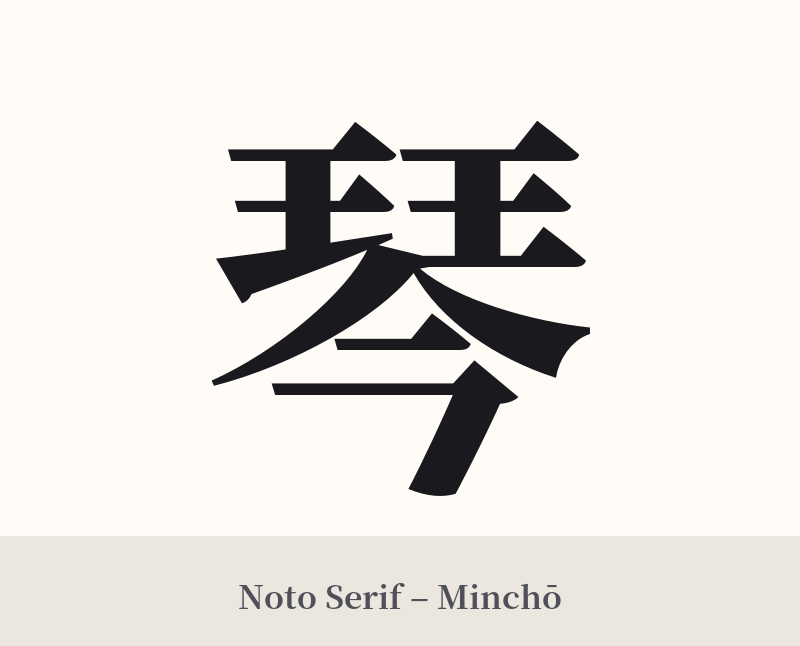
🖌️ Font Styles for 琴
The same kanji can look dramatically different depending on the calligraphy style. Choose a font that matches the mood you want for your tattoo or design.
🎨 Tattoo Suitability
📐 Tattoo Design Guide
The kanji 琴 has an elegant, vertically-oriented structure that lends itself well to specific placements and styles.
– Placement: Consider areas that emphasize its length and grace, such as the inner forearm, the calf, or running down the spine. For a smaller, more subtle design, the wrist or behind the ear can also work, but be mindful that the details might get lost if too small.
– Font Style: A flowing, semi-cursive calligraphy style (gyōsho) beautifully captures the artistic and musical nature of the kanji. For a more formal and dignified look, a crisp Mincho (serif) font is an excellent choice. A bold, modern gothic font can give it a contemporary edge.
– Visual Complements: This kanji pairs wonderfully with other traditional Japanese motifs. Consider incorporating delicate cherry blossom petals drifting around it, a subtle wave pattern at its base to represent the flowing nature of music, or placing it against a crescent moon to evoke a sense of serene, nighttime elegance.

Comments