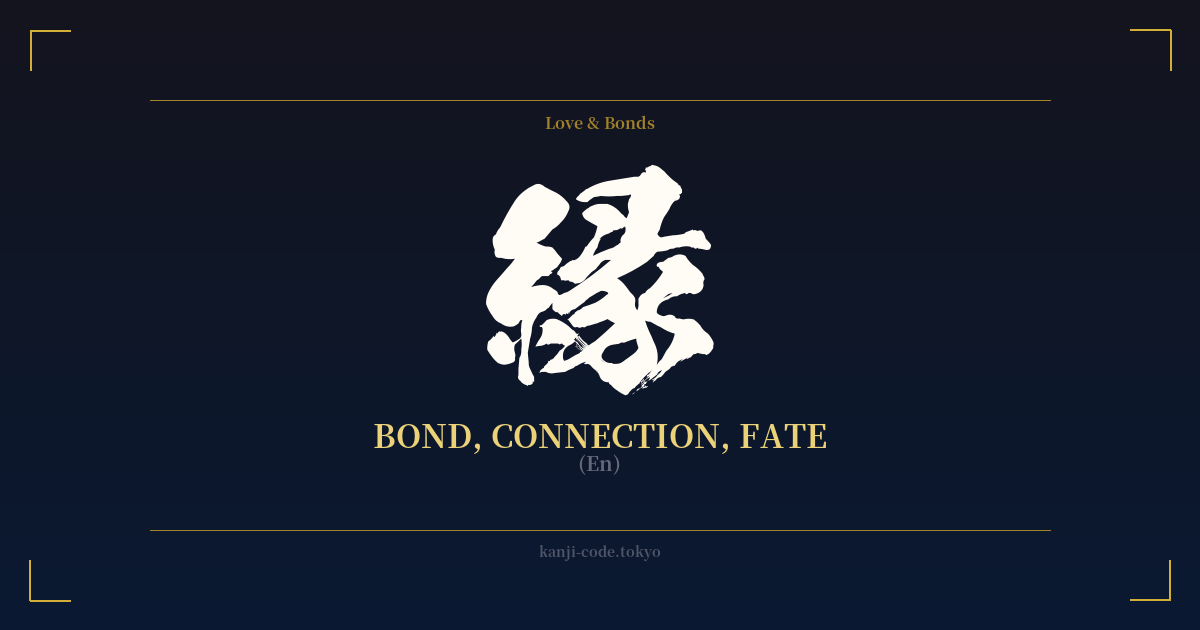
✍️ 縁 (En) — Cultural Context
The kanji 縁 (En) is one of the most profound and beautiful concepts in Japanese culture, carrying a weight far beyond its simple English translations of 'bond' or 'connection.' At its heart, En represents the invisible, fateful ties that connect people, places, and events across time. It’s the serendipitous encounter that changes your life, the chance meeting with a future partner, or the inexplicable feeling of connection to a place you've never been before.
This concept is deeply rooted in Buddhist philosophy, particularly the idea of dependent origination—the belief that all phenomena are interconnected and arise in relation to one another. Nothing exists in isolation. This spiritual underpinning gives En a sense of destiny and karma, suggesting that our current relationships are the result of actions and connections from past lives.
A famous Japanese proverb perfectly captures this sentiment: 「袖振り合うも多生の縁」 (sode furi-au mo tashō no en). It translates to, 'Even to brush sleeves with a stranger is a connection from a past life.' This illustrates the belief that every interaction, no matter how fleeting or insignificant it may seem, is part of a larger cosmic web of fate.
In modern Japan, En is far from just an abstract philosophical idea. It's a living, breathing part of the culture. The term 縁結び (en-musubi), literally 'tying of fates,' refers to matchmaking and the prayer for a good romantic partner, with many shrines dedicated to this specific purpose. But En is not limited to romance. It can describe the bond between family members, the camaraderie of a team, the connection a student feels with a mentor, or the good fortune of landing the perfect job. It’s the 'good connection' that leads to a positive outcome.
The character itself visually reinforces this meaning. The radical on the left, 糸 (ito), means 'thread,' symbolizing the threads of fate that weave through our lives, connecting everything together. En, therefore, is not a bond you create through sheer will, but a fateful thread you are fortunate enough to discover.
🖌️ Font Styles for 縁
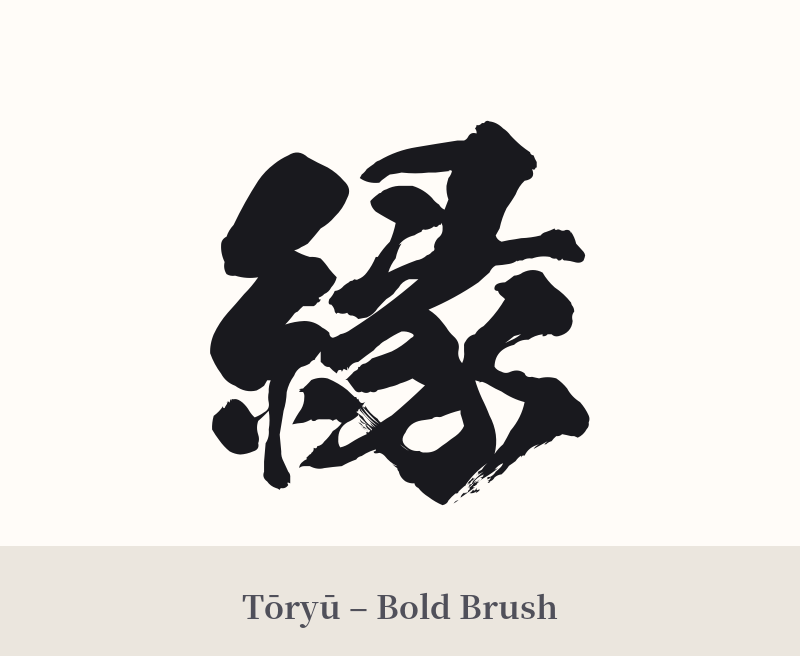
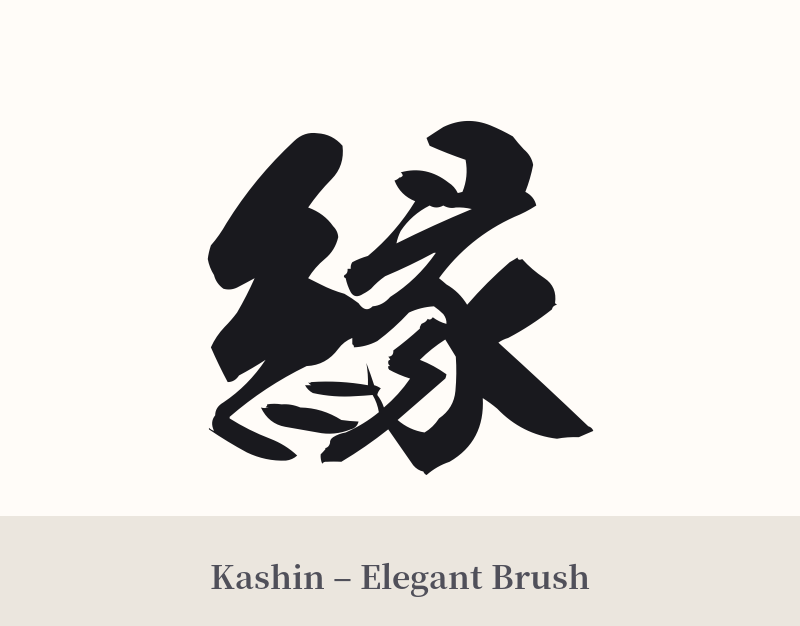
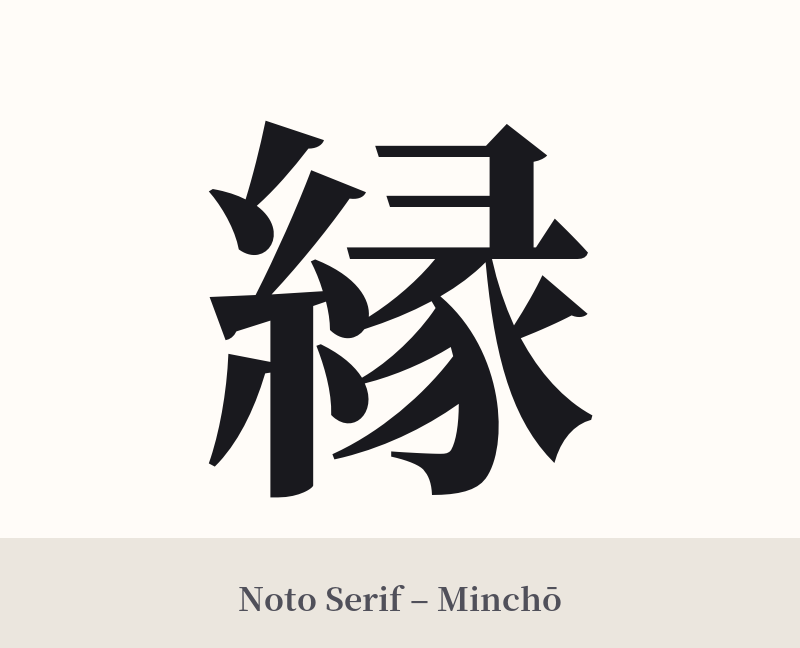
The same kanji can look dramatically different depending on the calligraphy style. Choose a font that matches the mood you want for your tattoo or design.
🎨 Tattoo Suitability
📐 Tattoo Design Guide
The kanji 縁 (En) offers wonderful versatility for a tattoo design, blending deep meaning with an elegant form.
– Placement Suggestions: For a subtle yet meaningful placement, consider the inner wrist, the back of the neck, or just behind the ear. For a more prominent piece, the forearm, shoulder blade, or calf allows for a larger, more detailed rendering.
– Font Style Recommendations: A flowing, semi-cursive calligraphy style (gyōsho) beautifully captures the organic and fateful nature of En. For a more modern and sharp look, a crisp Mincho (serif) or Gothic (sans-serif) font provides a strong, clear statement.
– Visual Embellishments: Consider weaving the kanji into a larger design. It pairs exceptionally well with the 'red string of fate' (運命の赤い糸, unmei no akai ito) motif. Other complementary elements include cherry blossoms to symbolize the beauty of transient encounters, or water ripples to represent how one connection can spread and influence many others.
Comments