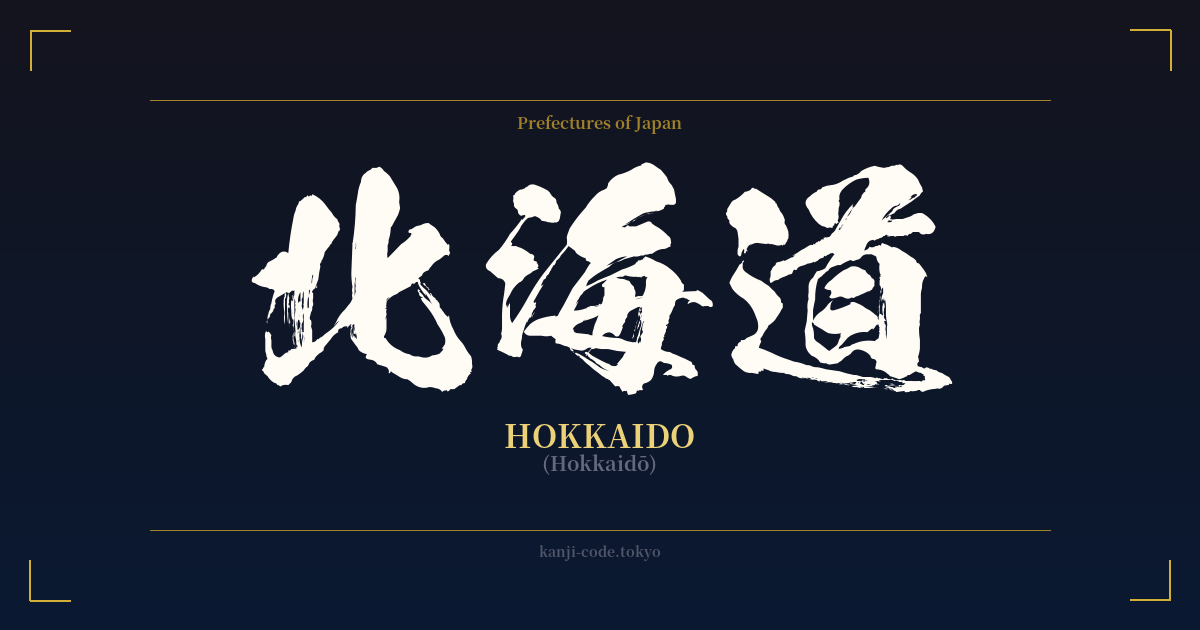
✍️ 北海道 (Hokkaidō) — Cultural Context
北海道 (Hokkaidō) is more than just a name on a map; it's a symbol of Japan's great northern frontier, a land of vast wilderness, harsh winters, and unparalleled natural beauty. The name itself tells a story of exploration, identity, and the modernization of Japan.
Before the Meiji Restoration in the 19th century, the island was known as 蝦夷地 (Ezochi), meaning "Land of the Ezo," a term referring to the indigenous Ainu people. As the Japanese government sought to solidify its claim and integrate the island into the nation, a new name was required. The task fell to the explorer Matsuura Takeshirō, a man who had traveled extensively throughout the region and deeply respected the Ainu culture.
Inspired by an Ainu elder, Matsuura proposed the name "Hokkaidō." The name was a clever fusion of tradition and a new national vision. It was modeled on the ancient Gokishichidō (five provinces, seven circuits) system of administrative divisions in Japan. While most of these old "circuits" (dō) had fallen out of use, the name resurrected the concept for this new territory.
The characters break down as 北 (hoku, north), 海 (kai, sea), and 道 (dō, circuit). Literally, it means the "North Sea Circuit." This name perfectly captures its geography—a large island surrounded by northern seas—while also formally classifying it as a major administrative region of Japan. Today, Hokkaido is the only prefecture that ends with -dō, setting it apart from the prefectures ending in -ken or -fu, a constant reminder of its unique history and scale.
In the modern Japanese imagination, Hokkaido represents an escape. It's a land of epic landscapes, from the lavender fields of Furano to the snow-covered peaks of Niseko. It is synonymous with delicious food—fresh seafood, rich ramen, and high-quality dairy products. The annual Sapporo Snow Festival draws millions, showcasing incredible ice and snow sculptures that transform the city into a winter wonderland. This connection to snow, nature, and abundance makes 北海道 a powerful evocation of a specific, beloved part of the Japanese identity.
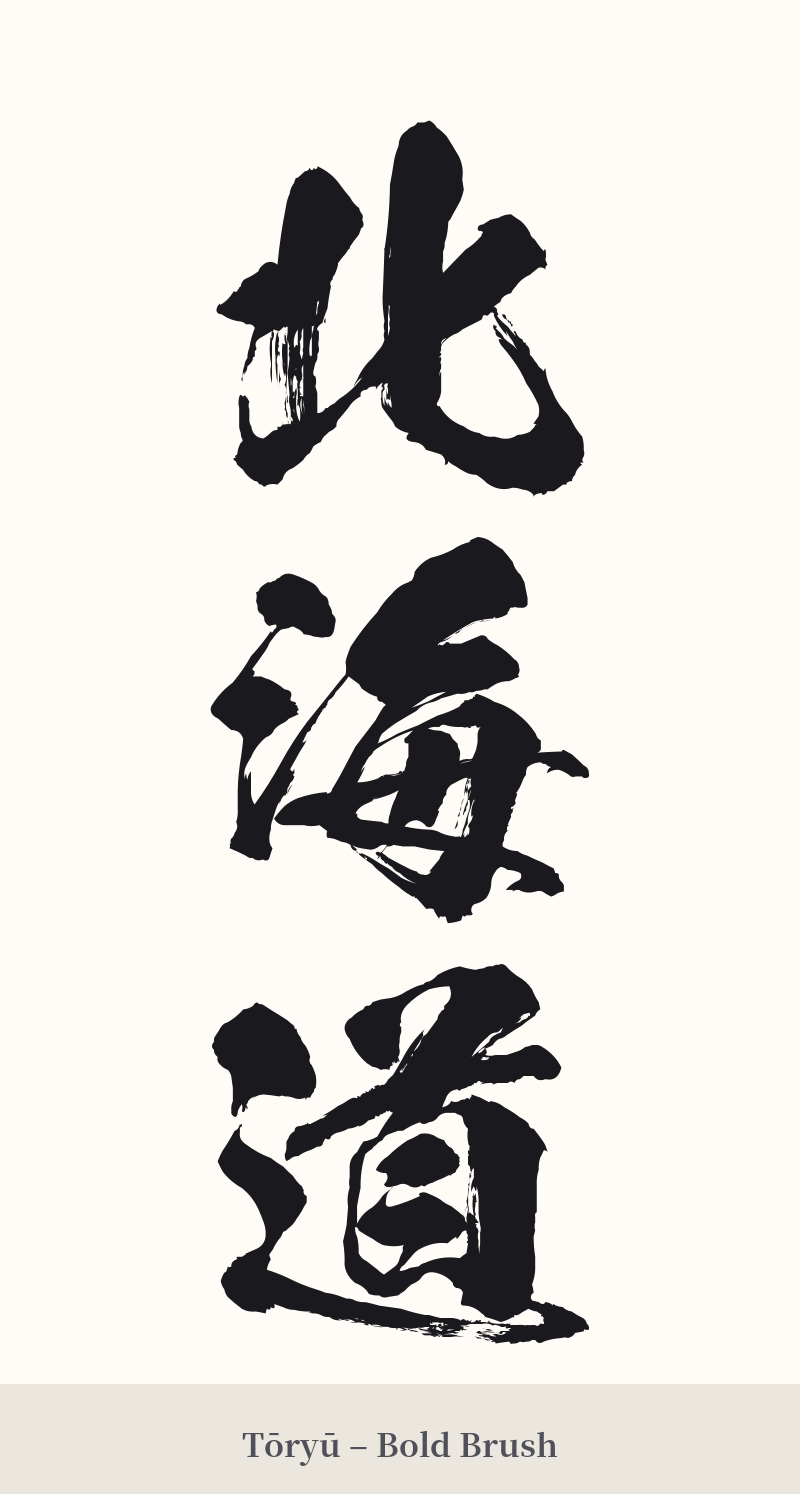
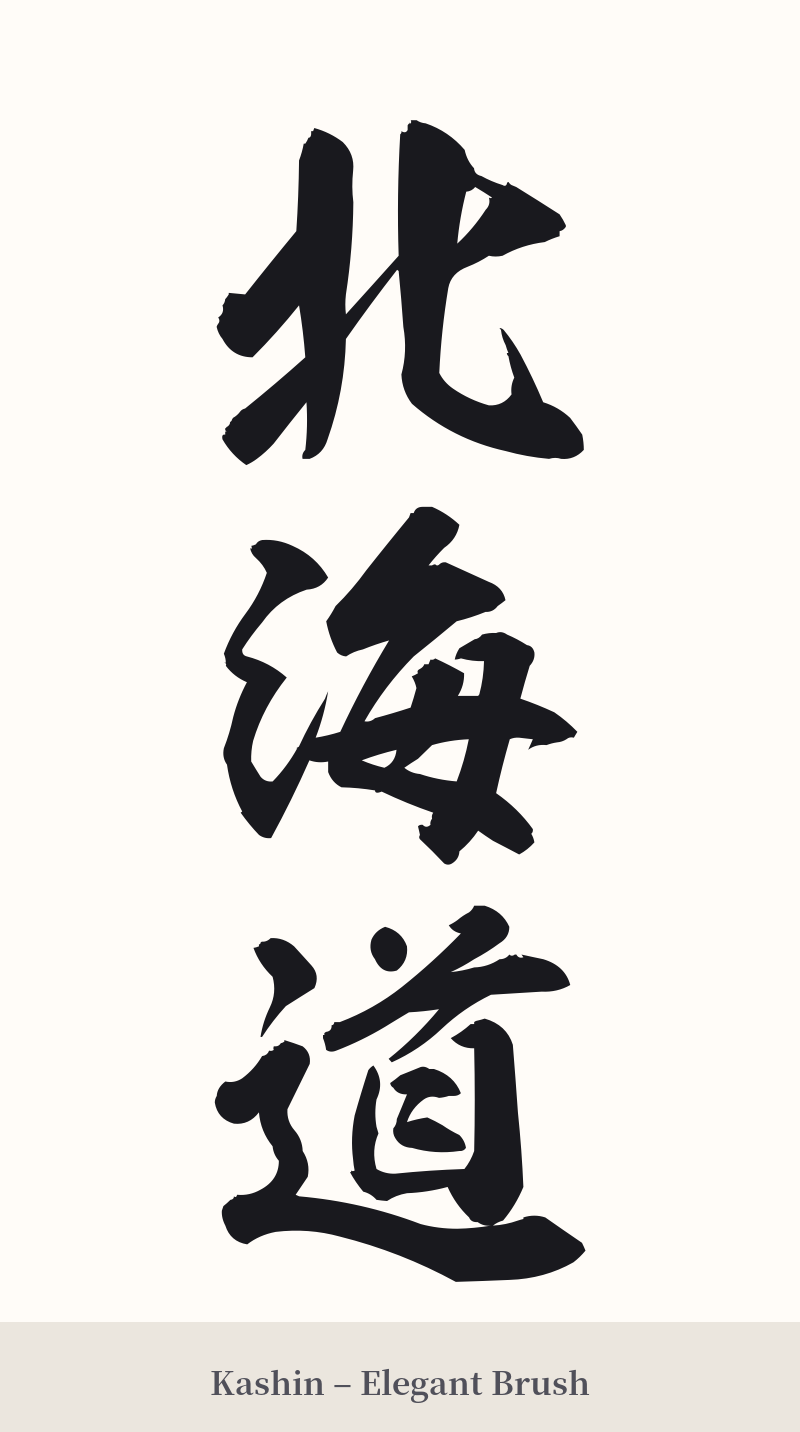
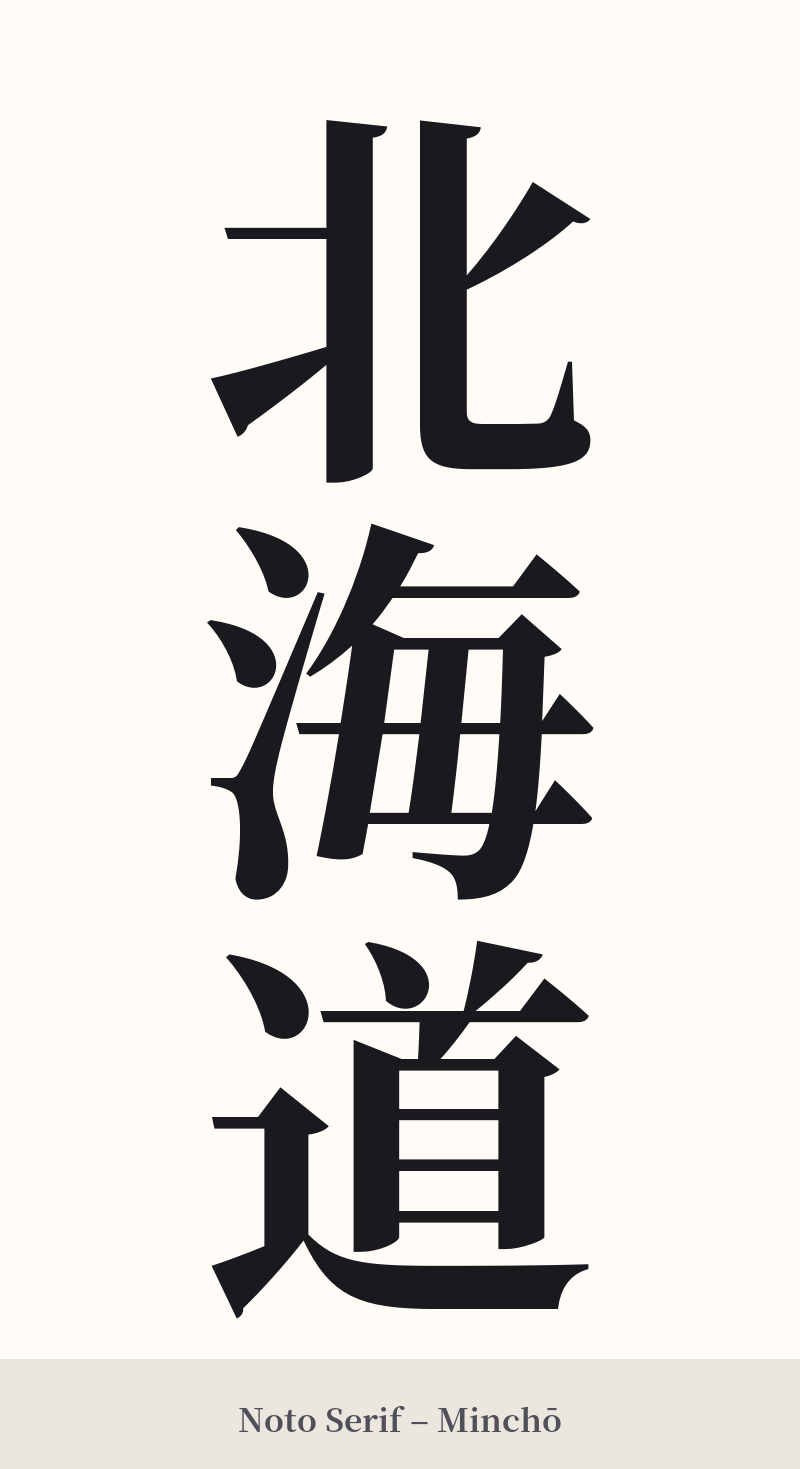
🖌️ Font Styles for 北海道
The same kanji can look dramatically different depending on the calligraphy style. Choose a font that matches the mood you want for your tattoo or design.
🎨 Tattoo Suitability
📐 Tattoo Design Guide
The three-character composition of 北海道 offers great versatility for a tattoo design.
– Placement: A vertical orientation is classic and works beautifully along the forearm, bicep, calf, or spine. A horizontal layout is also strong and fits well across the chest, upper back, or below the collarbone.
– Style: For a rugged, natural feel, consider a dynamic calligraphy style like gyōsho (semi-cursive) or sōsho (cursive) to mimic the wildness of Hokkaido's landscapes. For a cleaner, more modern look that reflects its planned cities like Sapporo, a crisp Mincho or Kaisho (block) font would be excellent.
– Visuals: Consider pairing the kanji with imagery associated with Hokkaido. Subtle additions like a few falling snowflakes, a silhouette of a bear (a symbol of the island), outlines of mountains, or stylized waves from the "海" (sea) character can add a personal layer of meaning and enhance the visual story.
Comments