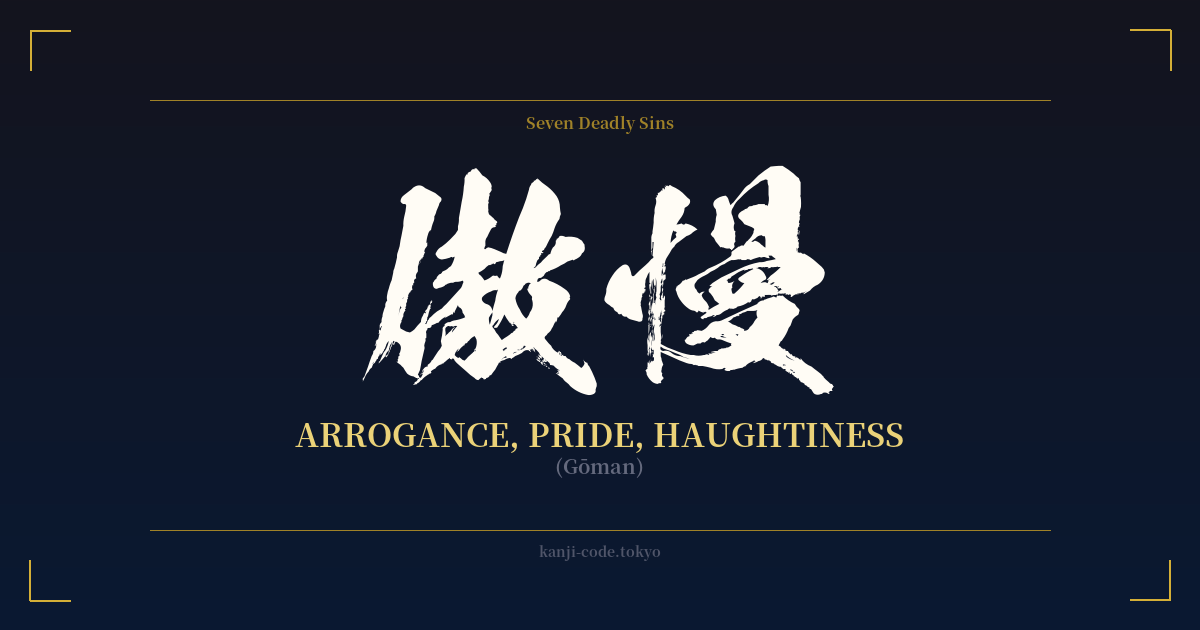
✍️ 傲慢 (Gōman) — Cultural Context
傲慢 (Gōman) is the Japanese word for arrogance, haughtiness, and an overbearing, destructive form of pride. While it directly translates a universal human flaw, its cultural weight in Japan is tied to both imported Western concepts and deep-seated Eastern philosophies.
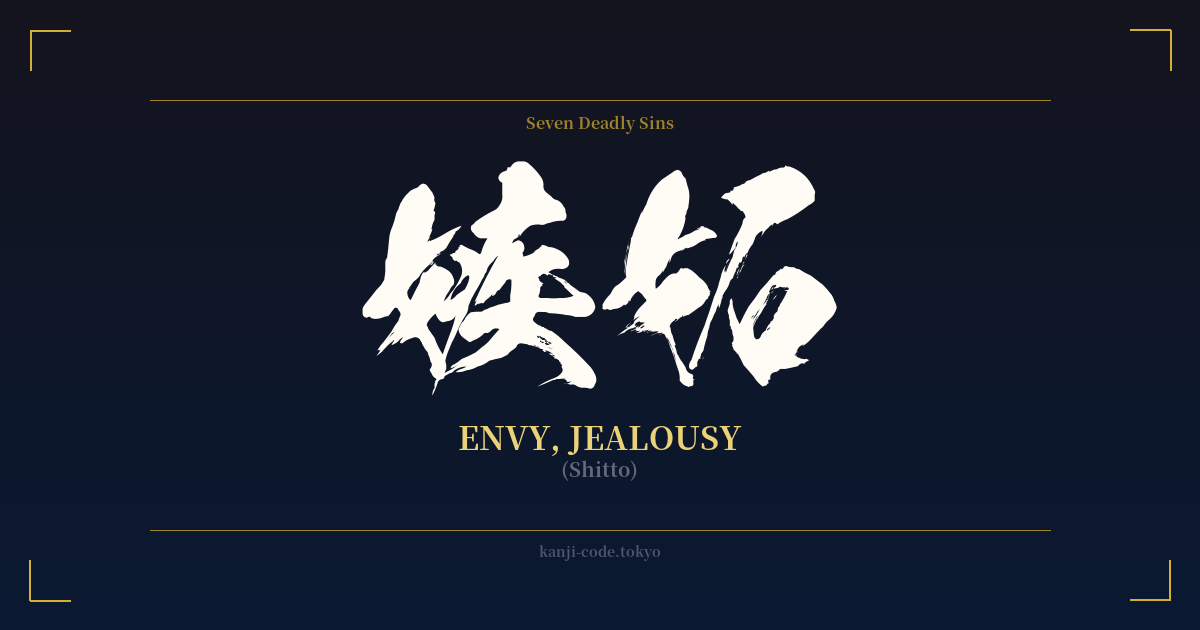
Most famously, Gōman is known as the Japanese representation of 'Pride' within the Seven Deadly Sins (七つの大罪, Nanatsu no Taizai). This Christian theological concept has permeated Japanese pop culture through manga, anime, and video games, where characters personifying each sin are a common trope. In this context, Gōman represents the original and most serious sin—the excessive belief in one's own abilities that interferes with the individual's recognition of the grace of God.
However, the idea of destructive pride long predates the introduction of Christianity in Japan. Buddhist teachings heavily caution against the ego and the 'kleshas' (煩悩, bonnō), or mental defilements that cloud the mind and prevent enlightenment. Arrogance is a primary defilement, a form of ignorance that creates suffering by chaining a person to a false sense of self and superiority. Gōman perfectly captures this Buddhist concept of a pride that is not just unlikable, but spiritually corrosive.
In the context of samurai and feudal Japan, the concept is a double-edged sword. A healthy sense of pride or honor, known as 誇り (hokori), was essential to a warrior's identity and their commitment to the Bushido code. But Gōman represented the hubris that leads to downfall. Countless historical tales and legends, such as 'The Tale of the Heike,' feature powerful warriors and clans whose arrogance leads them to underestimate their enemies, defy the gods, and ultimately meet a tragic end. It serves as a timeless cautionary tale: unchecked pride precedes the fall.
In modern Japan, Gōman is used to describe someone who is condescending, dismissive, and full of themselves. It is a harsh criticism. It stands in stark contrast to the valued social virtues of humility (謙遜, kenson) and modesty. To call someone 'gōman' is to point out a serious character flaw, suggesting they lack self-awareness and respect for others.
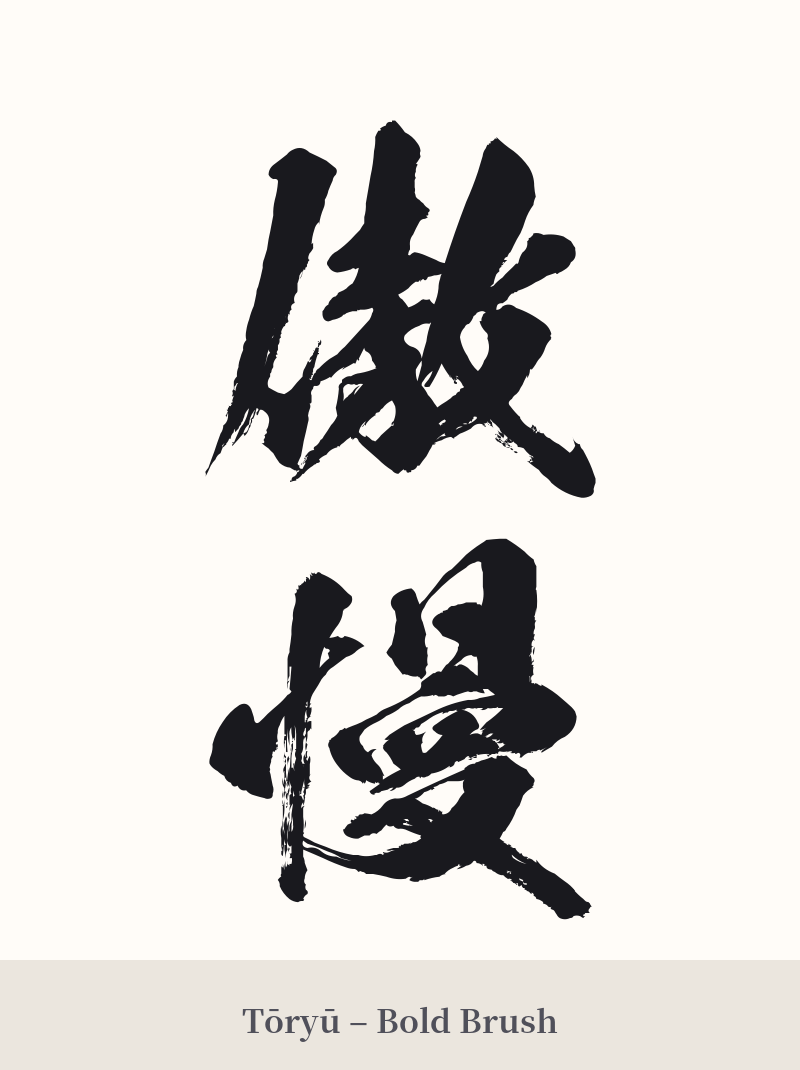
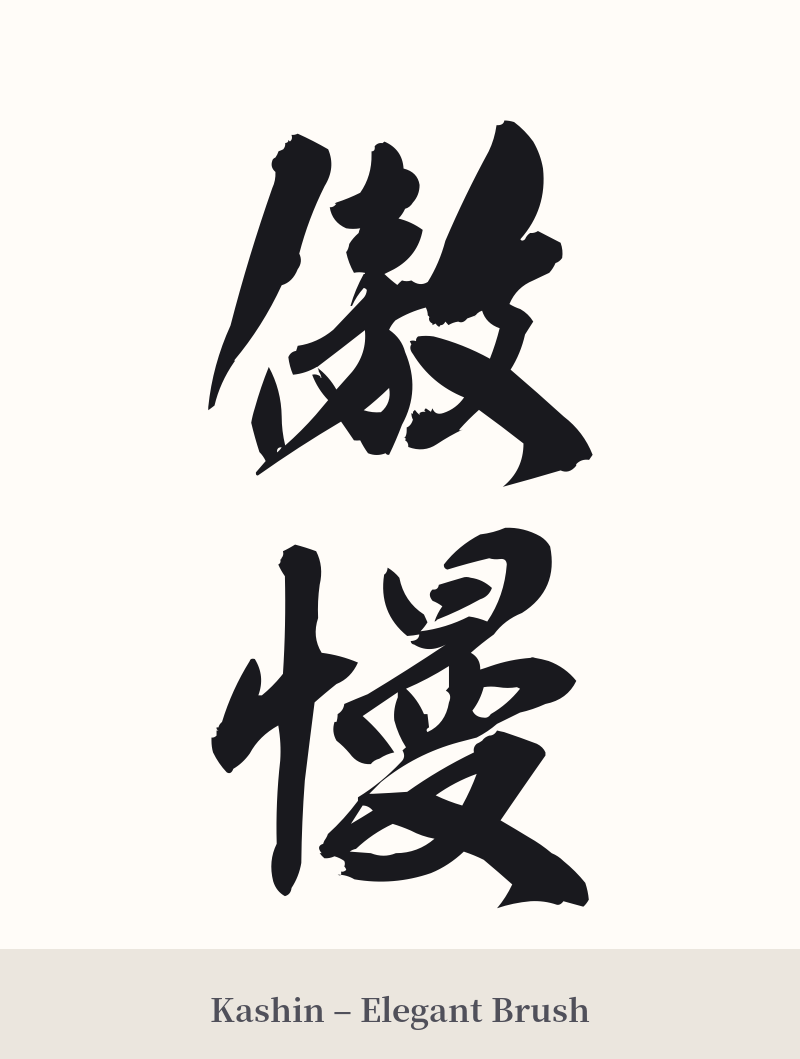
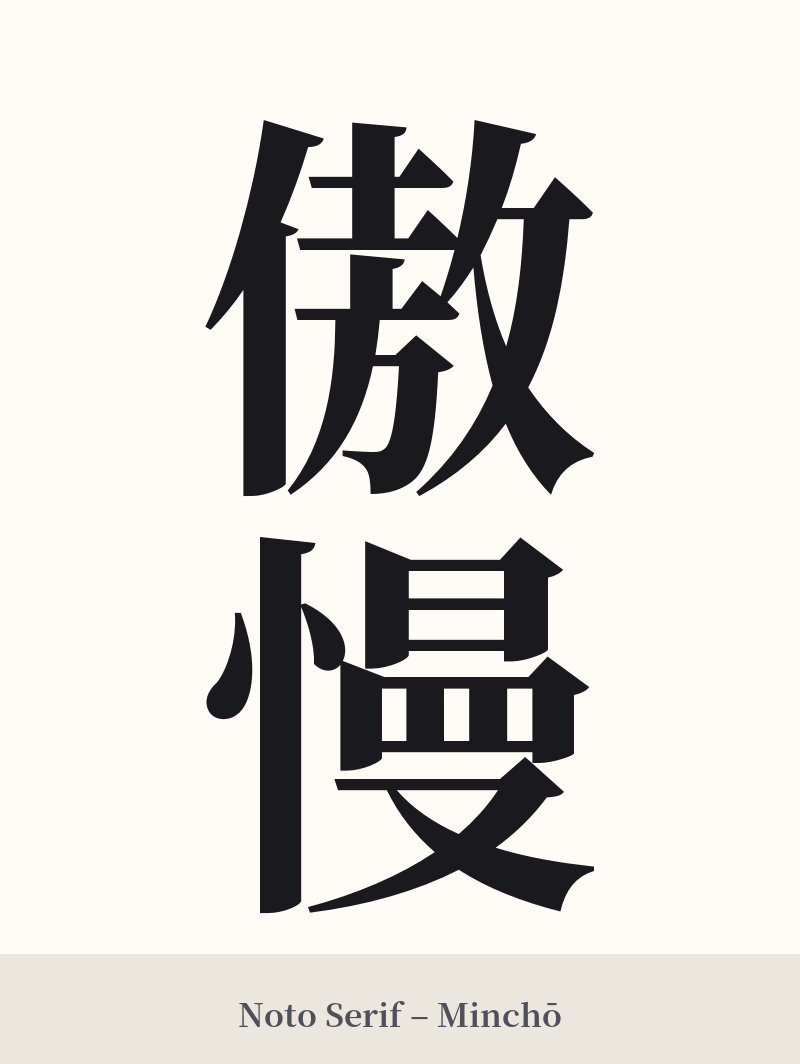
🖌️ Font Styles for 傲慢
The same kanji can look dramatically different depending on the calligraphy style. Choose a font that matches the mood you want for your tattoo or design.
🎨 Tattoo Suitability
📐 Tattoo Design Guide
For a tattoo of 傲慢 (Gōman), the design should reflect its strong, negative meaning. The complexity of the characters offers a lot of artistic potential.
– Placement: Vertical alignment works exceptionally well. Consider the inner forearm, the calf, or along the spine. For a horizontal design, the chest or upper back provides a wide enough canvas to do the characters justice.
– Font Style: A bold, aggressive font can amplify the meaning. Consider a sharp, angular Kaisho (block script) for an imposing feel, or a semi-cursive Gyosho style to give it a more dynamic, chaotic energy that reflects the unruliness of arrogance.
– Visual Tips: Given the high stroke count (13 and 14 strokes), ensure the tattoo is large enough for the lines to remain clear and not blur together over time. This design is powerful enough to stand on its own, but if you wish to add imagery, consider elements that symbolize a fall from grace, such as a broken crown, a fallen angel's wing, or a shattered mirror.
Comments