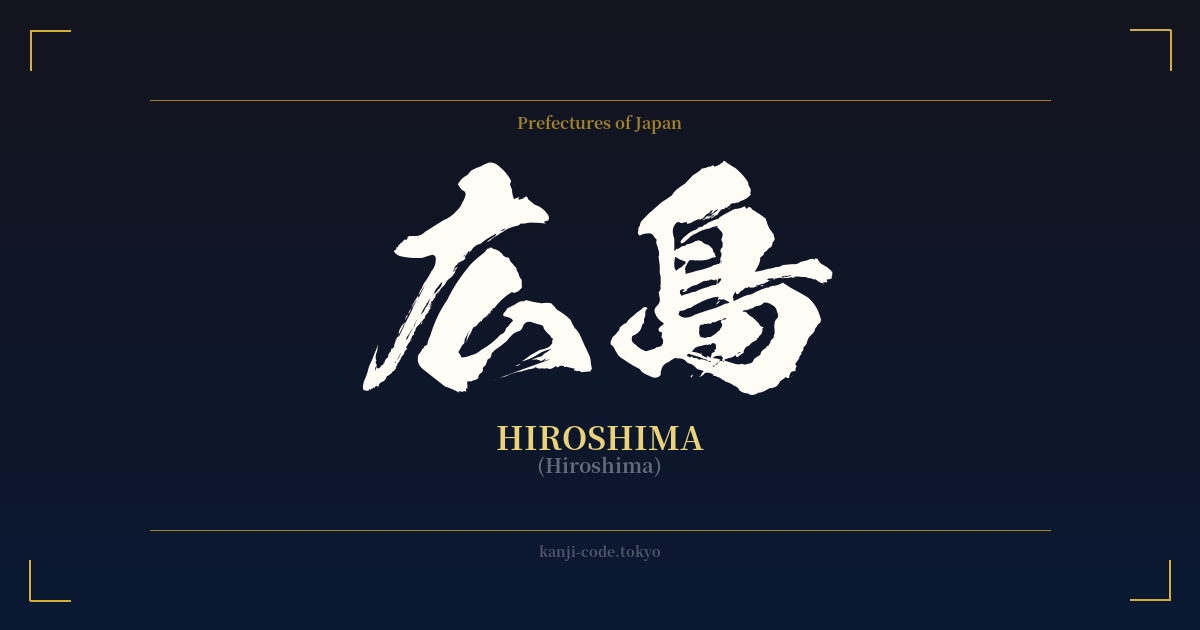
✍️ 広島 (Hiroshima) — Cultural Context
The name 広島 (Hiroshima) carries a weight unparalleled by almost any other place name in the world. While its origins are rooted in simple geography, its modern identity is forged in history's most devastating fire and a remarkable story of rebirth.
Literally translated, the kanji mean "Wide Island." The name was bestowed in 1589 by the powerful feudal lord Mōri Terumoto, who began construction of his castle on the largest of the islands in the Ōta River delta. The name perfectly described the expansive, flat geography of the area, a strategic location that would grow into a major castle town during the Edo Period.
During the Meiji Restoration in the late 19th century, Hiroshima transformed into a major urban center and a critical military hub. Its port was a key embarkation point for Japanese forces during the First Sino-Japanese War and Russo-Japanese War, and it housed significant army bases and munitions factories. This military importance tragically made it a primary target for the United States during World War II.
On August 6, 1945, the course of history was irrevocably altered when the atomic bomb was dropped on the city. The event caused unprecedented destruction and loss of life, instantly searing the name "Hiroshima" into the global consciousness as a symbol of the horrors of nuclear warfare.
However, the story of Hiroshima does not end in destruction. In the decades following the war, the city undertook an extraordinary journey of reconstruction. Refusing to be defined solely by its victimhood, Hiroshima rebuilt itself from the ashes and dedicated itself to a new mission: advocating for world peace and the complete abolition of nuclear weapons. The ruins of the Prefectural Industrial Promotion Hall were preserved as the A-Bomb Dome, a UNESCO World Heritage site and a stark, silent reminder of the past. The surrounding area was transformed into the Peace Memorial Park, a beautiful and poignant space for remembrance and reflection.
Today, Hiroshima is a vibrant, modern city. Its name evokes a powerful duality: the memory of an unimaginable tragedy and the inspiring resilience of the human spirit. It stands not just as a city in Japan, but as a global symbol of peace, a testament to survival, and a continuous, urgent call for a better future.
🖌️ Font Styles for 広島
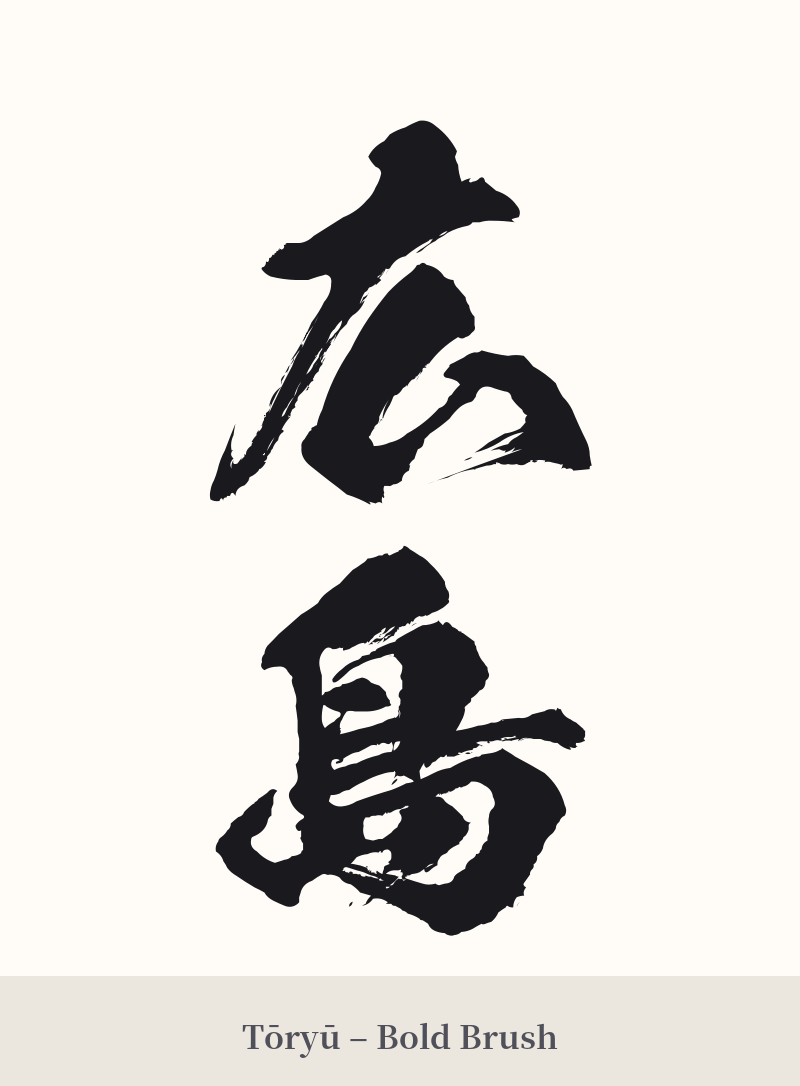
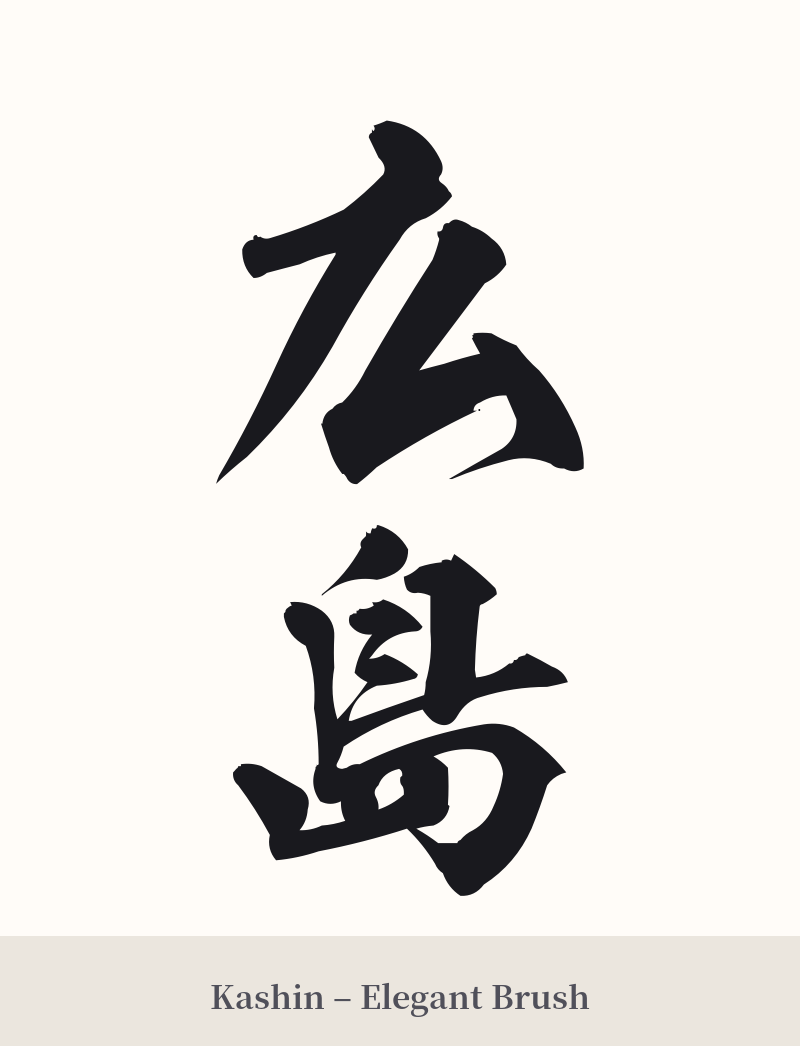
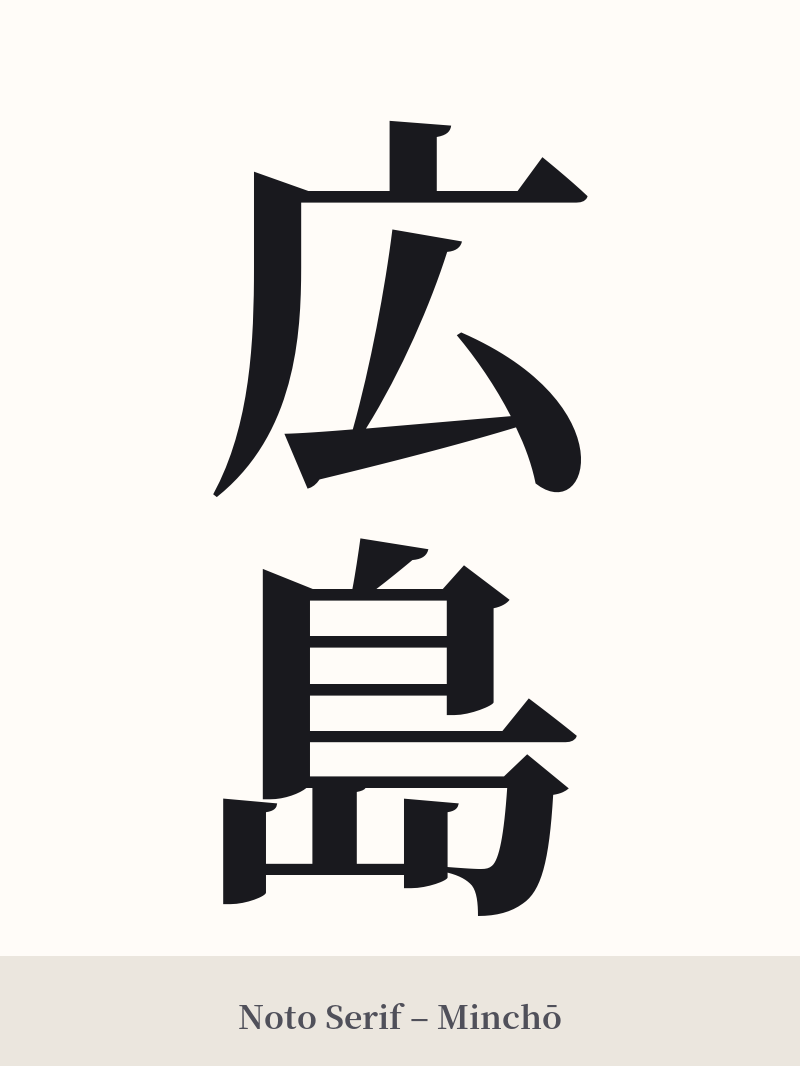
The same kanji can look dramatically different depending on the calligraphy style. Choose a font that matches the mood you want for your tattoo or design.
🎨 Tattoo Suitability
📐 Tattoo Design Guide
Given the extreme cultural sensitivity of this word, it is not recommended for a tattoo. However, if one were to proceed with a design intended for personal, private remembrance, the following guidelines should be considered to ensure maximum respect:
– Placement: Choose a private, discreet location on the body, such as the inner bicep, ribs, or over the heart. This reflects the solemn, personal nature of the subject matter, rather than making a public spectacle of it.
– Font Style: A simple, clean, and respectful font is essential. Standard Kaisho (block script) or Mincho (serif script) are the most appropriate choices. Avoid overly artistic, aggressive, or casual scripts, as they would be deeply inappropriate for the gravity of the name.
– Visual Tips: The two characters 広島 alone carry immense weight. Adding other elements is risky. If any imagery is included, it should be universally recognized symbols of peace, like a simple dove or paper crane (origami crane), and rendered in a subtle, respectful manner. Avoid any imagery that could be misconstrued as glorifying destruction or war.
Comments