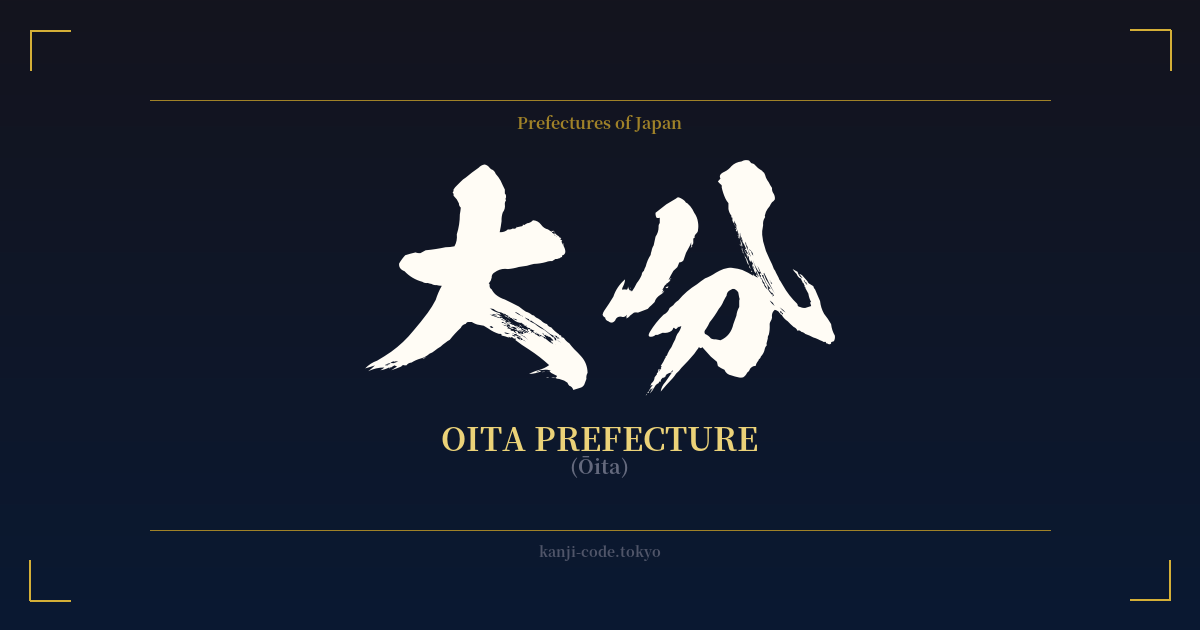
✍️ 大分 (Ōita) — Cultural Context
大分 (Ōita) is the name of a prefecture on Japan's southern island of Kyushu, a region renowned for its dramatic volcanic landscapes and, most famously, its abundance of natural hot springs, or onsen.
When people think of Ōita, they immediately picture the steam-filled streets of Beppu and the tranquil, refined inns of Yufuin. The prefecture is often called the 'Onsen Capital of Japan,' boasting the highest volume of hot spring water in the country. This identity is deeply woven into the local culture, from public bathhouses to luxurious ryokan that have perfected the art of relaxation for centuries.
The origin of the name 'Ōita' itself is steeped in ancient history. According to the 8th-century text, the Bungo Fudoki (the ancient report on Bungo Province, the former name for the area), the name was bestowed by the legendary Emperor Keikō. Upon visiting the region and seeing the vast, fertile rice fields, he is said to have exclaimed, 'This is a vast land!' He then named it 'Ōkita-kuni,' meaning 'the land of the great field.' Over time, the pronunciation shifted from 'Ōkita' to the modern 'Ōita.'
The kanji characters 大 (ō, big) and 分 (ita, part/divide) were likely applied later as ateji—characters chosen for their phonetic value rather than their literal meaning. This is a crucial point: the name doesn't literally mean 'big part.' The characters were simply a convenient way to write the sound 'Ōita.' This disconnect between the sound's origin and the characters' literal meaning is common in Japanese place names.
Beyond its hot springs, Ōita has a rich history as a crossroads of culture. During the 16th century, it was a major center for international trade, particularly with Portugal, under the rule of the Christian daimyō Ōtomo Sōrin. This period brought European medicine, music, and religion to Japan through Ōita's ports. The prefecture is also home to the Usuki Stone Buddhas, a national treasure consisting of over 60 serene stone sculptures carved into a cliff face during the Heian and Kamakura periods, showcasing a deep-rooted Buddhist heritage.
Today, Ōita represents a beautiful fusion of natural wonder and historical depth. It's a place where you can soak in geothermally heated waters in the morning and walk through samurai districts in the afternoon. While the kanji 大分 may seem simple, they are the gateway to a region defined by volcanic power, ancient spirituality, and a history of global connection.
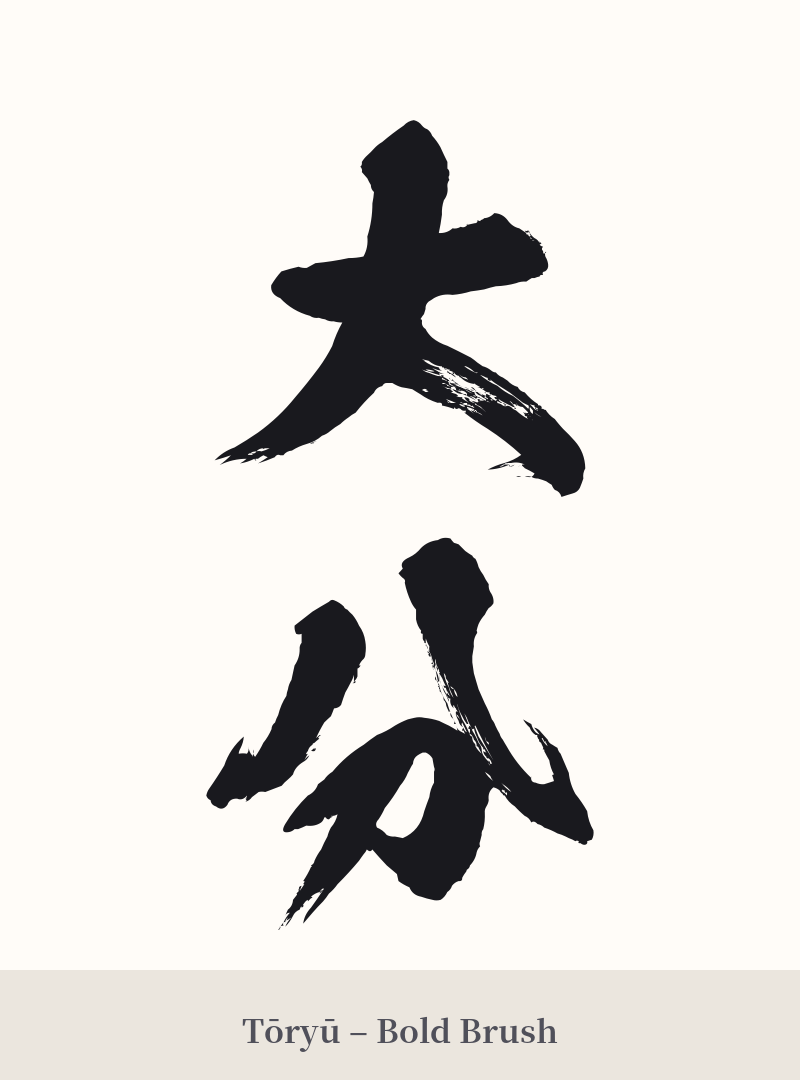
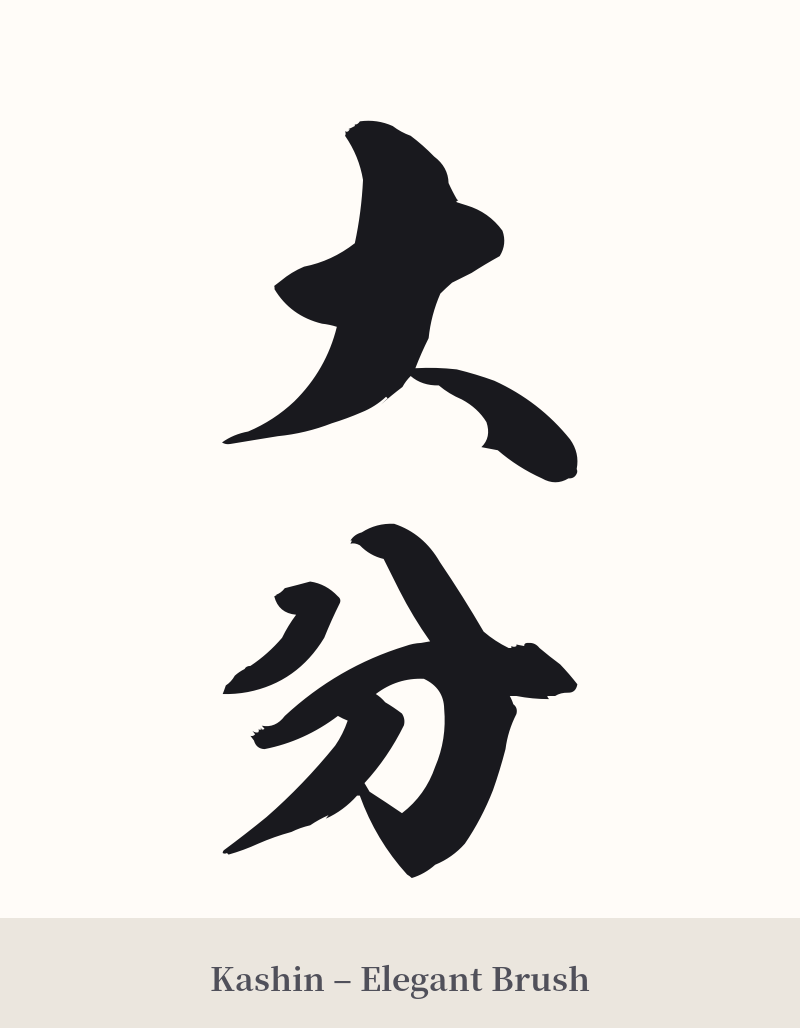
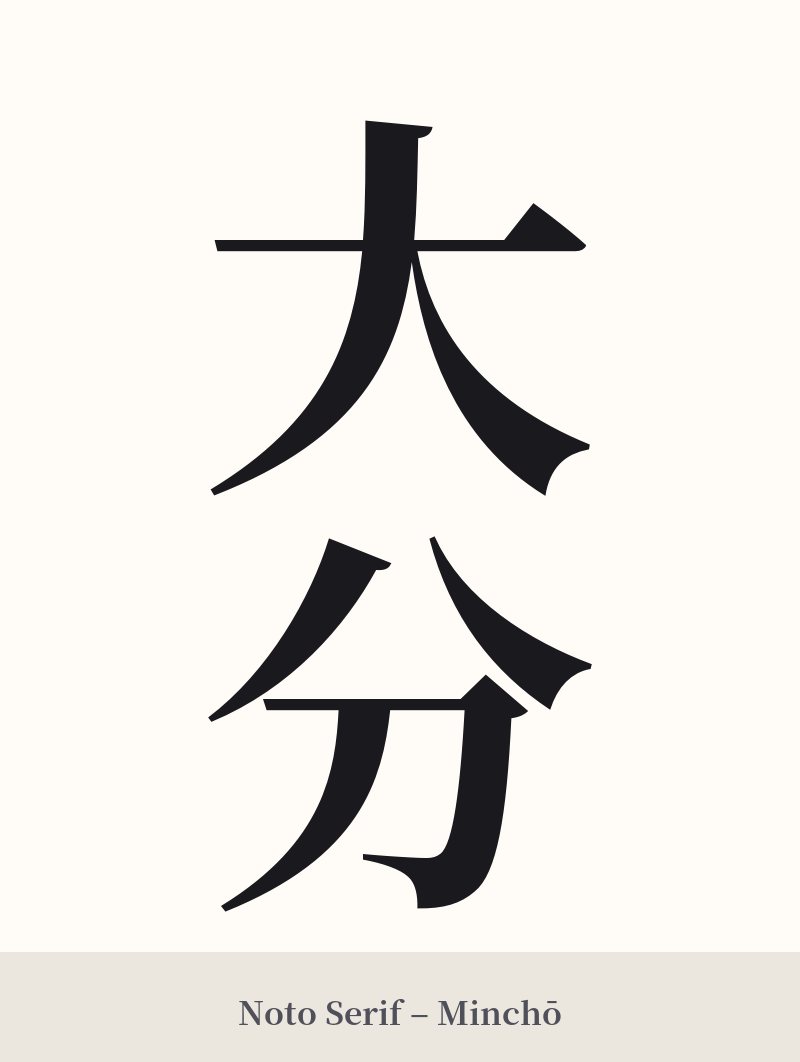
🖌️ Font Styles for 大分
The same kanji can look dramatically different depending on the calligraphy style. Choose a font that matches the mood you want for your tattoo or design.
🎨 Tattoo Suitability
📐 Tattoo Design Guide
Given the high risk of misunderstanding, getting 大分 as a standalone tattoo is strongly discouraged. It functions as a common adverb meaning 'considerably' and lacks the profound or artistic quality most people seek in a kanji tattoo.
If you have a deep personal connection to Ōita Prefecture and are determined to represent it, consider these alternatives instead of using the kanji alone:
– Integration: Incorporate the characters into a larger, more contextual piece. For example, a tattoo of a map of Kyushu with 大分 placed in the correct location, or combined with imagery iconic to the region, like the steam vents of Beppu ('jigoku') or a silhouette of the Usuki Stone Buddhas. – Stylistic Choices: If you must use the characters, a traditional, formal script like Kaisho (block script) or Mincho (serif script) would be most appropriate for a place name. However, this does not solve the problem of ambiguity. – Alternative Kanji: A better option might be to use the kanji for 'Beppu' (別府) or 'Onsen' (温泉) if your connection is to the hot springs, as these are more evocative and less ambiguous.
Comments