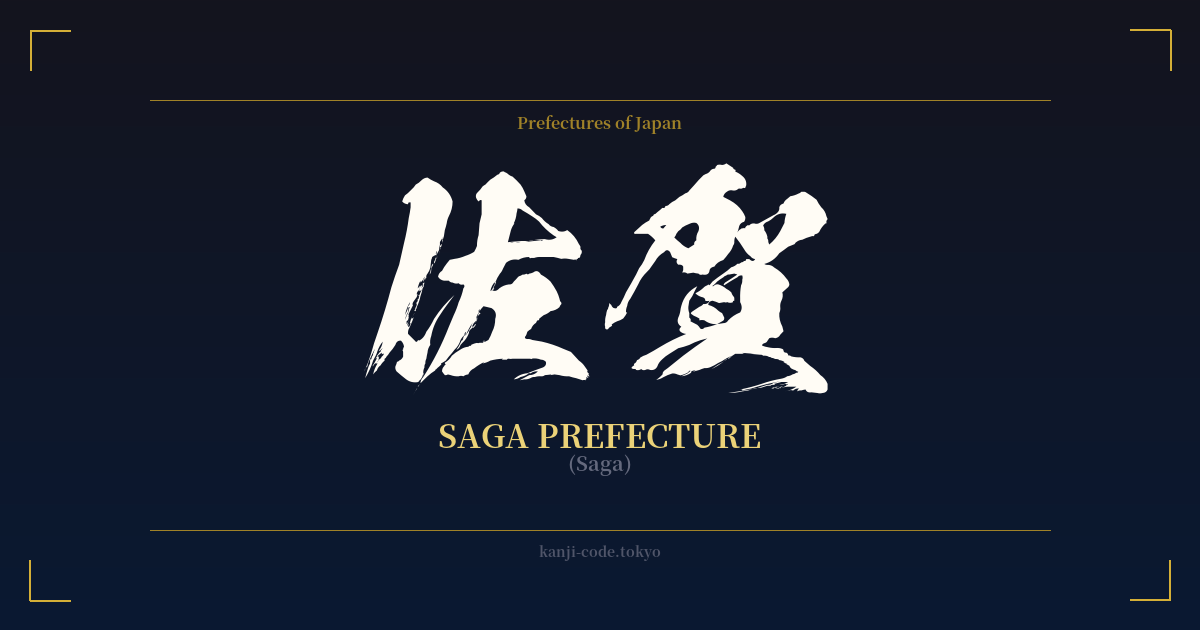
✍️ 佐賀 (Saga) — Cultural Context
The kanji 佐賀 (Saga) refers to a prefecture on the island of Kyushu in southwestern Japan. While the literal combination of the characters—佐 (assistant, help) and 賀 (congratulations, joy)—doesn't form a poetic phrase, the name itself is steeped in local legend and history.
One popular origin story comes from the ancient chronicle, the Hizen no Kuni Fudoki. It tells of the legendary prince Yamato Takeru visiting the area. Seeing the lush camphor trees, he remarked how prosperous the land was, calling it "Saka-no-kuni," or "Land of Prosperity." Over time, this name is said to have evolved into "Saga," with auspicious kanji characters chosen to represent the sounds.
Historically, Saga Prefecture was the heart of the Saga Domain, ruled by the powerful Nabeshima clan during the Edo period (1603-1868). This era cemented Saga's association with samurai culture, most famously through the "Hagakure," a practical and spiritual guide for the warrior class written by Yamamoto Tsunetomo, a retainer of the Nabeshima clan. This text, which translates to "In the Shadow of Leaves," offers profound insights into the samurai code of Bushido, emphasizing loyalty, discipline, and living with a constant awareness of death. This legacy gives the name "Saga" a deep connection to the stoic and disciplined aspects of samurai philosophy.
Beyond its warrior past, Saga played a pivotal role in Japan's modernization. During the late Edo period, the Saga Domain was a leader in Western technology and military science, developing Japan's first steamship and reverberatory furnaces. This forward-thinking spirit helped propel the nation into the Meiji Restoration.
Saga is also world-renowned for its exquisite pottery. The towns of Arita, Imari, and Karatsu have been centers of ceramic production for over 400 years. Arita ware, in particular, was one of Japan's first major exports to Europe, and its delicate, intricate designs are still celebrated today. The name Saga, therefore, also evokes a sense of refined craftsmanship and artistic heritage. To know Saga is to know a place of contrasts: where ancient samurai codes meet industrial innovation, and where rustic landscapes give birth to world-class art.
🖌️ Font Styles for 佐賀
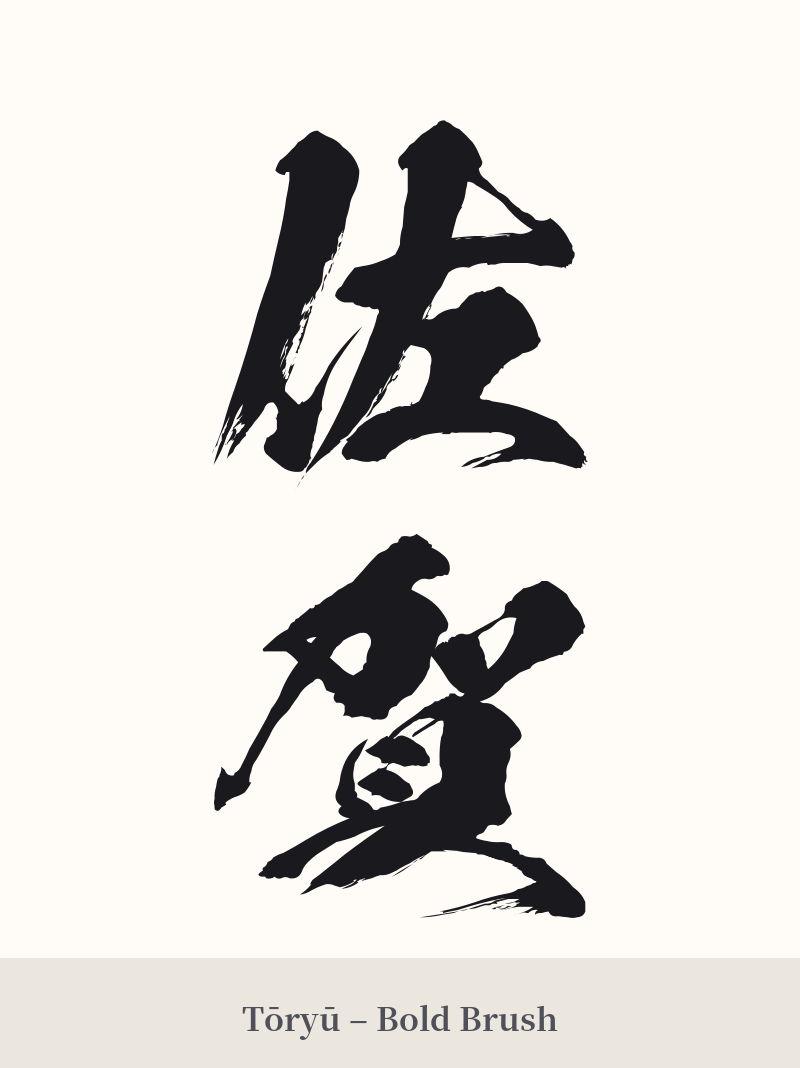
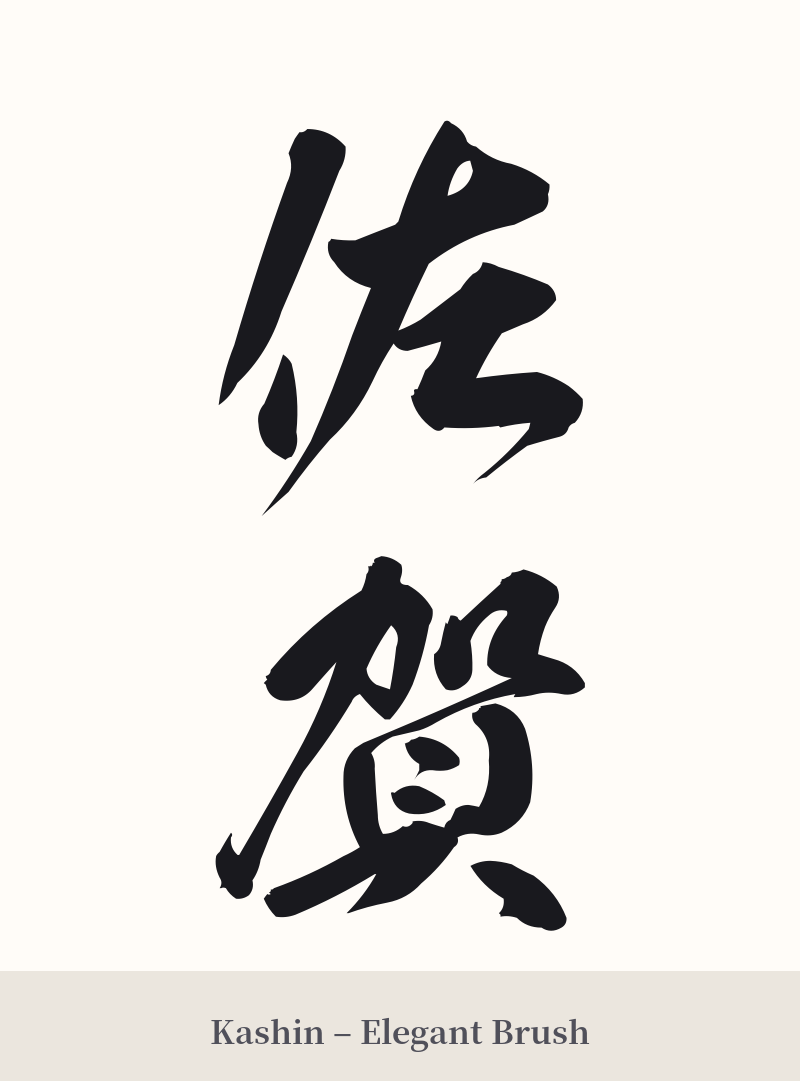
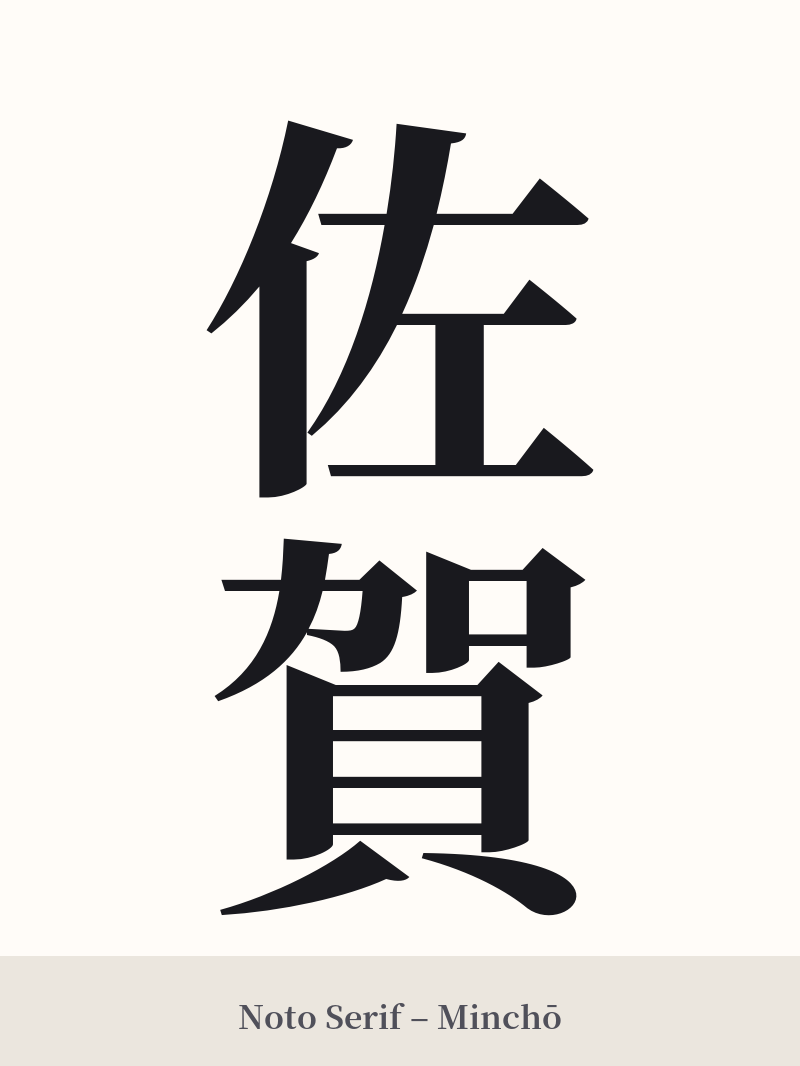
The same kanji can look dramatically different depending on the calligraphy style. Choose a font that matches the mood you want for your tattoo or design.
🎨 Tattoo Suitability
📐 Tattoo Design Guide
Because 佐賀 is a place name, a tattoo of it is highly personal. It's best suited for someone with a deep connection to the prefecture, whether through heritage, travel, or a life-changing experience.
– Placement: Consider more private or personal placements like the inner arm, ribs, or across the shoulder blade. This reflects the personal nature of the tattoo, making it more of a memento for the wearer than a public statement.
– Style: A traditional calligraphy style (shodō) like Gyosho (semi-cursive) or Sosho (cursive) can connect the design to Saga's rich history and the era of the samurai. For a more modern feel, a clean and crisp Mincho (serif) font can represent Saga's role in Japan's industrialization and its contemporary identity.
– Visual Elements: Instead of just the kanji, consider incorporating motifs representative of Saga. This could include a pattern from Arita porcelain, the silhouette of a hot air balloon from the famous Saga International Balloon Fiesta, or a camphor leaf to allude to its name's legendary origin.
Comments