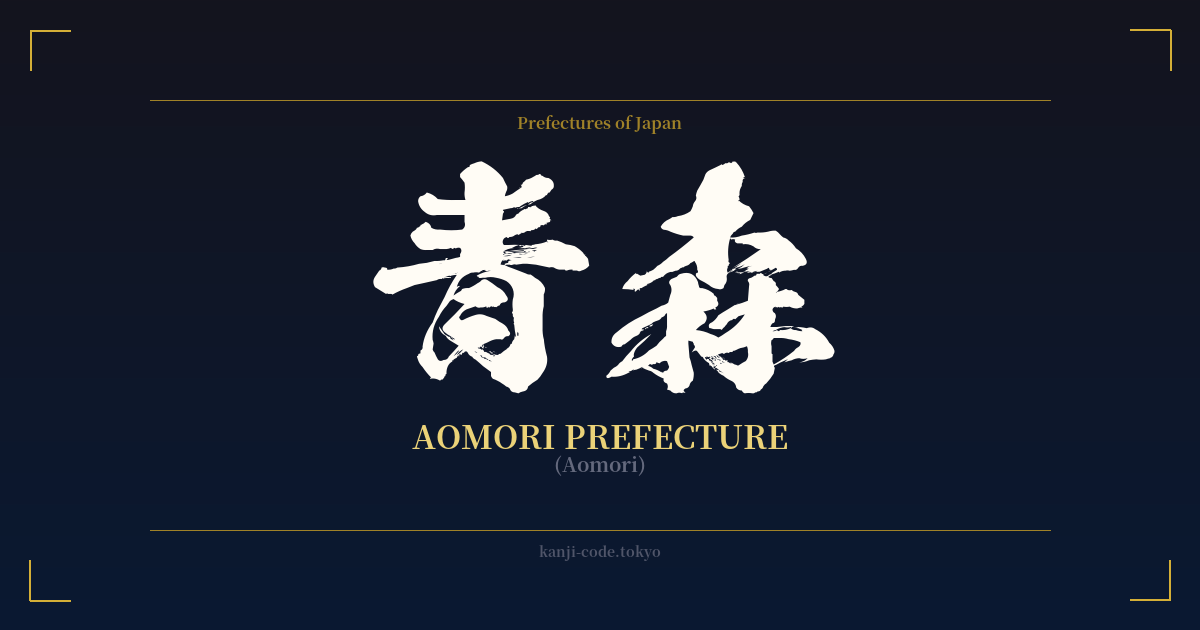
✍️ 青森 (Aomori) — Cultural Context
青森 (Aomori) is the name of the northernmost prefecture on Japan's main island of Honshu. The name literally translates to 'Blue Forest,' a poetic and evocative title that hints at the region's deep connection to nature. The origin of the name is said to date back to the early Edo period, around the 17th century. As the town of Aomori began to develop as a port, a small, dense evergreen forest on a nearby hill served as a crucial landmark for sailors navigating the bay. This lush, dark green grove appeared almost blue from a distance, earning it the name 'aoi mori,' or the blue forest, which eventually became the name for the entire region.
Aomori is defined by its rugged landscape and distinct seasons. It is known as a 'snow country' (雪国, yukiguni), receiving some of the heaviest snowfall in the world, which shapes the lifestyle and resilience of its people. This image of enduring harsh winters is contrasted by the vibrancy of its summers, most famously celebrated during the Aomori Nebuta Matsuri. This spectacular festival features enormous, illuminated paper floats depicting mythical figures, warriors, and gods, paraded through the city streets with thunderous music and dancing. It's a powerful expression of local identity and community spirit.
Beyond the festival, Aomori's identity is intrinsically tied to its agricultural and natural wealth. It is the undisputed apple capital of Japan, producing over half of the country's apples. The sight of endless apple orchards is as iconic to Aomori as the snow-covered mountains. The prefecture is also home to the Shirakami-Sanchi mountains, a UNESCO World Heritage site protecting the last virgin beech forest in East Asia. This, along with the scenic beauty of Lake Towada and the Oirase Stream, reinforces the 'forest' (森) aspect of its name. Aomori also holds deep historical significance, with sites like the Sannai Maruyama archaeological site revealing one of Japan's largest and most complete Jōmon period settlements, dating back thousands of years. To carry the name Aomori is to evoke a sense of wild nature, seasonal extremes, ancient history, and enduring community.
🖌️ Font Styles for 青森
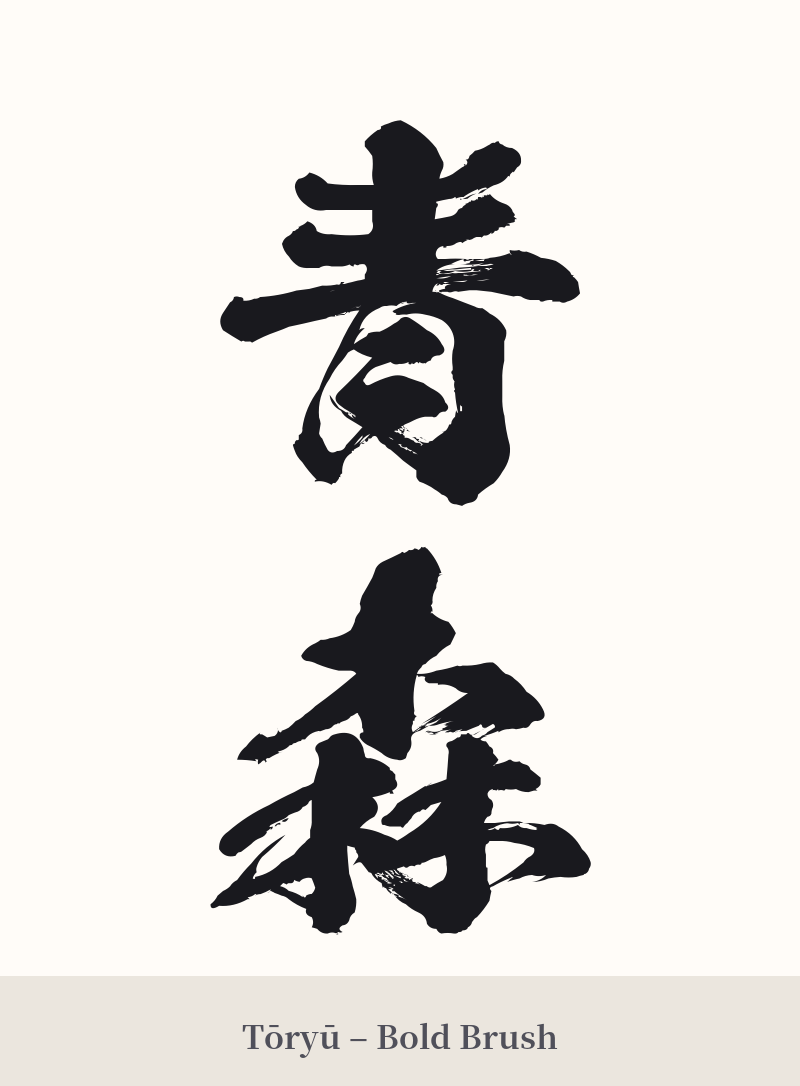
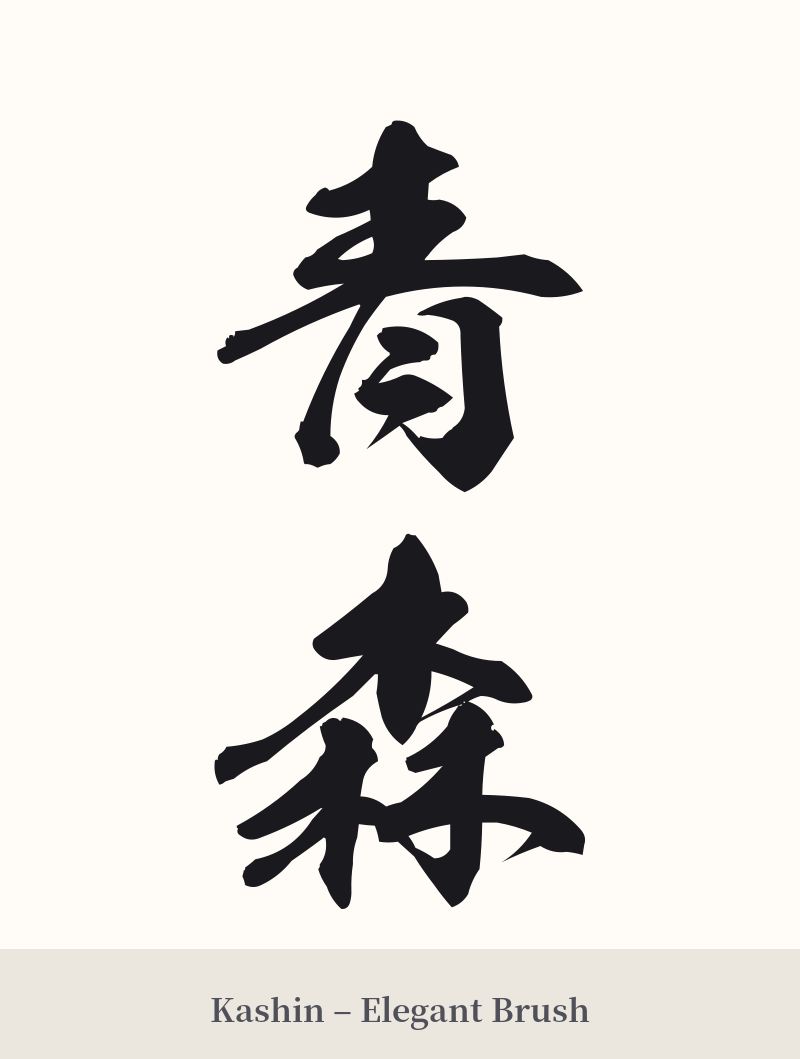
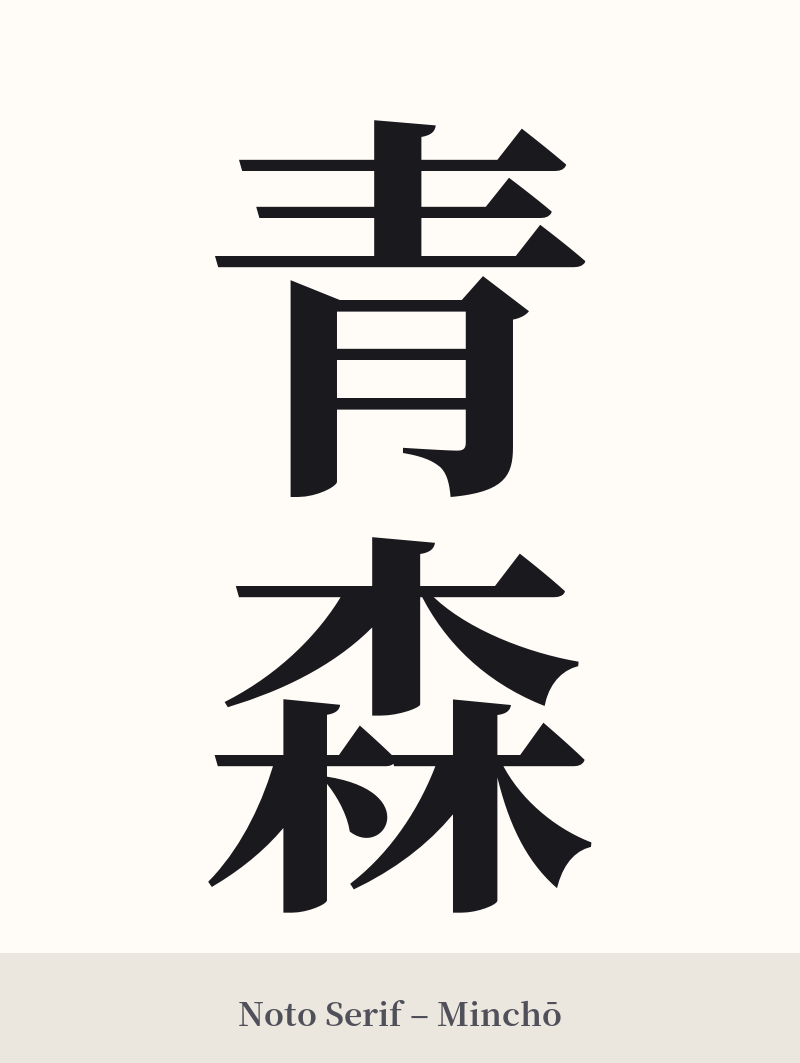
The same kanji can look dramatically different depending on the calligraphy style. Choose a font that matches the mood you want for your tattoo or design.
🎨 Tattoo Suitability
📐 Tattoo Design Guide
The two characters of 青森 offer a balanced and aesthetically pleasing design, suitable for both horizontal and vertical orientations.
– Placement: For a vertical design, the spine, forearm, or calf are excellent choices. Horizontally, it works well across the chest, on the back of the shoulder, or along the ribs.
– Style: A bold, slightly rustic calligraphy style like Gyosho (semi-cursive) or Kaisho (block script) can capture the rugged, natural feeling of the region. A font with a textured, wood-grain-like feel could also be a creative way to emphasize the 'forest' meaning.
– Visuals: Consider incorporating elements symbolic of Aomori to create a more personal and unique piece. You could frame the kanji with apple blossoms, add a background of swirling snow, or integrate the fierce, expressive lines of a Nebuta float design. A subtle blue-green color wash behind the black ink could also beautifully allude to the name's literal meaning.
Comments