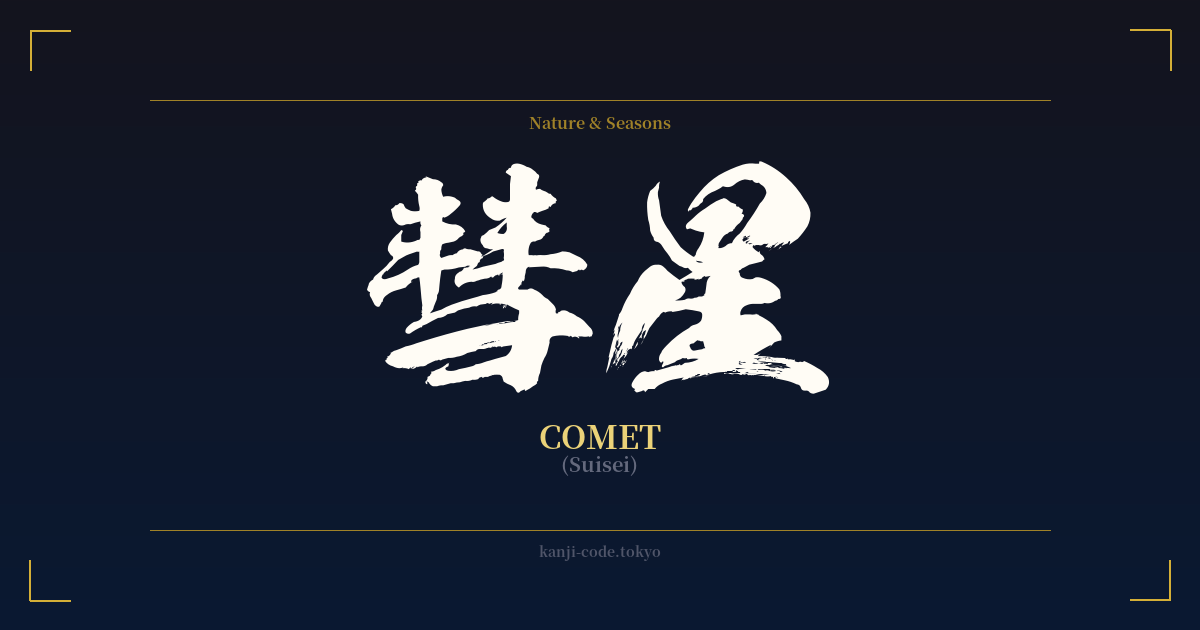
✍️ 彗星 (Suisei) — Cultural Context
The Japanese word for comet, 彗星 (Suisei), is a beautiful example of visual poetry embedded in language. It literally translates to “broom star,” a name that perfectly captures the celestial object’s appearance as it streaks across the night sky, its long tail trailing behind like the bristles of a broom sweeping through the cosmos.
This evocative name stems from the individual kanji. The first character, 彗 (sui), means “broom.” The second, 星 (sei), means “star.” Together, they form a compound word that is both descriptive and mythological, painting a picture that has captivated observers for centuries.
Historically, like in many cultures, the appearance of a comet in Japan was a significant event, often viewed with a mixture of awe and trepidation. In the pre-modern era, they were frequently considered 凶瑞 (kyōzui), or inauspicious omens. Court astronomers and chroniclers would meticulously document their arrival, as they were believed to foreshadow major events such as natural disasters, famines, political upheaval, or the death of a prominent leader. These celestial visitors were seen as messages from the heavens, disrupting the natural order and signaling impending change.
However, this perception began to shift dramatically during the Meiji Restoration in the late 19th century. As Japan opened up to the West, it rapidly absorbed scientific knowledge, including modern astronomy. The superstitious fear of comets gave way to scientific curiosity and understanding. They were re-contextualized from divine omens to natural, predictable astronomical phenomena, objects of study and wonder rather than fear.
In contemporary Japan, this sense of wonder has completely eclipsed the old superstitions. Comets are now powerful symbols in popular culture, particularly in anime, manga, and literature. Perhaps the most famous modern example is the record-breaking anime film “Your Name.” (君の名は。 – Kimi no Na wa.), where the arrival of a comet is the central catalyst for the entire story, weaving together themes of destiny, connection, loss, and renewal. In this context, the comet is a force of both destruction and profound, fated connection.
This evolution from a symbol of doom to a symbol of destiny and fleeting beauty makes 彗星 a particularly rich and layered word. It embodies the transition from an ancient, fearful worldview to a modern, scientific one, while still retaining a sense of poetic mystery. It speaks to grand, cosmic scales, the unstoppable passage of time, and moments of rare, transient beauty that leave a lasting impact.
🖌️ Font Styles for 彗星
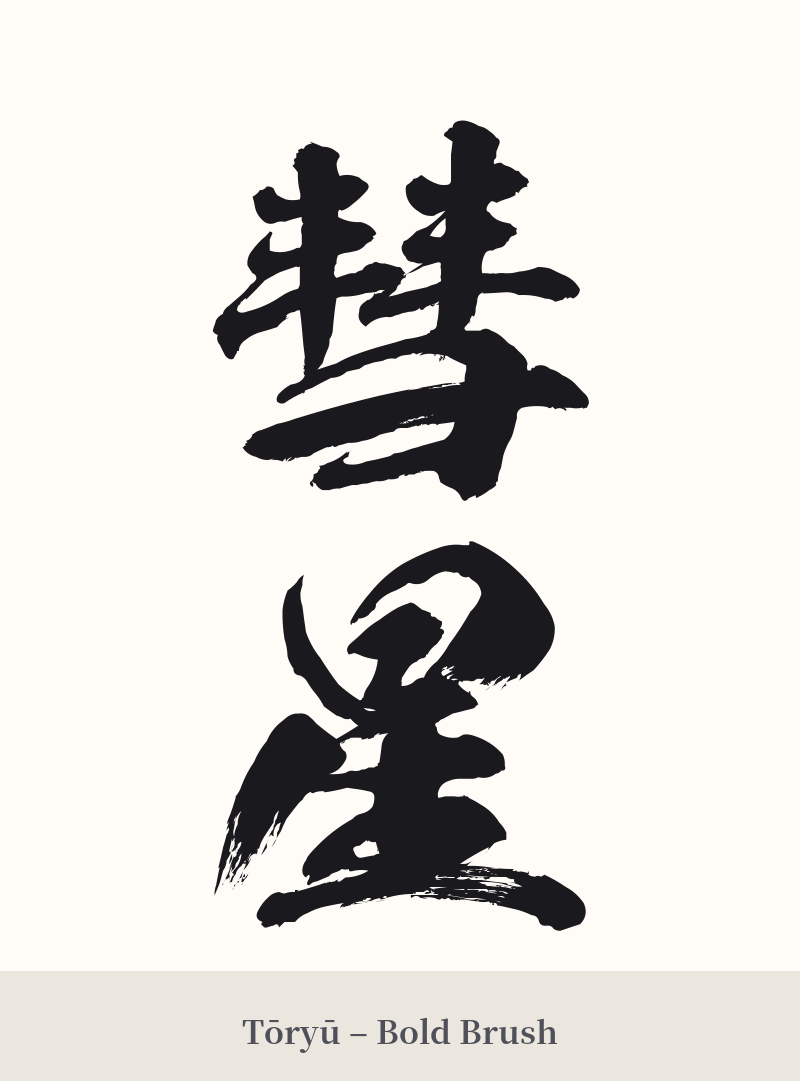
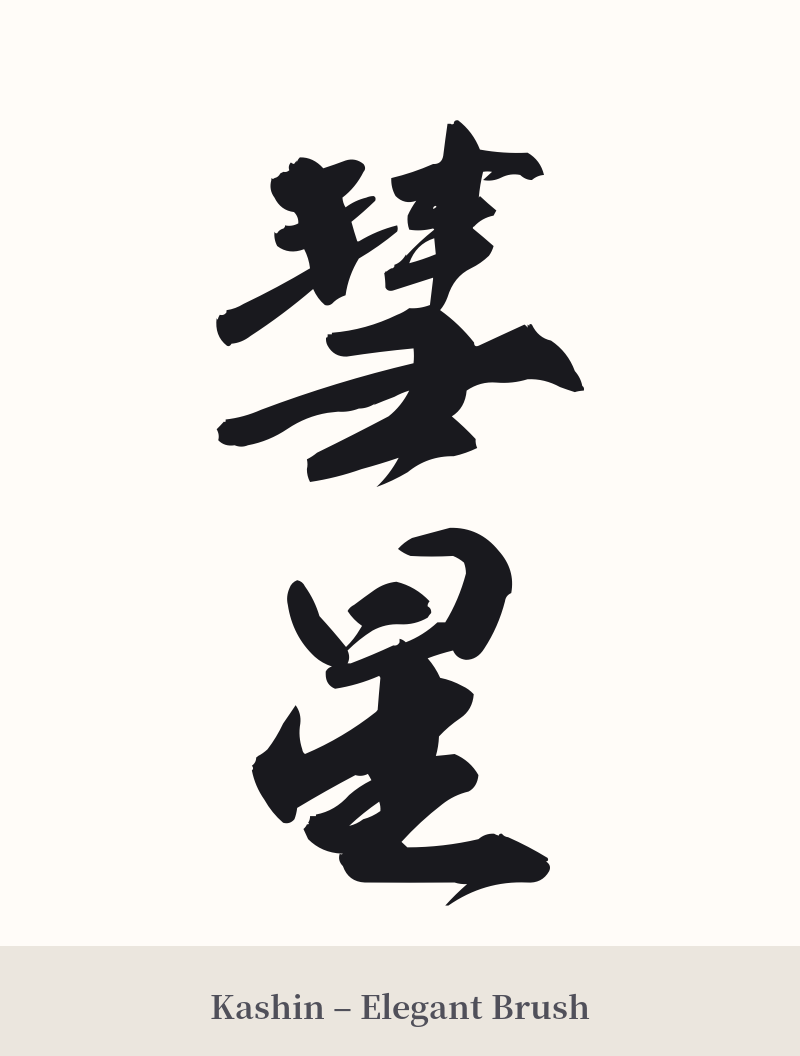
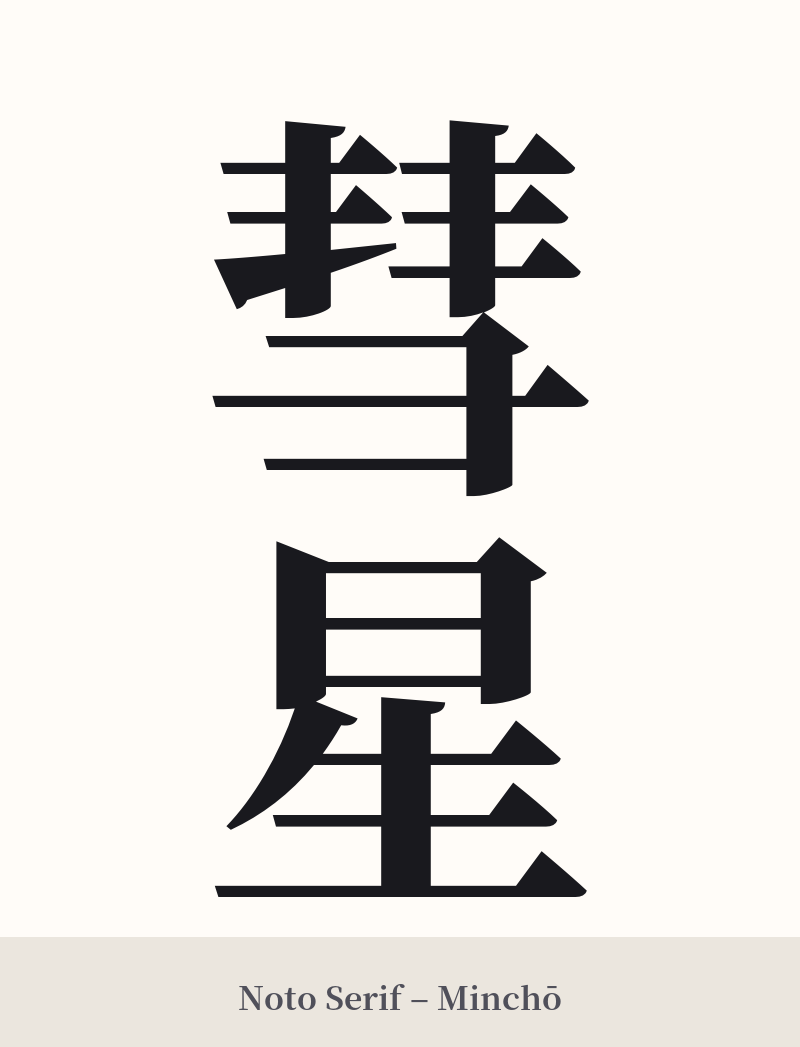
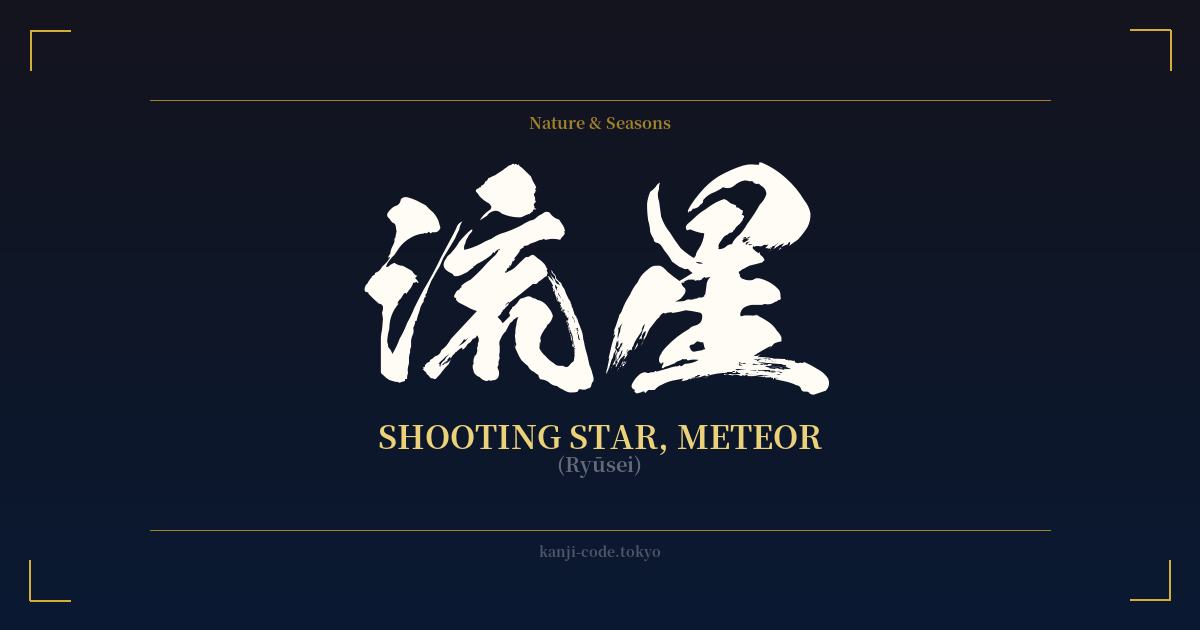
The same kanji can look dramatically different depending on the calligraphy style. Choose a font that matches the mood you want for your tattoo or design.
🎨 Tattoo Suitability
📐 Tattoo Design Guide
The vertical nature of Japanese writing lends itself beautifully to the word 彗星. A vertical orientation on the forearm, calf, or along the spine can create a powerful, elegant look that mimics the downward streak of a comet.
For font styles, consider these options: – Cursive Calligraphy (Gyōsho/Sōsho): A flowing, semi-cursive style can emphasize the ephemeral, graceful movement of a comet through space. The connected strokes can mirror the comet's tail. – Bold Kaisho: A clean, angular, block-style font gives the kanji a sense of weight and permanence. This style highlights the cosmic power and ancient nature of these celestial bodies.
To enhance the design, you could incorporate visual elements. A subtle watercolor splash effect in deep blues, purples, or golds can create a nebula-like background. Alternatively, a minimalist design might extend one of the final strokes of 星 into a faint, dissolving line, suggesting the comet's fading tail.
Comments