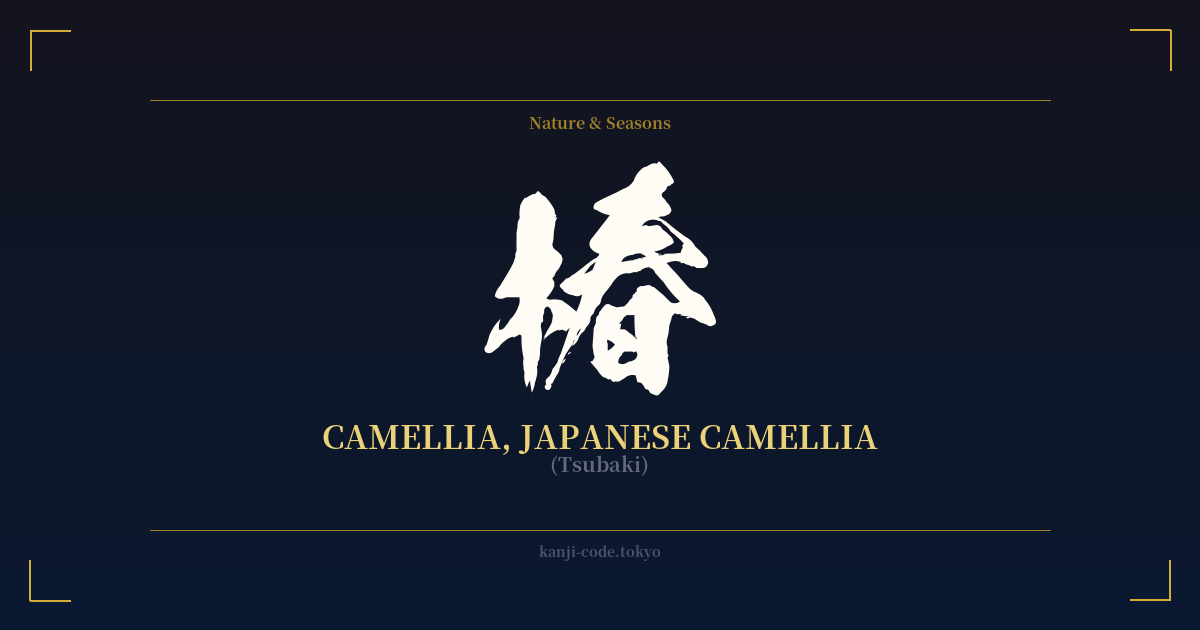
✍️ 椿 (Tsubaki) — Cultural Context
The kanji 椿 (Tsubaki) is a beautiful and evocative character that captures the essence of the Japanese Camellia, a flower deeply woven into the nation's culture and history. The character itself is a work of art, a combination of the radical for tree (木) on the left and the character for spring (春) on the right. This elegant construction literally translates to “the spring tree,” a perfect description for a plant that defies the cold of late winter to produce vibrant blooms, heralding the coming warmth.
The Camellia japonica is an evergreen shrub native to Japan, known for its glossy leaves and lush, perfectly formed flowers that appear from February to April. Its ability to bloom amidst lingering snow has made it a symbol of resilience, perseverance, and hope. In the language of flowers, Hanakotoba, the Tsubaki carries different meanings depending on its color. A red camellia signifies love, passion, or a noble death. A white one represents exquisite loveliness and waiting, while a yellow one speaks of longing.
However, the Tsubaki holds a more somber, complex meaning rooted in samurai history. Unlike other flowers that lose their petals one by one, the camellia flower drops its entire head in one piece when it wilts. This sudden, complete fall was seen by the warrior class as a powerful metaphor for a clean, honorable death in battle—a head being severed from the body. Consequently, the red camellia became a symbol of a noble but sudden end, an emblem of the transient nature of a warrior's life. This association made it a flower to be respected, but also one that was sometimes avoided in gardens or as a gift, as it was considered an ill omen.
This duality is what makes the Tsubaki so compelling. It is at once a symbol of divine love and spring's promise, and a poignant reminder of mortality and the impermanence of beauty. In modern Japan, while the darker samurai connotations have softened, they haven't entirely disappeared. The flower is now more widely celebrated for its elegance and is a popular motif in art, textiles like kimono, and family crests. It represents a graceful beauty that is both strong and fragile, a perfect embodiment of the Japanese aesthetic of mono no aware—the gentle sadness of passing things.
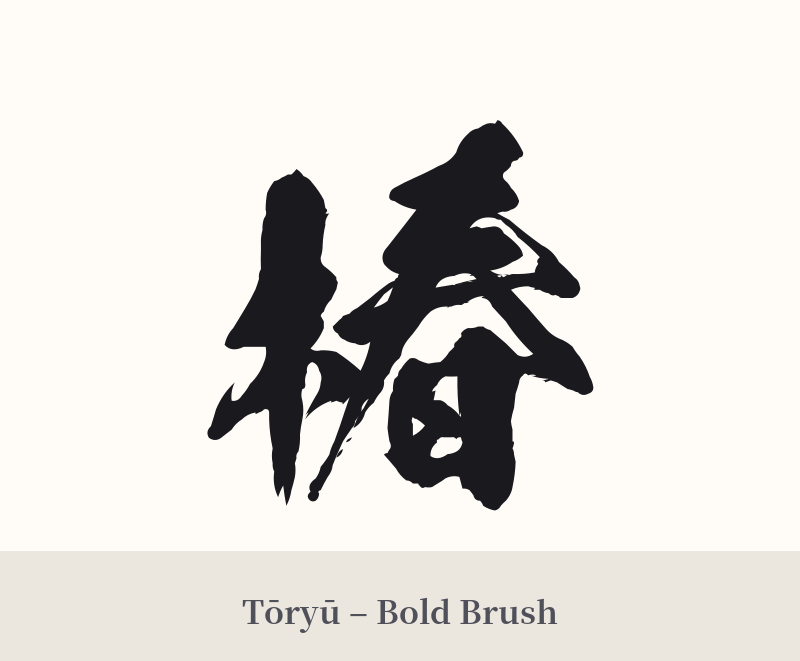
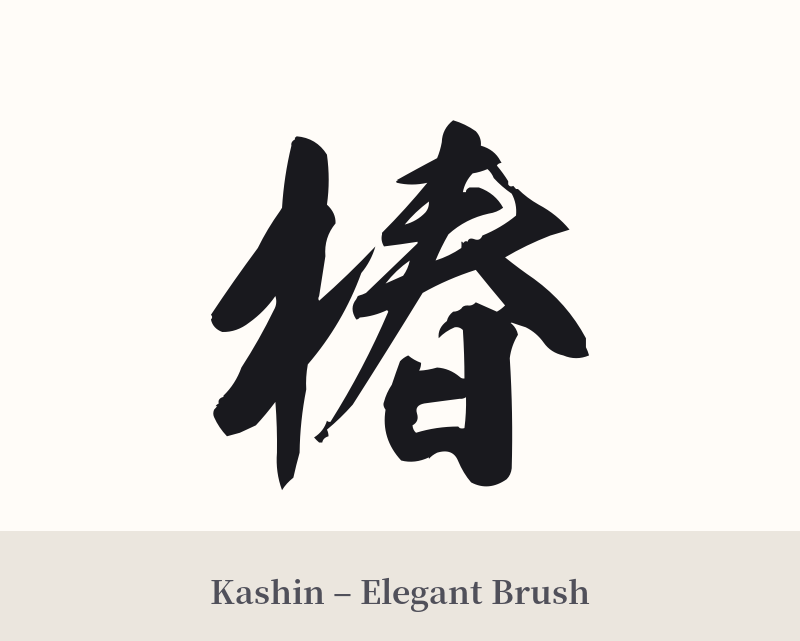
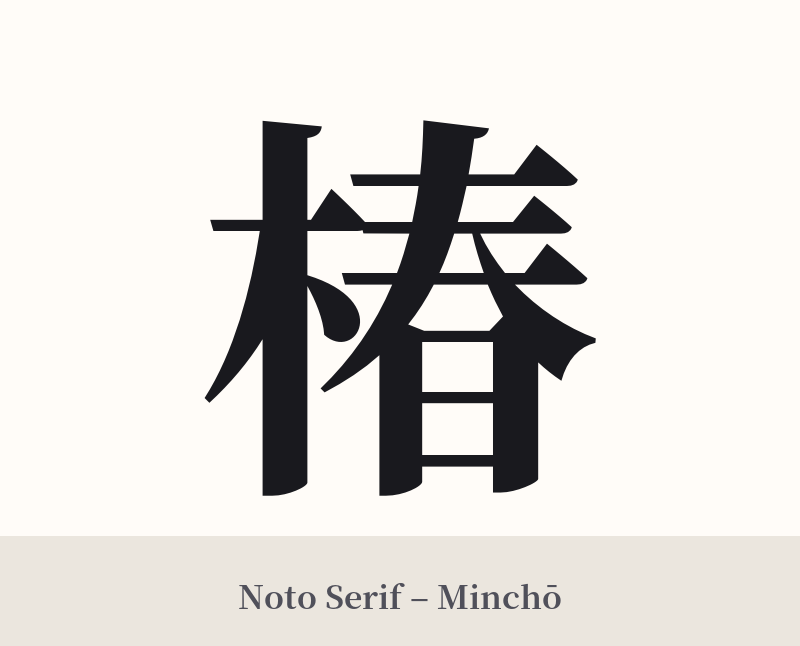
🖌️ Font Styles for 椿
The same kanji can look dramatically different depending on the calligraphy style. Choose a font that matches the mood you want for your tattoo or design.
🎨 Tattoo Suitability
📐 Tattoo Design Guide
The kanji 椿 (Tsubaki) offers wonderful versatility for a tattoo design, balancing visual elegance with deep meaning.
– Placement: Its vertical structure looks excellent on the forearm, calf, or along the spine. For a more subtle placement, the back of the neck or behind the ear works well. It also fits gracefully on the side of the ribs, following the body's natural curve.
– Style: A traditional calligraphy style (shodō) like the flowing, semi-cursive Gyōsho can add a sense of movement and grace. For a bolder, more defined look, the block-like Kaisho script is a classic choice. A minimalist, clean-lined font can also give it a very modern and sharp aesthetic.
– Visual Tips: Consider pairing the kanji with a realistic or stylized illustration of a camellia flower. You could have the kanji written in black ink with a single red camellia blooming beside it, or have petals falling around the character. Using red ink for the kanji itself can be a powerful statement, directly referencing the red Tsubaki and its associated meanings.
Comments