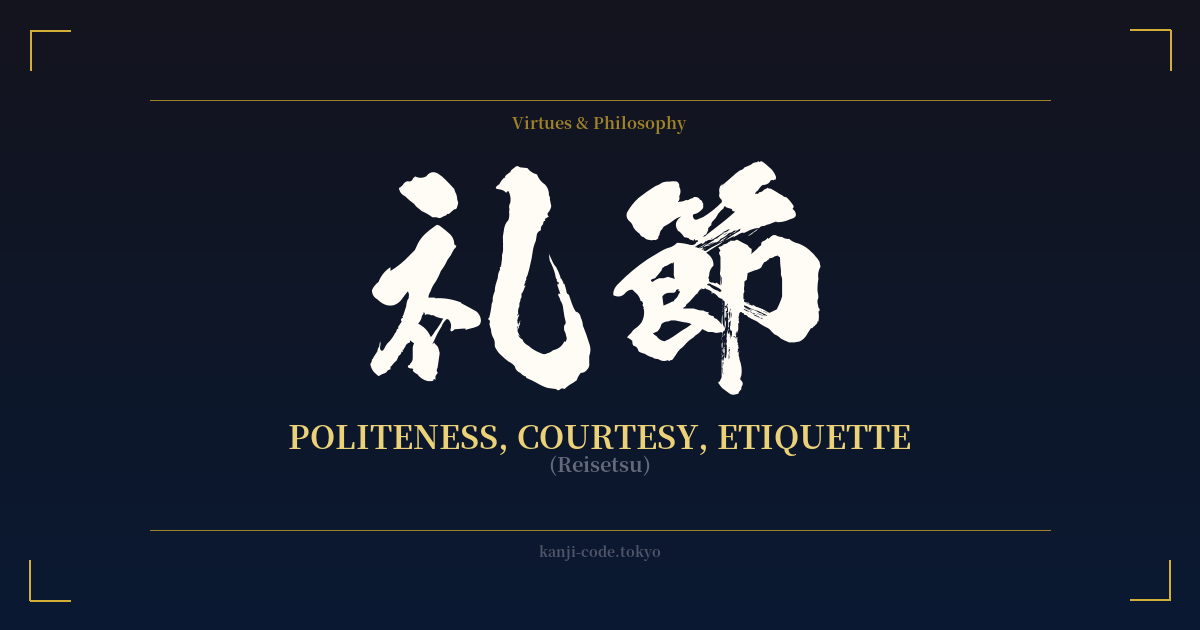
✍️ 礼節 (Reisetsu) — Cultural Context
礼節 (Reisetsu) is a Japanese concept that translates to politeness, courtesy, and etiquette. However, these English words only scratch the surface. Reisetsu is not merely about saying 'please' and 'thank you'; it's a foundational pillar of Japanese society, representing a philosophy of social harmony and profound respect for others.
At its core, Reisetsu is the external manifestation of an internal state of consideration and sincerity. It's deeply connected to the concept of 和 (Wa), or harmony, the idea that the smooth functioning of the group is paramount. Proper etiquette, therefore, is the mechanism through which this harmony is maintained in every interaction, from a simple greeting to a complex business negotiation.
The historical roots of Reisetsu are intertwined with Confucian principles that entered Japan from China. These ideas were refined and adapted by the samurai class, becoming an integral part of 武士道 (Bushidō), the way of the warrior. For a samurai, Reisetsu was not a sign of weakness but of self-mastery and strength. It demonstrated that a warrior had the discipline to control their emotions and treat others with dignity, even their enemies.
In modern Japan, Reisetsu is visible everywhere. It's in the precise angle of a bow (お辞儀, ojigi), which changes depending on the level of respect being shown. It's in the intricate rituals of gift-giving (贈答, zōtō), where the presentation is as important as the gift itself. It's encoded into the very language through honorifics (敬語, keigo), a complex system of speech that changes based on the social standing of the speaker and listener.
Reisetsu also forms the backbone of Japanese martial arts (武道, budō). The bow at the beginning and end of a match, the respectful handling of equipment, and the calm demeanor are all expressions of Reisetsu. It teaches that the goal is not just to win, but to cultivate character, discipline, and respect for one's opponent and the art form itself.
Ultimately, Reisetsu is about more than just a set of rules. It is the art of navigating social situations with grace, empathy, and an awareness of others' feelings (思いやり, omoiyari). It is the belief that by treating everyone with respect, you create a more stable, harmonious, and pleasant society for all.
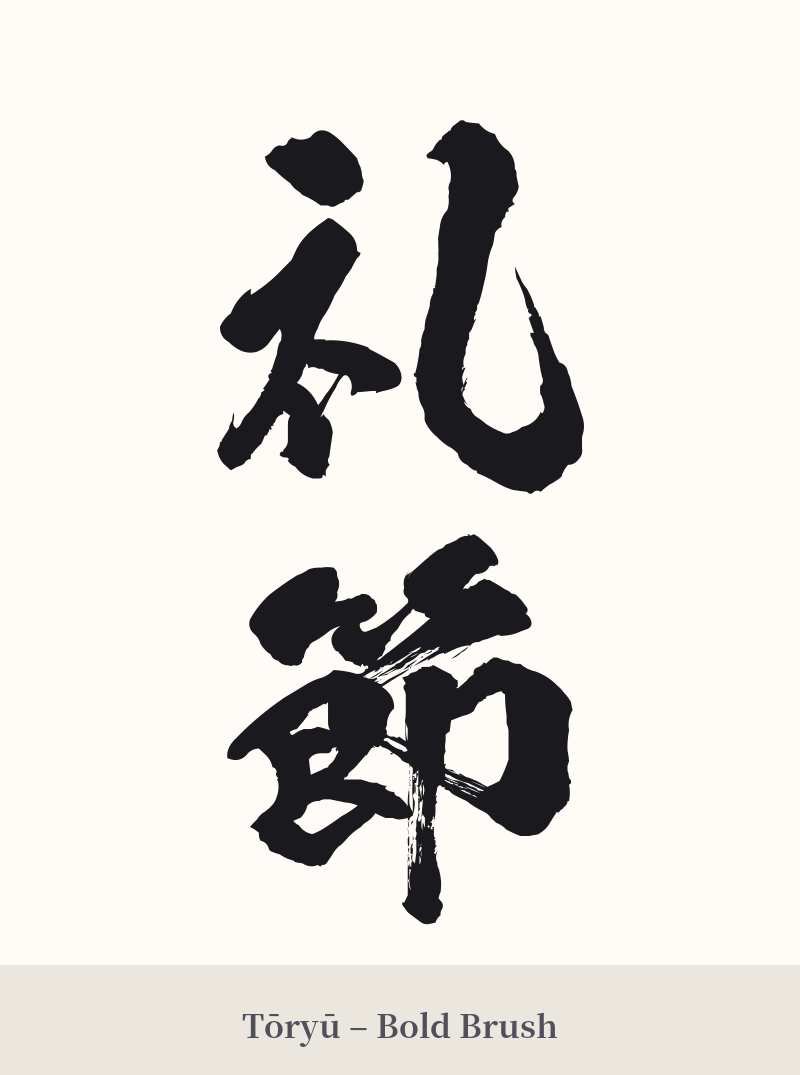
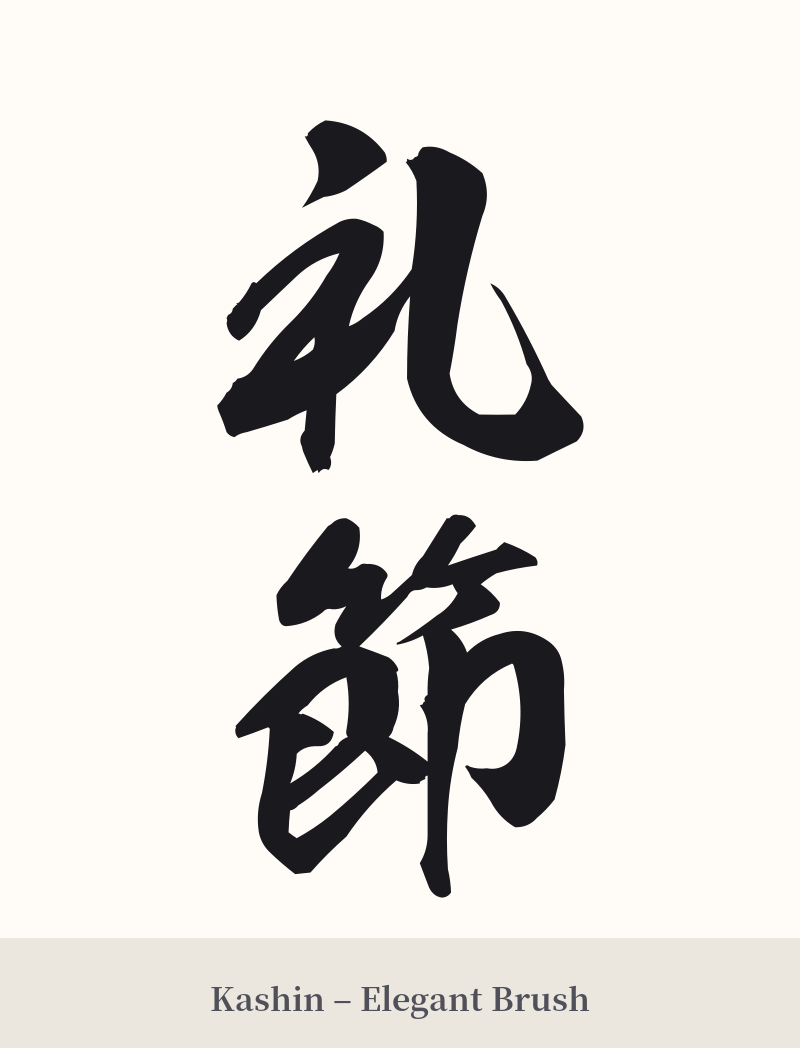
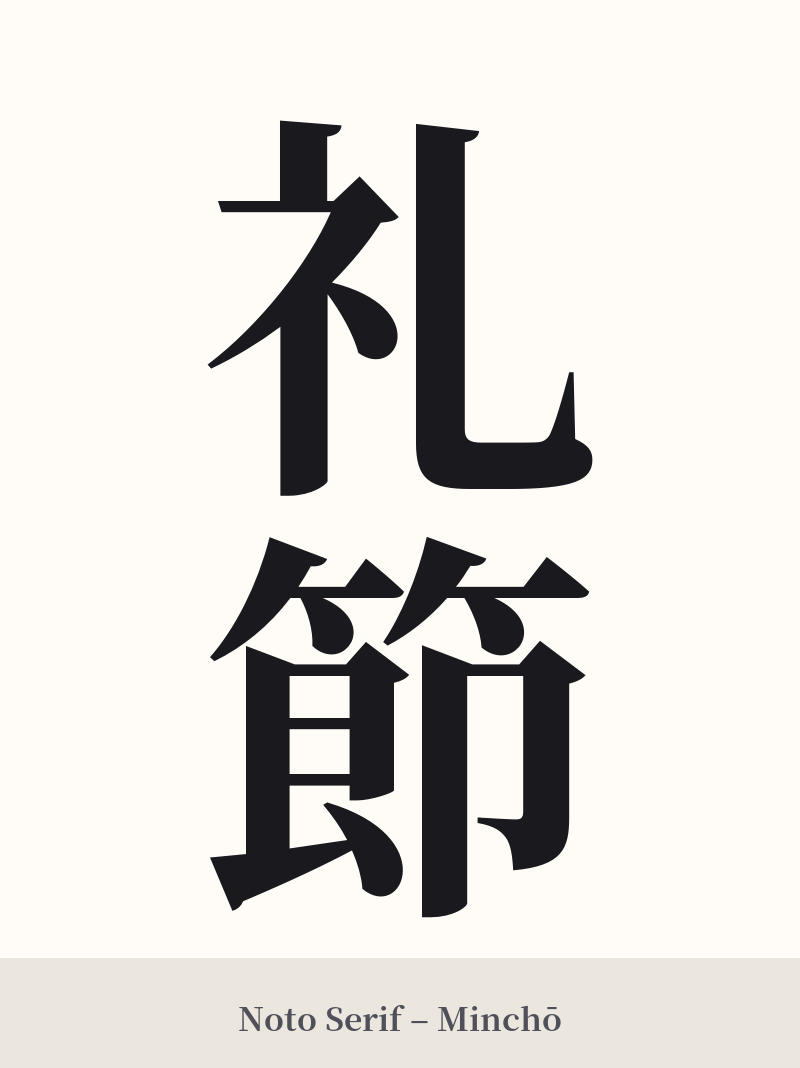
🖌️ Font Styles for 礼節
The same kanji can look dramatically different depending on the calligraphy style. Choose a font that matches the mood you want for your tattoo or design.
🎨 Tattoo Suitability
📐 Tattoo Design Guide
A tattoo of 礼節 (Reisetsu) speaks to a deep appreciation for discipline, respect, and social grace. The design should reflect this dignified nature.
– Placement: Vertical alignment is the most traditional and aesthetically pleasing orientation for multi-kanji words. It works beautifully along the forearm, the calf, the bicep, or tracing the spine. A horizontal design can also work well across the chest or upper back.
– Font Style: The choice of script can dramatically alter the feel. Kaisho (楷書), the standard block script, emphasizes the formal, structured nature of etiquette. Gyosho (行書), a semi-cursive style, can add a sense of fluid grace, suggesting that courtesy is a natural, flowing part of one's character. Sosho (草書), the highly abstract cursive script, is a bold artistic choice but may be illegible to the untrained eye.
– Visual Tips: The visual contrast between the simple 礼 (5 strokes) and the more complex 節 (13 strokes) is a key feature. An artist can play with this balance. Due to the detail in 節, avoid making the tattoo too small, as the lines could blur together over time. The design should be clean and precise, reflecting the concept it represents.
Comments