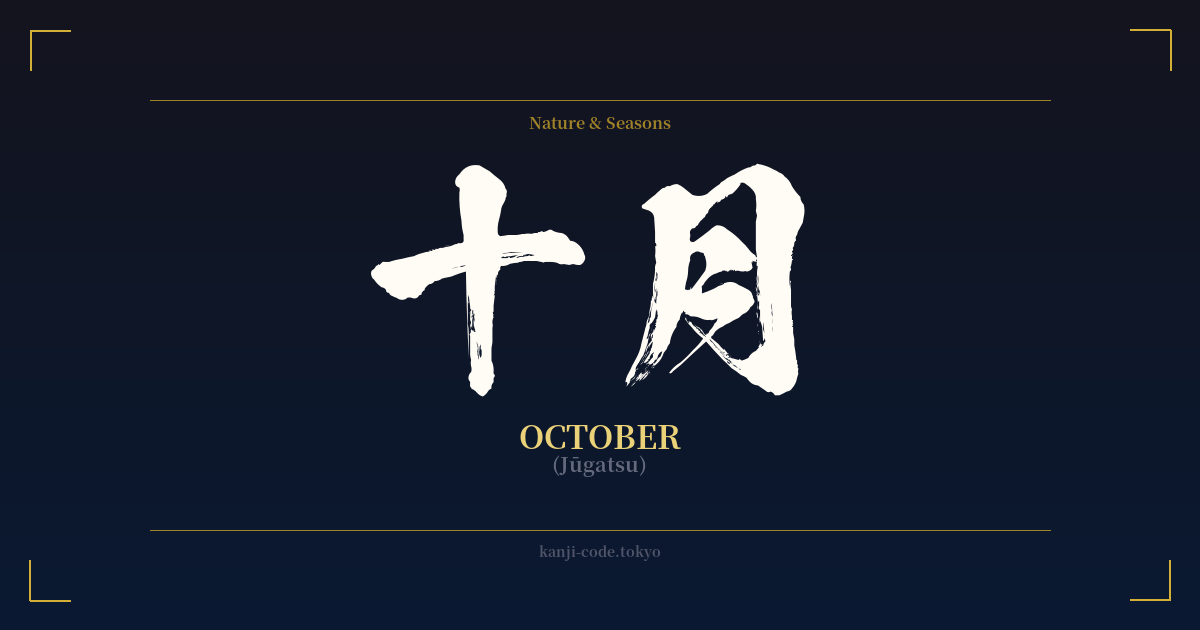
✍️ 十月 (Jūgatsu) — Cultural Context
十月 (Jūgatsu) is the modern Japanese word for October, straightforwardly composed of the kanji for 'ten' (十) and 'month' (月). This naming convention, which applies to all twelve months, was adopted during the Meiji Restoration in the late 19th century as part of Japan's modernization and alignment with the Gregorian calendar. While practical, this system replaced a more poetic and ancient set of names that were deeply connected to the seasons and traditional activities.
The old lunar calendar name for the tenth month is Kannazuki (神無月), which translates to 'the month of no gods'. This fascinating name stems from a Shinto belief that all eight million kami (gods and spirits) of Japan leave their home shrines during this month to gather for an annual meeting at the Grand Shrine of Izumo, in what is now Shimane Prefecture. This left the rest of the country temporarily 'godless'.
Ironically, in the Izumo region itself, this same month was known as Kamiarizuki (神在月), 'the month of the gods', celebrating the massive divine assembly taking place there. This tradition is still honored today with various festivals at the Izumo Grand Shrine, attracting pilgrims from all over Japan who wish to be present during this auspicious time.
In contemporary Japan, October is synonymous with the peak of autumn. It's a time of crisp air, clear skies, and spectacular natural beauty. The practice of 'momijigari' (紅葉狩り), or autumn leaf viewing, is in full swing, with people traveling to mountains and parks to see the vibrant reds, oranges, and yellows of the maple and ginkgo trees. The term 'shokuyoku no aki' (食欲の秋), or 'autumn of appetite', also comes to life in October. It's the harvest season for delicious foods like chestnuts (kuri), sweet potatoes (satsumaimo), persimmons (kaki), and the highly prized matsutake mushrooms.
While traditional festivals continue, October has also seen the enthusiastic adoption of Halloween. What started as a niche event has exploded into a major cultural phenomenon, especially in large cities. The streets of areas like Shibuya in Tokyo become packed with people in elaborate costumes, showcasing a modern, globalized side of Japanese culture that coexists with ancient traditions like Kannazuki.
🖌️ Font Styles for 十月
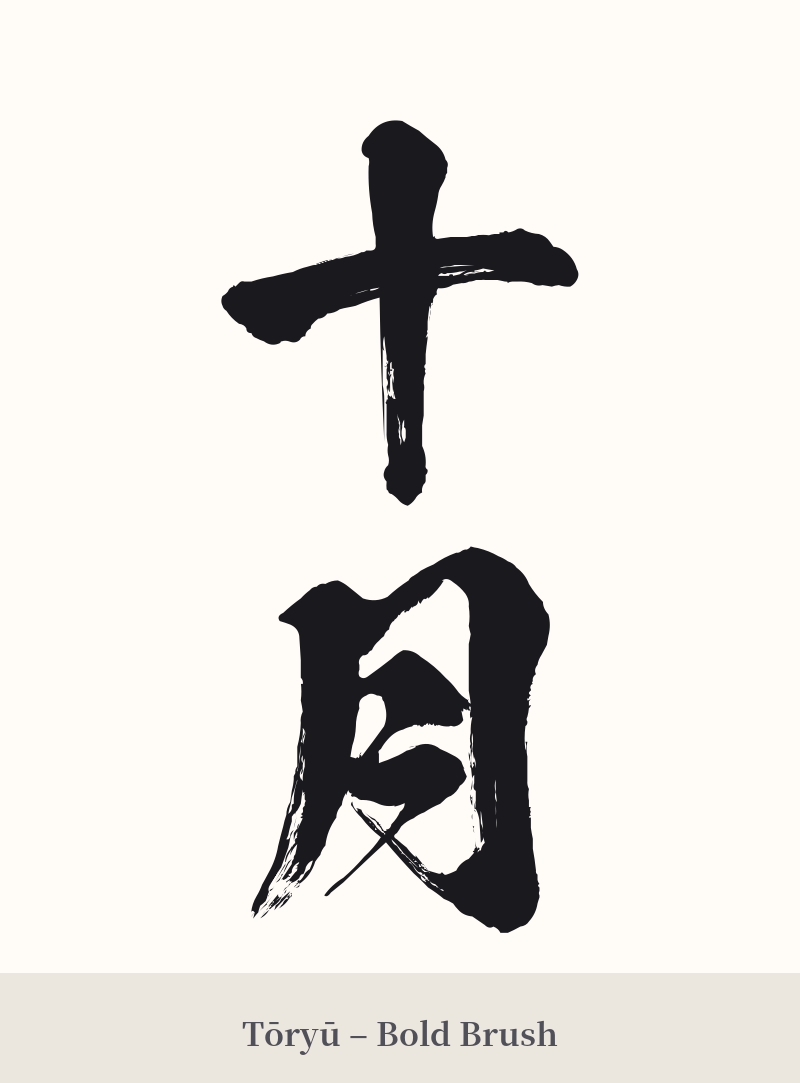
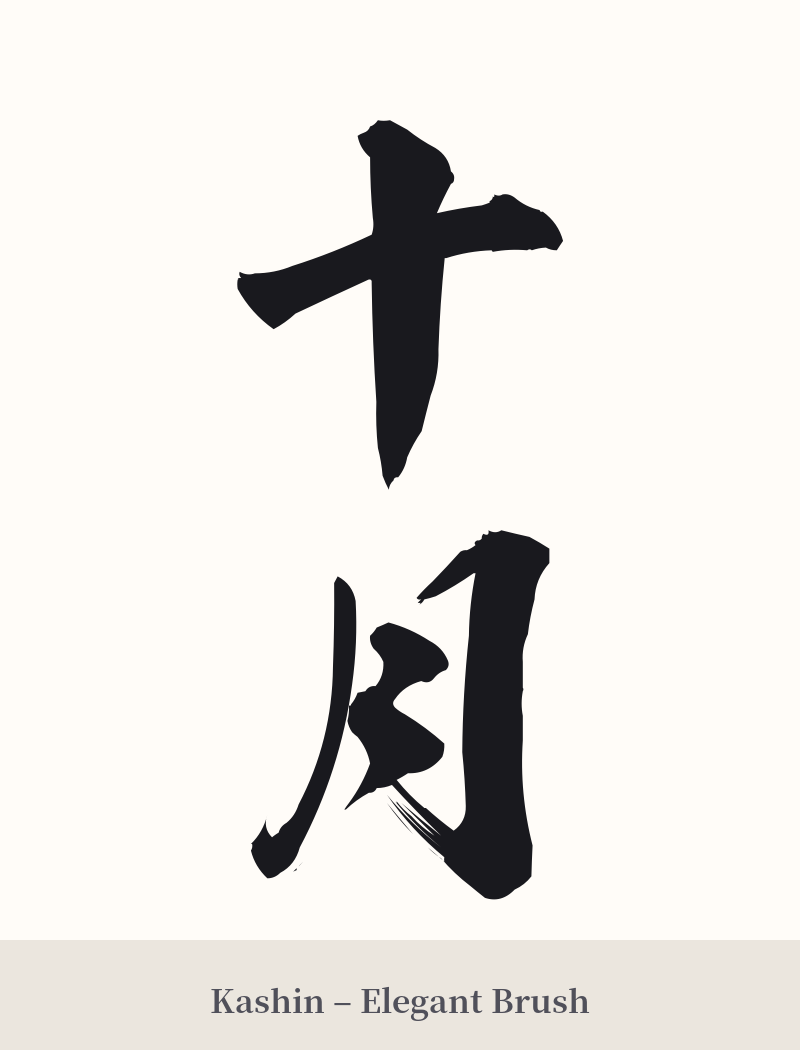
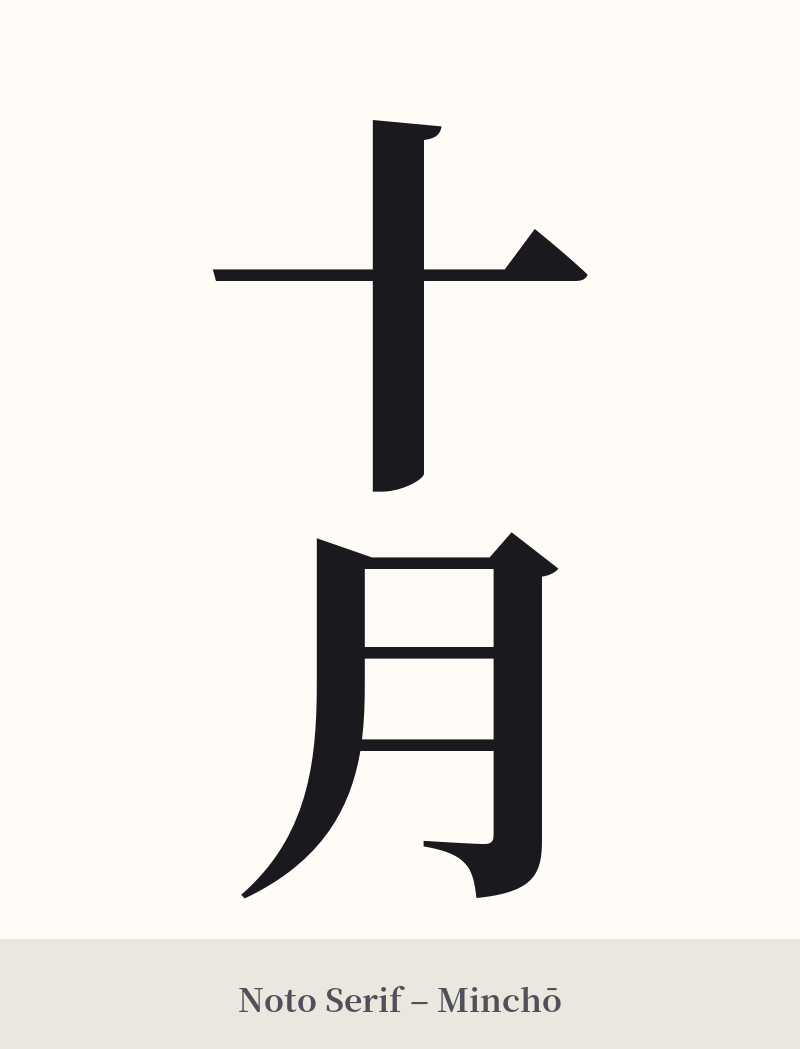
The same kanji can look dramatically different depending on the calligraphy style. Choose a font that matches the mood you want for your tattoo or design.
🎨 Tattoo Suitability
📐 Tattoo Design Guide
Given its simple and functional nature, a tattoo of 十月 works best when approached with personal meaning in mind. It's more of a quiet statement than a bold declaration.
– Placement: Consider smaller, more personal locations like the inner wrist, behind the ear, on the ankle, or along the collarbone. These spots complement the feeling of a personal memento.
– Style: The characters are simple, so a clean, minimalist font like a Mincho (serif) or a modern Gothic (sans-serif) style works very well. For a more artistic touch, a flowing semi-cursive script (Gyosho) can add elegance without sacrificing legibility.
– Visual Elements: To add depth and context, consider pairing 十月 with an autumnal motif. A single, gracefully falling maple leaf (momiji), a silhouette of a persimmon, or even a crescent moon (tying into the 月 kanji) can transform the design from a simple date into a beautiful, scenic piece.
Comments