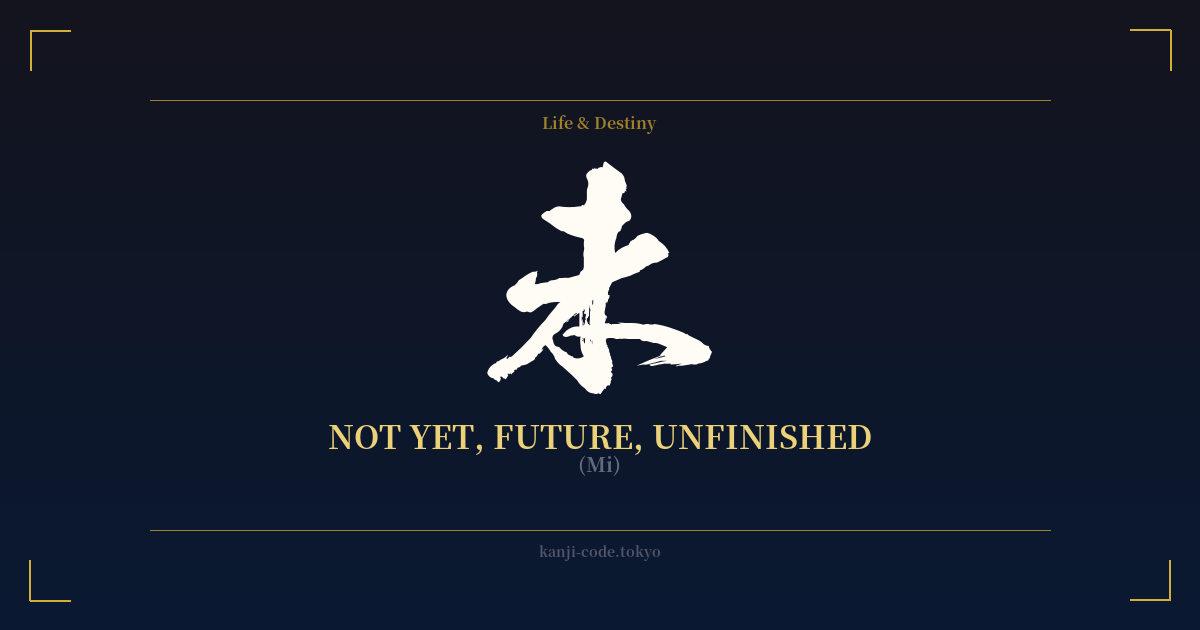
✍️ 未 (Mi) — Cultural Context
The kanji 未 (mi) is a character rich with the promise of what is to come. Its origins lie in a pictograph of a tree, 木 (ki), with an additional horizontal stroke at the top. This extra stroke symbolizes new branches that have yet to fully grow, perfectly capturing the essence of 'not yet' and 'undeveloped.' It is a character not of absence, but of latency and burgeoning potential.
Historically, 未 is one of the twelve Earthly Branches, the ancient Chinese and Japanese system used to reckon time, direction, and years. It corresponds to the Ram or Sheep of the zodiac. The 'Hour of the Ram' (未の刻, hitsuji no koku) was from 1 PM to 3 PM, a time when the day is mature but has not yet begun to fade into evening. This association embeds the kanji deep within the traditional calendrical and astrological fabric of East Asian culture.
In the Japanese language, 未 serves as a crucial prefix to convey a state of incompletion or futurity. It forms the foundation of some of the most hopeful and forward-looking words. The most prominent is 未来 (mirai), meaning 'future,' which literally translates to 'not yet come.' This single word transforms the concept from a simple negation into a powerful statement about time and possibility.
Other common words illustrate its nuanced meaning. 未知 (michi) means 'the unknown' ('not yet known'), while 未熟 (mijuku) means 'immature' or 'unskilled' ('not yet ripe'). In these contexts, 未 implies a temporary state that is expected to change through growth, experience, or the passage of time. A person who is 未熟 has the potential to become skilled; a matter that is 未定 (mitei, 'undecided') will eventually be resolved.
This concept resonates with a core aspect of Japanese aesthetics and philosophy—the appreciation for the incomplete. It speaks to a journey rather than a destination. Like an uncarved block of wood or a garden in early spring, 未 represents the beauty and power held within potential. It is a quiet, contemplative character that invites reflection on one's own path, growth, and the endless possibilities that lie ahead.
🖌️ Font Styles for 未
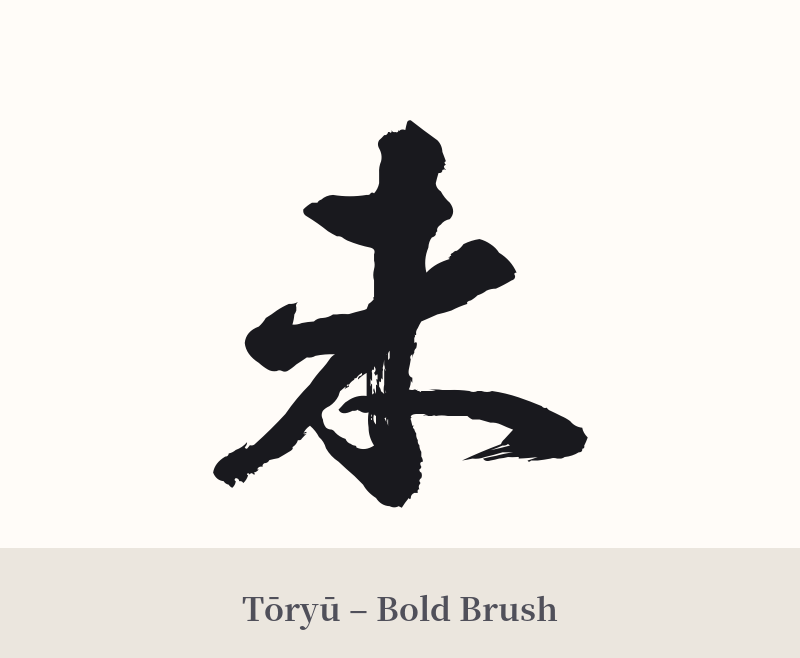
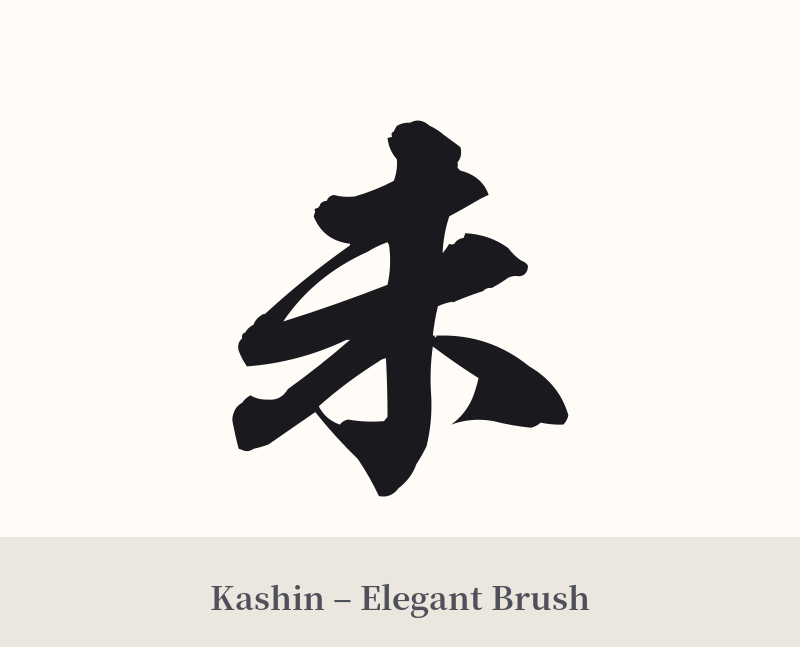
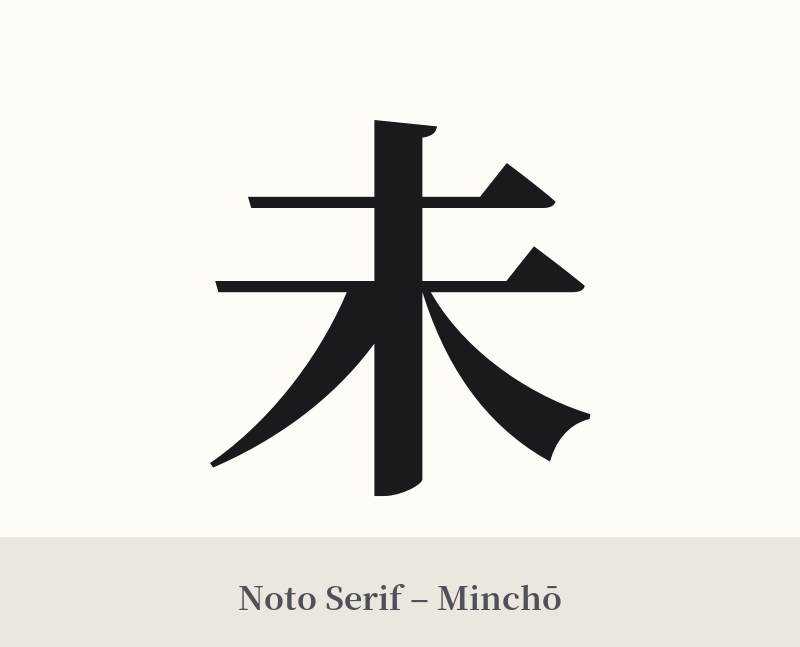
The same kanji can look dramatically different depending on the calligraphy style. Choose a font that matches the mood you want for your tattoo or design.
🎨 Tattoo Suitability
📐 Tattoo Design Guide
The simple and elegant structure of 未 makes it versatile for various tattoo designs. Its meaning of potential lends itself to subtle and personal placements.
– Placement: Due to its clean lines, 未 works exceptionally well as a small, discreet tattoo. Consider placing it on the inner wrist, behind the ear, on the ankle, or along the collarbone. For a larger statement, it can be placed on the forearm or calf, perhaps as the beginning of a more elaborate design.
– Font Styles: A bold, angular font like a Kaisho (block script) or Gothic style will emphasize its simple, strong structure. In contrast, a flowing, cursive calligraphy style like Gyosho or Sosho can visually represent the idea of becoming and potential.
– Visual Tips: To enhance its meaning, consider integrating 未 with other symbols. Placing it inside an Enso circle (Zen circle of enlightenment) can symbolize the universe of potential contained within. You could also have a design that grows out of the character itself, like a vine or tree branch, to visually connect to its etymological roots.
Comments