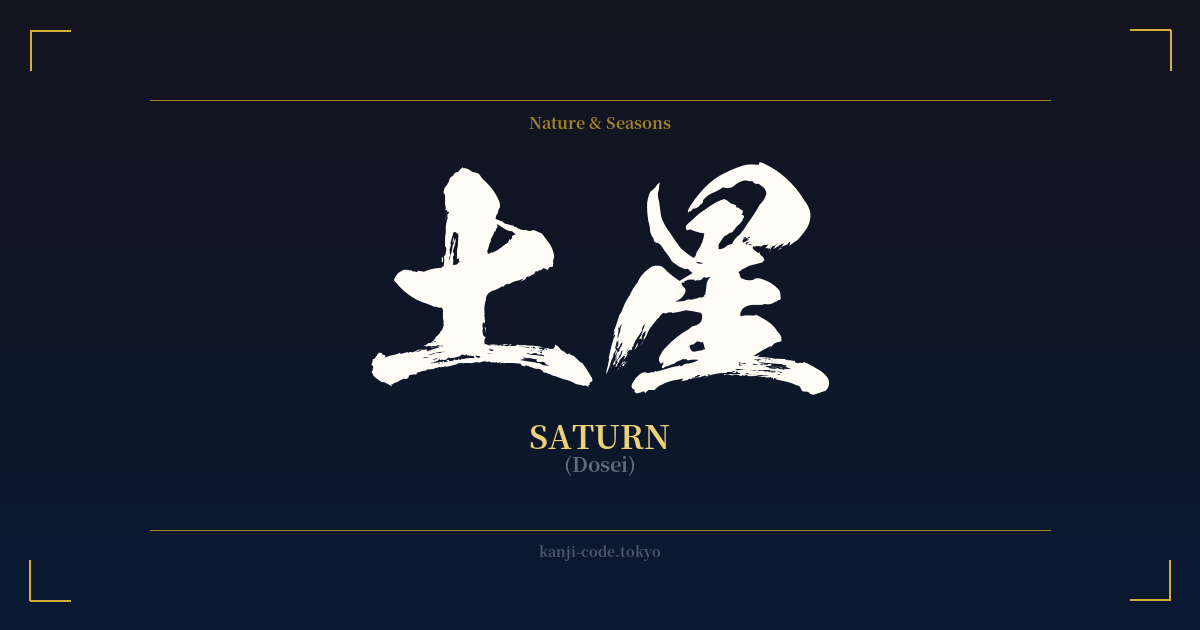
✍️ 土星 (Dosei) — Cultural Context
At first glance, 土星 (Dosei) is the straightforward Japanese word for the planet Saturn. It's used in textbooks, news reports about space exploration, and everyday conversation. However, to see it only in this modern astronomical context is to miss a story written in the stars thousands of years ago, a story rooted in ancient Chinese philosophy.
The name 土星 literally translates to "Earth Star." This isn't a poetic invention but a direct link to one of the most influential systems in East Asian thought: the Five Elements, known as Gogyō (五行) in Japan, which was adapted from the Chinese Wǔ Xíng. This philosophy posits that the universe is composed of five fundamental elements: Wood (木), Fire (火), Earth (土), Metal (金), and Water (水). These elements are not just physical substances but also represent interconnected forces, cycles, and characteristics that govern everything from medicine and martial arts to seasons and politics.
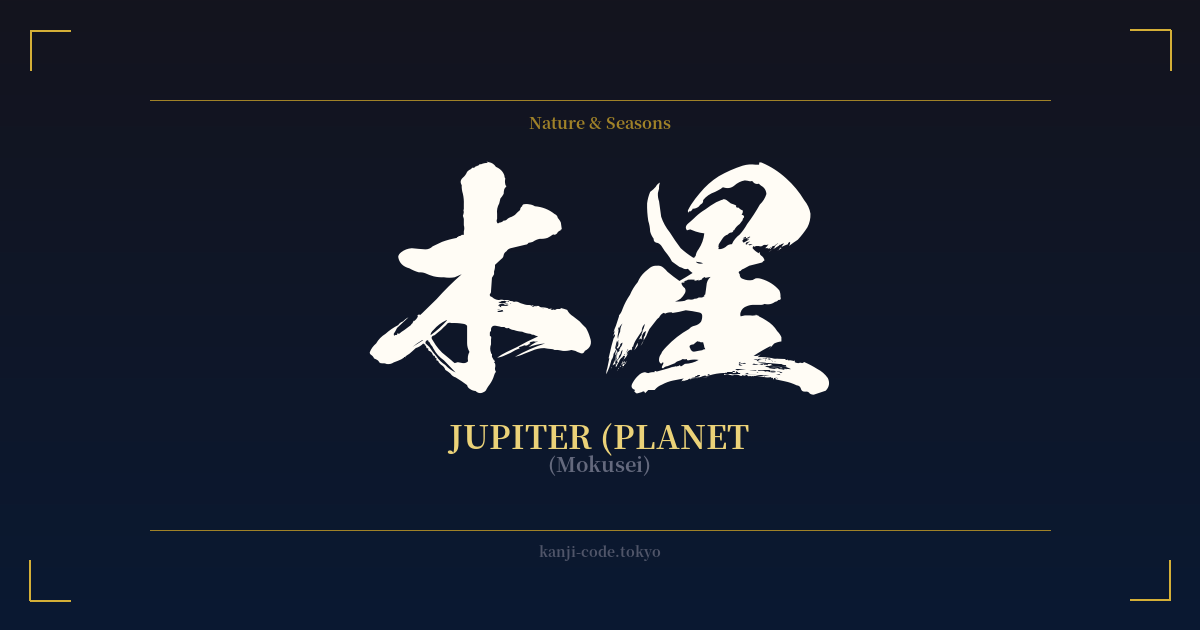
Ancient astronomers in China, whose observations were meticulously studied and adopted in Japan, looked to the heavens and saw a reflection of this elemental order. They identified the five planets visible to the naked eye and assigned an element to each one based on its perceived characteristics. Mars, with its reddish hue, became 火星 (Kasei), the "Fire Star." Jupiter, the great giant, became 木星 (Mokusei), the "Wood Star." Venus, shining brightly, became 金星 (Kinsei), the "Metal Star," and swift-moving Mercury became 水星 (Suisei), the "Water Star."
Saturn, with its slow, steady, and majestic journey across the night sky, was associated with the element of Earth. The character 土 represents soil, ground, and foundation. In the Five Elements system, Earth is the central element, symbolizing stability, patience, nourishment, and diligence. Saturn's deliberate pace and yellowish tint were seen as the celestial embodiment of these terrestrial qualities. It was the anchor of the planetary system, just as earth is the foundation beneath our feet.
Therefore, when someone chooses the kanji 土星, they are invoking a dual legacy. They are referencing the ringed gas giant we know from modern science, a symbol of cosmic beauty and wonder. Simultaneously, they are tapping into an ancient philosophical stream that sees this celestial body as a symbol of groundedness, stability, and the nurturing power of the earth. It's a beautiful fusion of the astronomical and the philosophical, a word that connects the soil beneath our feet to the distant stars above.
🖌️ Font Styles for 土星
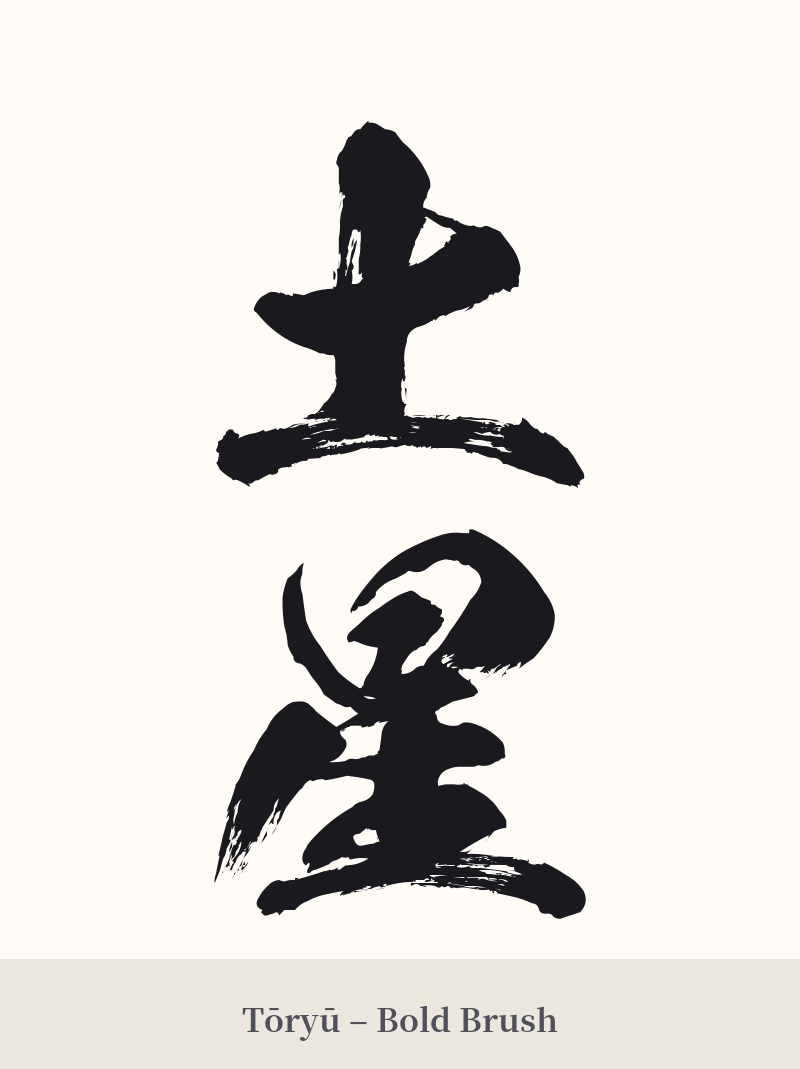
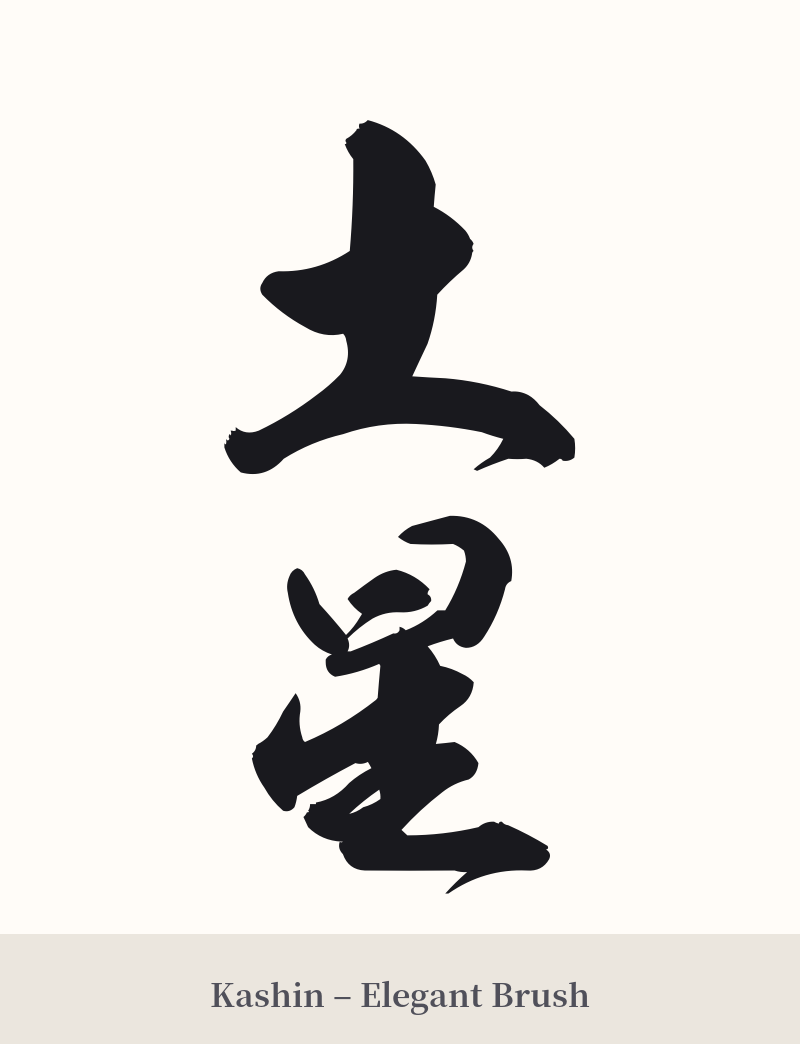
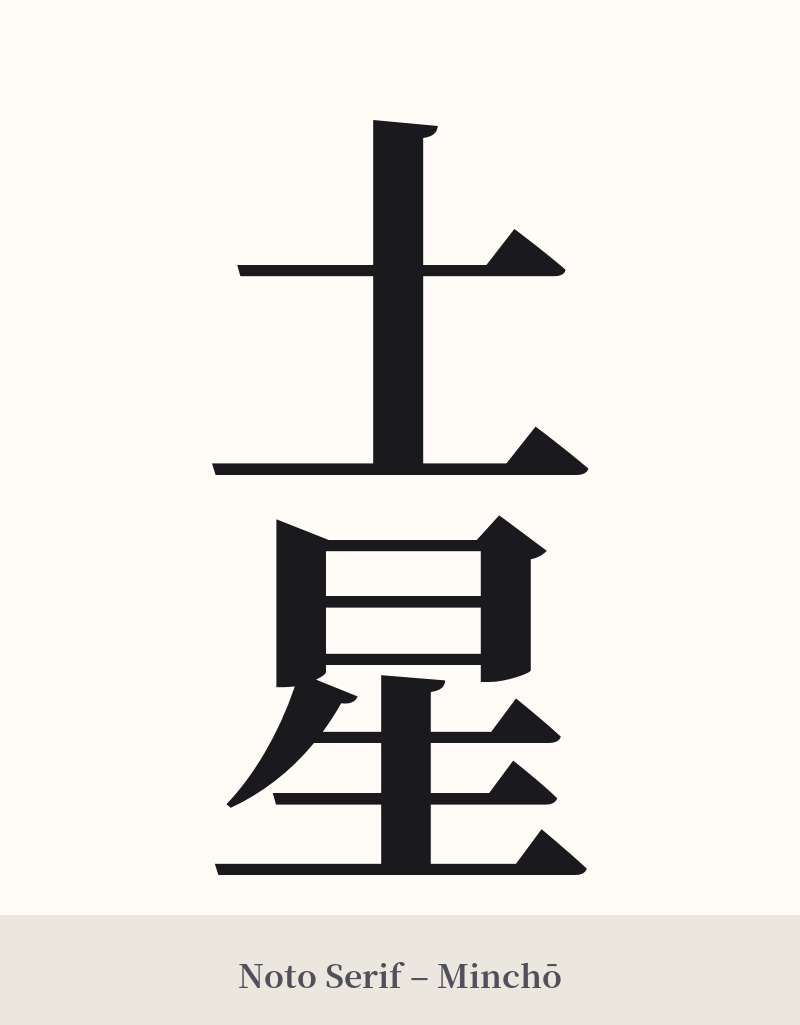
The same kanji can look dramatically different depending on the calligraphy style. Choose a font that matches the mood you want for your tattoo or design.
🎨 Tattoo Suitability
📐 Tattoo Design Guide
The two characters of 土星 offer a nice visual balance that works well in tattoo form. The simplicity of 土 contrasts beautifully with the more detailed 星, creating a dynamic yet harmonious composition.
– Placement: A vertical orientation is classic and looks excellent down the forearm, along the spine, or on the calf. For a horizontal design, the back of the neck, across the chest, or on the inner bicep are strong choices.
– Font Style: To emphasize the "Earth" aspect, consider a strong, stable calligraphy style like Kaisho (block script). For a design that highlights the "Star" aspect, a more fluid and artistic style like Gyosho (semi-cursive) can evoke a sense of cosmic movement.
– Visual Tips: Consider integrating the kanji with other imagery. The characters could be placed within a subtle outline of Saturn's rings. Alternatively, you could have the character 土 rendered with a texture like cracked earth, while 星 is inked with a brighter or shimmering effect to represent a star.
Comments