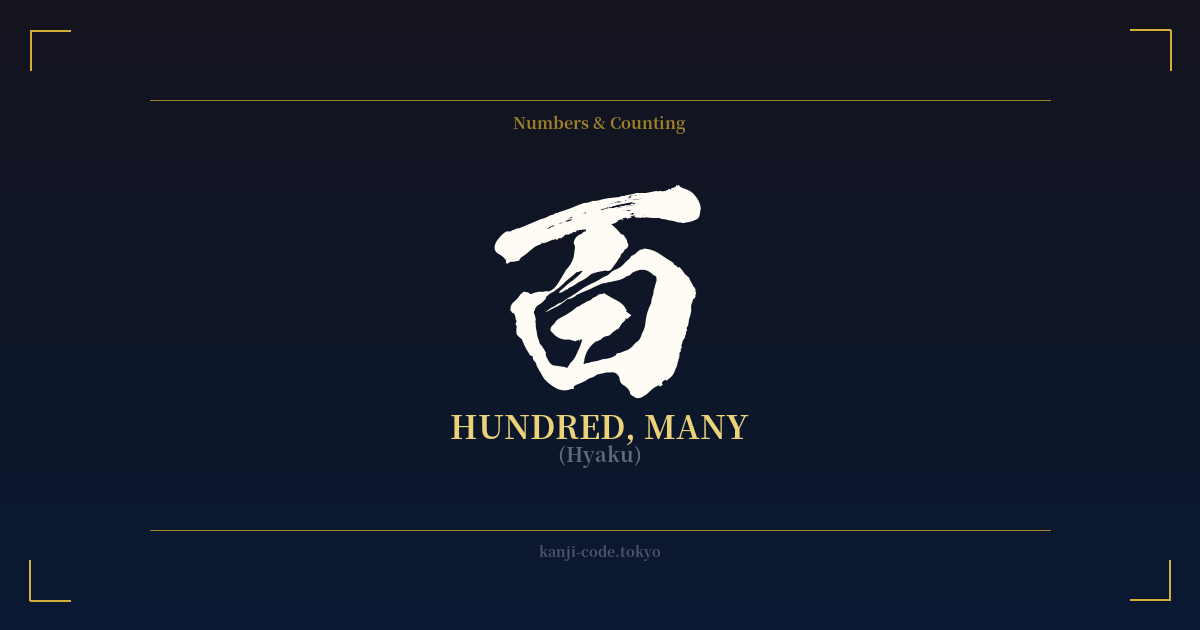
✍️ 百 (Hyaku) — Cultural Context
The kanji 百 (Hyaku) is one of the most fundamental characters in the Japanese language, representing the number 'one hundred'. Its origins are thought to be a combination of 'one' (一) and 'white' (白, haku), with 'white' being used as a phonetic component. Over centuries, this simple character has evolved from a mere numeral into a powerful symbol of abundance, completeness, and a significant quantity.
In Japanese culture, 'hundred' often transcends its literal value to mean 'many,' 'all,' or 'a great deal of'. This is beautifully illustrated in the term 百貨店 (hyakkaten), the word for a department store. It doesn't mean a store with only one hundred items, but rather a 'store of a hundred goods,' implying a vast and comprehensive selection.
This symbolic usage is deeply embedded in Japanese proverbs and expressions. The famous saying 百聞は一見に如かず (hyakubun wa ikken ni shikazu) translates to 'hearing a hundred times is not as good as seeing once,' emphasizing the power of direct experience over hearsay. Another powerful phrase is 百発百中 (hyappatsu hyakuchū), meaning 'one hundred shots, one hundred bullseyes.' It is used to describe a master archer, a skilled marksman, or metaphorically, someone whose plans and predictions are always perfectly accurate and successful.
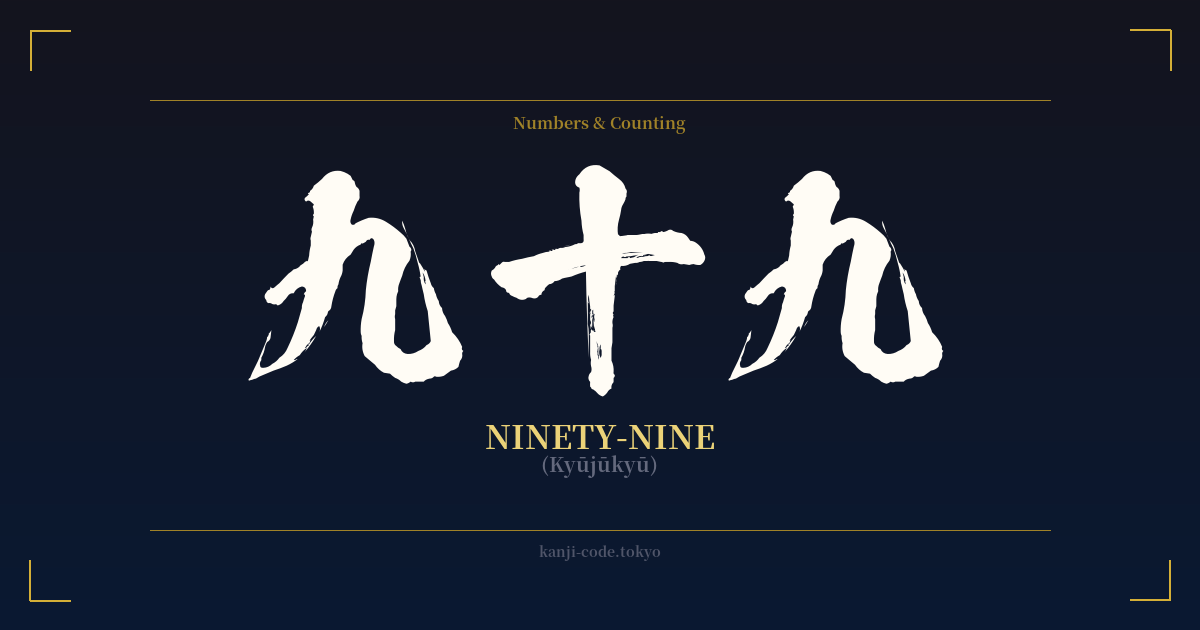
Furthermore, the concept of 'hundred' is integral to marking time and celebrating milestones. A person's 99th birthday is called Hakuju (白寿), a celebratory milestone where the kanji for 'white' (白) is used because if you remove the top stroke from 'hundred' (百), you are left with 'white'. The 100th birthday itself is a major event. This connection to longevity and achievement gives 百 a positive and aspirational quality.
While the term 八百万の神 (Yaoyorozu no kami) translates to the 'eight million gods' of Shinto, the concept uses numbers like 百 and 万 (ten thousand) poetically to convey the idea of 'innumerable' or 'countless.' It reflects a worldview where the divine is everywhere and in everything, and 百 helps build that sense of infinite scale.
🖌️ Font Styles for 百
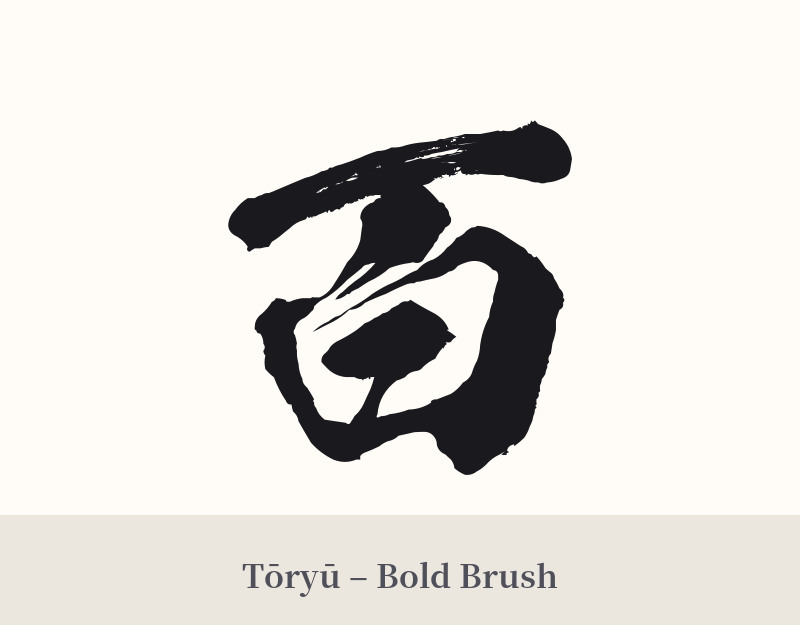
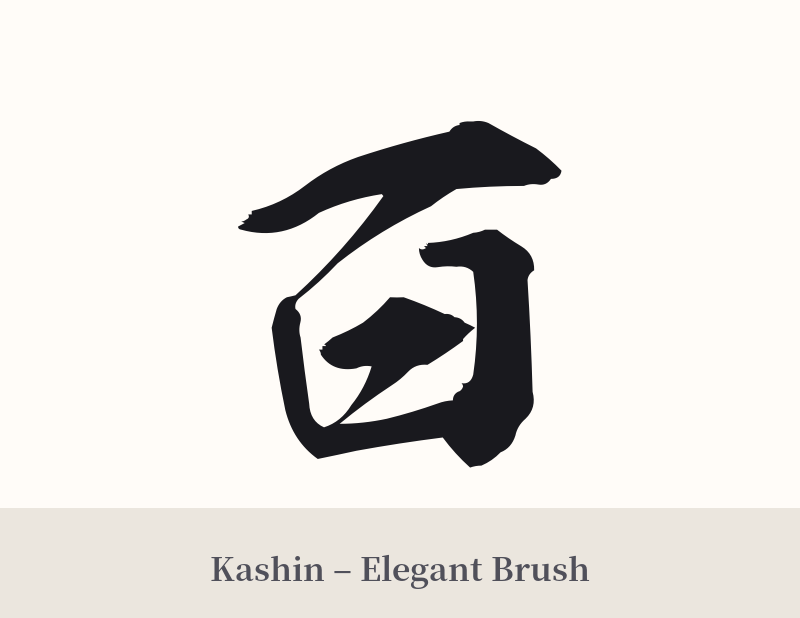
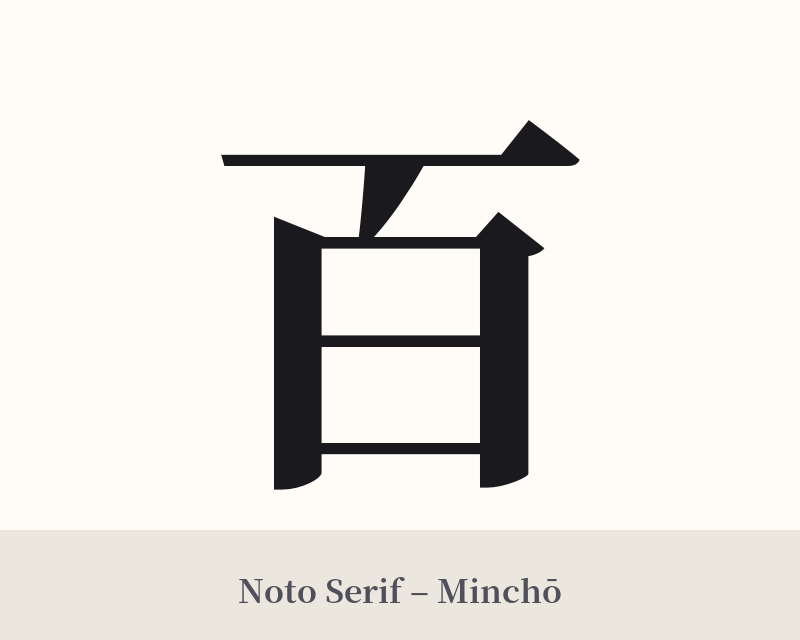
The same kanji can look dramatically different depending on the calligraphy style. Choose a font that matches the mood you want for your tattoo or design.
🎨 Tattoo Suitability
📐 Tattoo Design Guide
The kanji 百 (Hyaku) is a versatile character for a tattoo, lending itself well to minimalist aesthetics due to its clean lines and balanced structure.
– Placement: Its simplicity makes it ideal for smaller, subtle placements. Consider the wrist, behind the ear, the ankle, or on the fingers. In a larger composition, it can act as a foundational element or be integrated into a Japanese-style sleeve to represent a concept like '100 battles' or '100 blessings'.
– Font Style: A crisp, clean Mincho or Gothic font will emphasize its numerical, modern feel. Conversely, a dynamic and flowing calligraphy script (shodō) can give it more life and a classic, artistic vibe, highlighting the brushstroke order.
– Visual Companions: To enhance its meaning of 'many' or 'abundance,' consider pairing 百 with imagery. For example, a tattoo of 百 alongside a single crane could symbolize 'one hundred cranes,' a powerful motif for longevity and good fortune. It's also often paired with other kanji to form idiomatic compounds like 百発百中 (perfect accuracy).
Comments