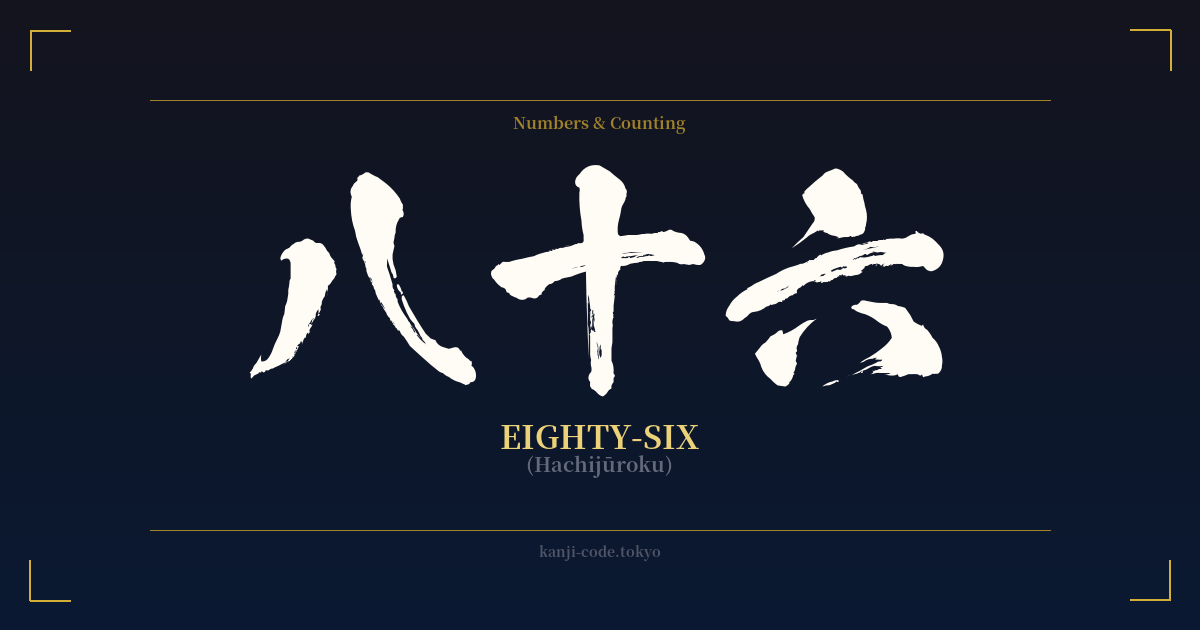
✍️ 八十六 (Hachijūroku) — Cultural Context
On the surface, 八十六 (hachijūroku) is as straightforward as it gets in the Japanese language. It is the number eighty-six. The construction is a perfect example of Japanese numerical logic: 八 (hachi – eight), 十 (jū – ten), and 六 (roku – six). It literally translates to 'eight tens and six,' or 86. In daily life, it carries no inherent symbolism or deep meaning; it's used to count, denote age, or identify a street address.
However, in recent years, this simple number has been imbued with a powerful and somber new meaning, thanks to the critically acclaimed light novel and anime series, '86 EIGHTY-SIX' (ハチロク -エイティシックス-). This has completely redefined the number for a generation of fans worldwide.
In the world of '86,' the Republic of San Magnolia is at war with a neighboring empire's army of autonomous drones. The Republic claims to have no human casualties, fighting the war with its own unmanned machines. The reality is far darker. The war is fought by the '86,' a marginalized minority stripped of their human rights and forced to pilot suicide machines in a secret administrative district—the 86th Sector. They are not considered human and their deaths are not recorded.
Within this narrative, the number '86' becomes a symbol of dehumanization, segregation, and systemic oppression. It is the brand that marks the protagonists as something less than human. Yet, for the characters themselves, being '86' also becomes a source of fierce pride, identity, and unbreakable camaraderie. They embrace the label that was meant to erase them, turning it into a testament to their will to survive and their shared struggle for freedom and dignity.
This modern pop culture context has elevated 八十六 from a mundane numeral to a complex emblem of resilience against a cruel fate. Before this series, the most common association for 'hachiroku' in Japan was the Toyota AE86, a legendary car from the 1980s popularized by the street racing manga 'Initial D.' Now, the number carries a dual cultural weight: one of nostalgic automotive enthusiasm and another of profound, tragic heroism.
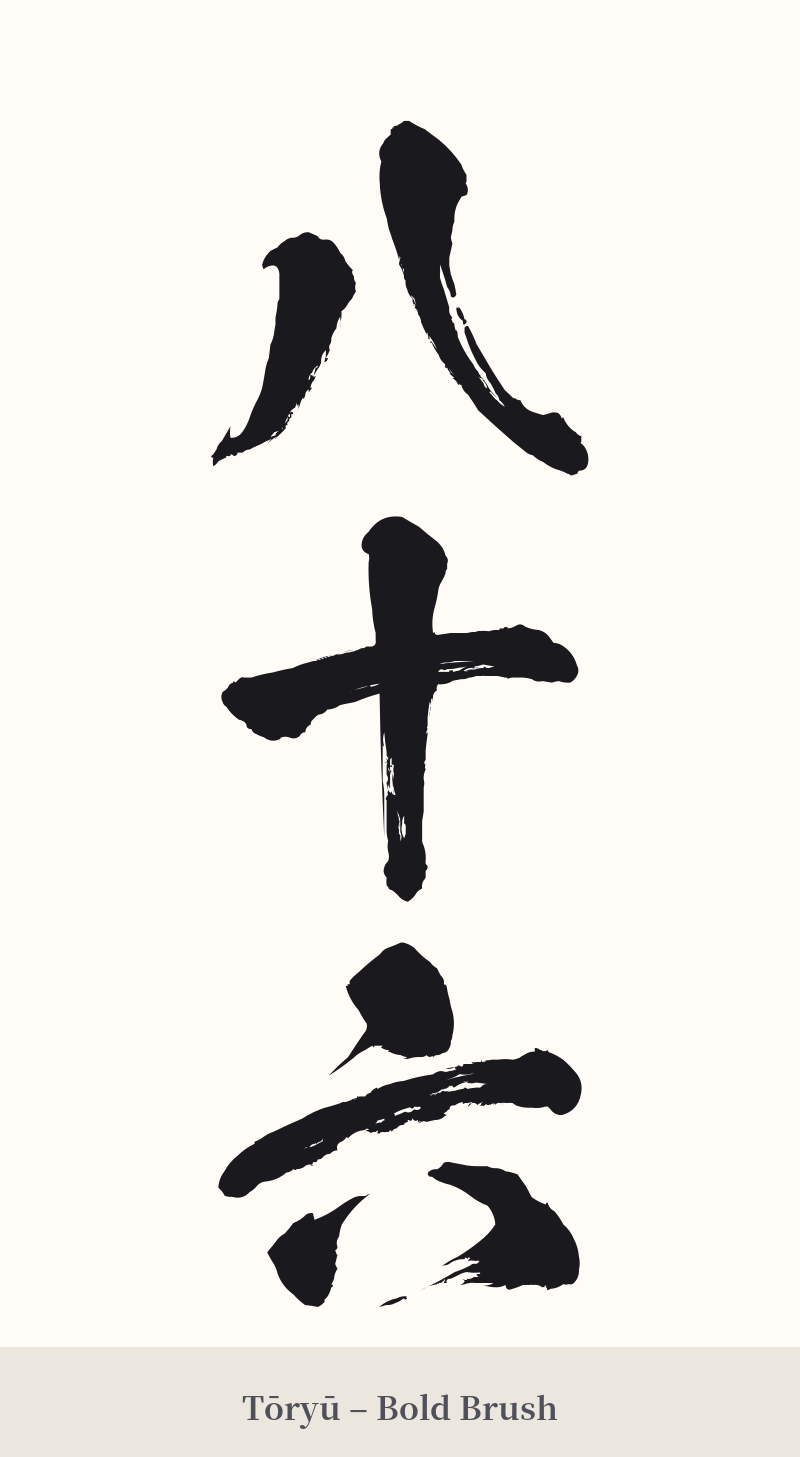
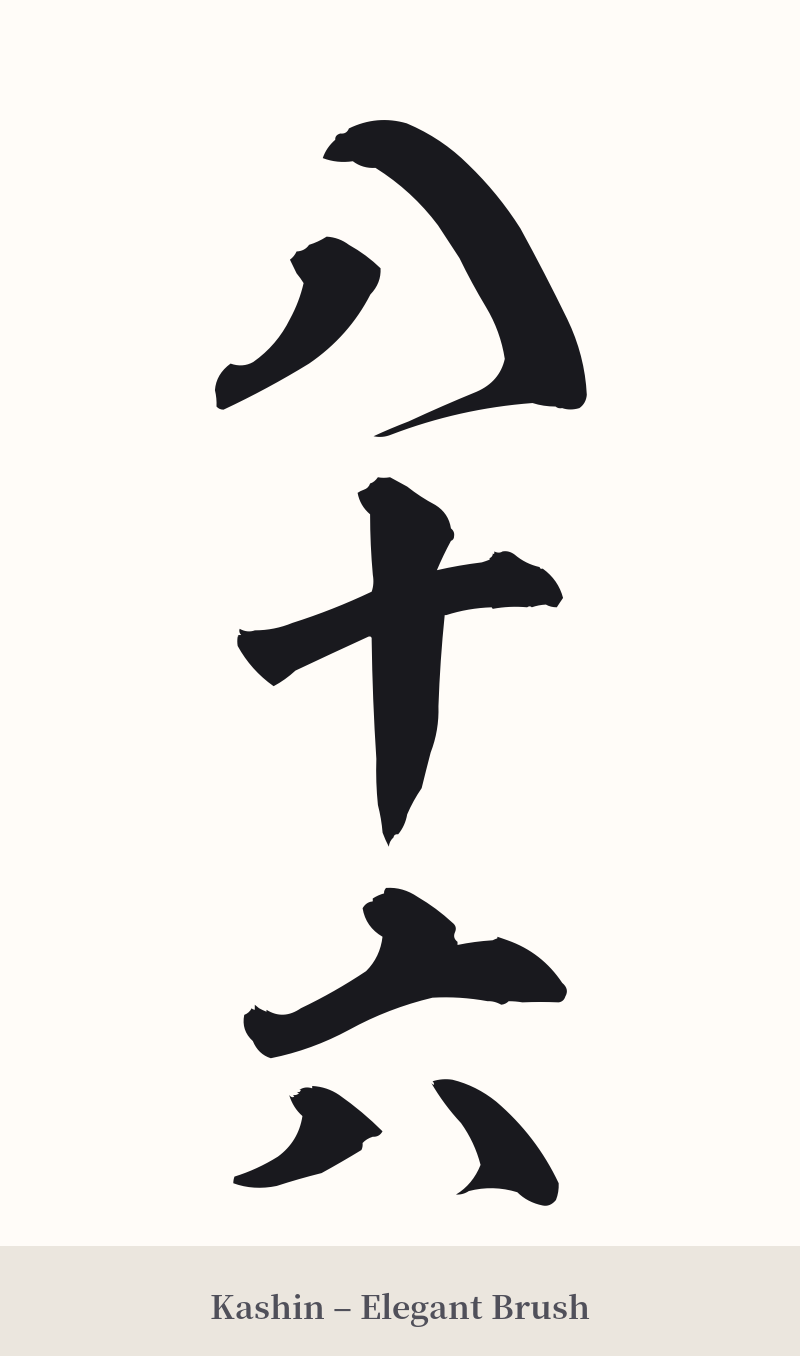
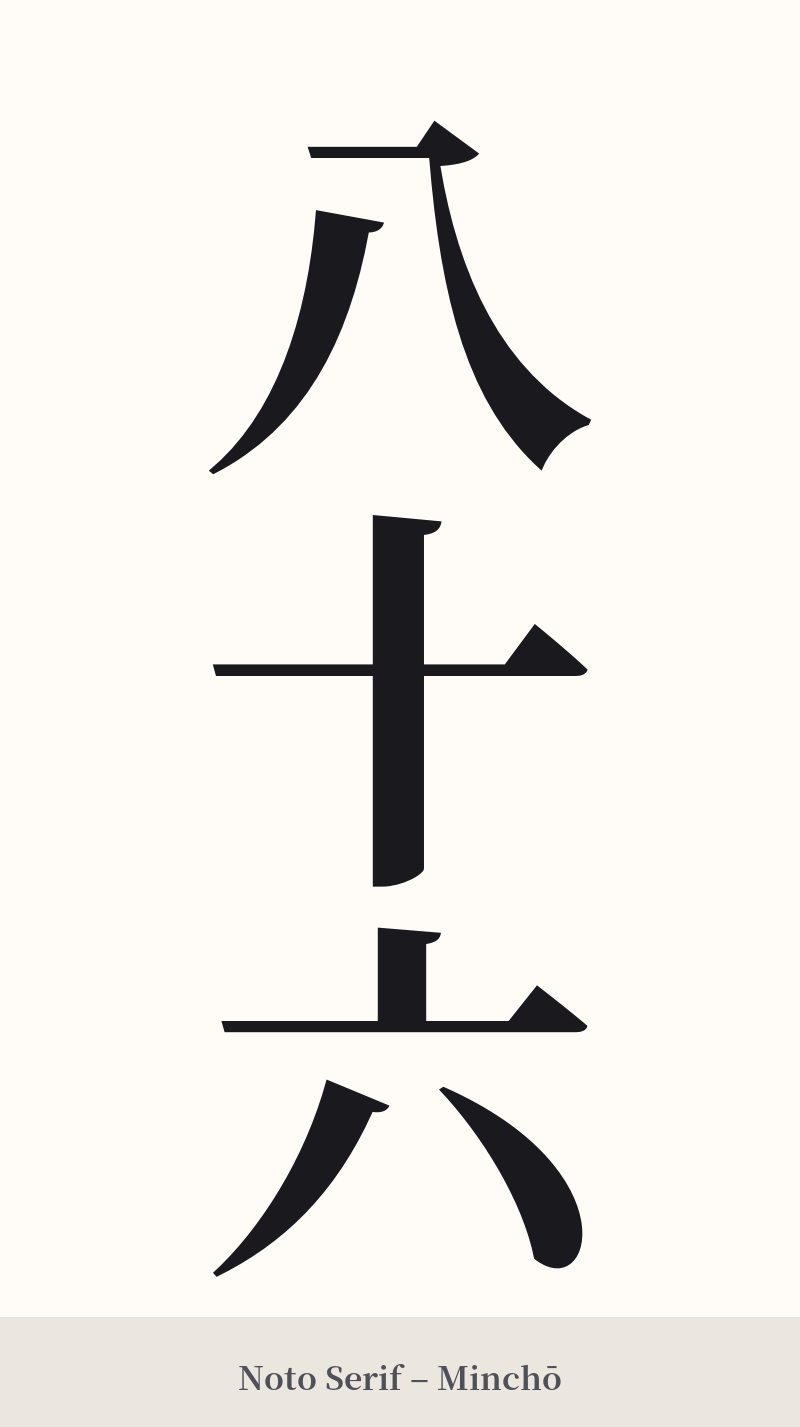
🖌️ Font Styles for 八十六
The same kanji can look dramatically different depending on the calligraphy style. Choose a font that matches the mood you want for your tattoo or design.
🎨 Tattoo Suitability
📐 Tattoo Design Guide
For a tattoo of 八十六, the design choices can help clarify its intended meaning.
– Placement: A vertical alignment is traditional and visually appealing. Consider places like the forearm, the calf, or along the spine. This allows the three characters to flow downward naturally.
– Font Style: The font can heavily influence the vibe. A clean, modern, sans-serif or Mincho-style font would echo the military sci-fi aesthetic of the '86 EIGHTY-SIX' anime. Alternatively, a distressed, stenciled, or gritty brush style could represent the harsh, war-torn reality of the 86th Sector.
– Visual Additions: To make the reference explicit, consider incorporating a small, subtle icon from the series. This could be the 'headless' skeleton mark of the Spearhead Squadron, a stylized Juggernaut, or the blue flower, the Lycoris radiata, which is a key visual motif in the anime. This provides context that the number alone lacks.
Comments