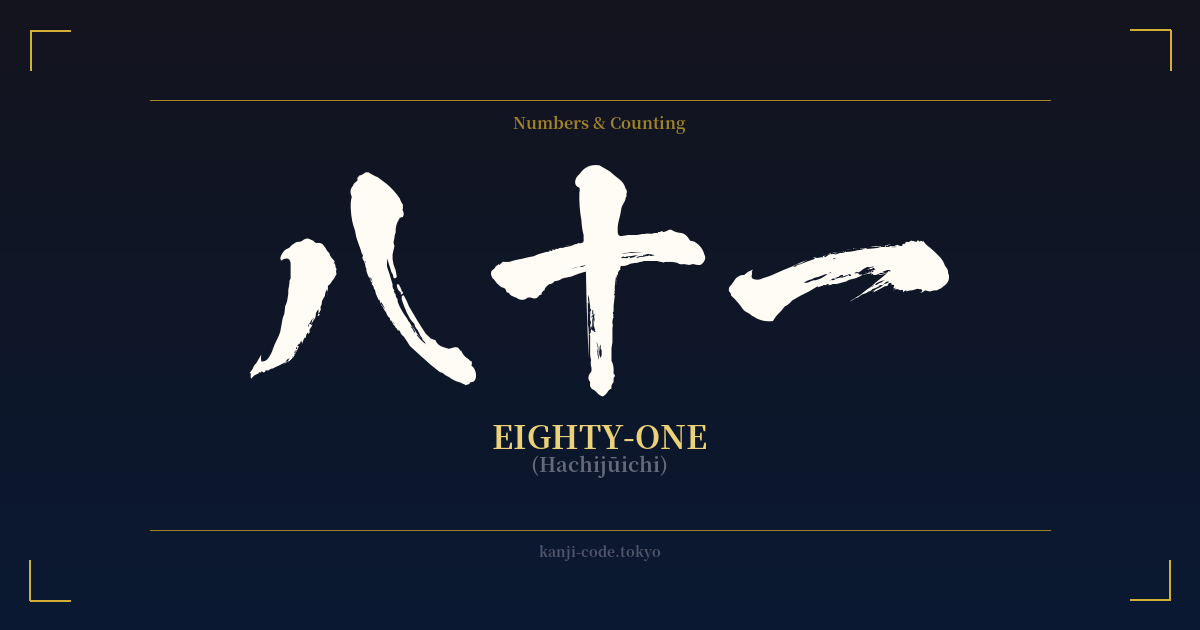
✍️ 八十一 (Hachijūichi) — Cultural Context
The kanji 八十一 (Hachijūichi) is the Japanese word for the number eighty-one. Its construction is a clear and logical representation of the Japanese numerical system: 八 (hachi) means 'eight', 十 (jū) means 'ten', and 一 (ichi) means 'one'. The structure literally translates to 'eight tens plus one,' showcasing the multiplicative and additive principles used to form larger numbers in Japanese.
While on the surface it's just a number, eighty-one holds a few interesting cultural and mathematical associations. Perhaps its most well-known appearance is in the Japanese multiplication tables, known as 九九 (kuku). The very last and most famous line that every Japanese schoolchild memorizes is 「九九八十一」 (ku ku hachijūichi), or 'nine times nine is eighty-one.' This makes the number a symbol of completion and foundational knowledge, the culmination of elementary arithmetic.
Beyond the classroom, the number 81 gains a deeper, more philosophical dimension through its connection to Taoism, which has profoundly influenced Japanese Zen Buddhism. The foundational text of Taoism, the Tao Te Ching, is traditionally divided into 81 chapters or poems. Each chapter offers insights into 'The Way' (the Tao), and the full collection of 81 represents a complete body of wisdom. For those familiar with this classic text, the number 81 can evoke themes of balance, natural order, and profound, simple truths.
In the realm of numerology, the number 81 is the square of 9 (9×9). The number nine, 九 (ku), is sometimes considered unlucky in Japan because it is a homophone for 苦 (ku), meaning 'suffering' or 'agony.' Therefore, 81 could be interpreted in different ways: either as an amplification of this 'unlucky' number or, in a more positive light, as a number of great power and completeness due to its squared nature. This duality adds a layer of intrigue, though the 'unlucky' association is far less common for 81 than it is for 9 itself.
Ultimately, 八十一 is not a word that carries the immediate poetic or martial weight of concepts like 'samurai' or 'cherry blossom.' Instead, its significance is more subtle and specific, rooted in the universal experience of learning and in the philosophical depths of ancient texts. It represents a concrete, quantifiable value that, through cultural association, touches upon ideas of completion, knowledge, and wisdom.
🖌️ Font Styles for 八十一
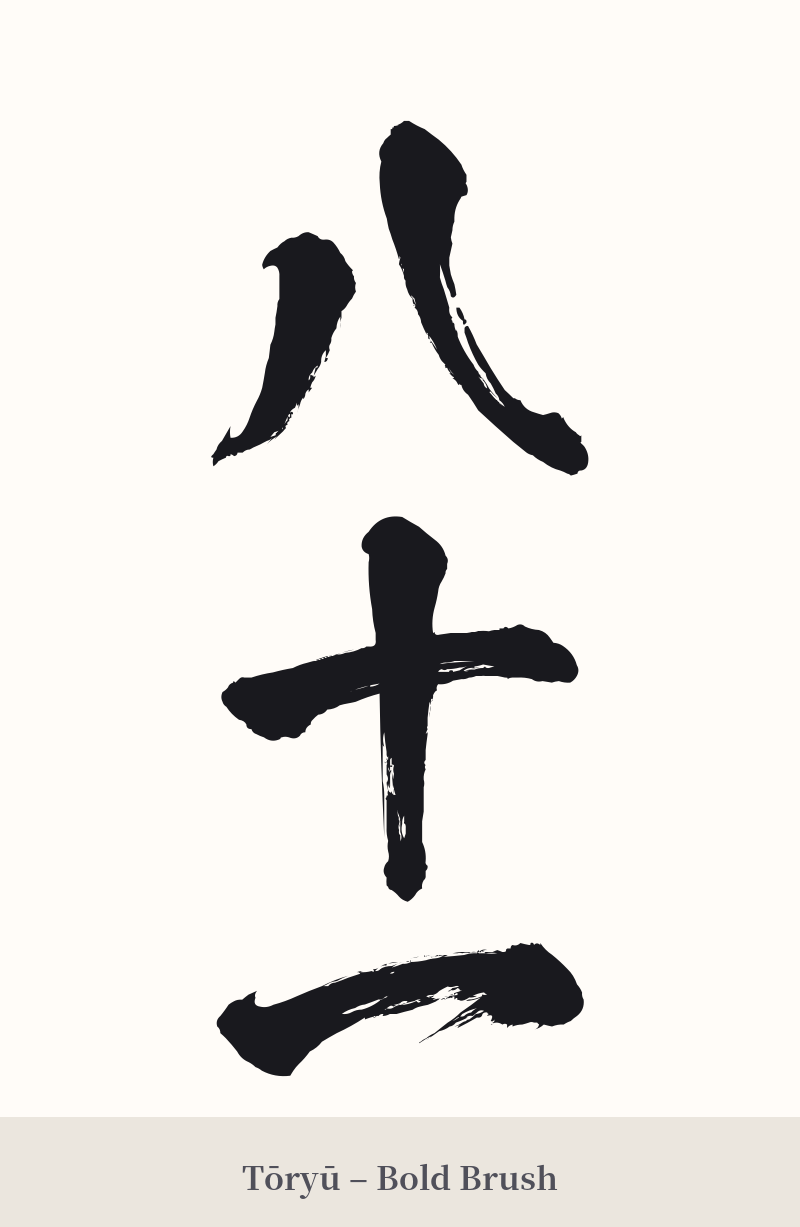
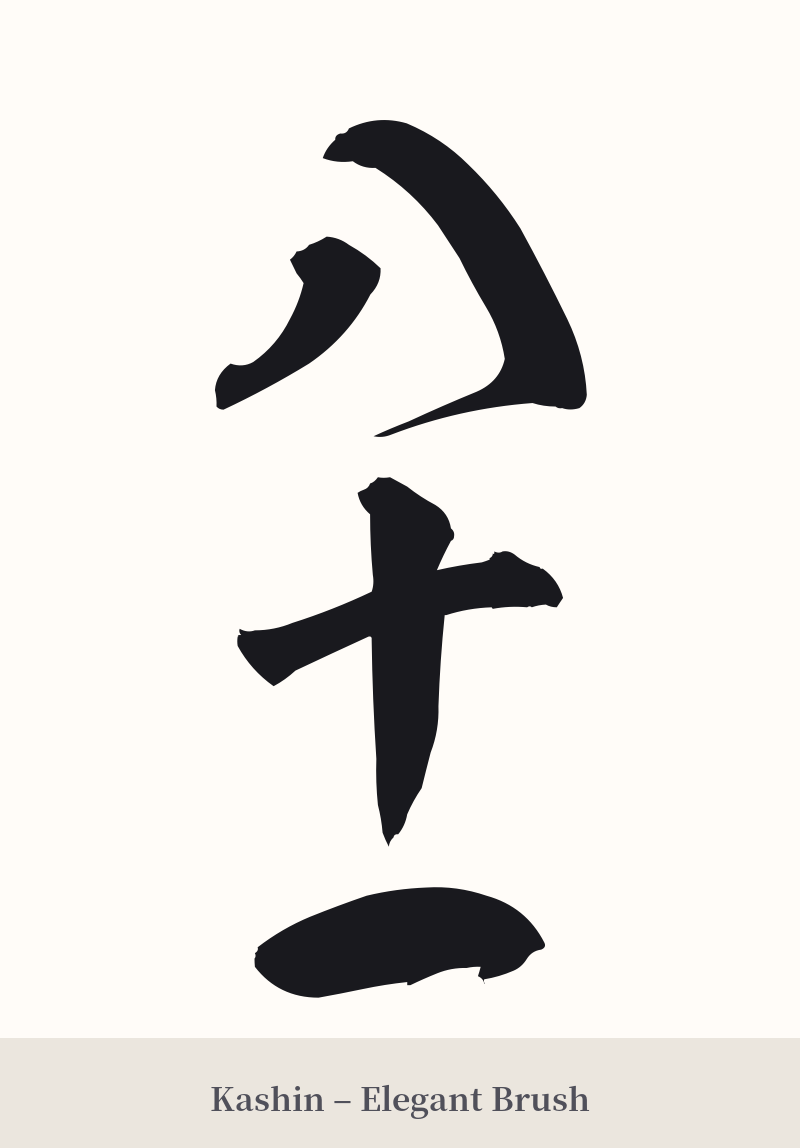
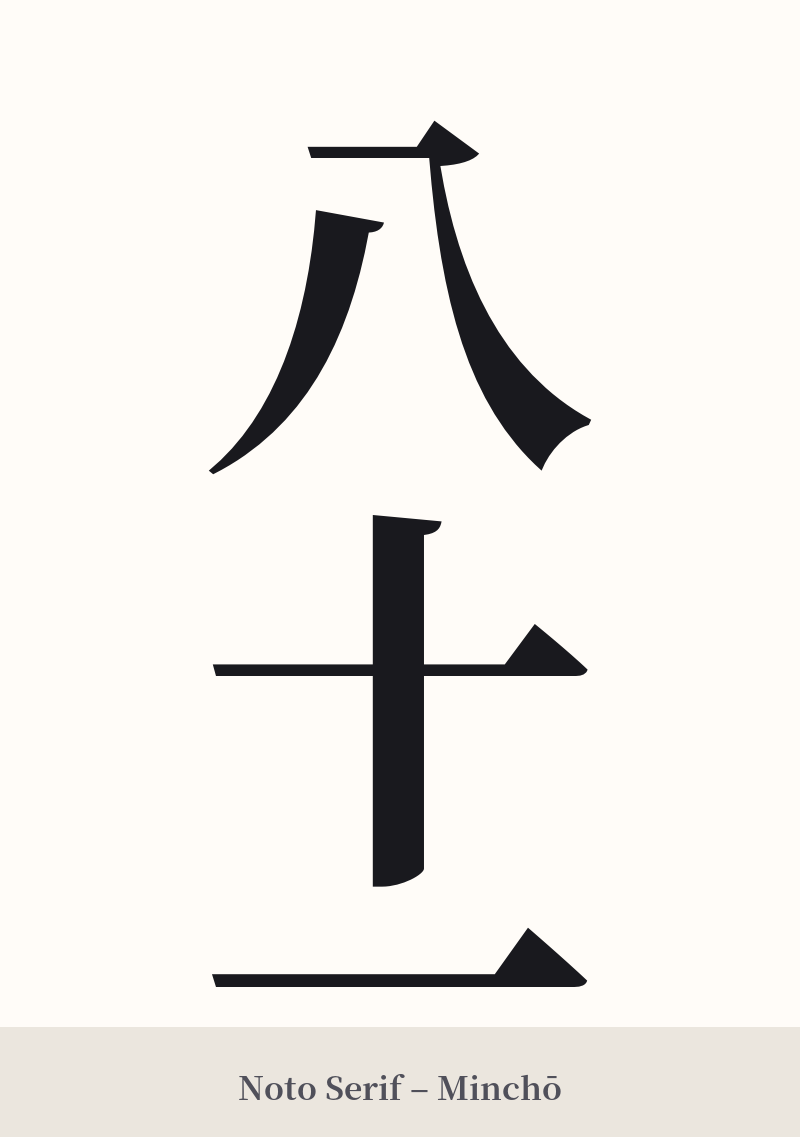
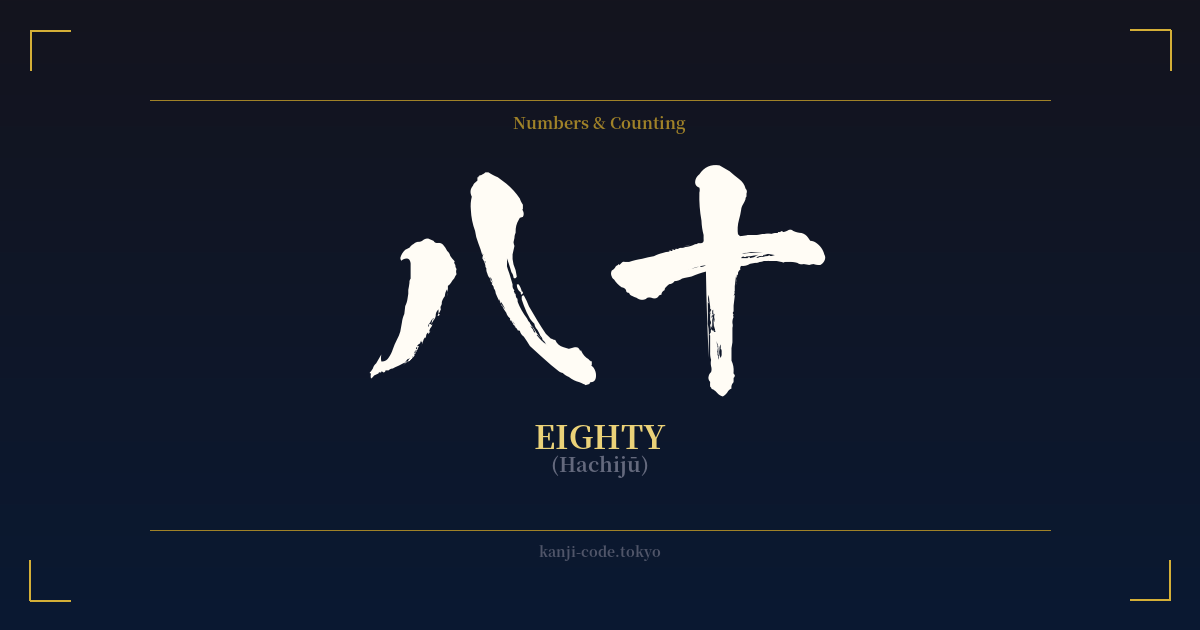
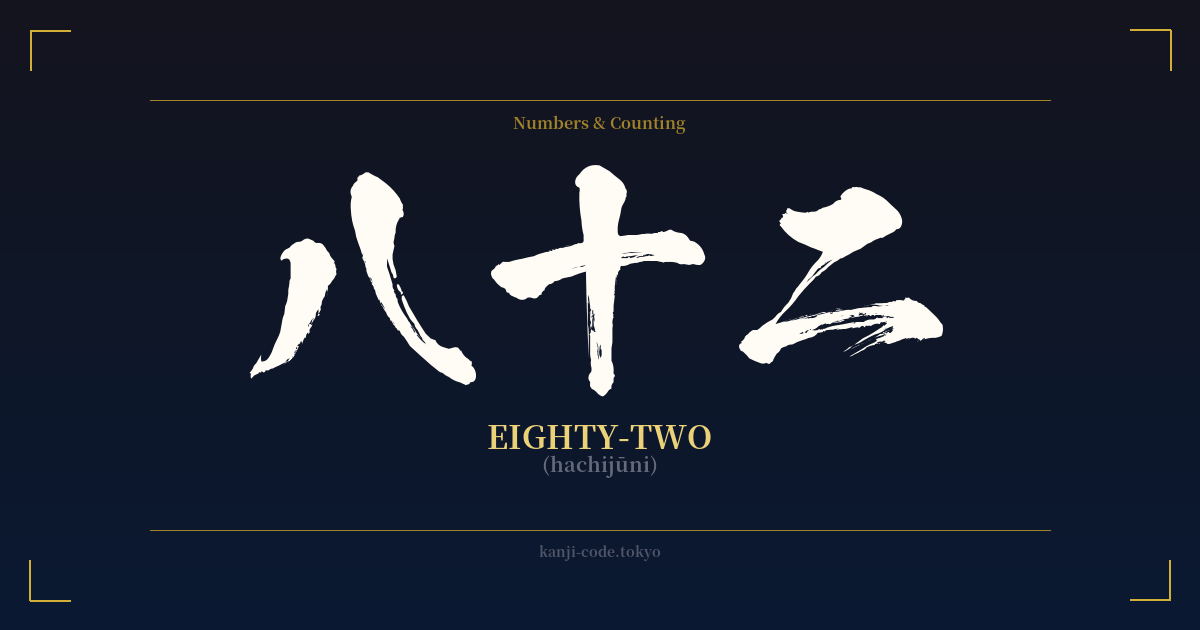
The same kanji can look dramatically different depending on the calligraphy style. Choose a font that matches the mood you want for your tattoo or design.
🎨 Tattoo Suitability
📐 Tattoo Design Guide
The simplicity of the characters in 八十一 offers a unique canvas for artistic interpretation. Since the strokes themselves are minimal, the choice of font and placement becomes crucial.
– Placement: A vertical orientation is very effective for this three-character compound. It works well along the spine, the forearm, or the calf. For a horizontal design, consider placing it across the chest, on the back of the shoulders, or along the ribs.
– Font Style: To counteract the simplicity, a dynamic, expressive calligraphy style is highly recommended. A semi-cursive script (gyōsho) or a full cursive script (sōsho) can infuse the characters with energy and movement, turning a simple number into a piece of art. Conversely, a bold, thick-brushed kaisho (block) style can give it a powerful, architectural presence.
– Visual Tips: Consider incorporating a visual element that hints at the number's personal meaning. If it relates to the Tao Te Ching, a subtle ensō (Zen circle) nearby could frame the concept. If it's about the 'completion' of 9×9, you could play with grid-like background elements. Avoid making the tattoo too small, as the simple characters could become illegible or appear insignificant.
Comments