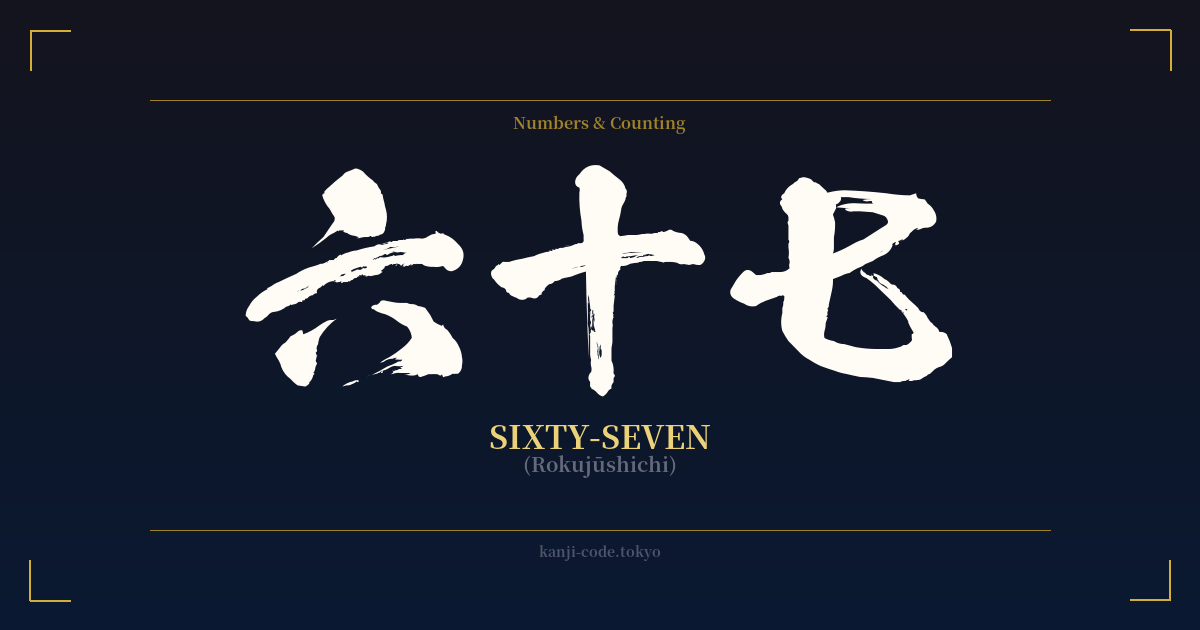
✍️ 六十七 (Rokujūshichi) — Cultural Context
The Japanese word for sixty-seven, 六十七 (Rokujūshichi), is a perfect example of the logical and elegant structure of the Sino-Japanese numbering system. It is composed of three distinct characters: 六 (roku, six), 十 (jū, ten), and 七 (shichi, seven). When read together, it literally translates to "six tens and seven," a clear and efficient way to construct larger numbers.
In modern Japanese, you will often hear this number pronounced as "rokujū-nana" as well. The character for seven, 七, has two common readings: the formal, Sino-Japanese "shichi" and the native Japanese "nana." In everyday conversation, "nana" is frequently preferred because "shichi" can sound very similar to "ichi" (one) and "shi" (four), leading to potential confusion, especially over the phone or in noisy environments. The choice between "shichi" and "nana" is often a matter of clarity and context rather than strict grammatical rule.
Unlike certain numbers in Japanese culture that are laden with symbolism—such as seven (七) being lucky, four (四) being unlucky due to its phonetic similarity to "death" (死), and eight (八) being auspicious for its shape suggesting widening prosperity—the number sixty-seven does not carry any widely recognized inherent meaning. It is not associated with any major myths, historical events, or spiritual concepts. It is also not one of the traditionally designated "yakudoshi," or unlucky ages, for either men or women.
This neutrality is, in itself, a form of freedom. The power of the number sixty-seven comes not from ancient tradition but from personal significance. For an individual, it could represent a birth year (e.g., 1967), a pivotal age, a jersey number, or any other deeply personal milestone. Choosing 六十七 is a statement that is specific and unique to the wearer, turning a simple numeral into a symbol of a personal narrative. Its meaning is not prescribed by culture, but created by individual experience, making it a quiet yet firm declaration of a moment or memory that matters.
🖌️ Font Styles for 六十七
The same kanji can look dramatically different depending on the calligraphy style. Choose a font that matches the mood you want for your tattoo or design.
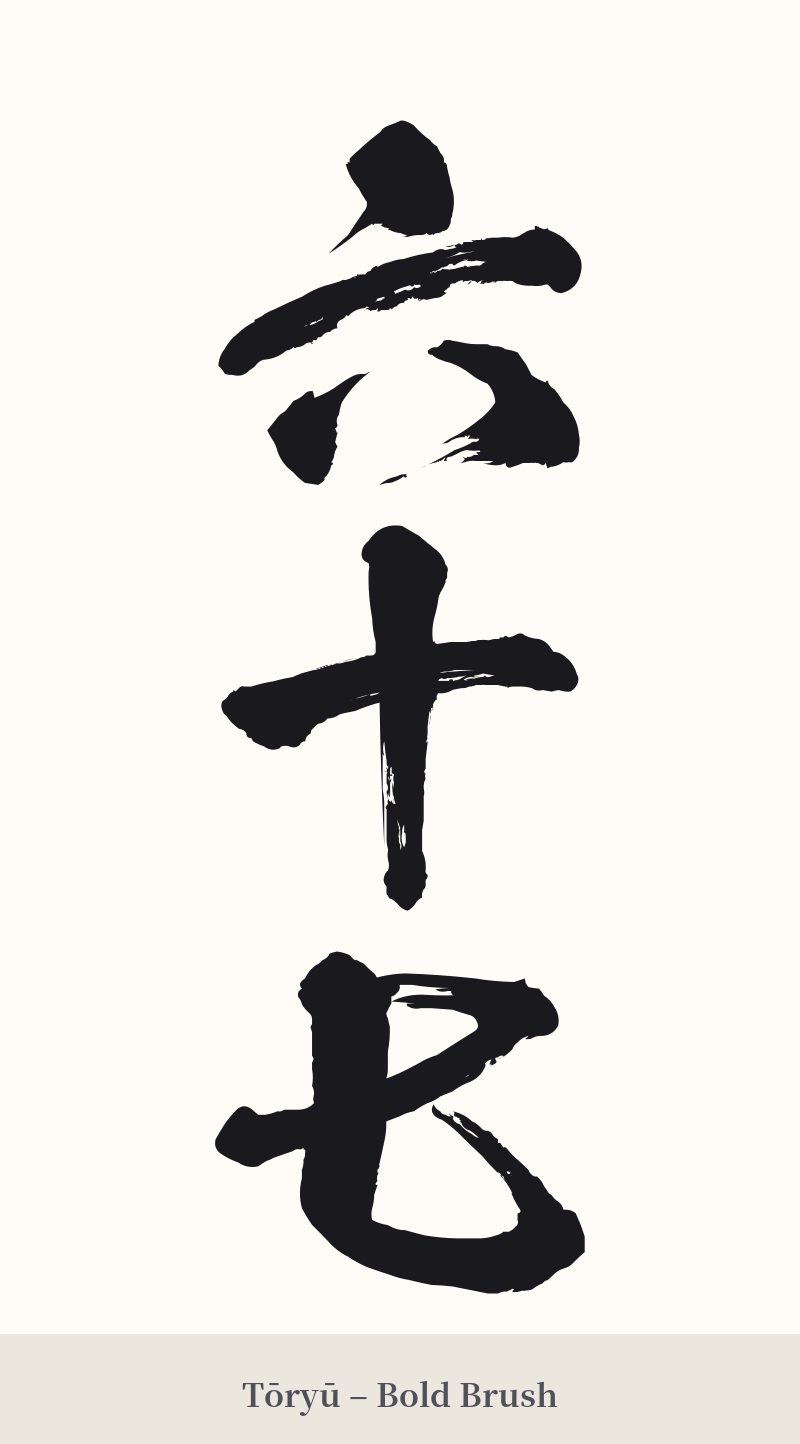
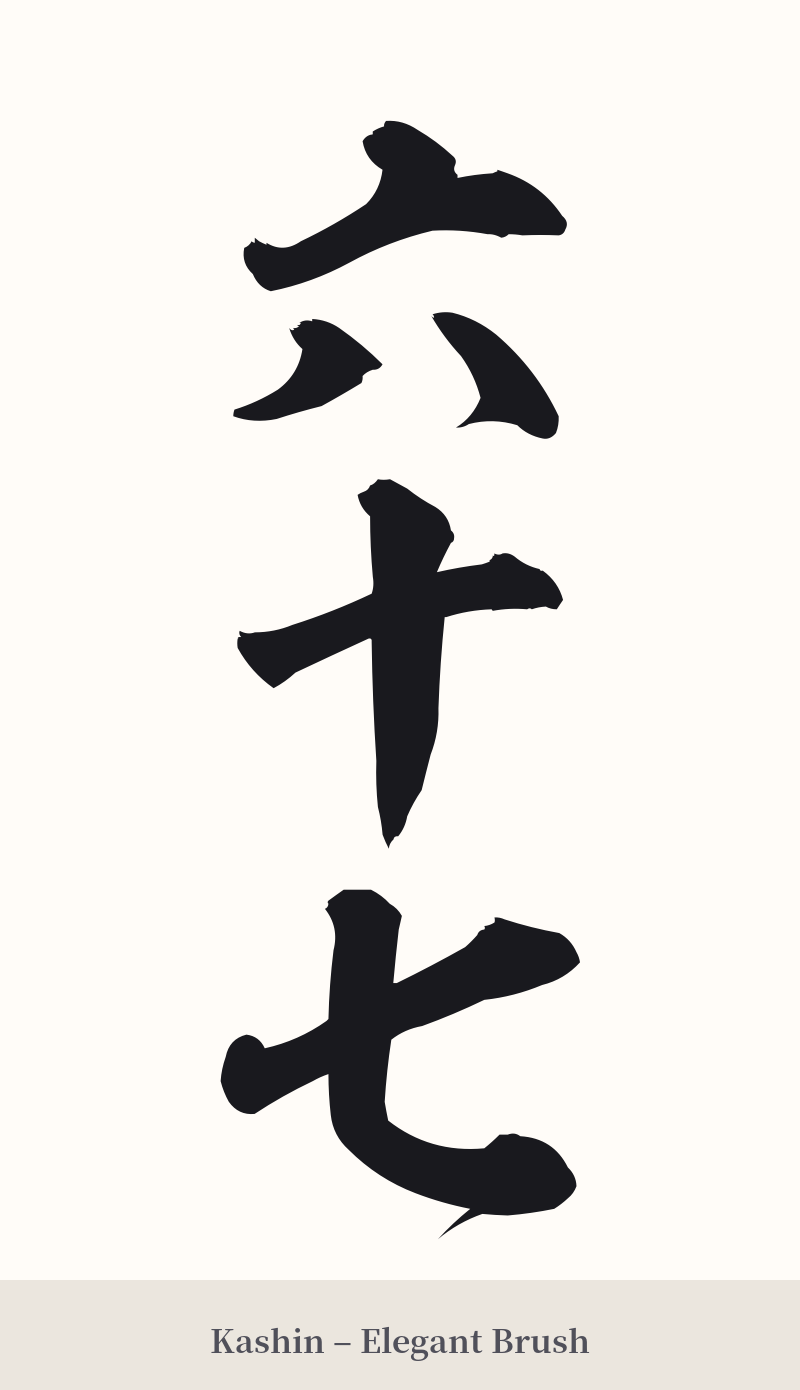
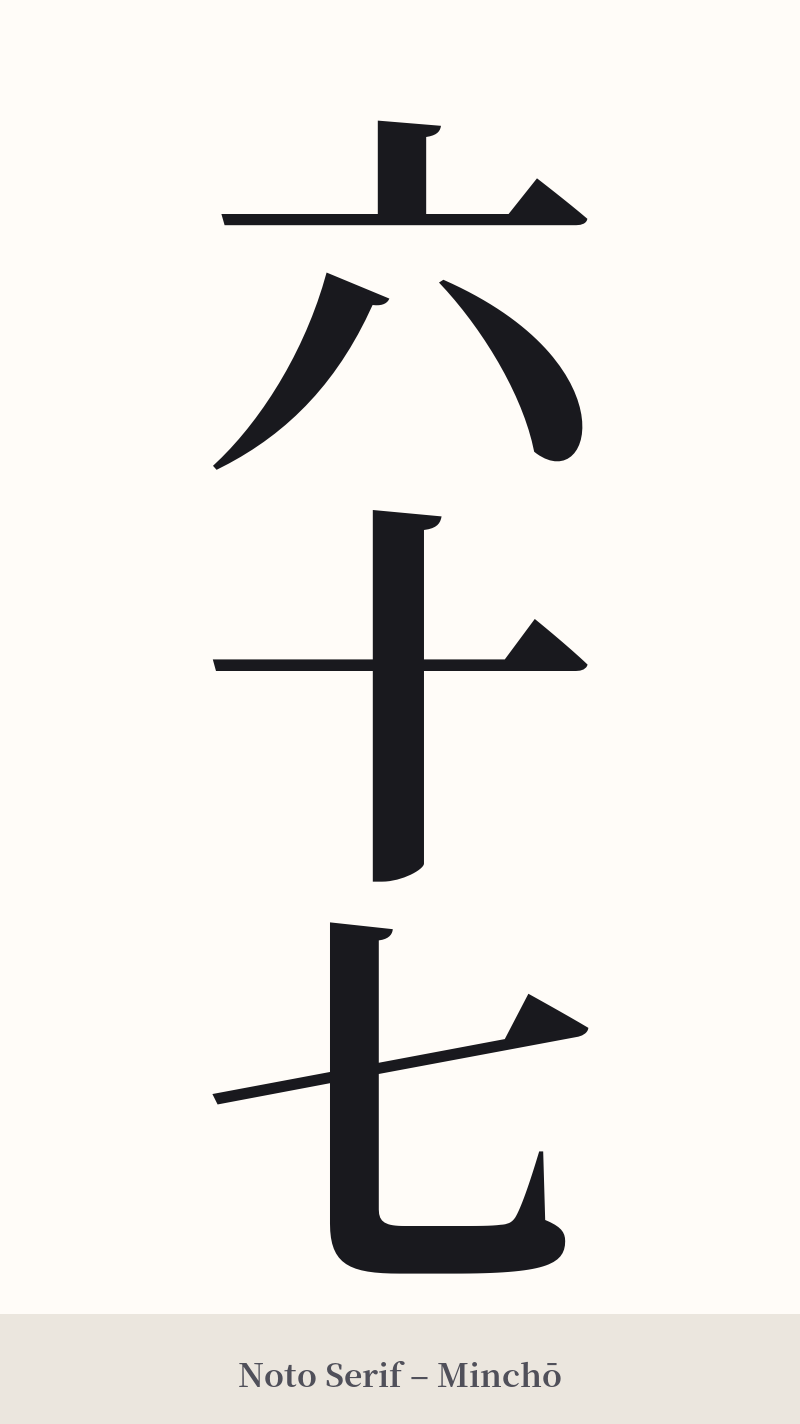
🎨 Tattoo Suitability
📐 Tattoo Design Guide
For a multi-character word like 六十七, a vertical orientation is the most traditional and aesthetically pleasing choice. This arrangement allows the characters to flow downwards, creating a sense of elegance and balance. Ideal placements for a vertical design include the forearm, the spine, along the ribs, or down the calf.
– Font Style: The characters are simple, so the choice of font is crucial. A semi-cursive style like Gyosho (行書) can add a touch of artistic flair and movement. For a more modern and stark look, a clean and angular Mincho (明朝) or blocky Kaisho (楷書) style would be effective.
– Visual Tips: Because the strokes are few, the quality of the line work is paramount. Ensure your tattoo artist is skilled in calligraphic styles. You could also consider integrating these kanji into a larger design that provides context for the number, such as a significant date or a complementary image that tells the story behind its importance to you.
Comments