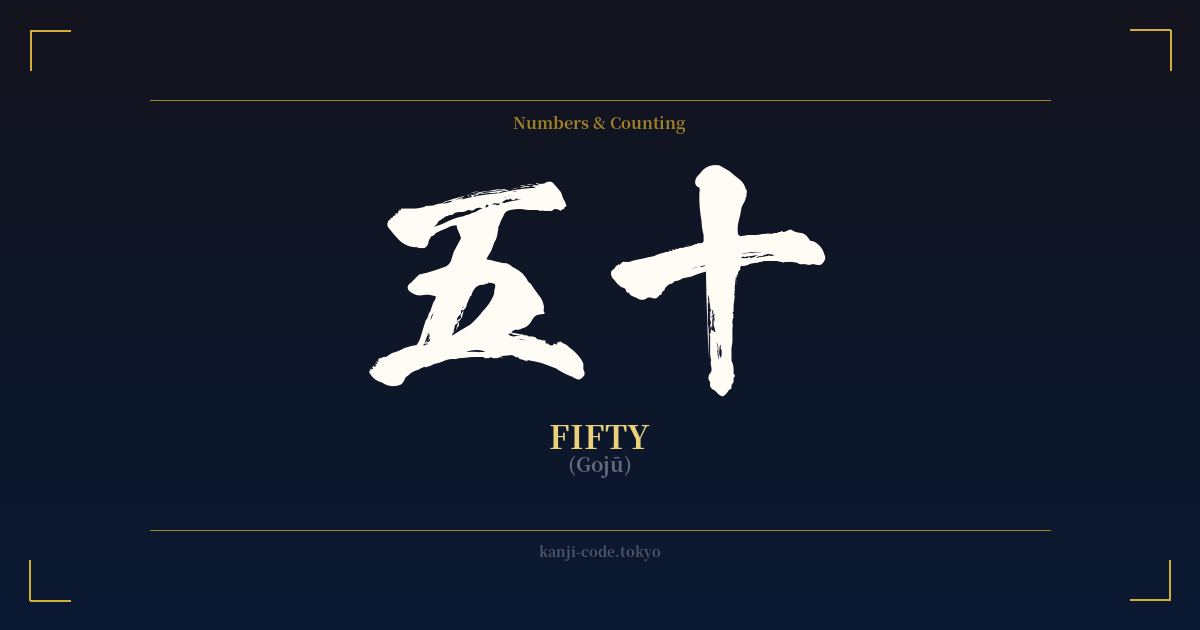
✍️ 五十 (Gojū) — Cultural Context
The Japanese word for fifty, 五十 (gojū), is a straightforward and logical construction. It combines the kanji for five, 五 (go), with the kanji for ten, 十 (jū), literally meaning "five tens." This multiplicative system is a hallmark of East Asian numbering and provides a clear, efficient way to express larger numbers.
While the number itself is simple, it holds a significant place in Japanese language and culture, most notably through the term 五十音 (gojūon), which translates to "the fifty sounds." The gojūon is the traditional system that organizes the Japanese syllabary—the kana characters (hiragana and katakana). Though modern Japanese uses fewer than 50 distinct sounds, this table remains the foundational tool for learning the language, organizing dictionaries, and understanding the very structure of Japanese phonetics. Every native speaker learns the gojūon chart in their first years of school, making it a deeply ingrained piece of cultural knowledge.
In terms of life milestones, the age of fifty carries a weight of maturity and wisdom. It is deeply connected to a famous saying from the Analects of Confucius, which has profoundly influenced East Asian thought: 「五十にして天命を知る」 (gojū ni shite tenmei o shiru). This translates to, "At fifty, I knew the mandate of heaven." It signifies reaching an age of profound understanding, where one comprehends their purpose in life and their place in the grander scheme of the universe. It's a point of transition from striving to understanding, a quiet and deep-seated wisdom.
Unlike the 60th birthday (還暦, kanreki), which is a major celebration marking a full cycle of the zodiac calendar, the 50th birthday is a more personal and reflective milestone. It represents the accumulation of half a century of experience. In modern Japan, you will see 五十 used everywhere in daily life, from the 50-yen coin (五十円玉, gojūen-dama), a common piece of currency with a hole in the middle, to prices, ages, and chapter numbers. It is a fundamental, everyday concept, yet one that carries echoes of linguistic history and philosophical maturity.
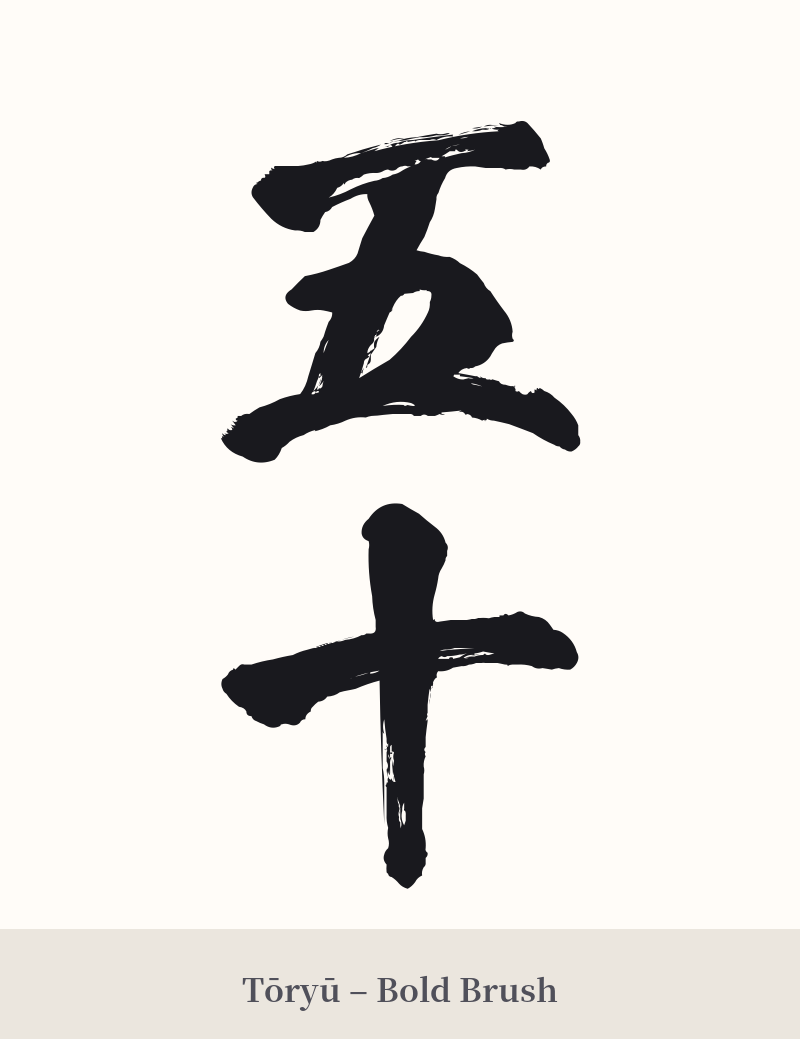
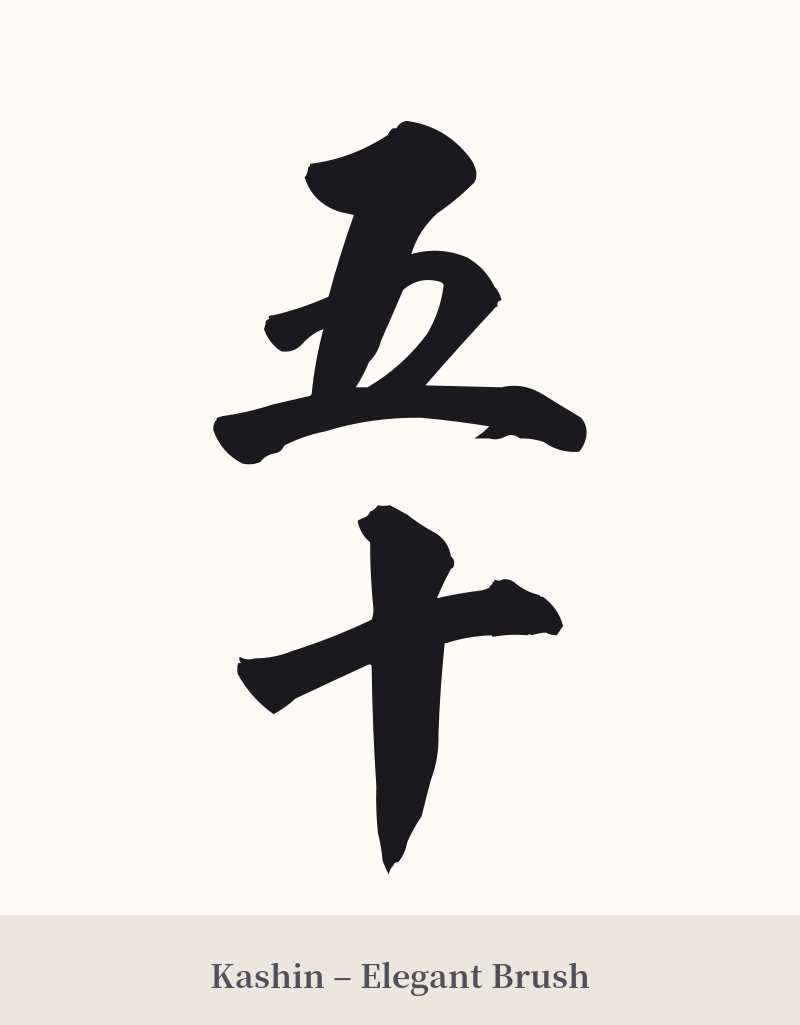
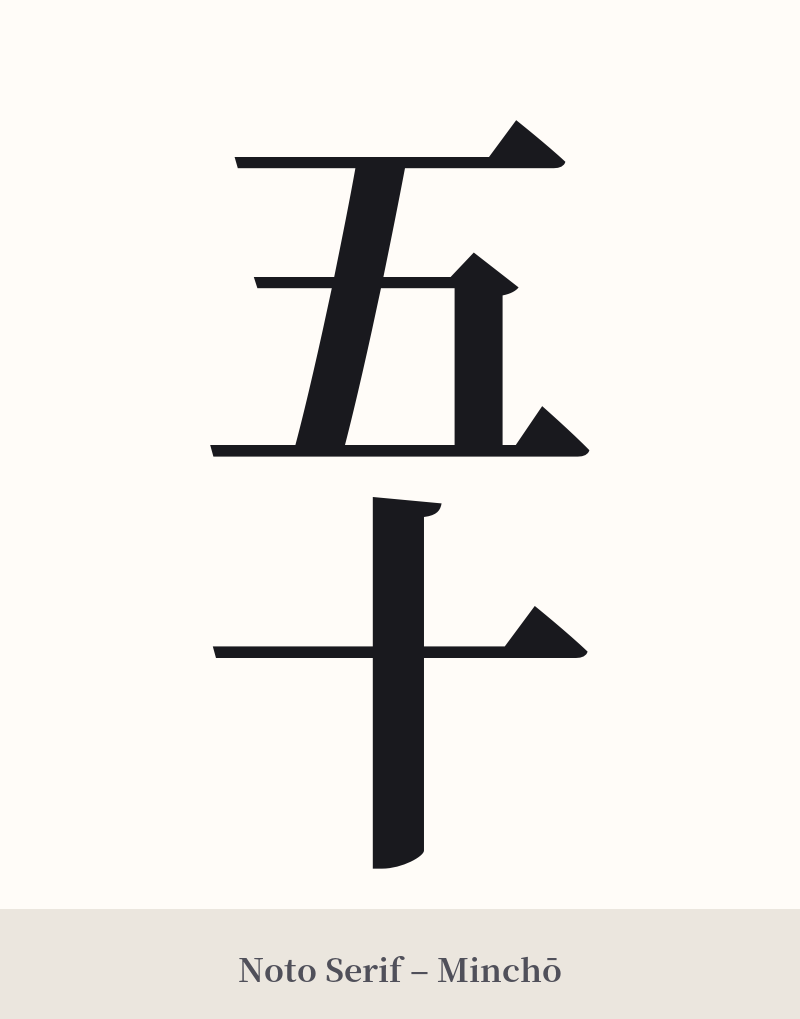
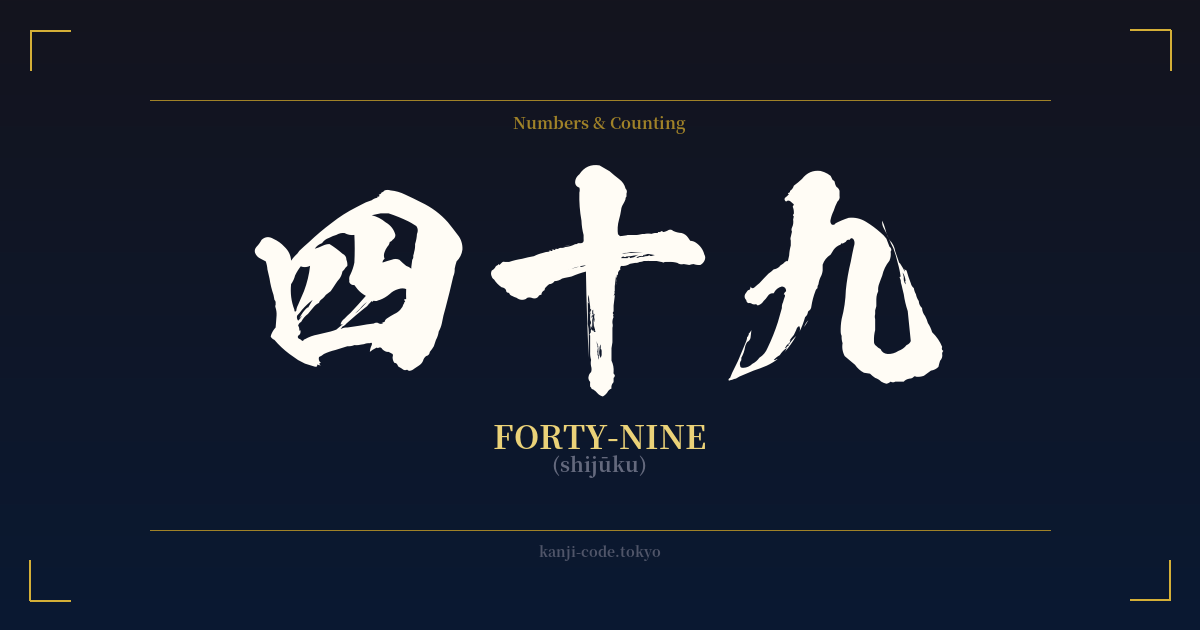
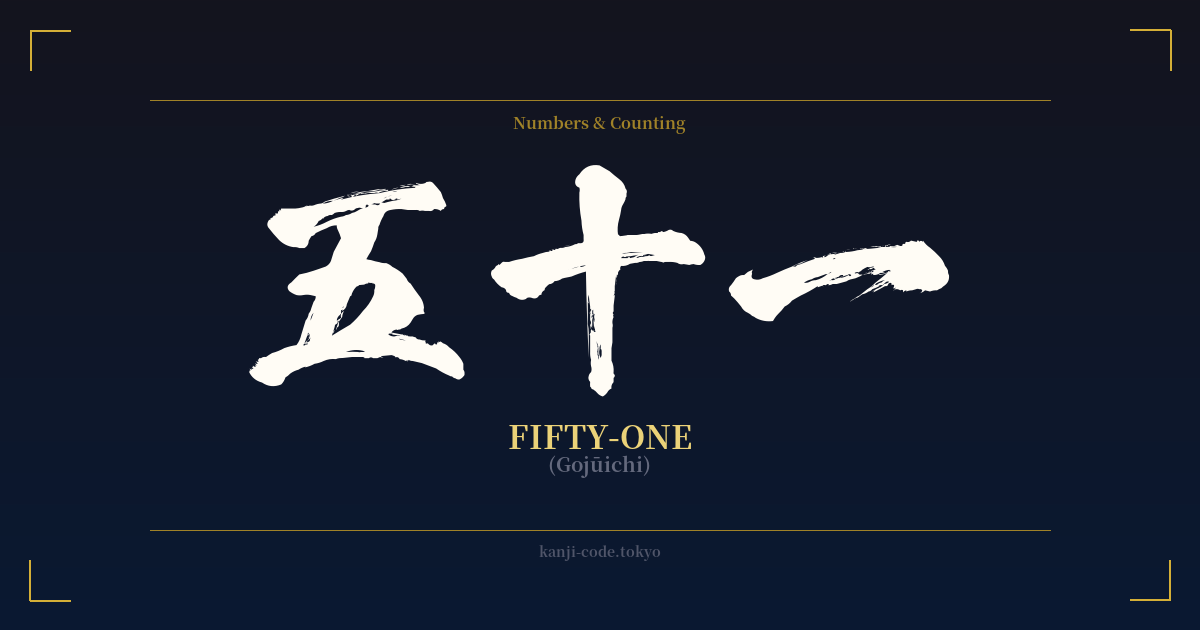
🖌️ Font Styles for 五十
The same kanji can look dramatically different depending on the calligraphy style. Choose a font that matches the mood you want for your tattoo or design.
🎨 Tattoo Suitability
📐 Tattoo Design Guide
Due to the stark simplicity of the characters 五 and 十, the design choices are crucial to making a tattoo of 'Fifty' feel intentional and aesthetically pleasing.
– Placement: This is a small, compact word. It works well in discreet locations like the inner wrist, behind the ear, on the ankle, or between the fingers. For a more prominent placement like the forearm or back, it would likely need to be integrated into a larger design to avoid looking lost.
– Style: A bold, clean font is highly recommended. A thick, blocky Kaisho (楷書) or a modern sans-serif style font will give the simple strokes presence and weight. A flowing, cursive Sōsho (草書) style is generally not advised, as it can render the simple characters illegible or looking like an accidental scribble.
– Visual Tips: Consider a vertical orientation, which is traditional for Japanese writing and can add a touch of elegance. You could also incorporate the number '50' alongside it or a relevant date to give it context. Another idea is to place it within a circle (ensō) or another geometric shape to frame it and give it more substance.
Comments