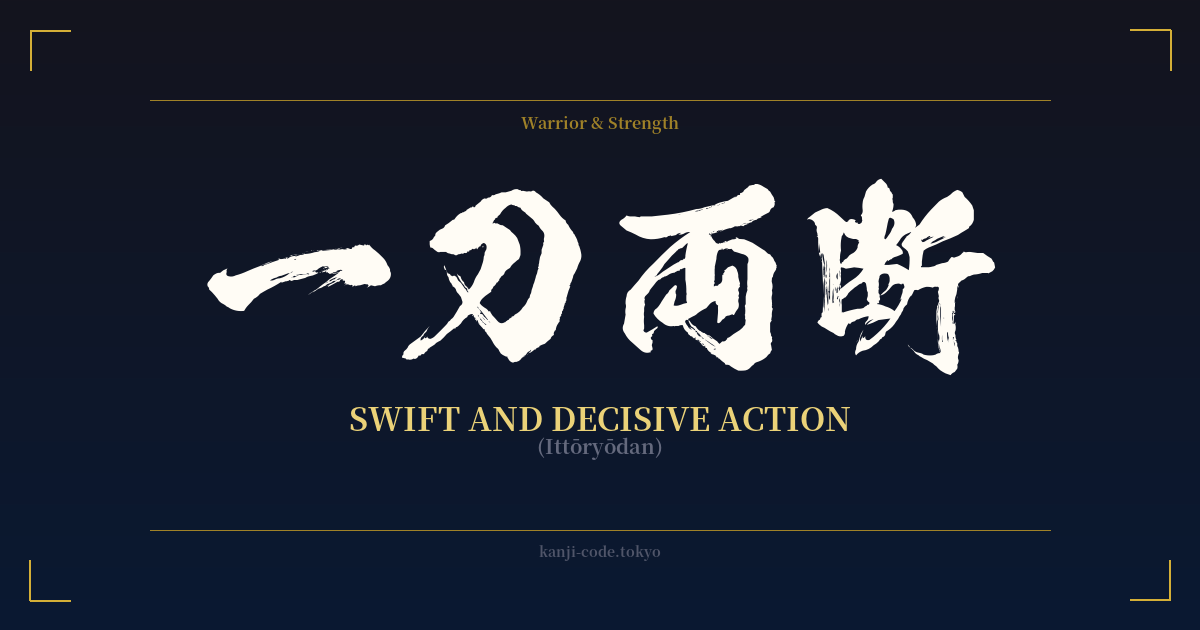
✍️ 一刀両断 (Ittōryōdan) — Cultural Context
一刀両断 (Ittōryōdan) is a four-character Japanese idiom that paints a vivid and powerful picture. Literally translated, it means "one sword, both cut apart." The image it immediately conjures is that of a master swordsman felling an opponent or slicing through an object with a single, perfect, and utterly decisive strike.
This phrase is the embodiment of swift and decisive action. It’s about more than just speed; it’s about clarity, confidence, and the ability to cut through complexity to the heart of a matter without hesitation. In the world of the samurai, hesitation meant death. A warrior had to assess a situation in an instant and act with total commitment. Ittōryōdan captures this martial ideal perfectly—the moment of pure focus where thought and action become one, resulting in a clean, irreversible outcome.
While its roots are firmly planted in the soil of feudal Japan and the way of the sword, the expression is very much alive in the modern world. In a business meeting, a leader who cuts through bureaucracy to solve a problem might be praised for their Ittōryōdan approach. In politics, it can describe a bold, decisive policy change. On a personal level, it represents the courage to make a tough decision and stick with it, whether it's ending a bad relationship, quitting a dead-end job, or tackling a long-avoided personal project.
The opposite of Ittōryōdan is a concept called 優柔不断 (yūjūfudan), which means indecisiveness, hesitation, and wavering. The cultural admiration for Ittōryōdan is, in part, a rejection of this state of being. It champions a proactive, clear-minded approach to life's challenges. It's not about recklessness, but about having the wisdom to see the correct path and the courage to take it without delay. To embrace the spirit of Ittōryōdan is to strive for a mind as sharp and unwavering as a master's blade.
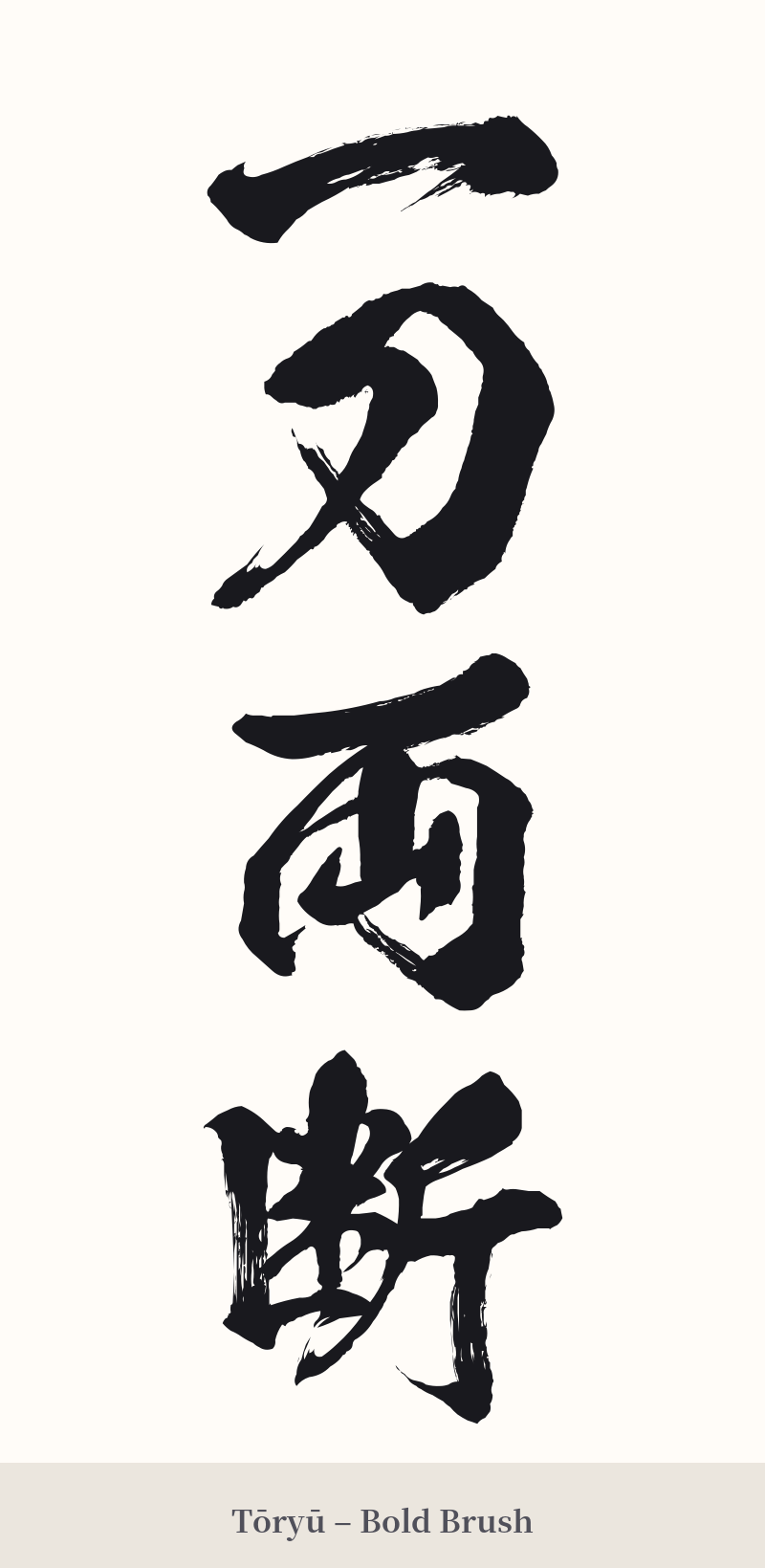
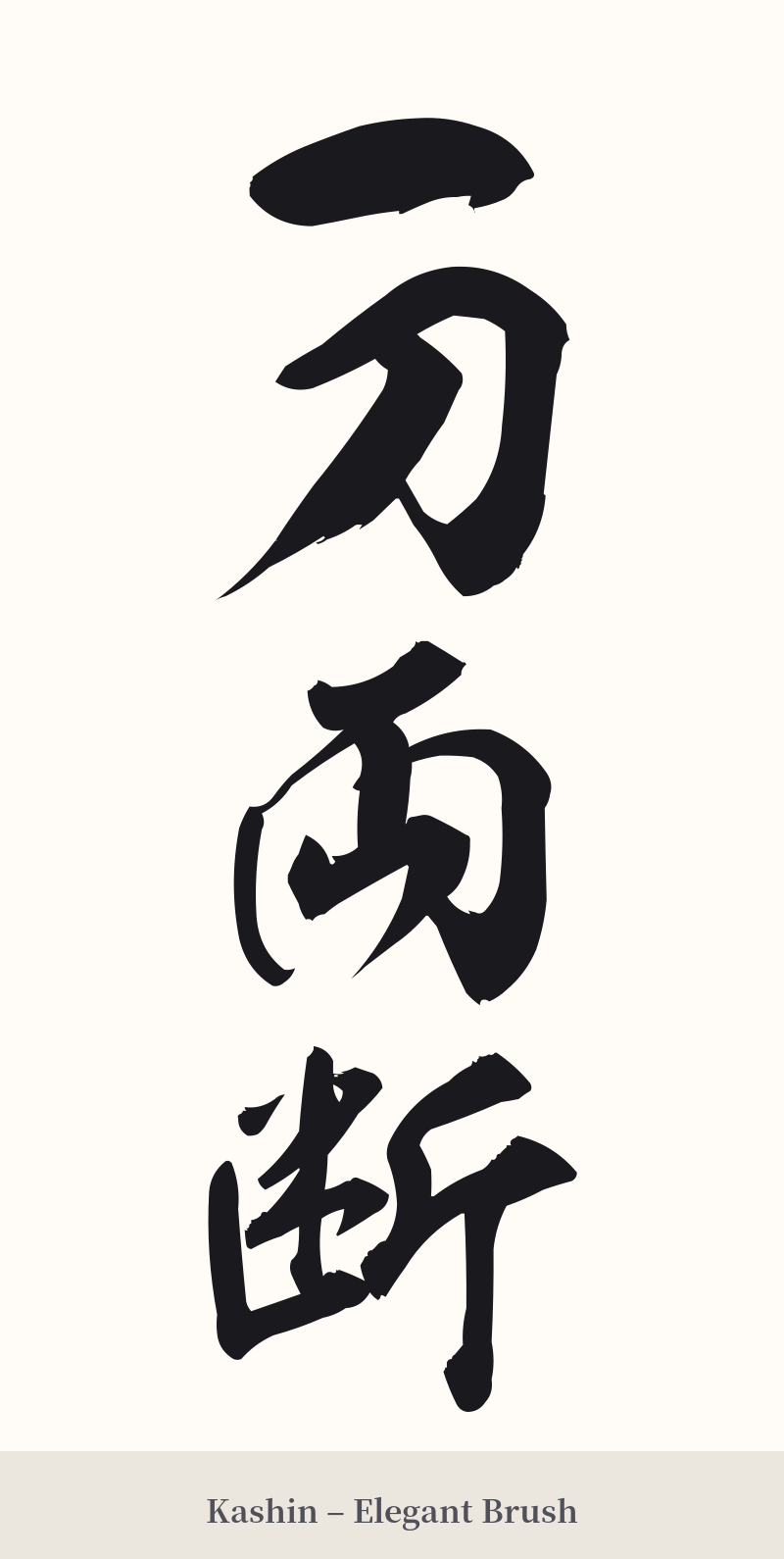
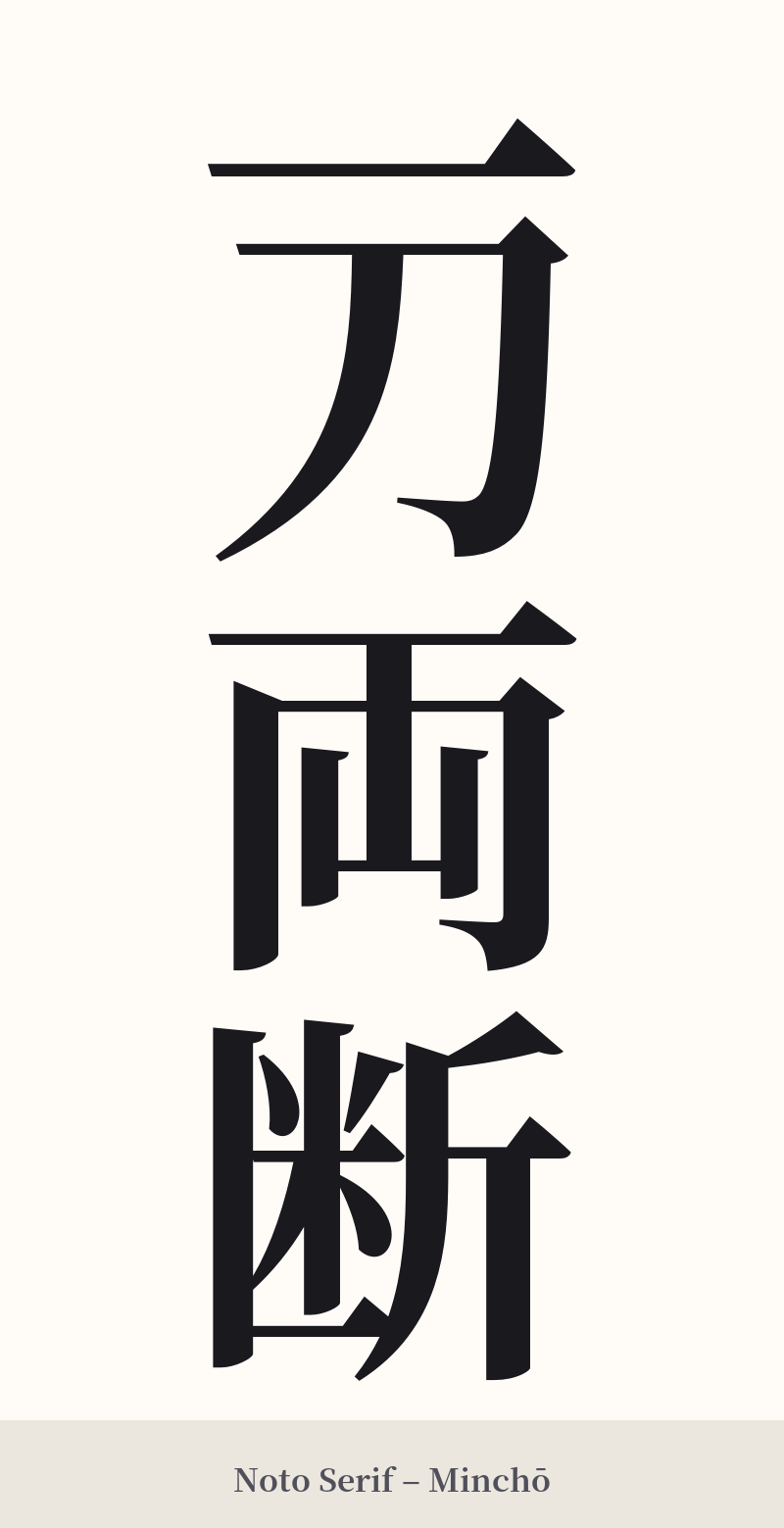
🖌️ Font Styles for 一刀両断
The same kanji can look dramatically different depending on the calligraphy style. Choose a font that matches the mood you want for your tattoo or design.
🎨 Tattoo Suitability
📐 Tattoo Design Guide
The strength of 一刀両断 lies in its balance and flow as a four-character compound. A vertical arrangement is the most traditional and visually impactful presentation for this type of phrase.
– Placement: A vertical column of the four kanji looks excellent along the spine, forearm, or calf. For a horizontal design, the upper back or across the chest provides a strong canvas.
– Font Style: The font should match the powerful meaning. A dynamic, semi-cursive calligraphy style (Gyōsho) can emphasize the 'swift' nature of the action. For a more solid and resolute feel, a bold, angular block script (Kaisho) is an excellent choice.
– Visual Tips: Consider adding a single, sharp brushstroke or an 'ensō' (Zen circle) nearby to complement the theme of a single, perfect action. Avoid overly ornate or complex additions that would detract from the clean, decisive feel of the kanji themselves. The power is in the characters; let them be the focus.
Comments