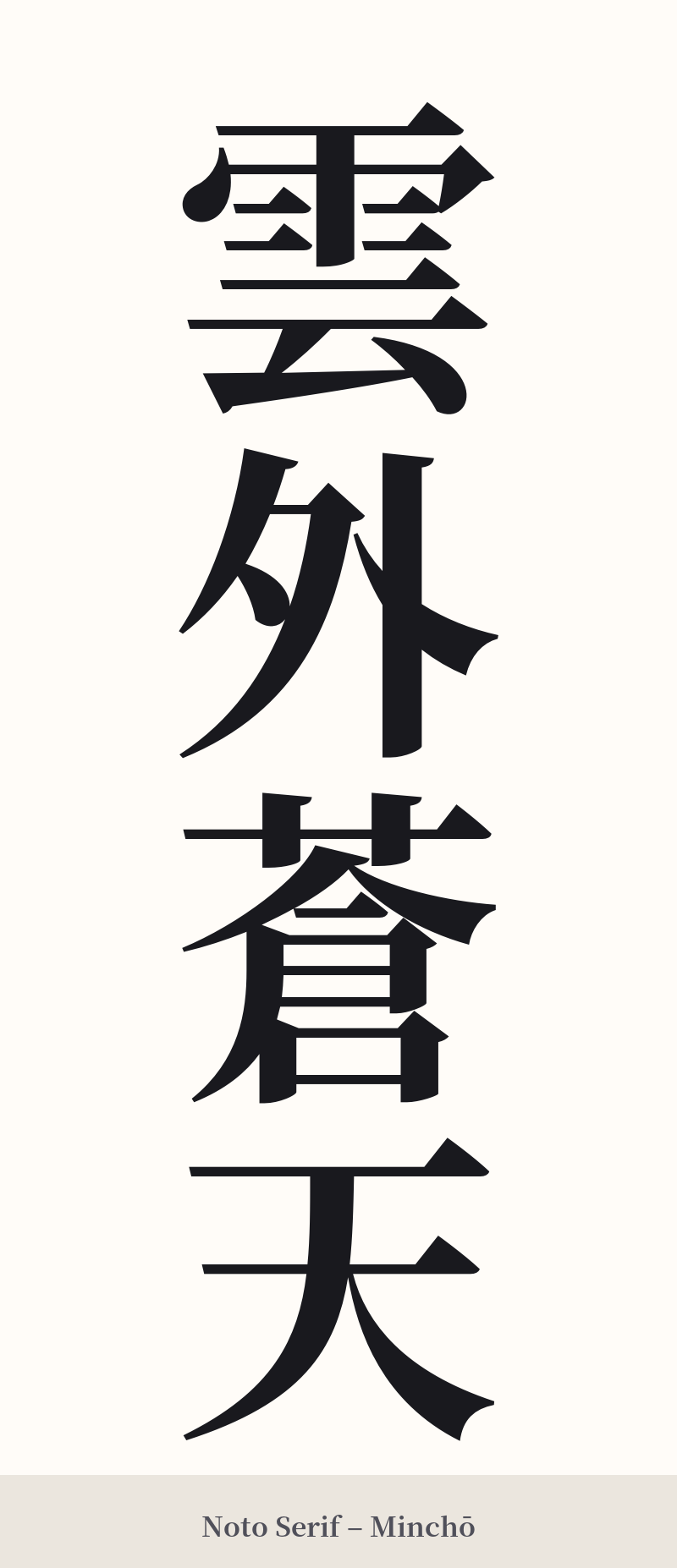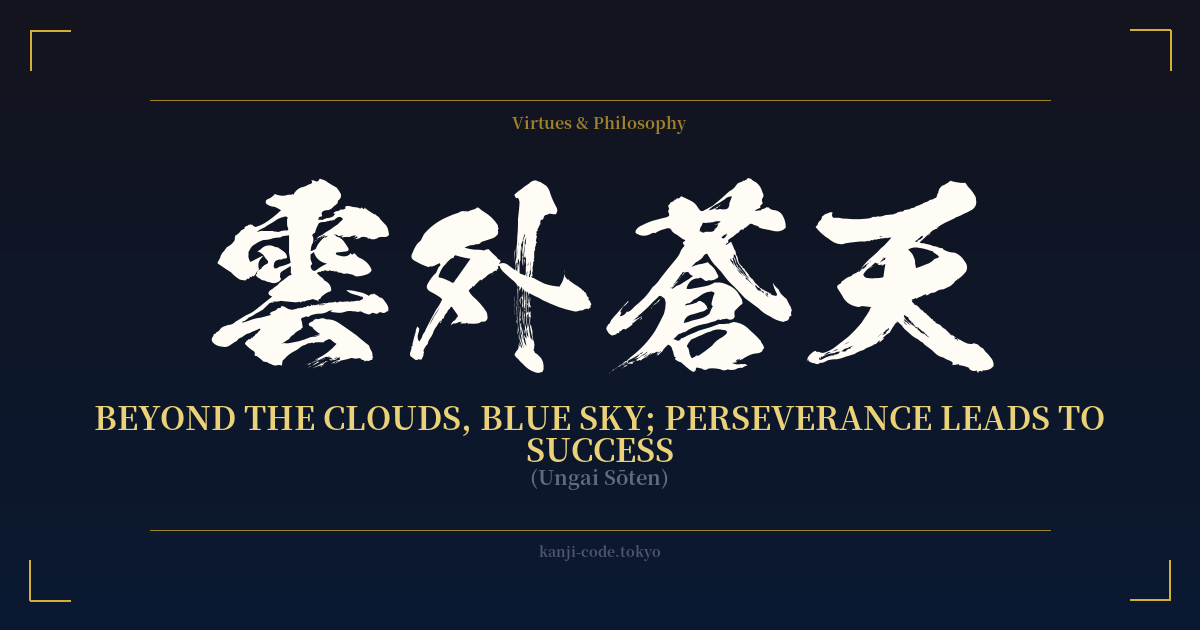
雲外蒼天 (Beyond the Clouds, Blue Sky; Perseverance Leads to Success): Meaning & Origin – Japanese Kanji Design

💡 Virtues & Philosophy

✍️ 雲外蒼天 (Ungai Sōten) — Cultural Context

雲外蒼天 (Ungai Sōten) is a poetic and powerful Japanese four-character idiom, known as a 'yojijukugo'. Literally translated, it means "Outside the clouds, the blue sky." This simple, beautiful image holds a much deeper philosophical meaning: that by pushing through difficult times and overcoming obstacles (the clouds), a clear, hopeful future (the blue sky) awaits.

This phrase is a cornerstone of encouragement in Japanese culture. It’s not about denying the existence of hardship; rather, it’s a quiet conviction that adversity is temporary. The clouds may block the sun, bringing darkness and uncertainty, but they are not the sky itself. The vast, clear, blue sky is always there, waiting. This provides a powerful message of hope and resilience.

Unlike proverbs that focus solely on the struggle, such as 我慢 (Gaman), which emphasizes endurance, 雲外蒼天 focuses on the reward. It is a forward-looking promise. It serves as a motivational phrase for students facing grueling exams, for athletes pushing their physical limits, or for anyone navigating a personal or professional crisis. It reminds them that their current efforts, no matter how taxing, are the very means by which they will break through to a better state.

The choice of the character 蒼 (sō) for 'blue' is significant. It doesn't just mean any blue; it evokes a deep, clear, cerulean or azure hue, the kind you see on a perfect day. This poetic choice elevates the phrase beyond a simple statement, painting a vivid mental picture of the peace and clarity that lies beyond the turmoil.

In essence, 雲外蒼天 is a testament to the human spirit's ability to persevere. It embodies the belief that hard work and determination will eventually lead to success and a clear path forward. It’s a reminder that even in the darkest moments, one must keep striving, because just beyond the struggle lies a world of possibility and peace.

🖌️ Font Styles for 雲外蒼天

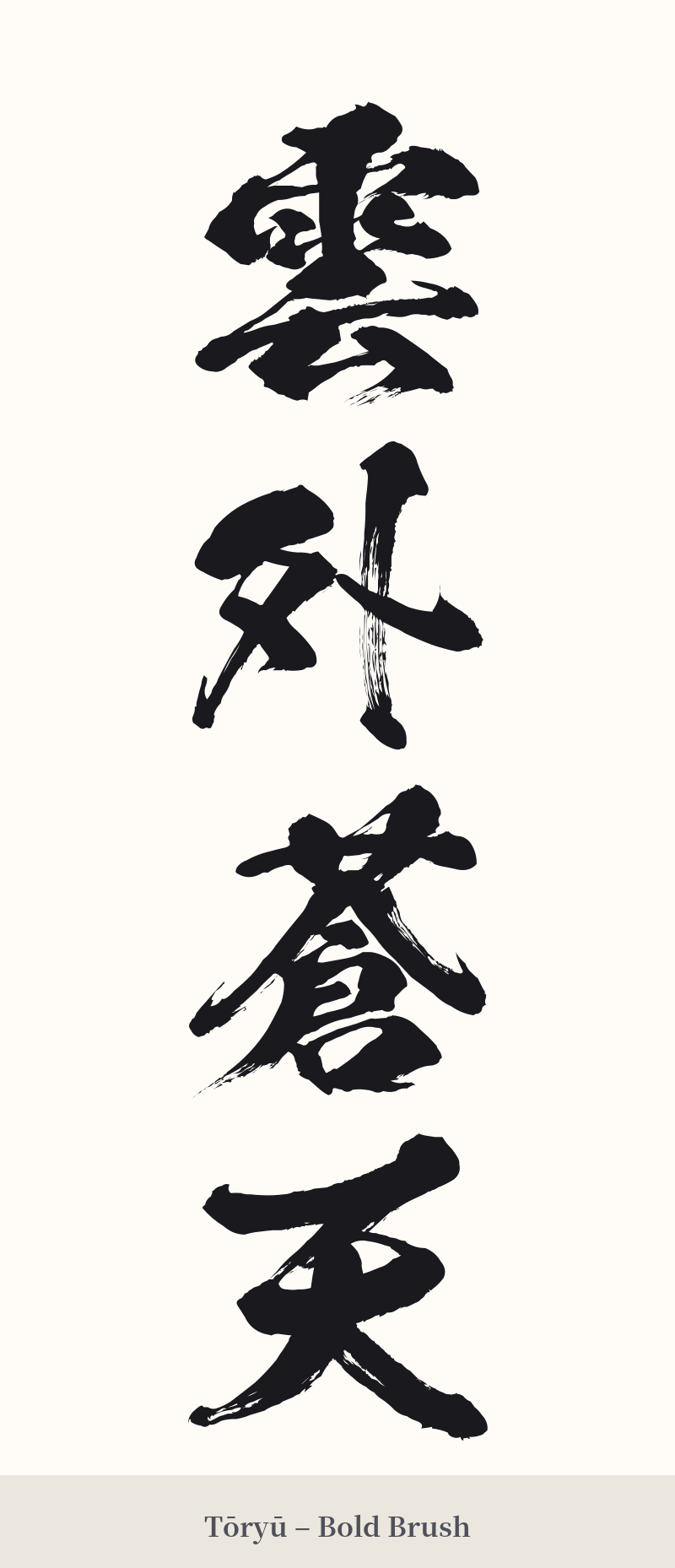
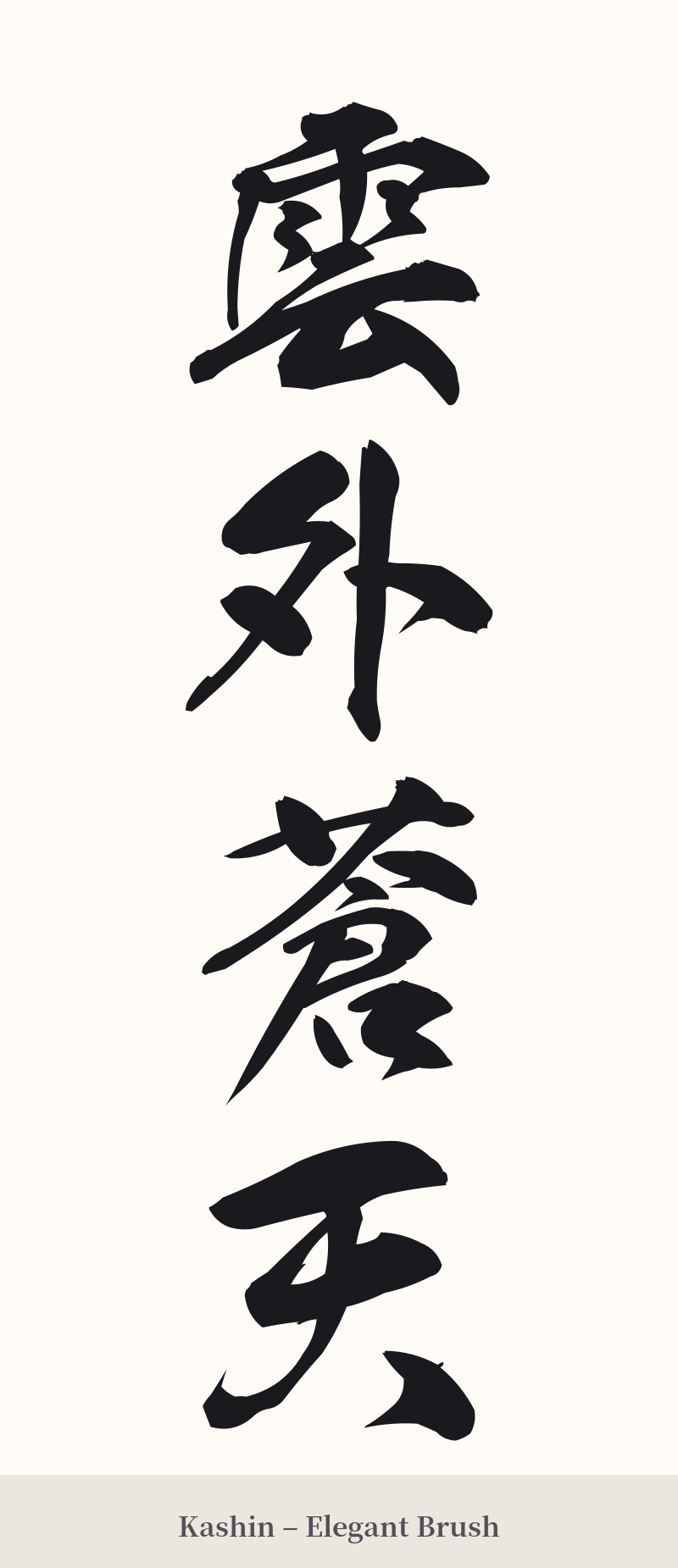
The same kanji can look dramatically different depending on the calligraphy style. Choose a font that matches the mood you want for your tattoo or design.
🎨 Tattoo Suitability

★★★ Highly Suitable
This is an excellent choice for a tattoo. It's a complete, profound philosophical phrase (yojijukugo) with a universally positive message of hope and perseverance. The four characters are visually balanced and create a powerful statement, while the complexity of certain characters adds to its aesthetic depth.
⚠️ Cultural Note: The characters 雲 (cloud) and 蒼 (blue) have a higher stroke count (12 and 13 strokes, respectively). For the tattoo to remain clear and not blur over time, it should be done at a reasonable size. Avoid placing it in very small areas where the details could become illegible.

📐 Tattoo Design Guide

For a 雲外蒼天 tattoo, the design should reflect its message of breaking through. A vertical orientation is traditional for four-character idioms and works exceptionally well on the spine, forearm, or along the calf, mimicking a scroll.

– Font Style: A strong, clear Kaishotai (block script) can emphasize the determination and stability inherent in the phrase. For a more dynamic feel, a semi-cursive Gyōshotai can represent the movement through the 'clouds' toward the 'sky'.

– Visual Elements: Consider a subtle artistic touch. The first two characters, 雲外 (ungai), could be inked in a slightly darker or thicker style to represent the 'clouds' of hardship. The last two, 蒼天 (sōten), could be slightly lighter or even have a hint of blue ink mixed in to symbolize the emerging 'blue sky'.

– Placement: A vertical column on the back or inner forearm allows the characters to be read naturally and gives them space to breathe. For a horizontal piece, the upper back or chest is suitable, but ensure the characters are spaced properly to maintain readability.
🔍 Kanji Breakdown: 雲外蒼天

The first character, 'un' or 'kumo', means 'cloud'. In this idiom, it serves as a powerful metaphor for the obstacles, struggles, and periods of obscurity that one must face in life.
'Gai' or 'soto' means 'outside' or 'beyond'. This character signifies the action of moving past or breaking through the aforementioned difficulties, representing the transition from struggle to resolution.
'Sō' or 'aoi' means 'blue', but it's a specific, poetic shade of deep, clear blue. It represents the serene, vast, and hopeful expanse that awaits after the hardships, symbolizing the reward of perseverance.
The final character, 'ten', means 'sky' or 'heavens'. It anchors the idiom, solidifying the image of a vast, open sky and representing a state of peace, clarity, and limitless potential.

❓ Frequently Asked Questions

Is 雲外蒼天 a common phrase in Japan?
Yes, it is a well-known yojijukugo (four-character idiom) used to offer encouragement and express hope. While it's more poetic than everyday speech, most Japanese people understand its meaning and appreciate its inspirational message.
What's the difference between 雲外蒼天 and 七転び八起き (Nanakorobi Yaoki)?
Both relate to perseverance, but with different focuses. 雲外蒼天 (Ungai Sōten) emphasizes the hopeful outcome and the clear sky that lies beyond the struggle. In contrast, 七転び八起き (Nanakorobi Yaoki), meaning 'fall seven times, get up eight,' focuses on the resilient act of getting up again and again during the struggle itself.
Can I get this tattoo with just the last two characters, 蒼天 (Sōten)?
While 蒼天 (Sōten) means 'blue sky' and is a beautiful word on its own, it lacks the full philosophical context of the complete idiom. The power of 雲外蒼天 comes from the journey it describes—from the 'clouds' to the 'sky'. Using all four characters conveys the full, profound meaning of overcoming adversity.

🔗 Related Kanji

⚠️ Important: Before You Get Inked

The Kanji designs and meanings on this site are for inspiration purposes. While we strive for accuracy, Japanese characters can have multiple nuances depending on the context.

Tattoos are permanent. We strongly recommend consulting with a native Japanese speaker or a professional tattoo artist to verify the design and meaning before getting a tattoo.

Did I save you from a bad tattoo?

Creating accurate Kanji definitions takes time and research.
If this guide helped you, please consider buying me a Green Tea to support the site! 🍵

💡 Virtues & Philosophy

Comments

Copied title and URL