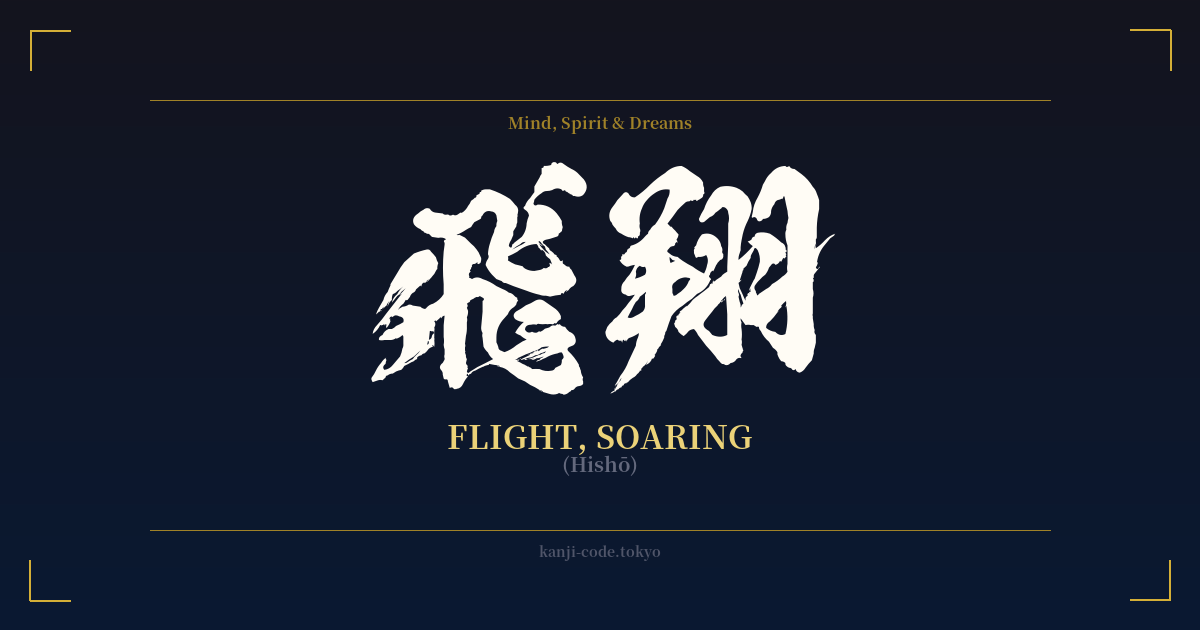
✍️ 飛翔 (Hishō) — Cultural Context
飛翔 (Hishō) is a Japanese word that captures the essence of flight in its most majestic and poetic form. While it literally translates to 'flight' or 'soaring,' its true meaning extends far beyond the physical act. Hishō evokes a sense of breaking free from earthly constraints, achieving great heights, and realizing one's full potential. It’s not the simple, functional flight of a commuter plane; it's the powerful, graceful soaring of an eagle riding thermal currents or the mythical ascent of a dragon into the heavens.
In Japanese culture, this word is often used metaphorically to describe a person's rapid advancement in their career, the blossoming of a talent, or a significant leap forward in life. A company might use Hishō in its slogan to signify ambition and growth. An artist who suddenly achieves fame could be described as making a 'hishō.' This imbues the word with a strong sense of ambition, success, and the triumphant culmination of hard work.
The power of Hishō comes from the combination of its two kanji. While both characters relate to flying, their pairing creates a more profound and literary nuance than using a single character alone. It’s a word you would find in poetry, literature, and formal speeches, used to inspire and convey a sense of grandeur. This elevation in tone makes it a popular choice for those wanting to express a powerful personal goal or a feeling of spiritual liberation.
This concept is deeply tied to imagery of powerful creatures in East Asian folklore. Dragons, phoenixes (不死鳥, fushichō), and large birds of prey are all symbols of strength, freedom, and good fortune, and their flight is the ultimate expression of Hishō. To embody Hishō is to channel the spirit of these creatures—unfettered, powerful, and aiming for the sky.
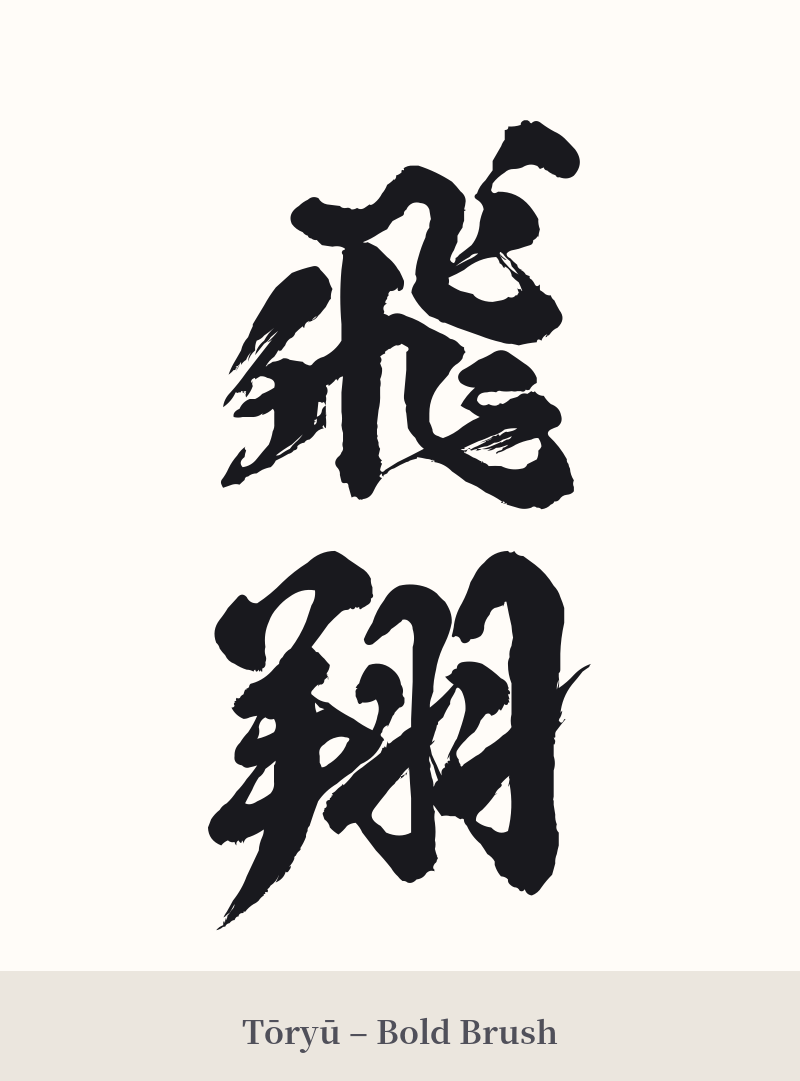
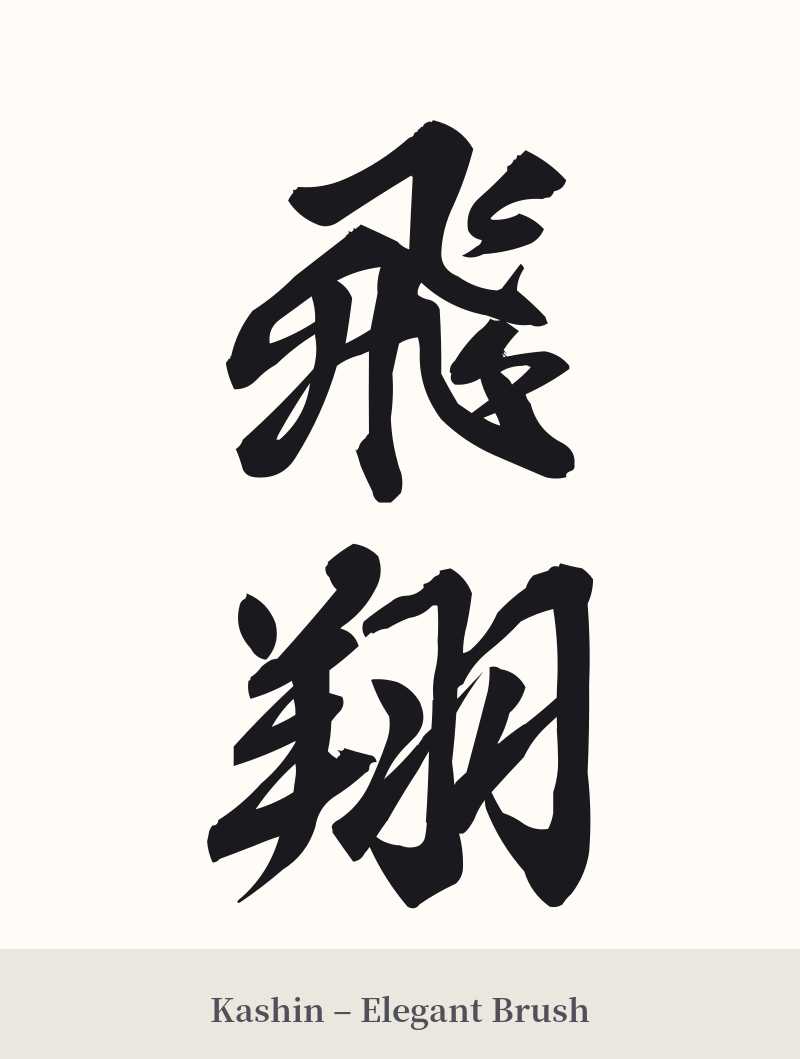
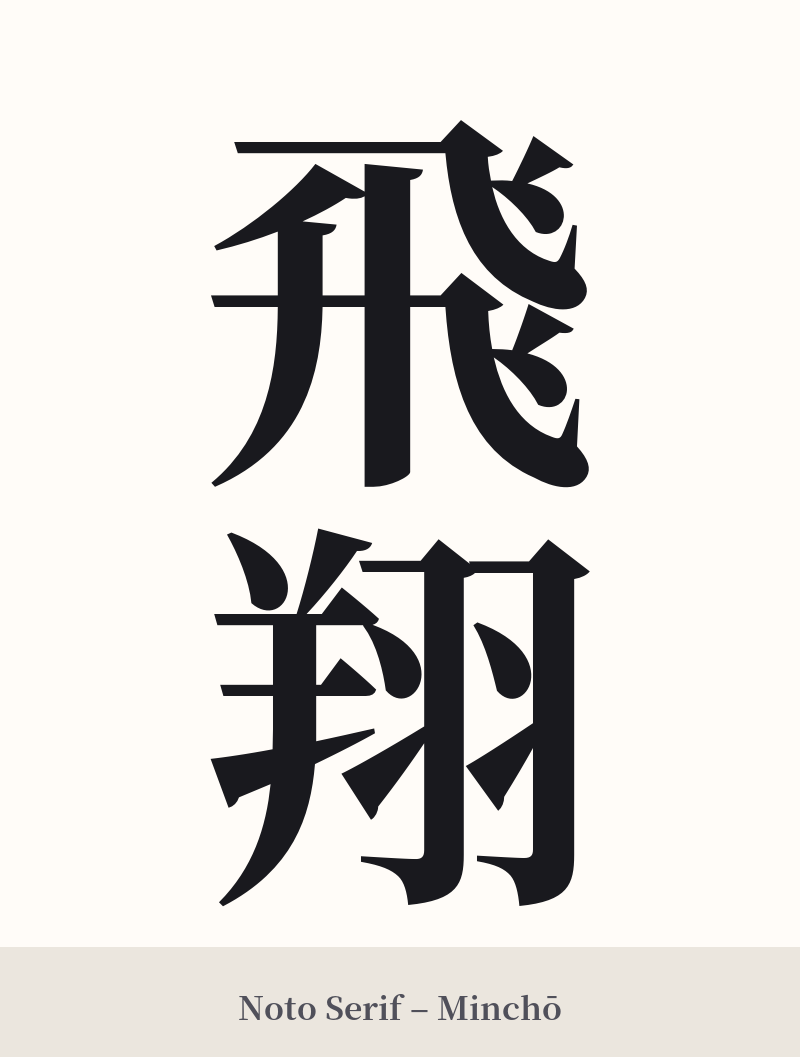
🖌️ Font Styles for 飛翔
The same kanji can look dramatically different depending on the calligraphy style. Choose a font that matches the mood you want for your tattoo or design.
🎨 Tattoo Suitability
📐 Tattoo Design Guide
The word 飛翔 (Hishō) lends itself beautifully to tattoo designs that emphasize movement and aspiration.
– Placement: Vertical alignment is highly recommended to enhance the feeling of upward motion. Popular spots include the spine, forearm, or along the calf. For a horizontal design, the chest or upper back provides a wide canvas that allows the characters to 'spread their wings.'
– Font Style: A dynamic, semi-cursive calligraphy style (gyōsho) is an excellent choice, as its flowing strokes can mimic the feeling of wind and movement. For a bolder, more impactful statement, a strong, angular brushstroke font (kaisho) can convey power and stability.
– Visual Tips: Consider integrating the kanji with subtle imagery. A few loose feathers appearing to fall from the characters, or minimalist brushstroke wings extending from the sides, can amplify the theme without cluttering the design. The key is to support the kanji, not overwhelm it.
Comments