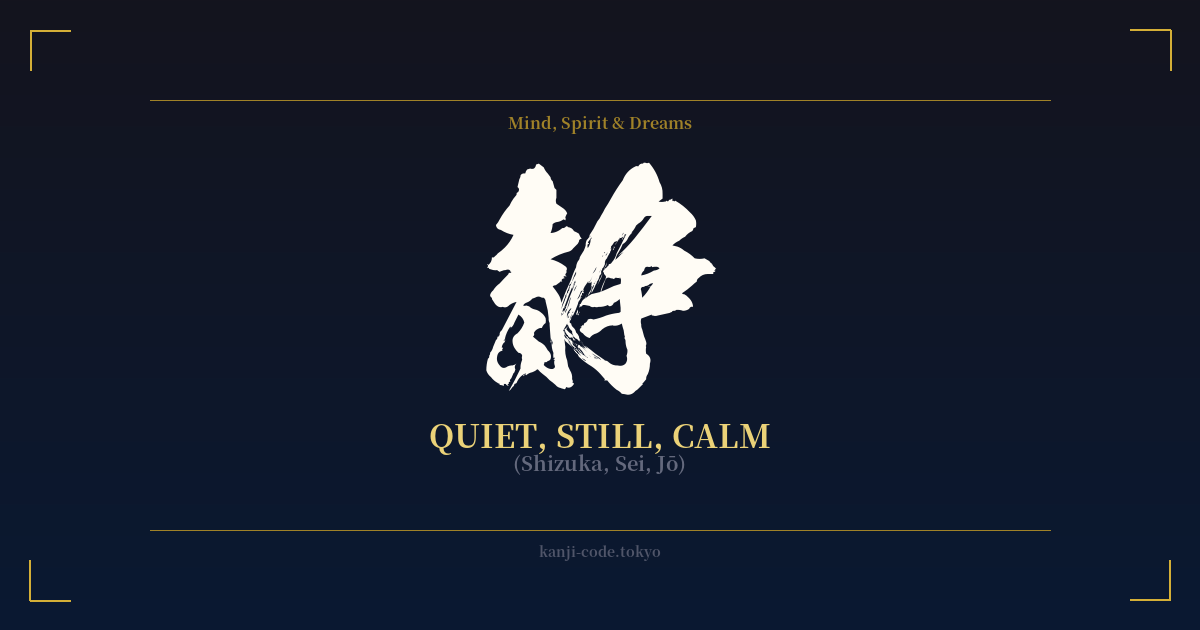
✍️ 静 (Shizuka, Sei, Jō) — Cultural Context
The kanji 静 (shizuka, sei) is one of the most evocative characters in the Japanese language, representing far more than the simple absence of noise. It embodies a profound state of tranquility, a stillness that permeates both the external environment and the internal landscape of the mind. This is not an empty quiet, but a rich, textured silence filled with potential and awareness.
In Japanese culture, the pursuit of 'sei' is a cornerstone of various spiritual and aesthetic practices. It is the feeling one might experience in a meticulously raked Zen rock garden (karesansui), where every stone and grain of sand is placed to inspire quiet contemplation. It is the atmosphere of a traditional tea ceremony (sadō), where prescribed, deliberate movements create a space of shared serenity, free from the distractions of the outside world.
The character's origin story adds a fascinating layer to its meaning. It is a phono-semantic compound, combining the character 青 (sei, ao), meaning 'blue' or 'green' and often representing purity or freshness, with 争 (sō, arasou), which means 'to dispute' or 'to struggle.' The combination powerfully suggests the idea of a conflict being settled, a struggle coming to rest. True calm, the kanji implies, is not the absence of struggle, but the achievement of peace and clarity after it. It is the stillness that follows the storm.
This concept is woven into the fabric of Japanese life and language. The adjective 'shizuka na' (静かな) can describe a quiet neighborhood, a calm sea, or a person with a serene demeanor. The word 'seijaku' (静寂) denotes a deeper, more profound silence, the kind found deep in a forest or an ancient temple. 'Reisei' (冷静), combining 'cool' and 'calm,' describes a person who can maintain composure and clear judgment under pressure.
Ultimately, 静 is a symbol of inner peace. It represents the ability to quiet the 'noise' within one's own mind, to find a point of stillness amidst the chaos of life. It speaks to a state of being that is balanced, mindful, and deeply connected to the present moment, making it a cherished ideal in both traditional and modern Japan.
🖌️ Font Styles for 静
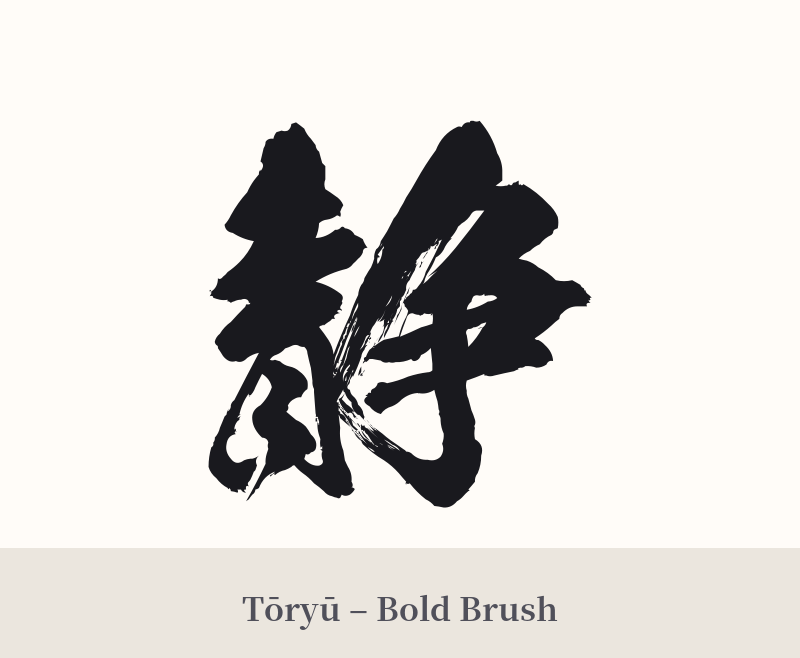
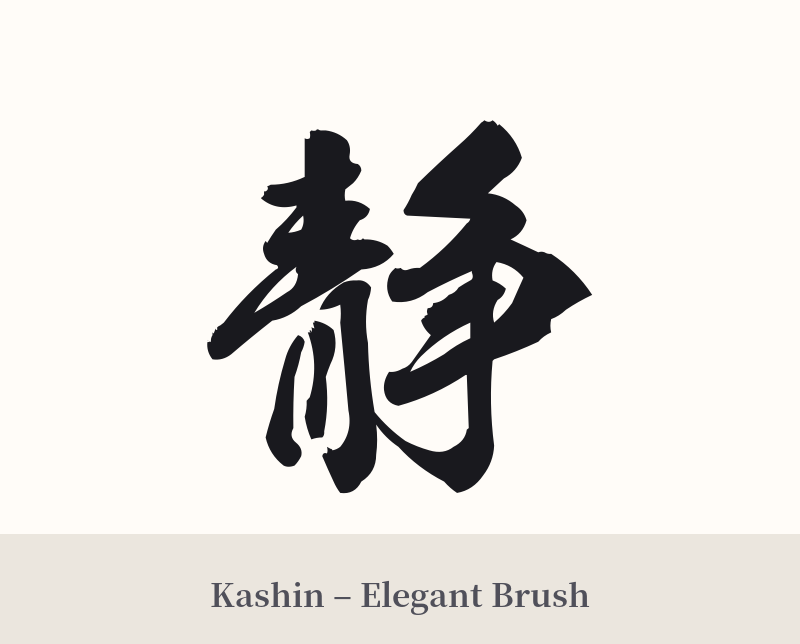
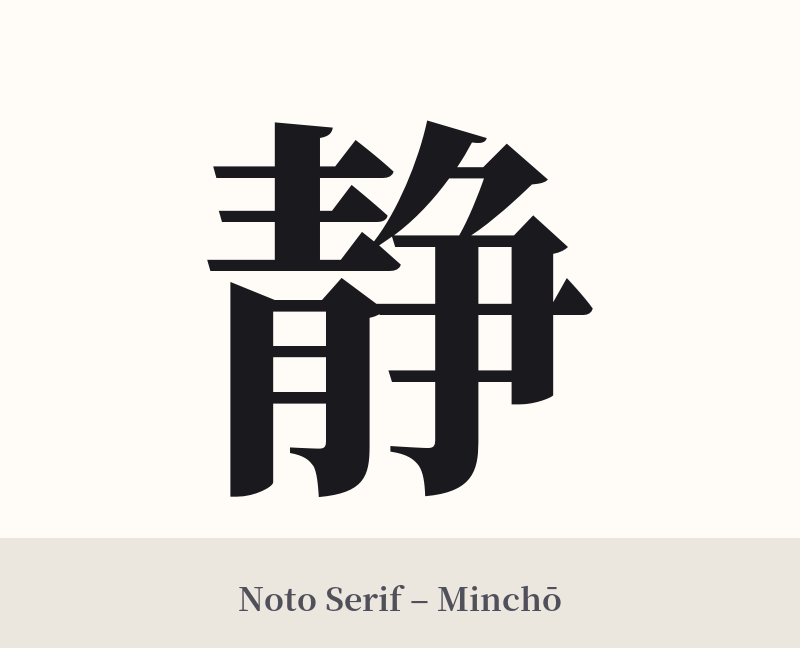
The same kanji can look dramatically different depending on the calligraphy style. Choose a font that matches the mood you want for your tattoo or design.
🎨 Tattoo Suitability
📐 Tattoo Design Guide
The kanji 静 offers a wealth of design possibilities that can emphasize its meaning of tranquility.
– Placement: Consider placing it in areas that are personal or central to your being. The inner forearm, the back of the neck just below the hairline, over the heart, or vertically along the spine are all excellent choices that complement its introspective nature.
– Font Style: The character's form can be adapted to various styles. A flowing, semi-cursive script (Gyosho) can evoke a sense of natural, effortless calm. A classic block script (Kaisho) gives it a feeling of stability and strength. For a more delicate and artistic touch, a serif-style Mincho font can be very effective.
– Visual Tips: While 静 is powerful enough to stand alone, it can be paired with subtle imagery. Consider integrating it with an Enso circle, which also symbolizes enlightenment and the void. A design featuring ripples in water, a single falling leaf, or the silhouette of a bonsai tree can beautifully enhance the theme of stillness and nature.
Comments