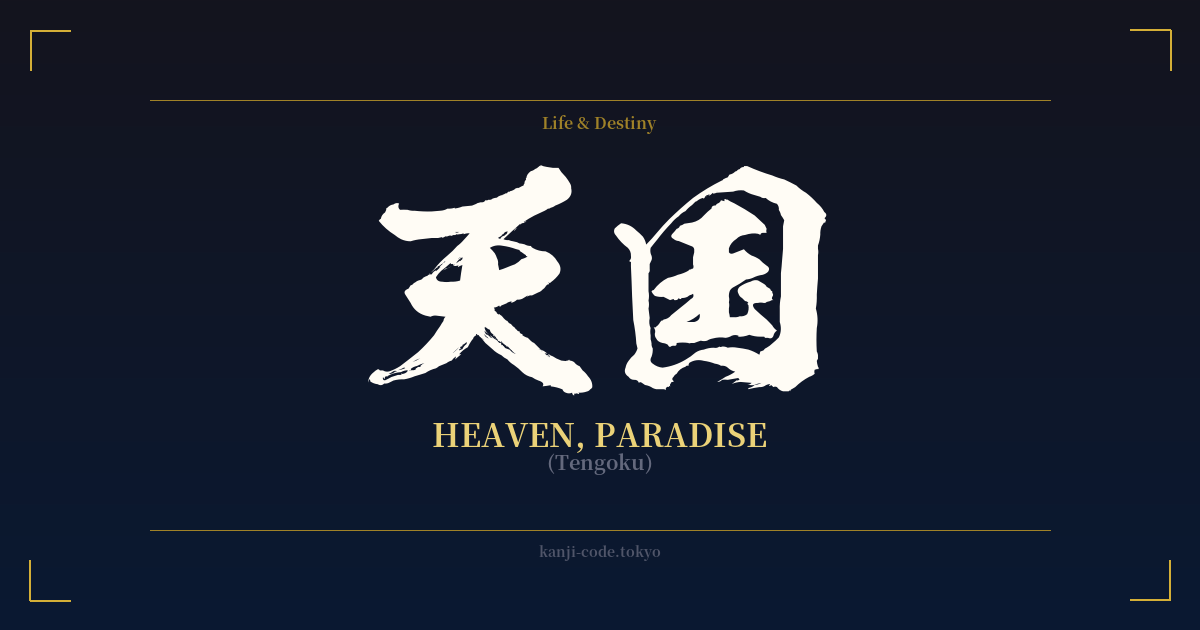
✍️ 天国 (Tengoku) — Cultural Context
天国 (Tengoku) is the most common and widely understood Japanese word for 'heaven' or 'paradise.' Its beauty lies in its accessibility, painting a picture that resonates across both religious and secular contexts. You might hear a family say a loved one has gone to Tengoku (天国に行った), referring to a peaceful afterlife. In the next breath, someone tasting an exquisite meal might exclaim, 「ここは天国だ!」 (Koko wa tengoku da!), meaning "This place is heaven!"
This versatility is rooted in the kanji themselves. The word combines 天 (ten), meaning 'sky' or 'heavens,' with 国 (koku), meaning 'country' or 'kingdom.' Together, they form the 'Heavenly Country' or 'Kingdom of Heaven,' an image that is both grand and easy to grasp. This literal construction gives it a tangible quality, a place of ultimate peace and rest.
The history of 天国 is fascinating. While Japan has native concepts of the afterlife, such as the Shinto realm of the gods, 高天原 (Takamagahara), the term Tengoku gained widespread prominence partly through the influence of Christianity. When missionaries arrived in Japan in the 16th century, they needed a word to translate the Christian concept of Heaven, and 天国 was a perfect fit. It was already in use but its adoption for this purpose cemented its place in the common lexicon.
However, it's crucial to distinguish 天国 from other 'paradises' in Japanese culture. In Buddhism, the terms 浄土 (Jōdo), meaning 'Pure Land,' and especially 極楽 (Gokuraku), the 'Land of Ultimate Bliss' of Amida Buddha, refer to specific realms sought by practitioners. These words carry a much heavier doctrinal weight.
Tengoku, by contrast, evolved to become the people's paradise. It shed its strictly religious confines to represent a universal ideal of bliss, tranquility, and perfection. It's the heaven of pop culture, of everyday dreams, and of heartfelt goodbyes. This makes it a powerful and deeply human word, representing a shared hope for a peaceful place, whether in the next life or in a perfect moment in this one.
🖌️ Font Styles for 天国
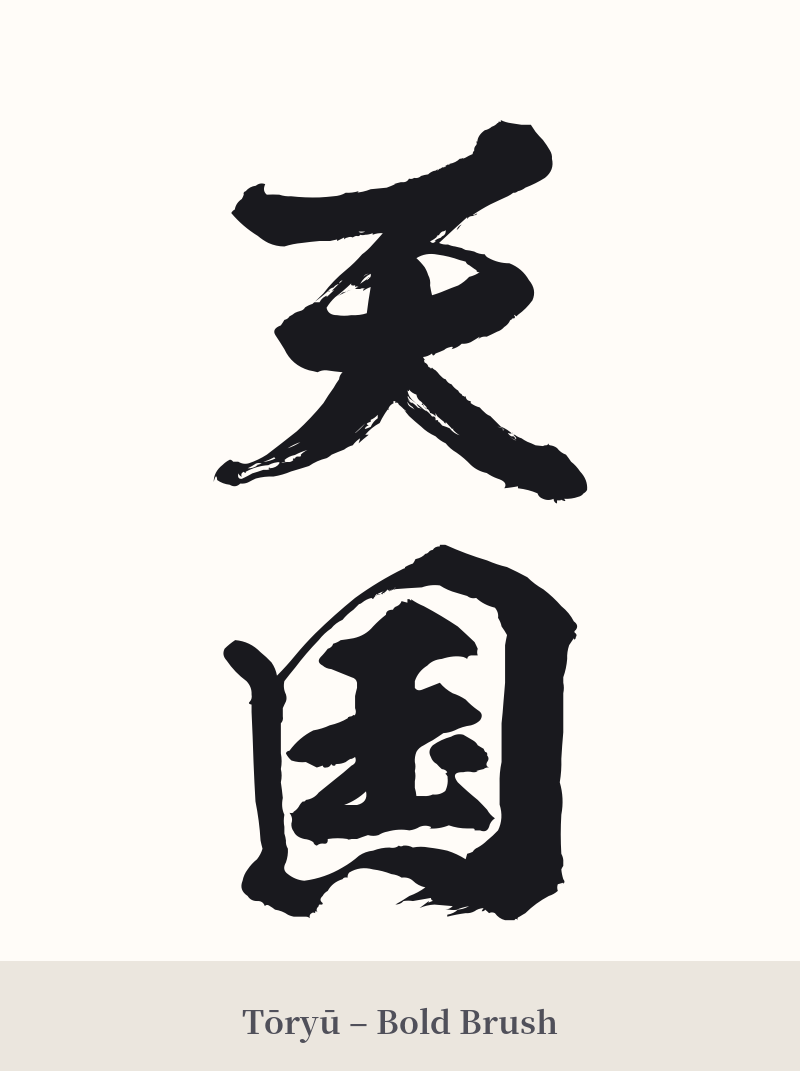
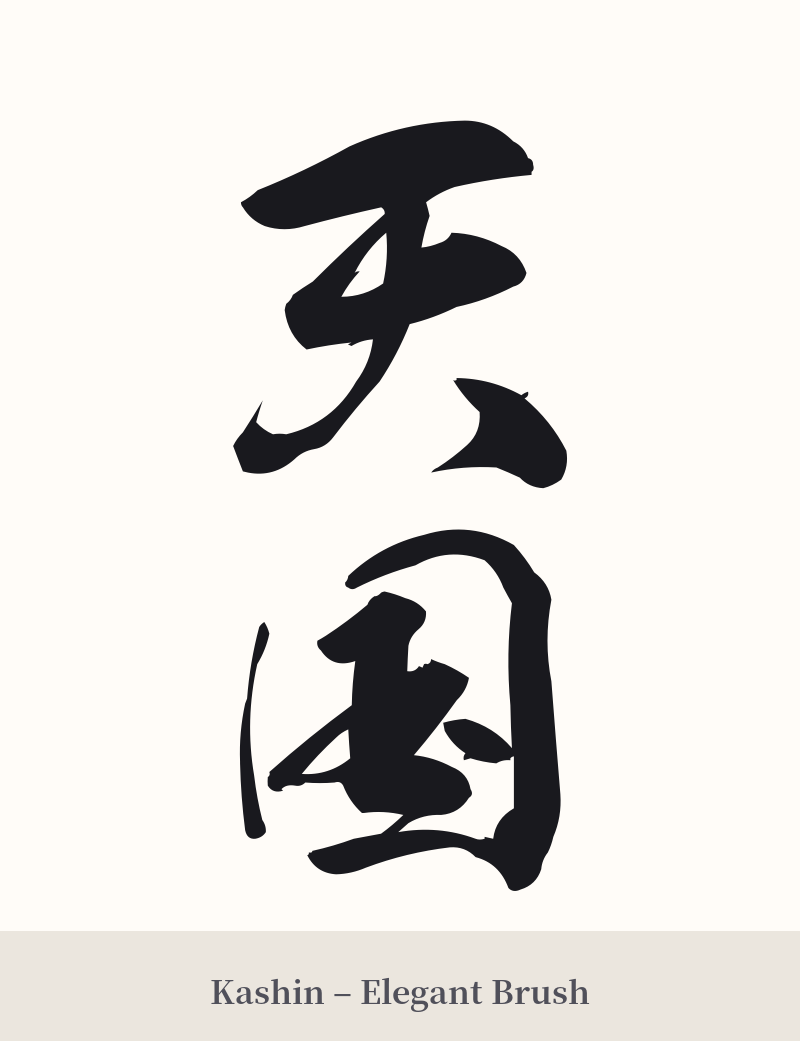
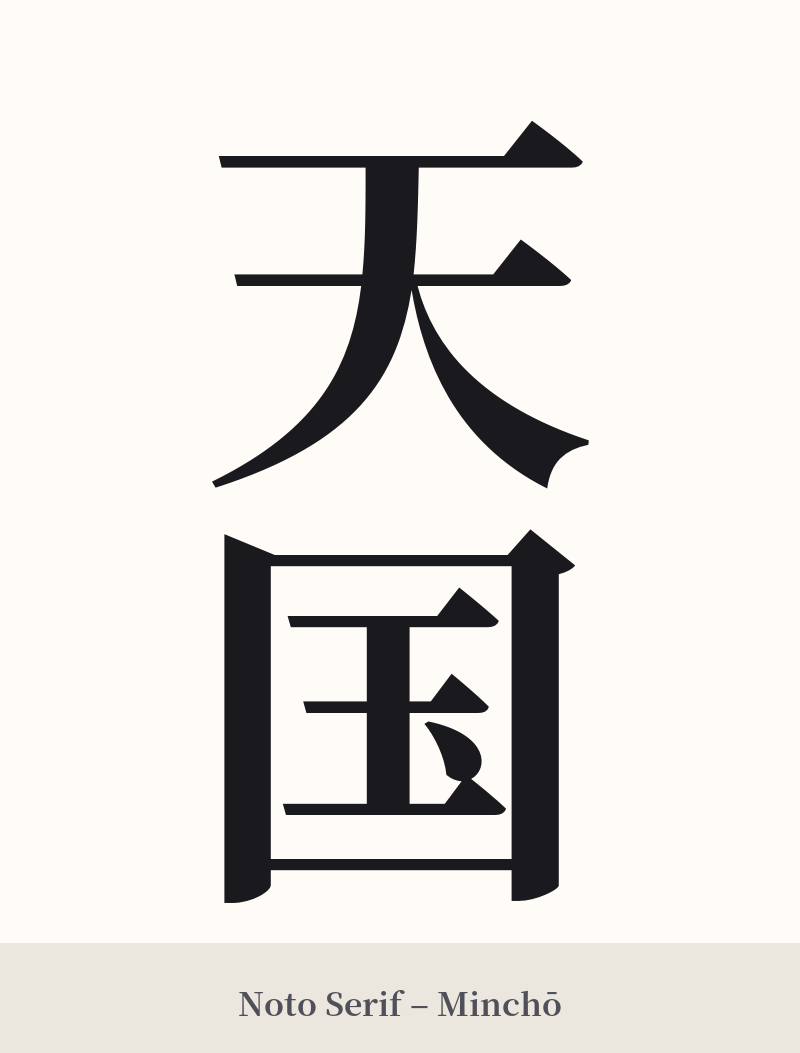
The same kanji can look dramatically different depending on the calligraphy style. Choose a font that matches the mood you want for your tattoo or design.
🎨 Tattoo Suitability
📐 Tattoo Design Guide
The balanced and relatively simple nature of 天国 makes it an excellent choice for a variety of tattoo designs.
– Placement: A vertical orientation is classic for Japanese script and works beautifully along the forearm, bicep, calf, or down the spine. For a horizontal layout, the chest, upper back, or across the ribs are strong options.
– Font Style: For a traditional and powerful look, a dynamic brushstroke font (shodō style) like Gyosho (semi-cursive) or Sosho (cursive) emphasizes the calligraphic roots. For a more modern, serene, and understated feel, a crisp and clean Mincho (serif) or Gothic font is an excellent choice.
– Visual Elements: Consider complementing the kanji with subtle imagery. Wisps of clouds curling around the characters can enhance the 'heavenly' theme. A soft glow or halo effect can represent divine light. For a design that hints at Buddhist influence without being explicit, a single lotus petal or a gentle wave pattern can be incorporated.
Comments