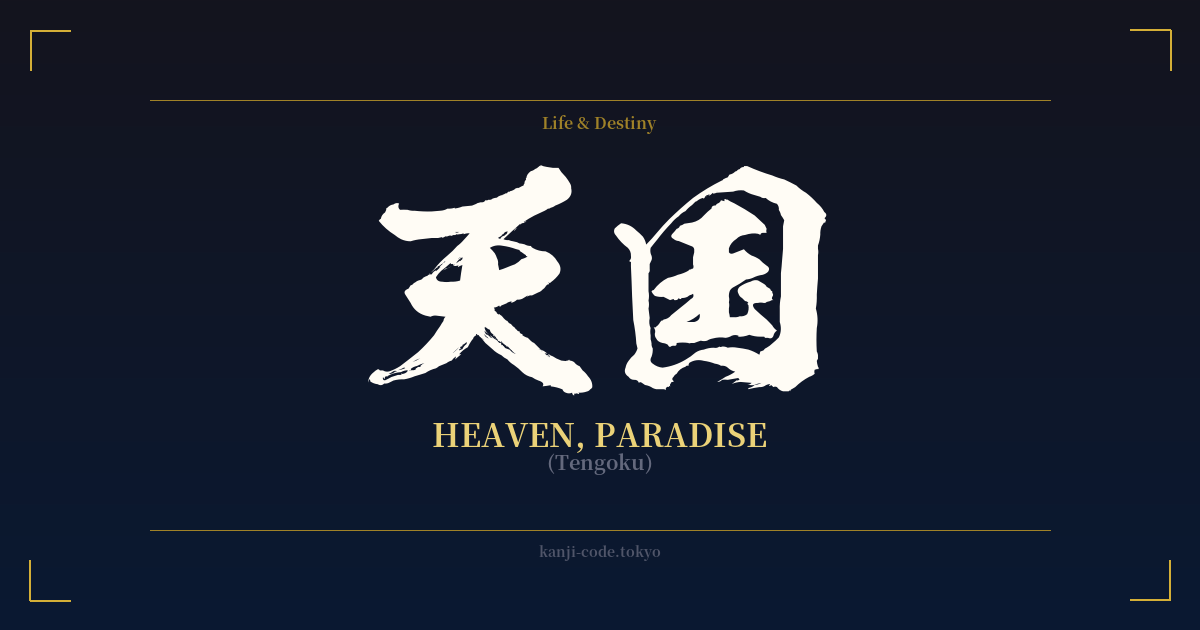
✍️ 天国 (Tengoku) — Contexto cultural
天国 (Tengoku) es la palabra japonesa más común y ampliamente entendida para "cielo" o "paraíso". Su belleza radica en su accesibilidad, lo que pinta un cuadro que resuena en contextos tanto religiosos como seculares. Es posible que escuches a una familia decir que un ser querido ha ido a Tengoku (天国に行った), en referencia a una vida pacífica en el más allá. En el siguiente suspiro, alguien que pruebe una comida exquisita podría exclamar: 「ここは天国だ!」 (¡Koko wa tengoku da!), que significa "¡Este lugar es el paraíso!".'
Esta versatilidad radica en los propios caracteres kanji. La palabra combina 天 (ten), que significa 'cielo' o 'cielos', con 国 (koku), que significa 'país' o 'reino'. Juntos, forman el 'País Celestial' o 'Reino de los Cielos', una imagen grandiosa y fácil de comprender. Esta construcción literal le confiere una cualidad tangible: un lugar de paz y descanso absolutos.
La historia de 天国 es fascinante. Si bien Japón posee conceptos propios sobre el más allá, como el reino sintoísta de los dioses, 高天原 (Takamagahara), el término Tengoku alcanzó gran popularidad, en parte, gracias a la influencia del cristianismo. Cuando los misioneros llegaron a Japón en el siglo XVI, necesitaban una palabra para traducir el concepto cristiano de Cielo, y 天国 resultó ser la ideal. Aunque ya se utilizaba, su adopción para este propósito consolidó su lugar en el léxico común.
Sin embargo, es crucial distinguir el concepto de 天国 (paraíso) de otros 'paraísos' en la cultura japonesa. En el budismo, los términos 浄土 (Jōdo), que significa 'Tierra Pura', y especialmente 極楽 (Gokuraku), la 'Tierra de la Felicidad Suprema' del Buda Amida, se refieren a reinos específicos que buscan los practicantes. Estas palabras tienen un peso doctrinal mucho mayor.
En cambio, Tengoku evolucionó hasta convertirse en el paraíso del pueblo. Abandonó sus límites estrictamente religiosos para representar un ideal universal de dicha, tranquilidad y perfección. Es el paraíso de la cultura pop, de los sueños cotidianos y de las despedidas sentidas. Esto la convierte en una palabra poderosa y profundamente humana, que representa una esperanza compartida de un lugar de paz, ya sea en la otra vida o en un momento perfecto de esta.
🖌️ Estilos de fuente para 天国
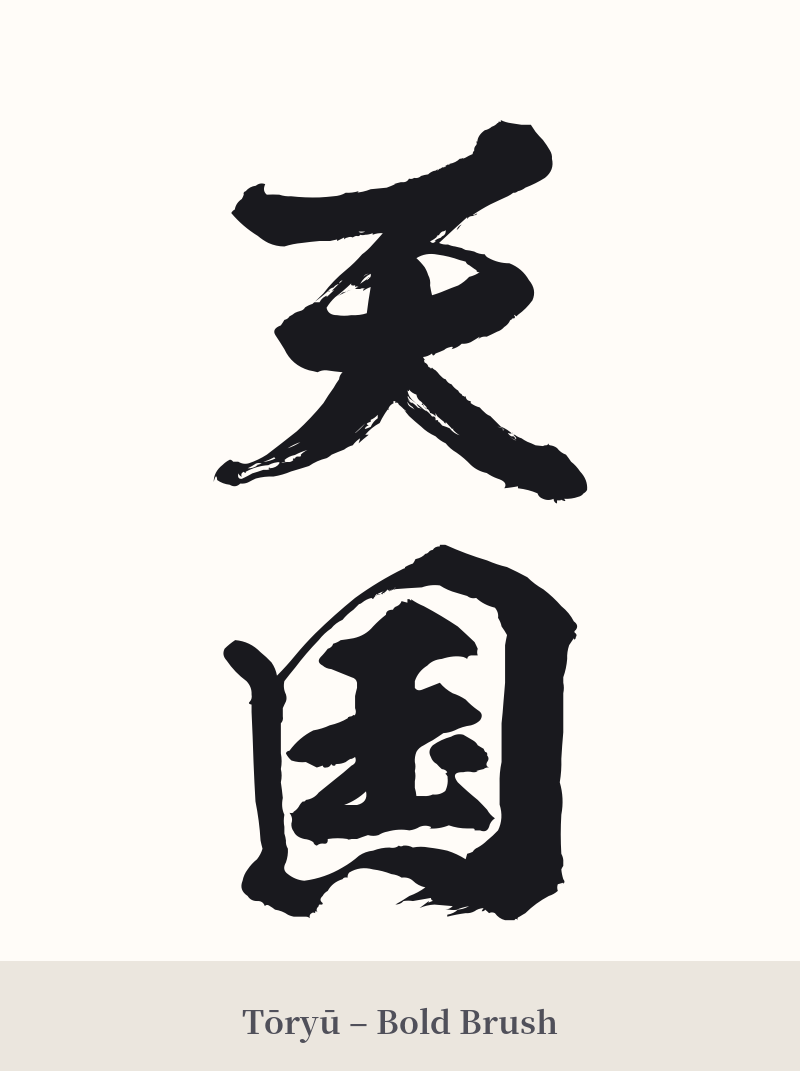
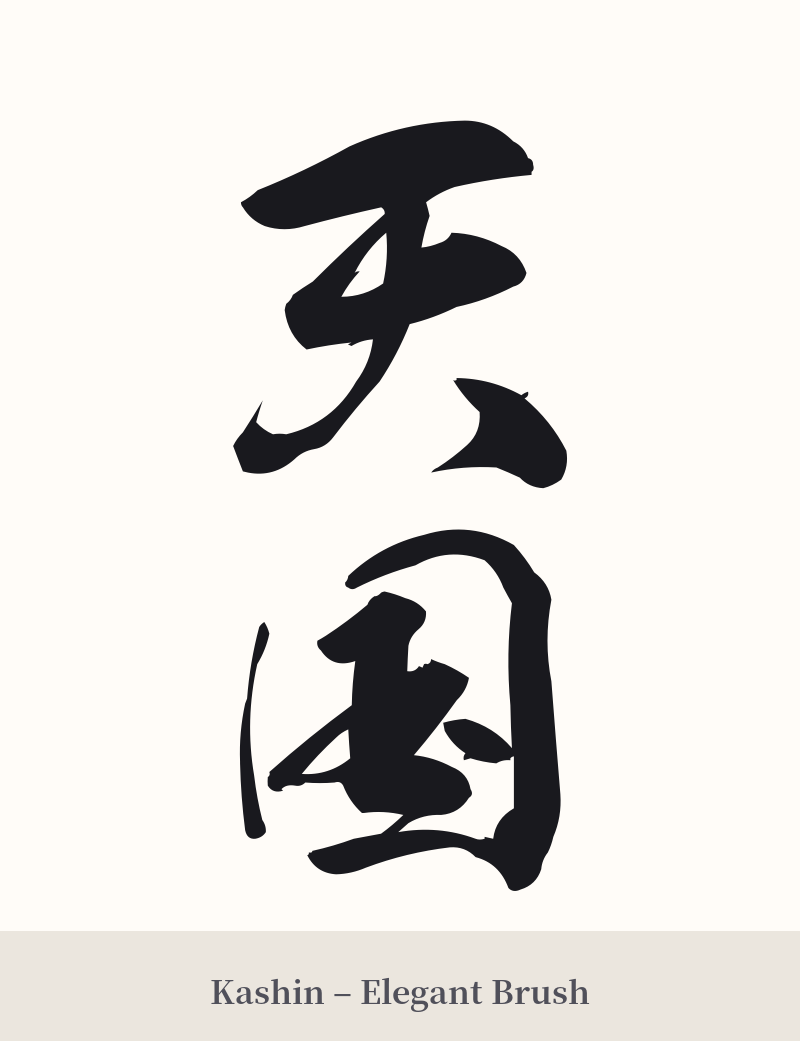
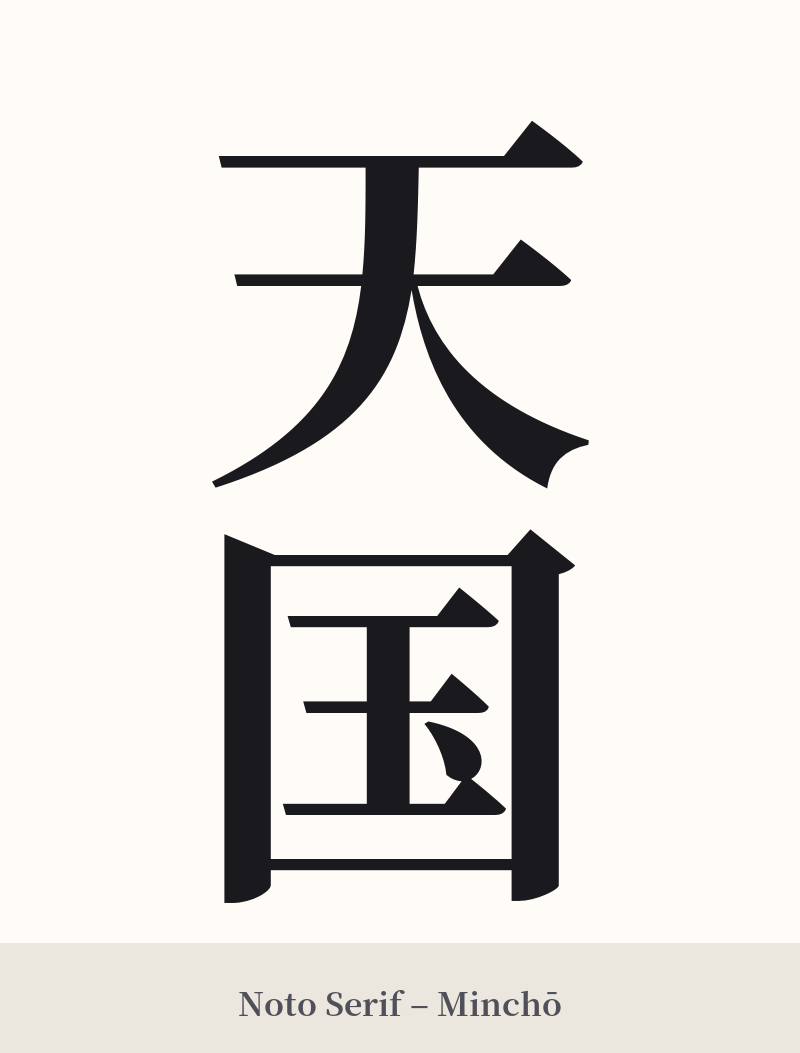
Los mismos caracteres kanji pueden verse muy diferentes según el estilo de caligrafía. Elige una fuente que se ajuste al ambiente que deseas para tu tatuaje o diseño.
🎨 Idoneidad para tatuajes
📐 Guía de diseño de tatuajes
La naturaleza equilibrada y relativamente simple de 天国 la convierte en una excelente opción para una variedad de diseños de tatuajes.
– Ubicación: La orientación vertical es clásica para la escritura japonesa y queda muy bien a lo largo del antebrazo, el bíceps, la pantorrilla o la columna vertebral. Para una disposición horizontal, el pecho, la parte superior de la espalda o las costillas son buenas opciones.
– Estilo de fuente: Para un aspecto tradicional y contundente, una fuente dinámica con trazos de pincel (estilo shodō), como Gyosho (semicursiva) o Sosho (cursiva), resalta las raíces caligráficas. Para un estilo más moderno, sereno y discreto, una fuente Mincho (con serifa) o gótica, nítida y limpia, es una excelente opción.
Elementos visuales: Considere complementar los kanji con imágenes sutiles. Nubes ondulantes que rodean los caracteres pueden realzar el tema celestial. Un brillo suave o un halo pueden representar la luz divina. Para un diseño que insinúe la influencia budista sin ser explícito, se puede incorporar un solo pétalo de loto o un delicado patrón ondulado.
Comentarios