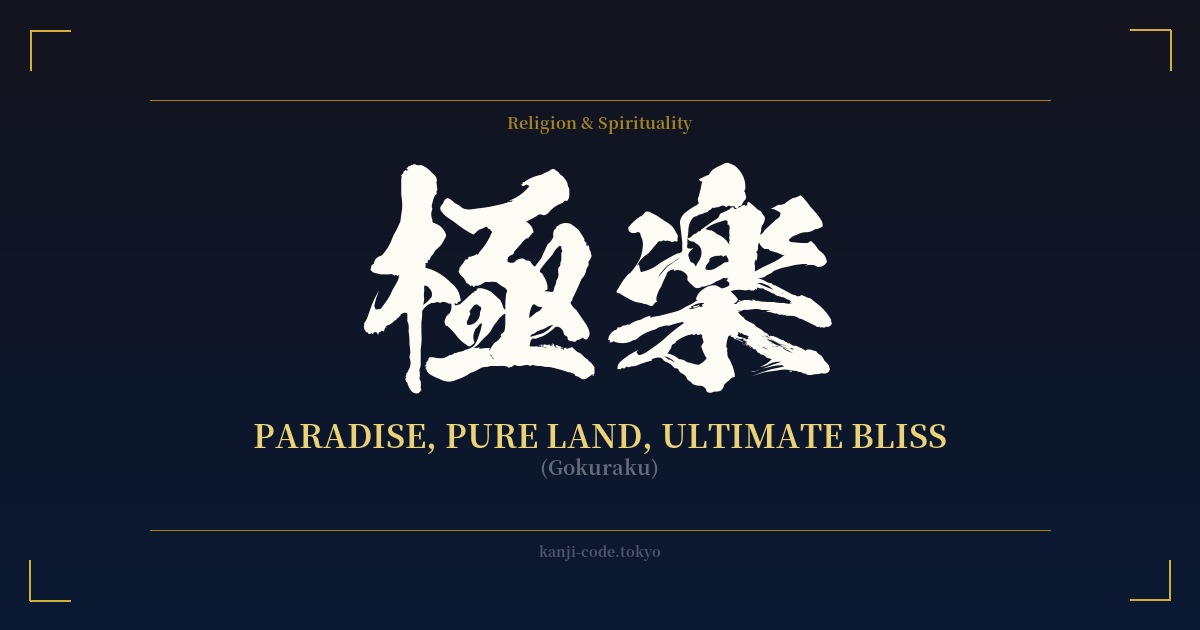
✍️ 極楽 (Gokuraku) — Cultural Context
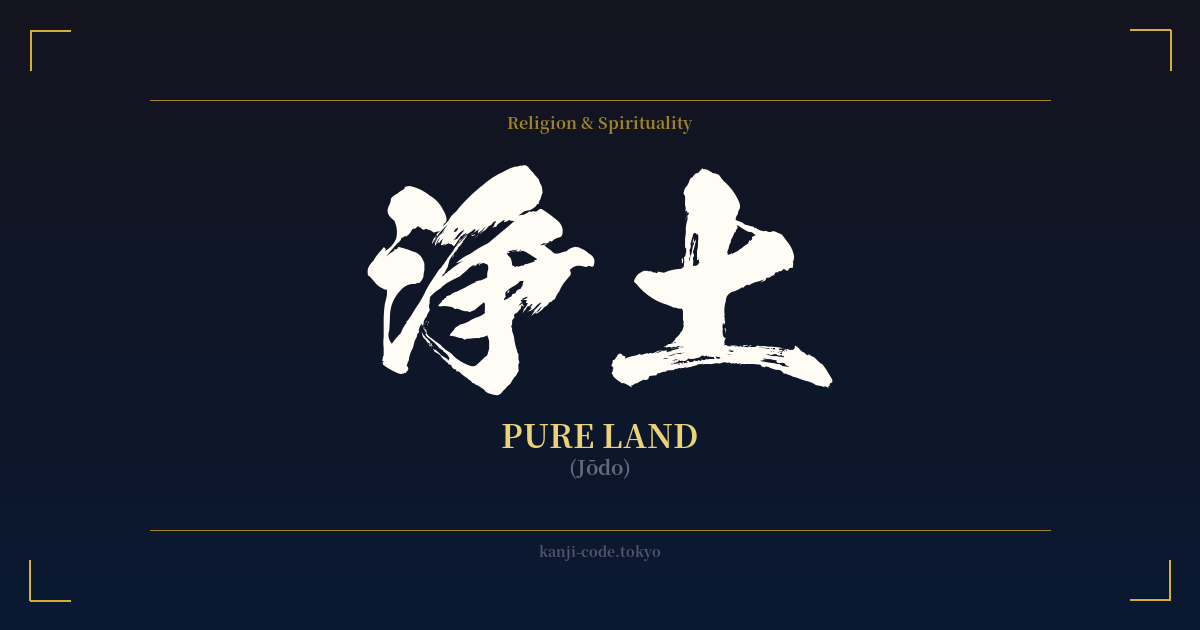
The word 極楽 (Gokuraku) is one of the most evocative terms in the Japanese spiritual lexicon, translating to 'Paradise' or 'Pure Land.' However, its meaning is far more specific and profound than a simple equivalent of the Western concept of Heaven. Gokuraku is the central goal for followers of Pure Land Buddhism (浄土宗, Jōdo shū), one of the most prominent schools of Buddhism in Japan.
At its core, Gokuraku is the Western Pure Land of Amitābha Buddha (阿弥陀仏, Amida Butsu). It is not a final, eternal reward for a virtuous life, but rather an ideal realm free from the suffering, distractions, and negative karma of our world. It is described in sutras as a place of immense beauty, with jeweled trees, fragrant breezes, and celestial music, where the ground is soft gold and lotus flowers bloom in shimmering ponds.
The purpose of being reborn in Gokuraku is not hedonistic pleasure. Instead, it is a perfect environment for spiritual advancement. In the Pure Land, one can listen directly to the teachings of Amida Buddha and other enlightened beings, allowing for an unobstructed path toward attaining final enlightenment, or Nirvana (涅槃, Nehan). The method for gaining rebirth in Gokuraku is surprisingly accessible: faith in Amida Buddha and the sincere recitation of his name in a chant known as the 'nenbutsu' (南無阿弥陀仏, Namu Amida Butsu).
This concept has deeply influenced Japanese culture and art. The famous Byōdō-in temple in Uji, with its Phoenix Hall situated on a pond, was designed in the 11th century as a physical manifestation of Gokuraku on Earth, giving aristocrats a glimpse of the paradise they hoped to reach.
Over centuries, the term has also seeped into secular Japanese language. Today, you might hear someone step into a hot spring (onsen) and exclaim, 「極楽、極楽」 ('Gokuraku, gokuraku'), meaning 'This is pure bliss!' or 'This is heaven!' It's used to describe any experience of supreme comfort, pleasure, and relaxation. This dual meaning—a profound spiritual destination and a secular expression of ultimate comfort—makes Gokuraku a rich and multifaceted word.
🖌️ Font Styles for 極楽
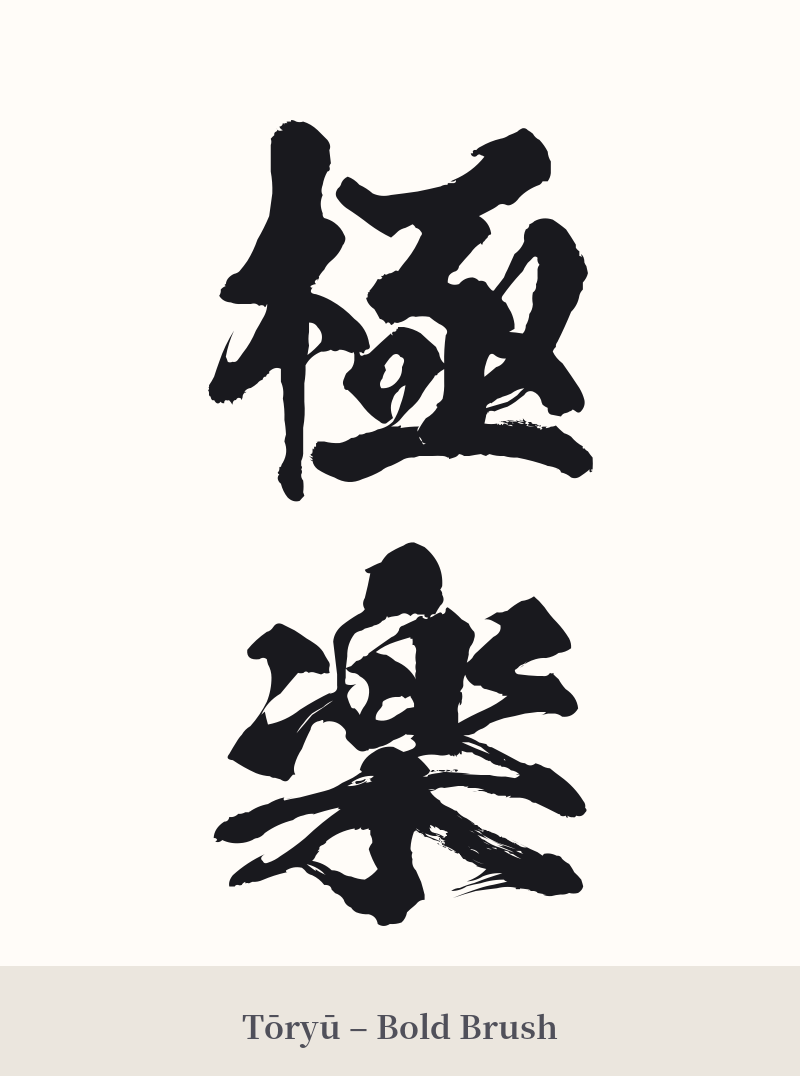
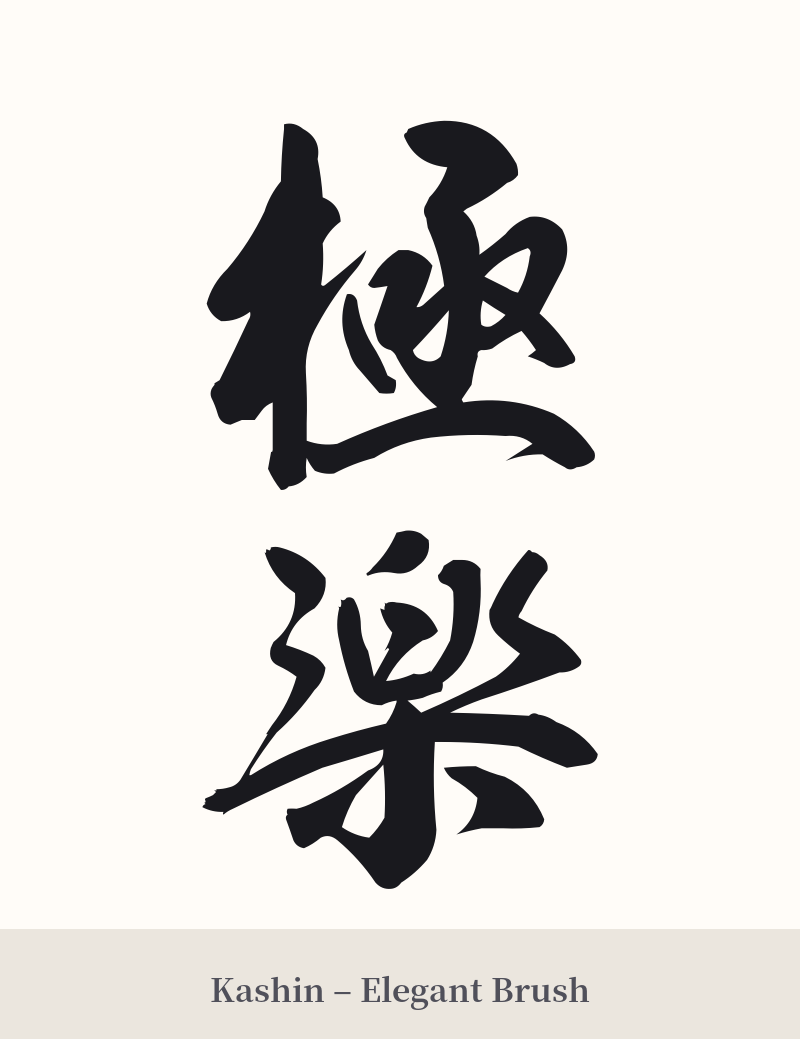
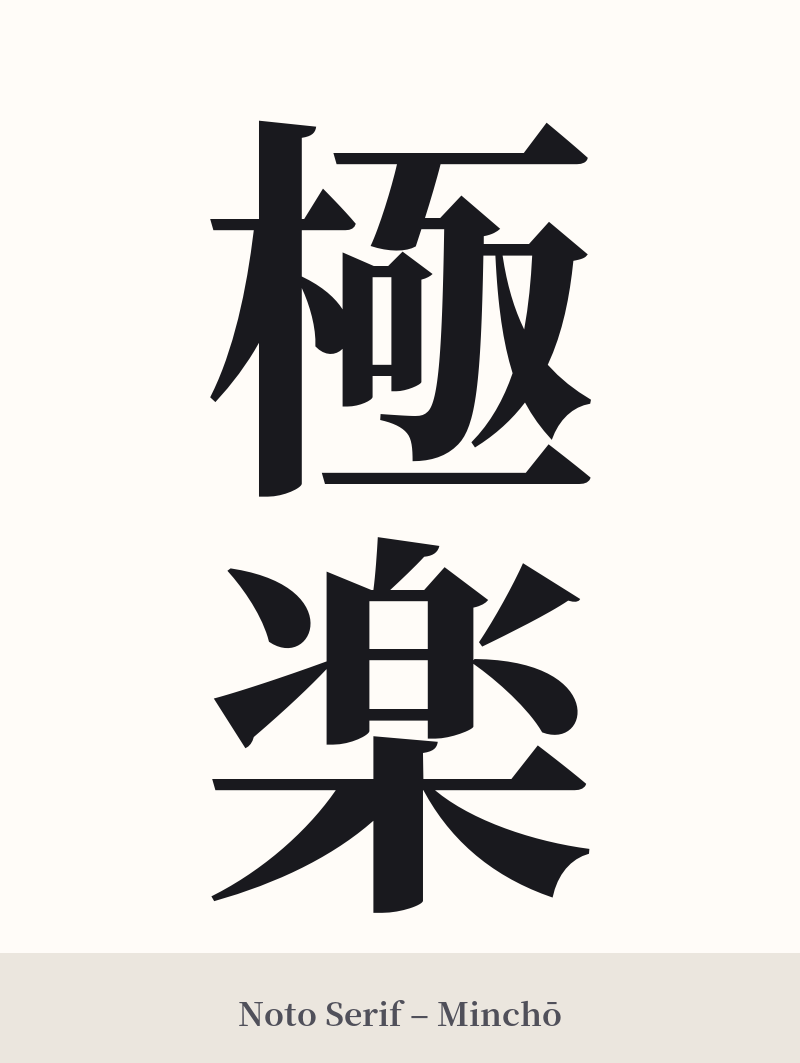
The same kanji can look dramatically different depending on the calligraphy style. Choose a font that matches the mood you want for your tattoo or design.
🎨 Tattoo Suitability
📐 Tattoo Design Guide
For a 極楽 (Gokuraku) tattoo, the design should reflect its sense of serenity and spiritual significance. Due to the detail in the characters, it's best suited for medium to large applications where the strokes can be clearly defined.
– Placement: Vertical alignment is the most traditional and aesthetically pleasing orientation. Consider placements like the forearm, the calf, the spine, or across the back or chest to allow for adequate space.
– Font Style: A classic Kaisho (楷書) or block script emphasizes the formal, reverent nature of the word. For a more artistic and flowing look, a Gyosho (行書) or semi-cursive style can be beautiful. A powerful, expressive Shodō (書道) brushstroke style would also be highly appropriate, capturing the spiritual energy of the term.
– Visual Elements: Consider incorporating related imagery. A lotus flower is the most fitting companion, as it symbolizes purity and rebirth in the Pure Land. Other elements could include gentle clouds, rays of light, or a tranquil water motif to evoke the paradise described in the sutras.
Comments