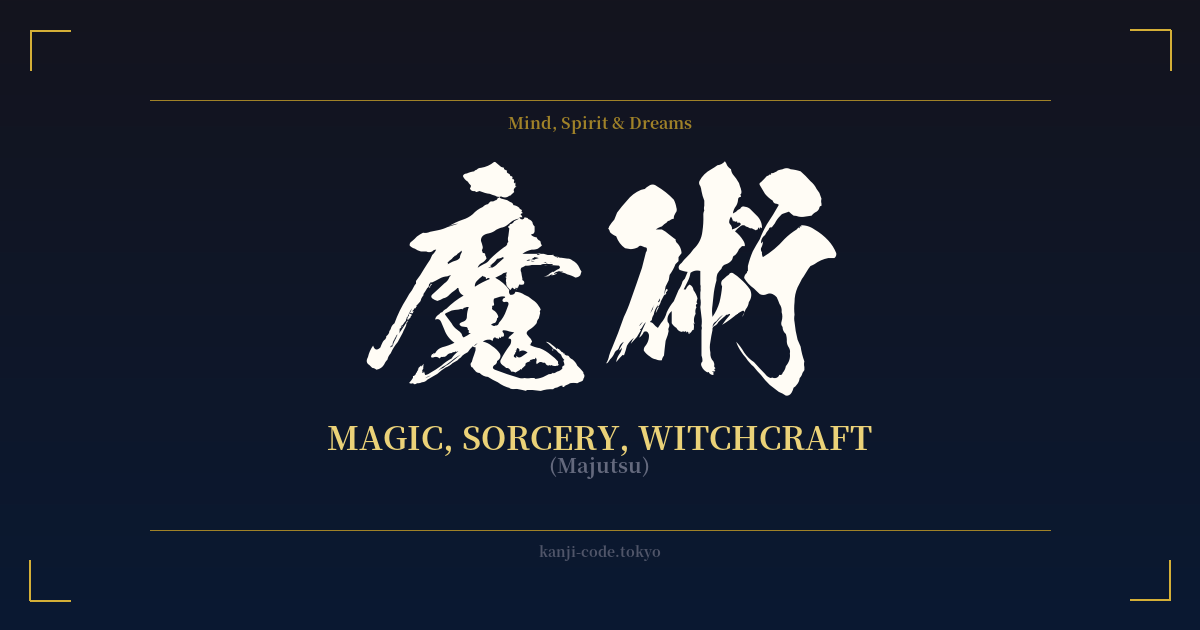
✍️ 魔術 (Majutsu) — Cultural Context
魔術 (Majutsu) is the Japanese term that translates to magic, sorcery, and witchcraft. However, it carries a specific nuance that distinguishes it from other words for magic and reveals a deep connection to Japanese cultural concepts of skill and the supernatural.
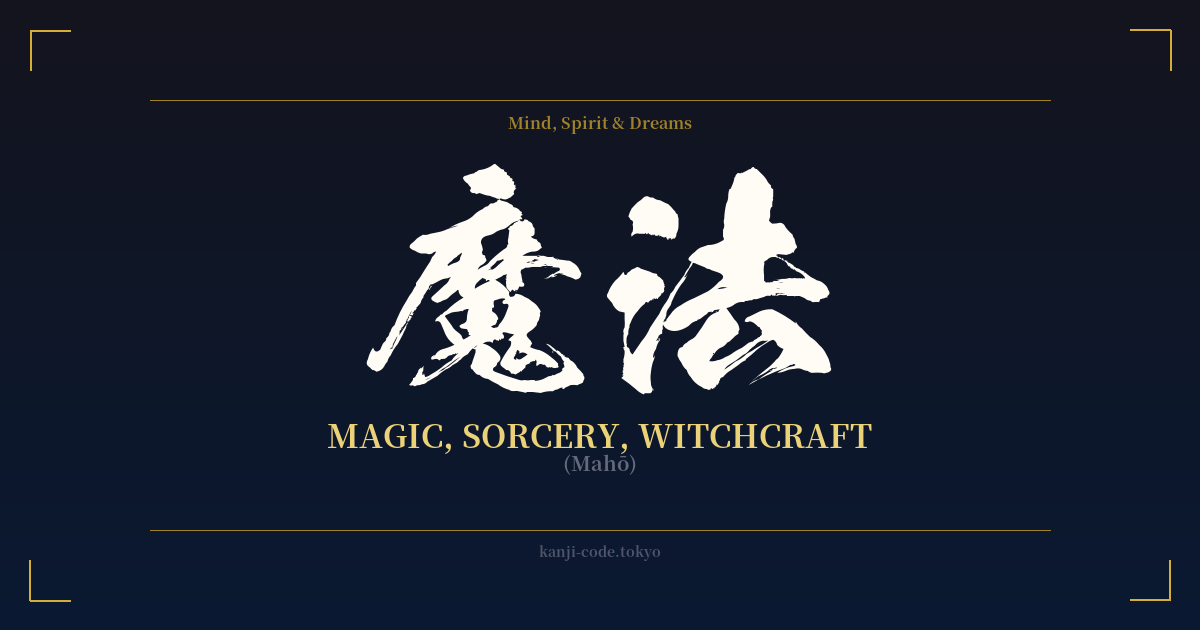
The word is composed of two kanji: 魔 (ma), meaning 'demon' or 'evil spirit,' and 術 (jutsu), meaning 'art,' 'technique,' or 'skill.' Therefore, a literal translation is 'demonic art' or 'the technique of spirits.' This immediately sets it apart from stage magic, which is called 手品 (tejina), or the more general, often wondrous magic found in fairy tales, 魔法 (mahō).
Majutsu implies a system, a discipline that is studied and practiced to wield supernatural power. The inclusion of 術 (jutsu) is significant; it's the same character used in words like 武術 (bujutsu, martial arts) and 忍術 (ninjutsu, the art of the ninja). This frames majutsu not as an innate gift, but as a learned craft that requires knowledge, practice, and mastery over specific techniques, rituals, or incantations. It's magic as a science or a dark martial art.
Historically, while Japan has its own esoteric traditions like 陰陽道 (Onmyōdō) and 修験道 (Shugendō), the term 魔術 often became associated with Western occultism—alchemy, ceremonial magic, and demonology—when these ideas were introduced. It captured the systematic, often forbidden nature of these practices.
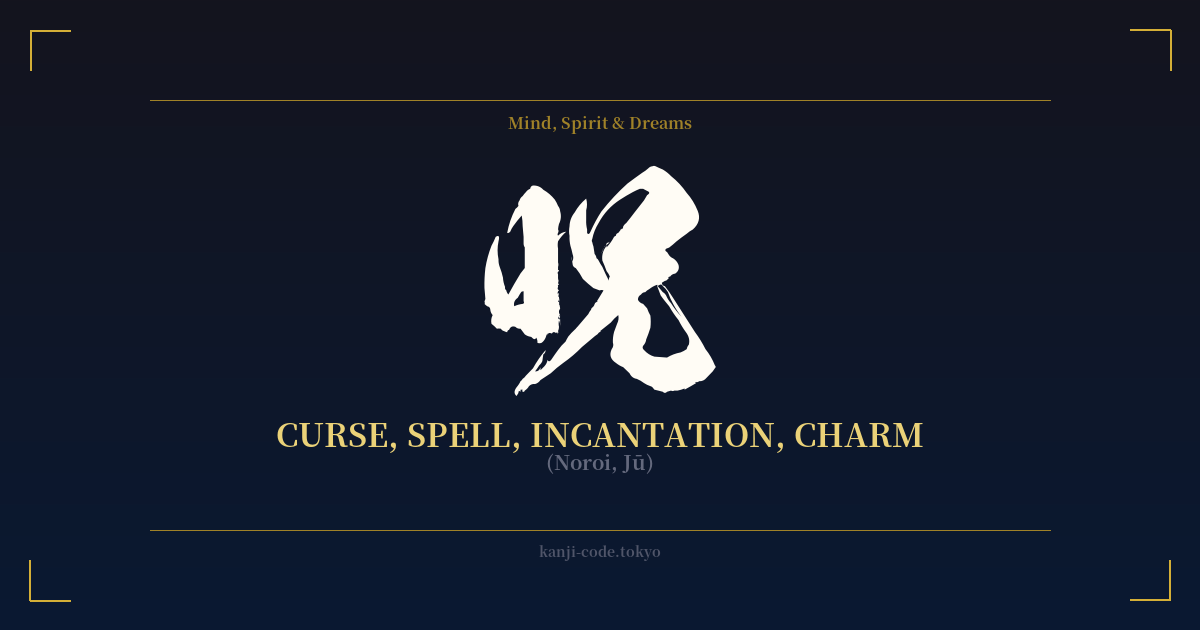
In modern pop culture, particularly anime, manga, and video games, 魔術 is a prevalent concept. Series like the Fate franchise, Fullmetal Alchemist (as 錬金術, renkinjutsu, or alchemy), and Jujutsu Kaisen (which uses the related 呪術) build entire worlds around these systematic forms of magic. In these contexts, majutsu is a powerful but often dangerous tool, a path that requires immense sacrifice and carries great risk. It is the magic of scholars and occultists, distinct from the miracles of gods or the innate abilities of mythical creatures.
Choosing the word 魔術 is to embrace this darker, more technical side of the supernatural. It speaks to a fascination with hidden knowledge, forbidden power, and the mastery of esoteric arts.
🖌️ Font Styles for 魔術
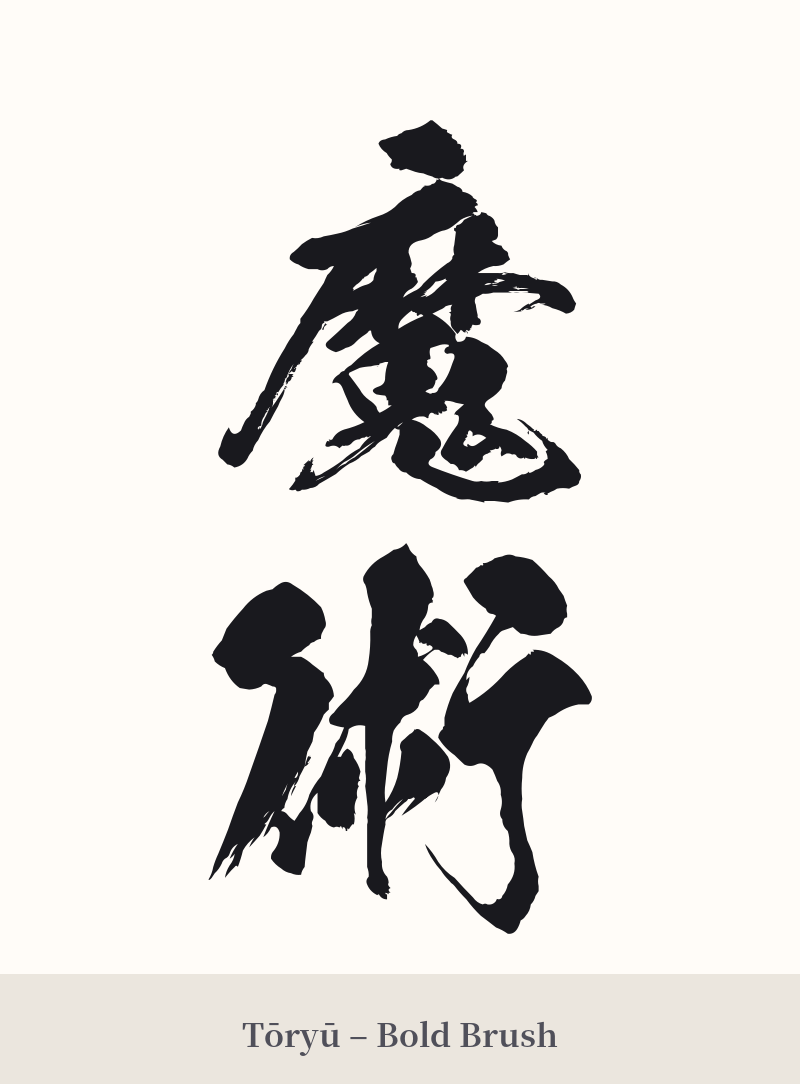
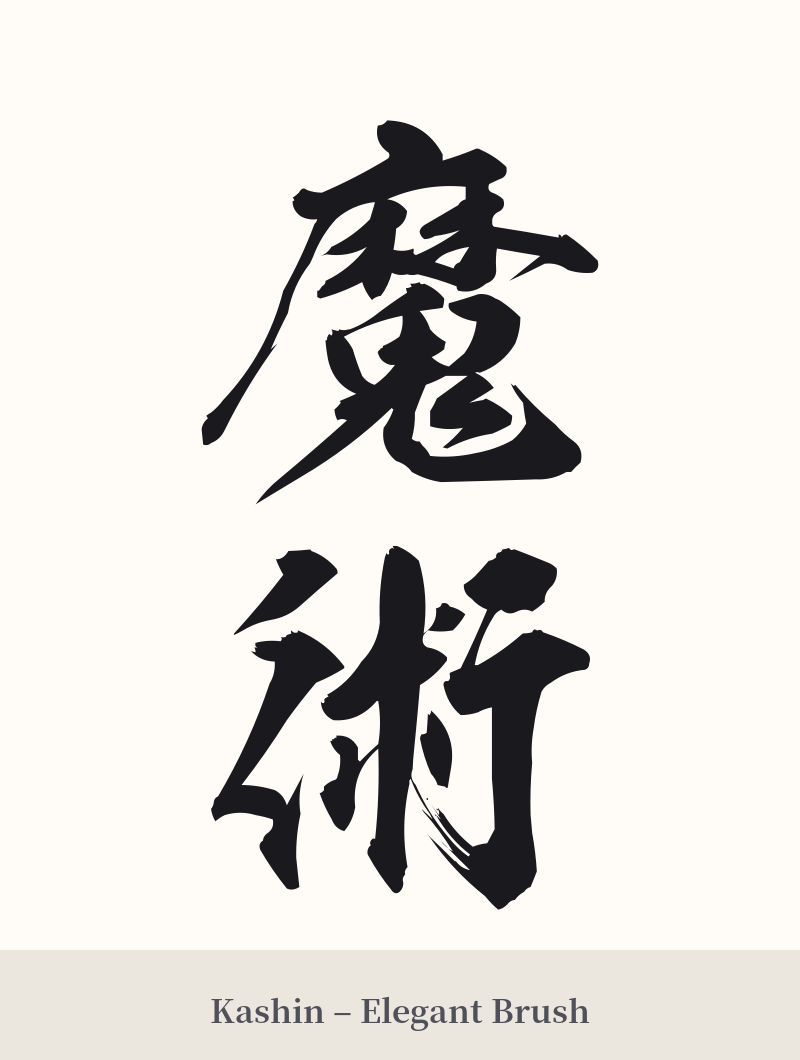
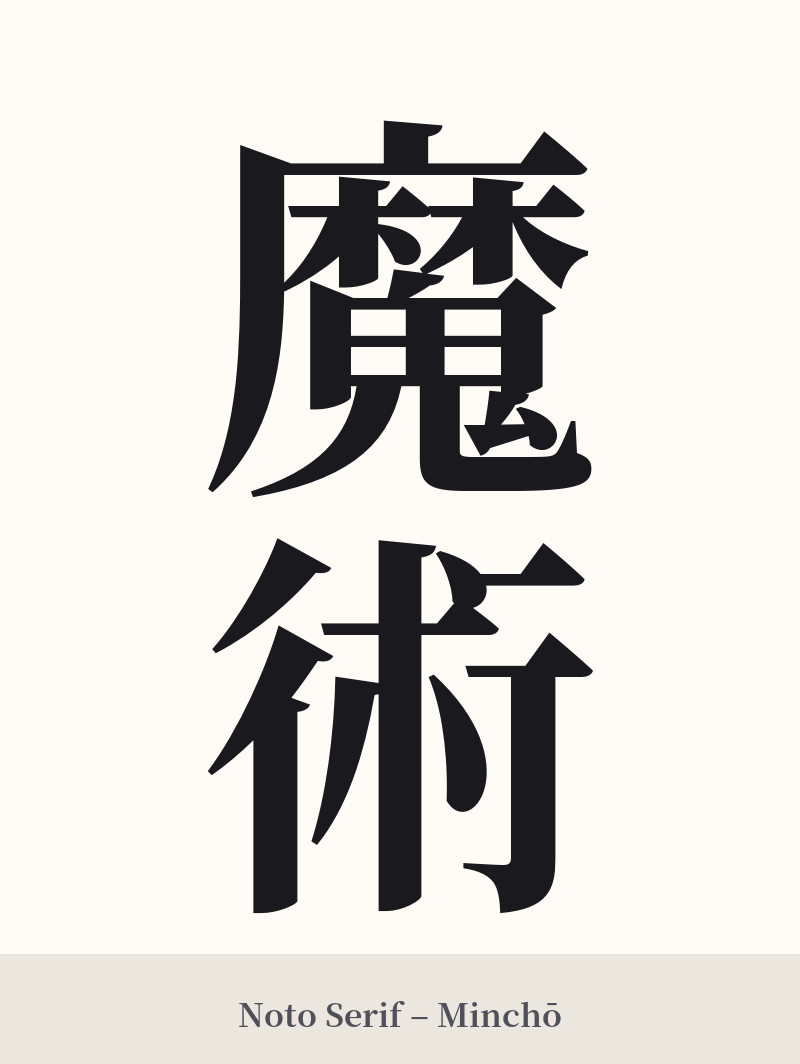
The same kanji can look dramatically different depending on the calligraphy style. Choose a font that matches the mood you want for your tattoo or design.
🎨 Tattoo Suitability
📐 Tattoo Design Guide
A 魔術 (Majutsu) tattoo is a powerful statement that benefits from thoughtful design choices to enhance its dark and technical feel.
– Placement: Vertical orientation is highly recommended to honor the traditional writing style. It looks particularly striking along the forearm, calf, or down the spine, allowing space for the complex characters to breathe.
– Font Style: A thick, aggressive calligraphy style (like a dynamic Gyōsho or Sōsho) can emphasize the 'demonic' and chaotic energy of the word. Conversely, a blocky and angular Kaisho or Mincho font can highlight the 'technique' and systematic aspect of the art. Avoid thin, delicate fonts, as they can make the 21 strokes of the 魔 character blur together.
– Visual Embellishments: Consider pairing the kanji with thematic imagery. Magical circles, alchemical symbols, spectral energy, or motifs from a specific fantasy series that uses the concept (like a Command Seal from Fate) can frame the kanji and deepen its narrative. Placing it within a scroll or on a tattered parchment background can also reinforce the idea of ancient, learned knowledge.
Comments