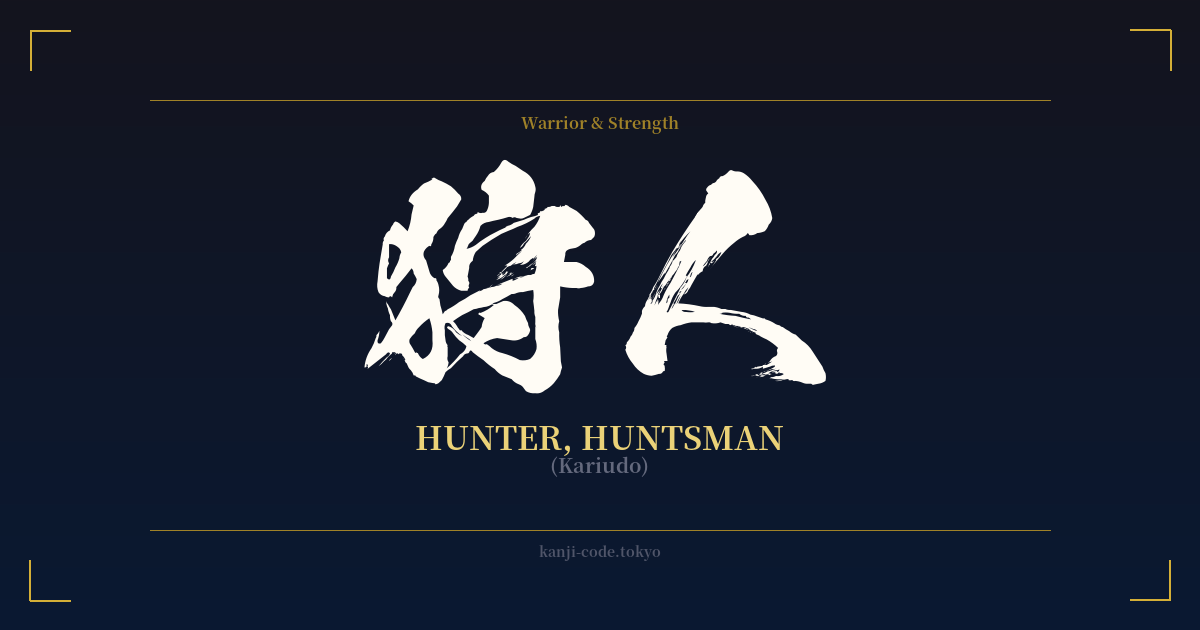
✍️ 狩人 (Kariudo) — Cultural Context
狩人 (Kariudo) is the Japanese word for 'hunter' or 'huntsman.' It’s a direct and evocative term, combining the kanji for 'hunt' (狩) and 'person' (人). While simple in its construction, the word carries deep cultural weight, summoning images of self-sufficient individuals navigating the wild with skill and reverence.
Historically, the most famous hunters in Japan are the Matagi (マタギ), traditional winter hunters from the Tōhoku region in northern Honshu. For centuries, these groups lived a unique, semi-isolated existence, entering the mountains in the harshest months to hunt bears, deer, and other animals for sustenance and trade. The Matagi were not just hunters; they were a distinct cultural group with their own dialect, spiritual beliefs, and strict laws governing the hunt. They viewed the mountains as sacred and the animals as gifts, performing rituals to honor the spirits of the creatures they took. This imbues the concept of 'Kariudo' with a sense of spiritual respect and a profound connection to the cycle of life and death, far beyond mere sport.
In modern Japan, the role of the hunter has changed. While traditional Matagi communities still exist, they are few. Today, hunting is primarily for wildlife management or sport, governed by strict licensing. The term for a modern, licensed hunter is more often 猟師 (Ryōshi), which feels more technical and professional. 狩人 (Kariudo), by contrast, has retained a more archaic, romantic, and adventurous connotation. It's the word you are more likely to encounter in folklore, historical dramas, and fantasy.
This is especially true in popular culture. The 'hunter' archetype is a staple in Japanese anime, manga, and video games. Series like 'Hunter x Hunter' and the colossal 'Monster Hunter' franchise have cemented the image of the Kariudo as a brave, skilled adventurer who tracks and battles formidable beasts. In these contexts, the Kariudo is a figure of strength, perseverance, and specialized knowledge, often belonging to a guild or operating as a lone wolf on a quest. This modern interpretation has made 狩人 a symbol of personal strength and the pursuit of a challenging goal.
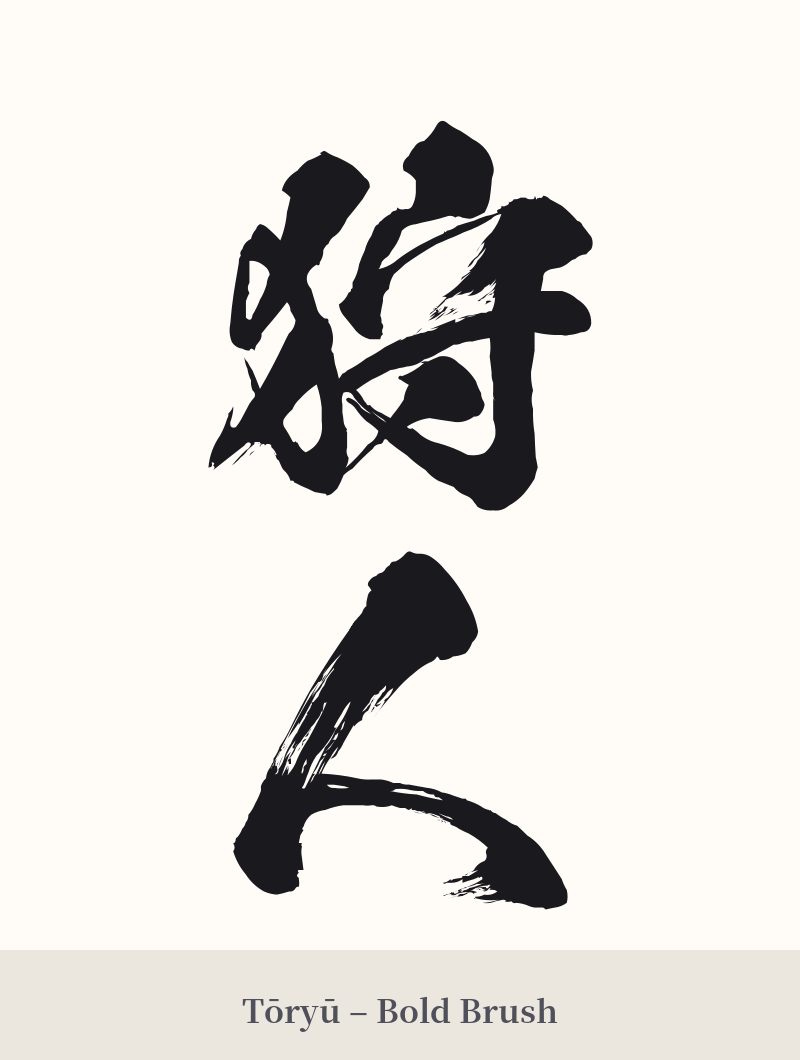
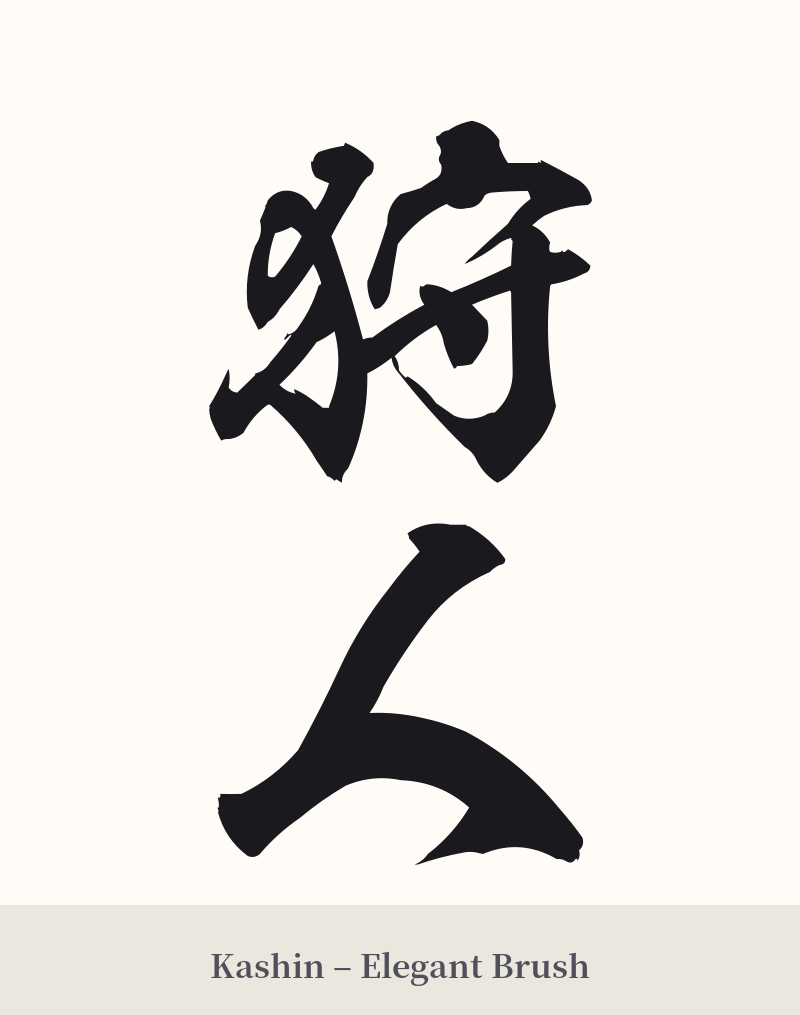
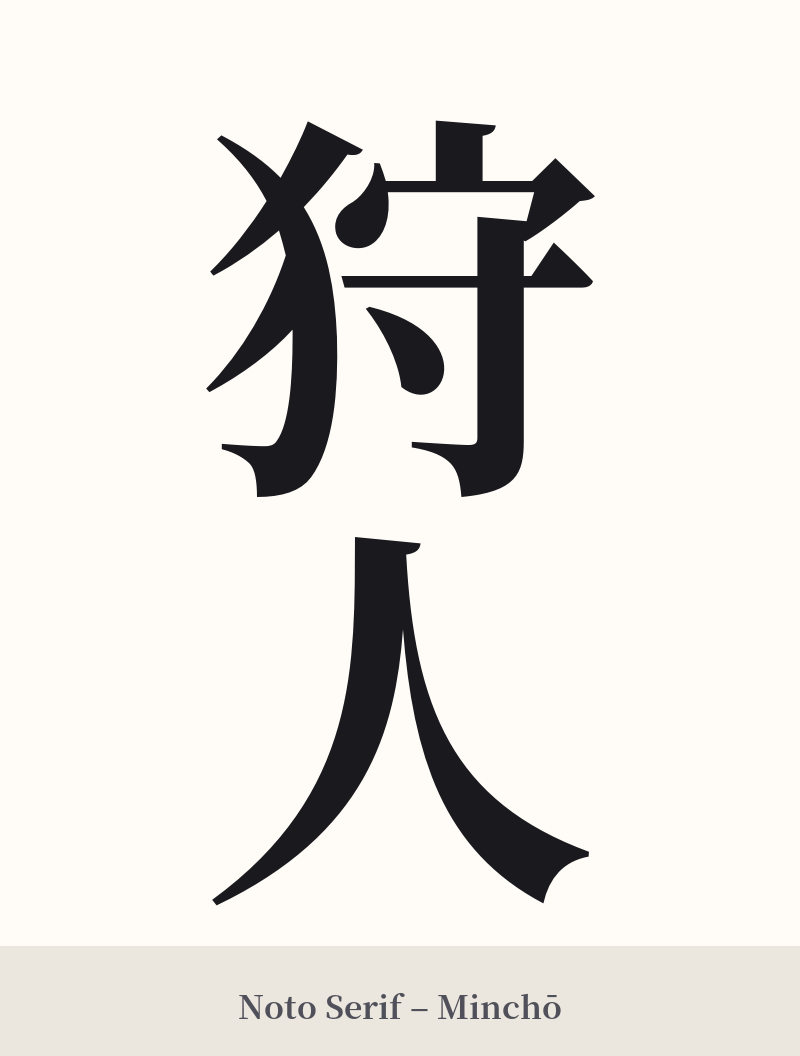
🖌️ Font Styles for 狩人
The same kanji can look dramatically different depending on the calligraphy style. Choose a font that matches the mood you want for your tattoo or design.
🎨 Tattoo Suitability
📐 Tattoo Design Guide
A 狩人 tattoo speaks to primal skill and independence. Its two-character structure offers great flexibility in design.
– Placement: Vertical alignment is a classic choice, looking powerful on the forearm, bicep, calf, or running along the spine. Horizontally, it fits well across the chest, upper back, or below the collarbone.
– Font Styles: A dynamic, semi-cursive brush script (gyōsho) can emphasize the wild, untamed nature of the hunter. For a more solid and resolute feel, a bold, angular block script (kaisho) is an excellent option. A stylized, modern font can also work well to connect with the anime and gaming aesthetic.
– Visual Elements: Consider pairing the kanji with related imagery to enhance its meaning. A silhouette of a wolf or bear, arrowheads, animal tracks, or a background of a dense forest or mountain range can create a complete and compelling narrative piece. Adding a single splash of red ink within one of the strokes can create a dramatic focal point.
Comments