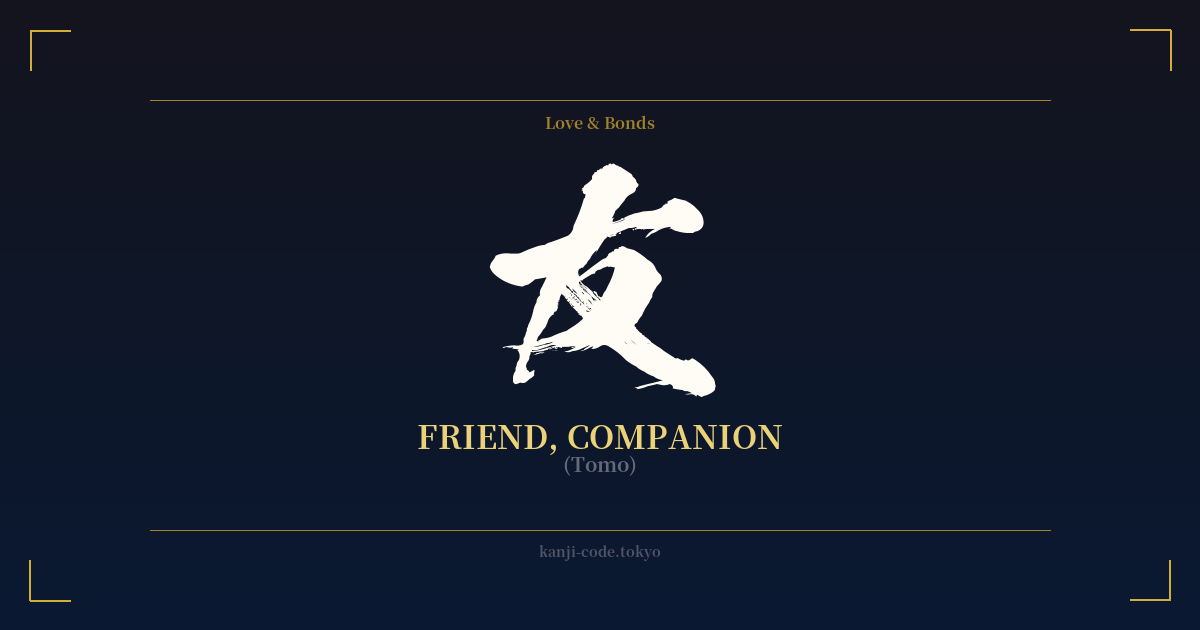
✍️ 友 (Tomo) — Cultural Context
The kanji 友 (tomo) is one of the most fundamental and emotionally resonant characters in the Japanese language. Its power lies in its simplicity and the profound, universal concept it represents: friend or companion.
The character's origin story offers a beautiful glimpse into its meaning. Etymologically, 友 is a pictograph derived from the image of two right hands coming together, as if in a handshake or offering mutual support. This visual metaphor perfectly captures the essence of friendship—cooperation, assistance, and a meeting of equals. It signifies a bond forged through shared experience and mutual reliance.
In Japanese culture, the concept of friendship carries significant weight. While the English word 'friend' can be applied loosely, the Japanese term 友達 (tomodachi), which uses the 友 kanji, often implies a deeper, more established connection. There's a clear distinction between a mere acquaintance (知人, chijin) and a true friend (友, tomo). A tomo is someone you can count on, a person who understands you and stands by you.
This idea is further refined with the word 親友 (shinyū), meaning 'best friend.' This term elevates the bond to one of profound intimacy and unwavering trust, akin to family. This isn't a label given lightly; a shinyū is a lifelong confidant, a pillar of support in one's life. The existence of such specific terms highlights the value placed on the quality and depth of friendships.
The spirit of 友 also extends into the concept of 仲間 (nakama). While often translated as 'comrade,' 'crew,' or 'group of friends,' nakama carries a nuance of a bond forged through a shared goal, struggle, or passion. Think of a sports team, a creative group, or the fellowship in epic stories like 'One Piece.' These are not just friends; they are a unit, a chosen family moving in the same direction. The 友 kanji is the foundational block for all these layered, meaningful relationships.
Ultimately, 友 is more than just a character; it's a cultural value. It represents loyalty, sincerity (誠, makoto), and the deep human need for connection. It speaks to the quiet strength found in knowing you don't have to walk through life alone.
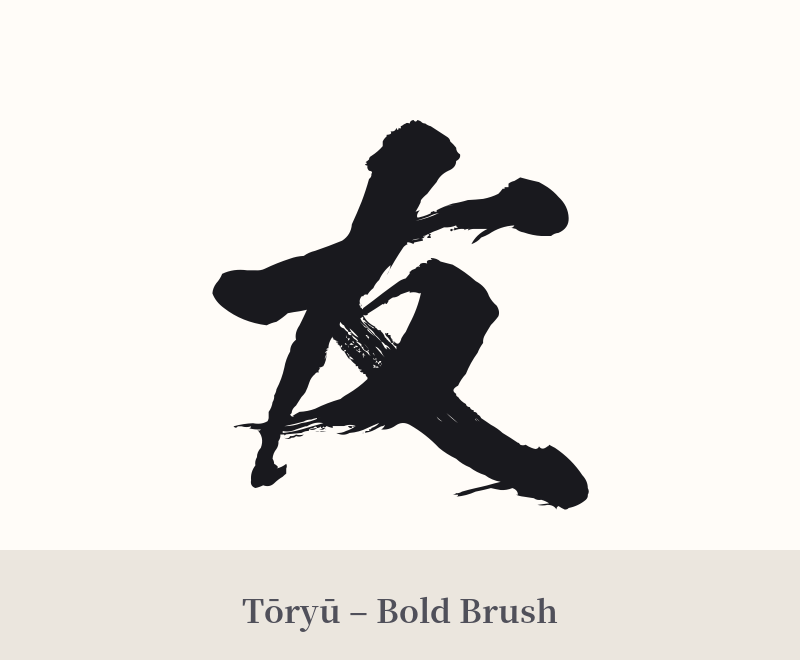
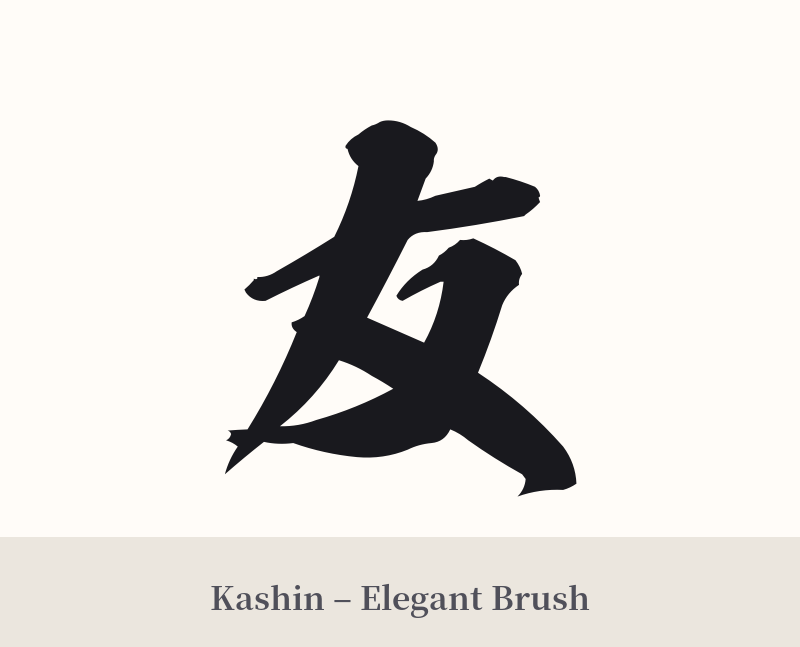
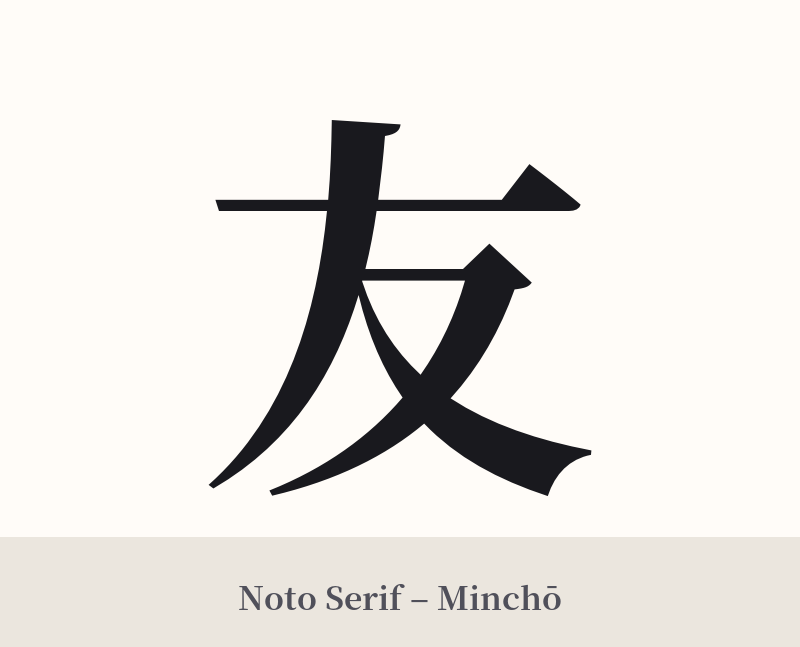
🖌️ Font Styles for 友
The same kanji can look dramatically different depending on the calligraphy style. Choose a font that matches the mood you want for your tattoo or design.
🎨 Tattoo Suitability
📐 Tattoo Design Guide
The simple elegance of 友 (tomo) makes it a versatile choice for a tattoo, suitable for various styles and placements.
– Placement: Its clean, compact shape works well in discreet locations like the inner wrist, behind the ear, or on the ankle. For a more prominent piece, it looks excellent on the forearm, bicep, or shoulder blade where it can be rendered with more detail.
– Font Style: A classic Kaisho (block) script will emphasize its balance and simplicity, creating a timeless look. For a more fluid and artistic feel, consider a Gyosho (semi-cursive) or Sosho (cursive) style, which can give the character a sense of movement and personality.
– Visual Tips: To enhance its meaning, consider getting it as a matching tattoo with a best friend. It can also serve as the centerpiece of a larger design, perhaps incorporated with elements that represent your friendship, like a specific flower, animal, or a stylized representation of two hands meeting, echoing its etymological origin. Pairing it with the kanji for 'bond' (絆, kizuna) can also create a powerful two-character design.
Comments