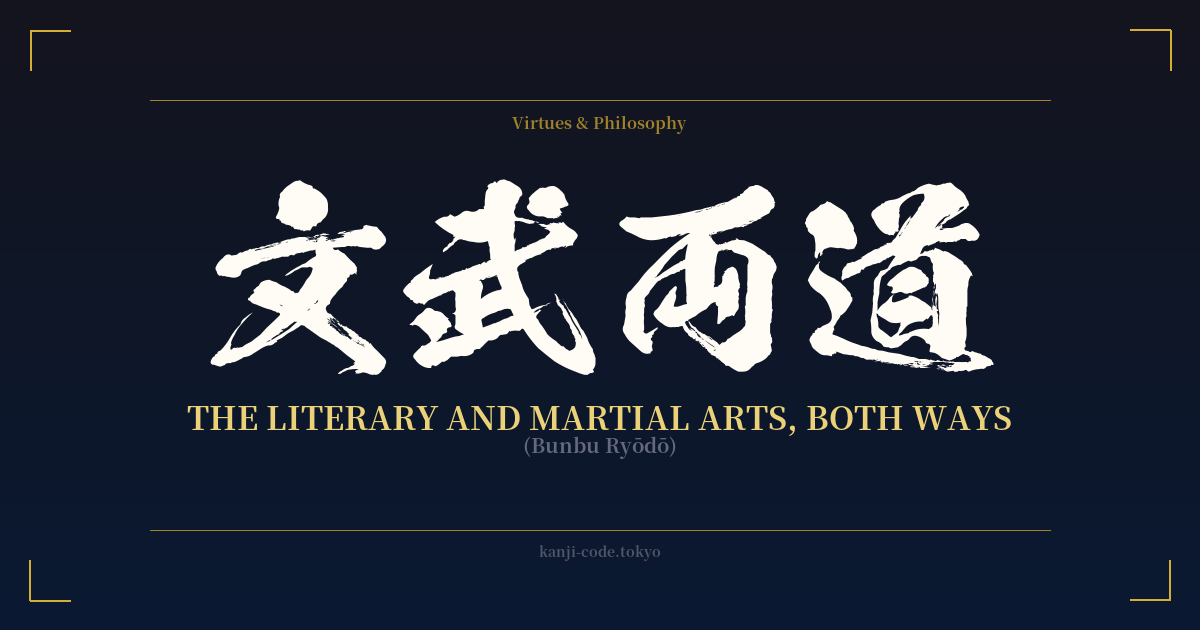
✍️ 文武両道 (Bunbu Ryōdō) — Cultural Context
文武両道 (Bunbu Ryōdō) translates to "The Literary and Martial Arts, Both Ways." It represents a core ideal in Japanese philosophy, particularly one that flourished during the age of the samurai. Far more than a simple phrase, it embodies the concept of a complete, well-rounded individual who achieves mastery in both intellectual pursuits and physical discipline.
This idea is often summarized as balancing "the pen and the sword." The ideal warrior was not a mindless brute but a cultured, educated, and strategic leader. The historical context for this was the gradual shift of the samurai class from purely battlefield warriors to a ruling administrative class during the peaceful Edo period (1603-1868). To govern effectively, they needed more than just fighting skills; they required literacy, an understanding of strategy, an appreciation for the arts, and diplomatic acumen.
The character 文 (Bun) represents the world of literature, calligraphy, poetry, philosophy, and strategy. It is the mind, the intellect, and the capacity for thoughtful governance and artistic expression. The character 武 (Bu) stands for the martial arts, physical strength, combat readiness, and personal fortitude. It is the body, the action, and the power to protect and enforce.
The genius of the phrase lies in the final two characters, 両道 (Ryōdō), meaning "both ways" or "both paths." This emphasizes that these are not opposing forces but two complementary halves of a single, integrated path to self-perfection. One without the other was seen as incomplete. A scholar without martial training was considered weak and unable to defend his principles. A warrior without culture was seen as a mere thug, lacking the wisdom to apply his strength justly.
Perhaps the most famous embodiment of Bunbu Ryōdō is Miyamoto Musashi. While renowned as Japan's most legendary and undefeated swordsman, he was also an accomplished artist, calligrapher, and author of the classic text on strategy, "The Book of Five Rings" (五輪書, Gorin no Sho). He demonstrated that the discipline and focus honed through swordsmanship could be applied to artistic and intellectual endeavors, and vice versa.
Today, the spirit of Bunbu Ryōdō lives on. It is a guiding principle in Japanese education, where students are encouraged to excel in both their academic studies and their club activities (bunkatsu), whether in sports or arts. It is found in modern martial arts (budō), where the goal is not just to win fights but to cultivate character, discipline, and respect. For anyone seeking a path of holistic self-development, Bunbu Ryōdō offers a powerful and timeless philosophy of balance and integrated strength.
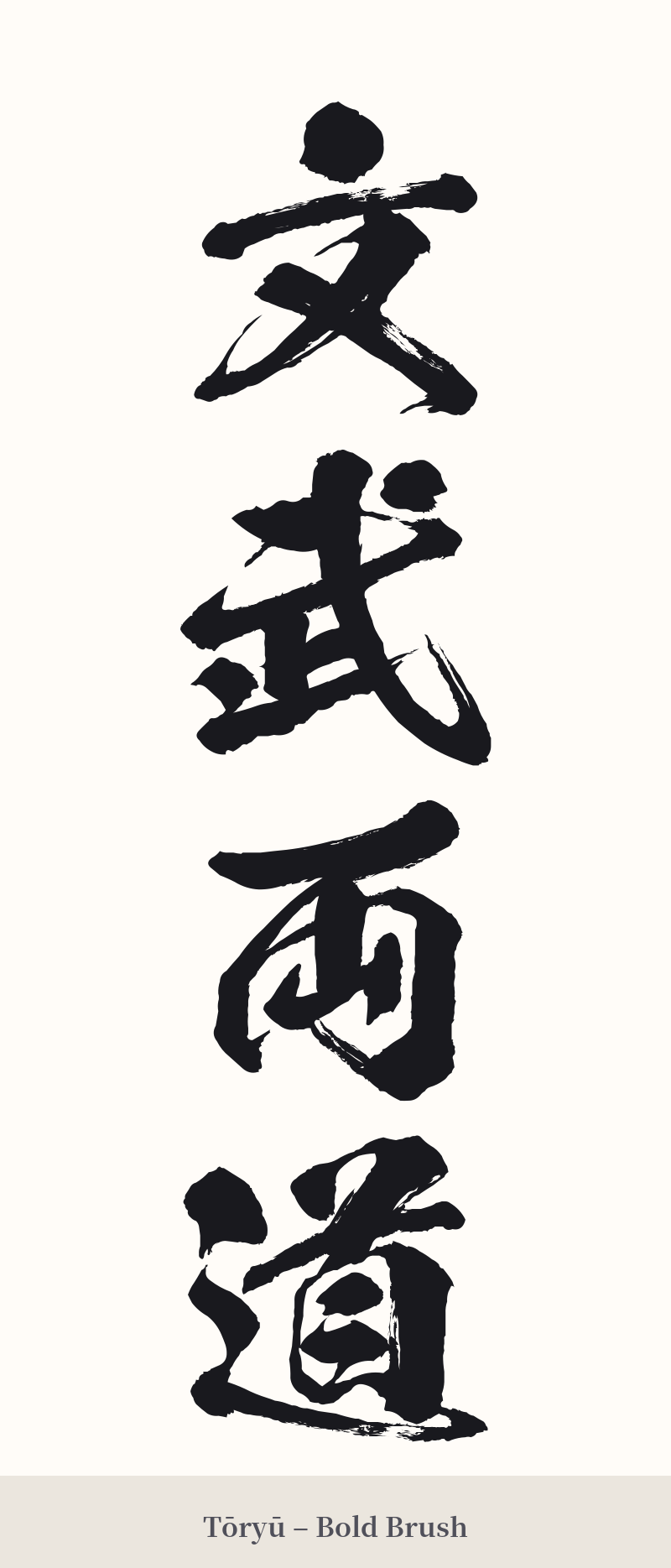
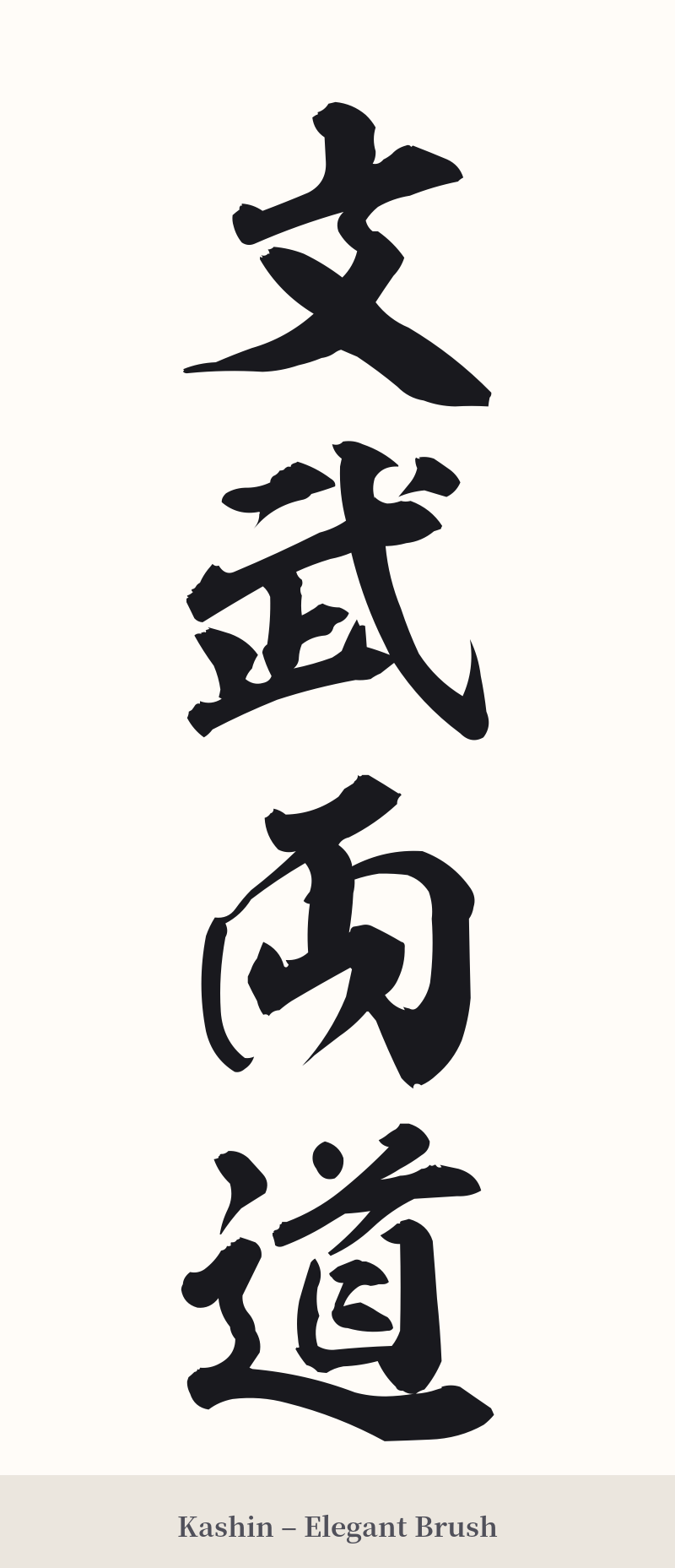
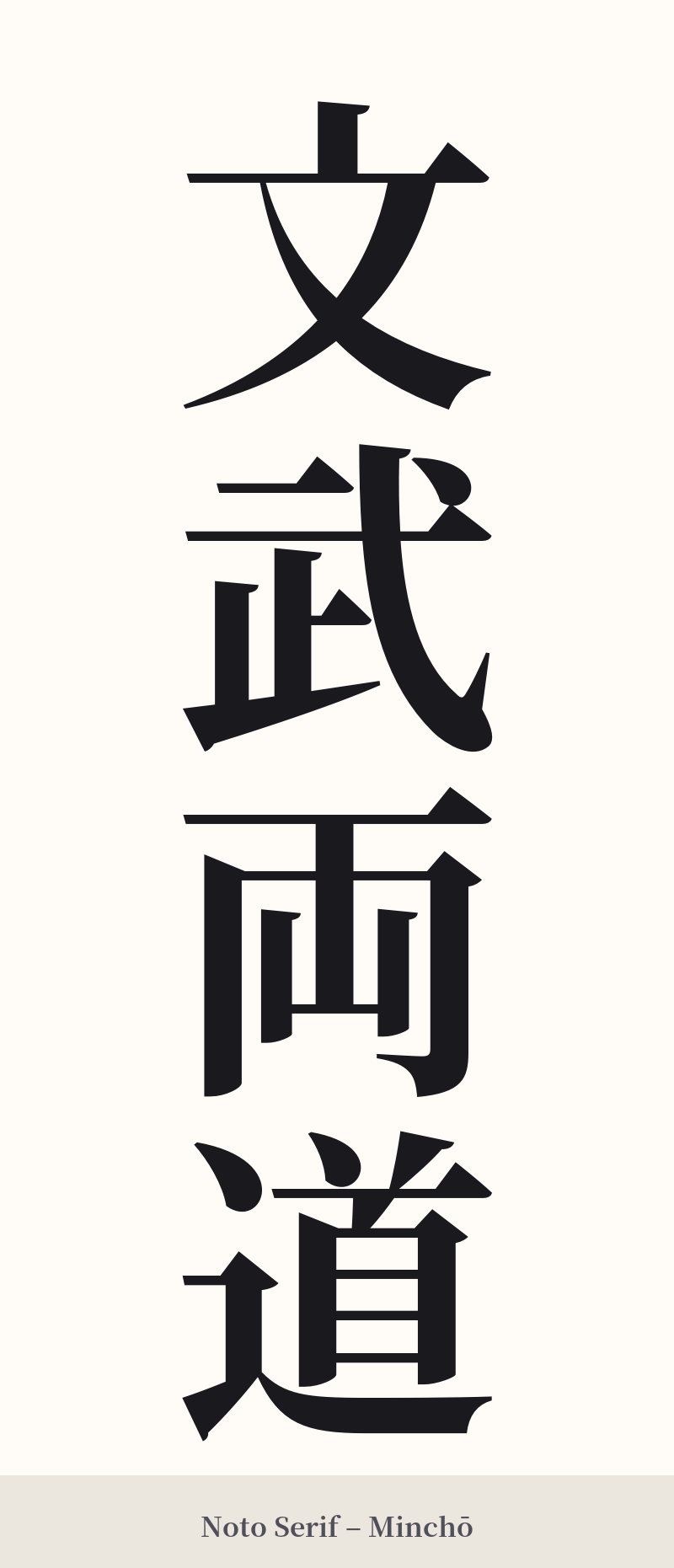
🖌️ Font Styles for 文武両道
The same kanji can look dramatically different depending on the calligraphy style. Choose a font that matches the mood you want for your tattoo or design.
🎨 Tattoo Suitability
📐 Tattoo Design Guide
A four-character compound like 文武両道 offers excellent design versatility. Its inherent balance makes it a powerful statement piece.
For placement, a vertical alignment is classic and dramatic, making it perfect for the spine, forearm, or along the side of the calf. A horizontal layout works well across the chest, upper back, or inner bicep.
Font style dramatically changes the feel: – Kaisho (block script): For a strong, formal, and highly legible design that emphasizes discipline and structure. – Gyosho (semi-cursive): This style adds a sense of fluidity and artistry, beautifully reflecting the 'Bun' (art) aspect of the phrase while retaining legibility. – Sosho (cursive): A highly artistic and abstract choice. While visually stunning, it can be difficult to read for the untrained eye. This style is best executed by an artist who is also a skilled calligrapher.
To enhance the theme, consider incorporating related imagery. A design could feature the kanji alongside crossed elements like a writing brush and a katana, or set against a backdrop of a tranquil bamboo forest, symbolizing both strength and serenity.
Comments