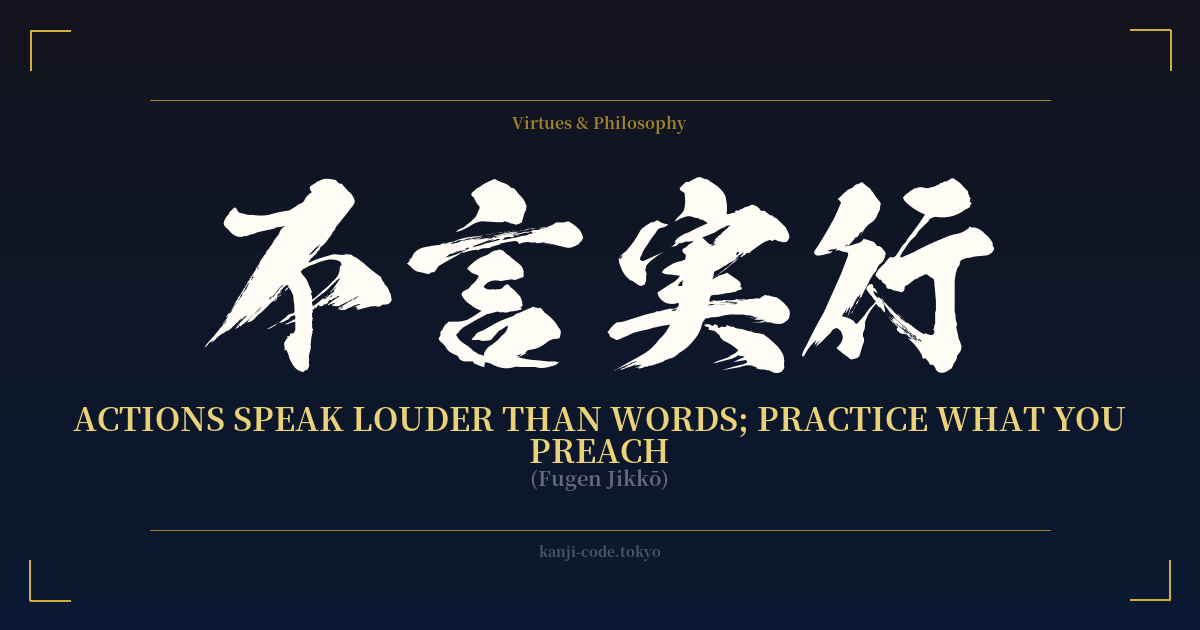
✍️ 不言実行 (Fugen Jikkō) — Cultural Context
不言実行 (Fugen Jikkō) is a Japanese four-character idiom, or yojijukugo, that encapsulates a core virtue in Japanese culture. Translated literally, it means "no words, carry out action." It embodies the principle that actions truly speak louder than words, advocating for a life of quiet diligence and tangible results over empty promises or boastful speech.
This concept is deeply woven into the fabric of Japanese society, from the silent dedication of a master artisan to the stoic leadership style valued in business and martial arts. It suggests that a person's true worth and character are demonstrated not by what they say, but by what they do. The emphasis on the first two characters, 不言 (fugen) or "no words," adds a layer of nuance not always present in its Western equivalent. It’s not just that actions are more important, but that true strength and integrity often require no verbal announcement at all.
Historically, the ideals of Fugen Jikkō can be traced to influences from both Zen Buddhism and Confucianism, which prioritize sincerity (誠, makoto), self-discipline, and understated contribution. In the world of Bushidō, the samurai code, a warrior was judged by his deeds and his ability to endure hardship without complaint. Talking about one's intentions or accomplishments was seen as a sign of weakness or vanity. The ideal was to simply do what was necessary, with resolve and without fanfare.
In modern Japan, Fugen Jikkō is often contrasted with its counterpart, 有言実行 (Yūgen Jikkō), which means "to say and then do." While Yūgen Jikkō is also a positive trait—it signifies reliability and keeping one's promises—Fugen Jikkō is often regarded as a higher, more stoic ideal. It represents the person who achieves greatness without ever needing to declare their goals, their work speaking for itself. It’s the quiet programmer who fixes a critical bug overnight or the athlete who puts in extra hours of training in solitude. This makes it a powerful personal motto for anyone who values humility, integrity, and the silent power of action.
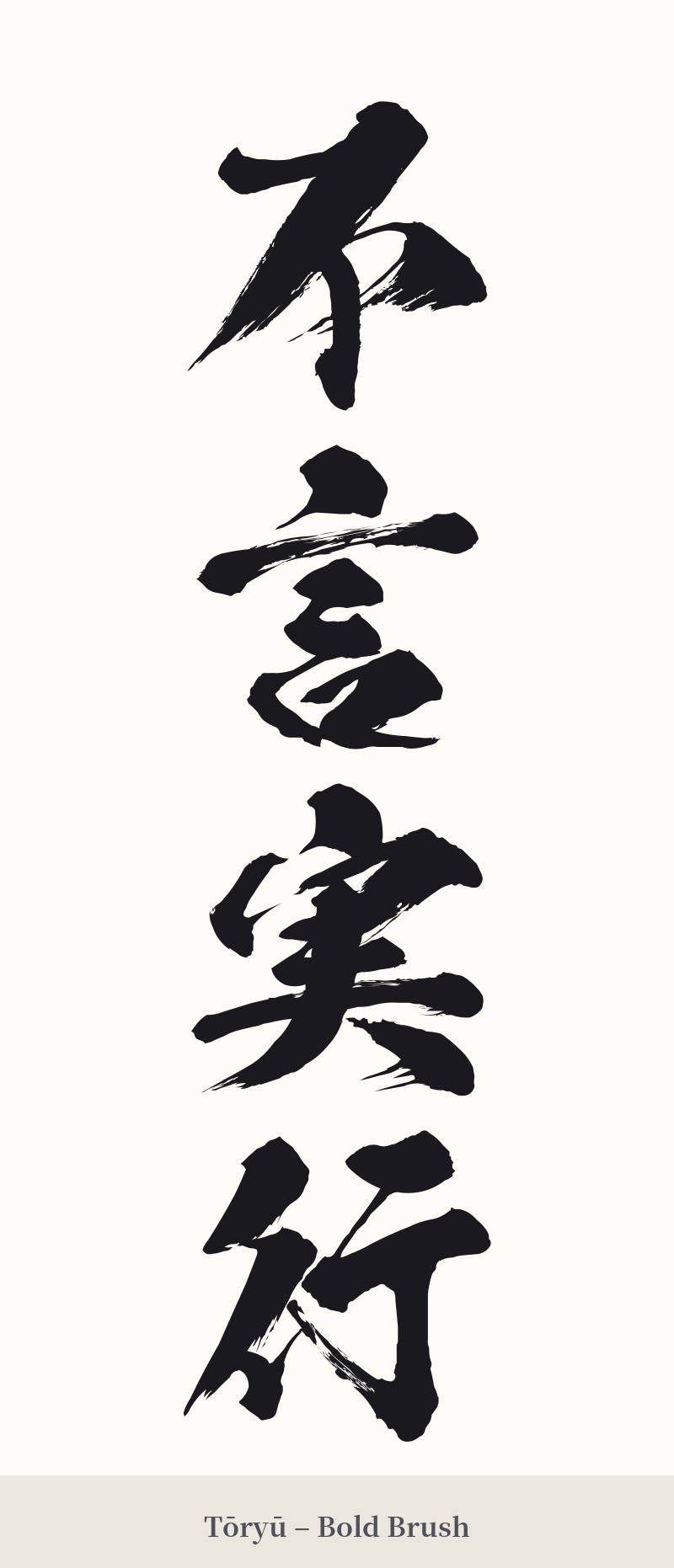
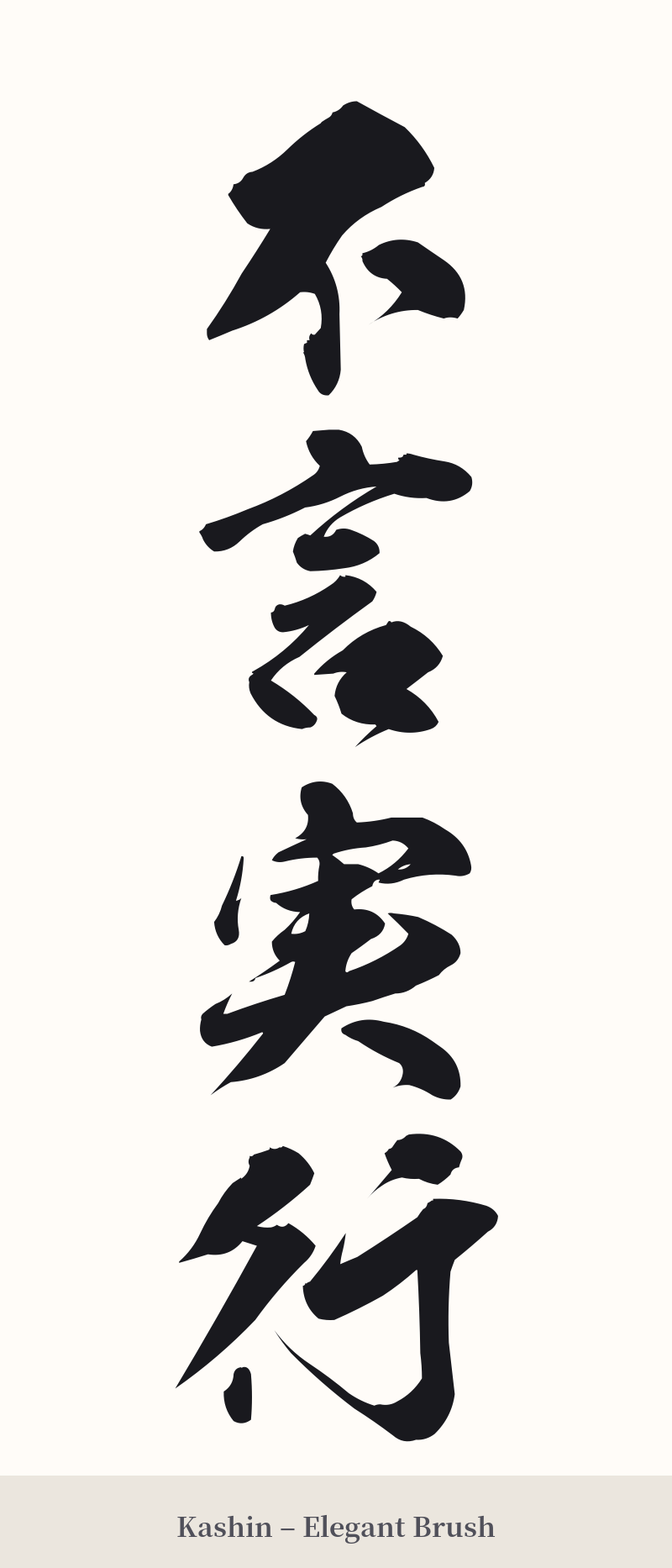
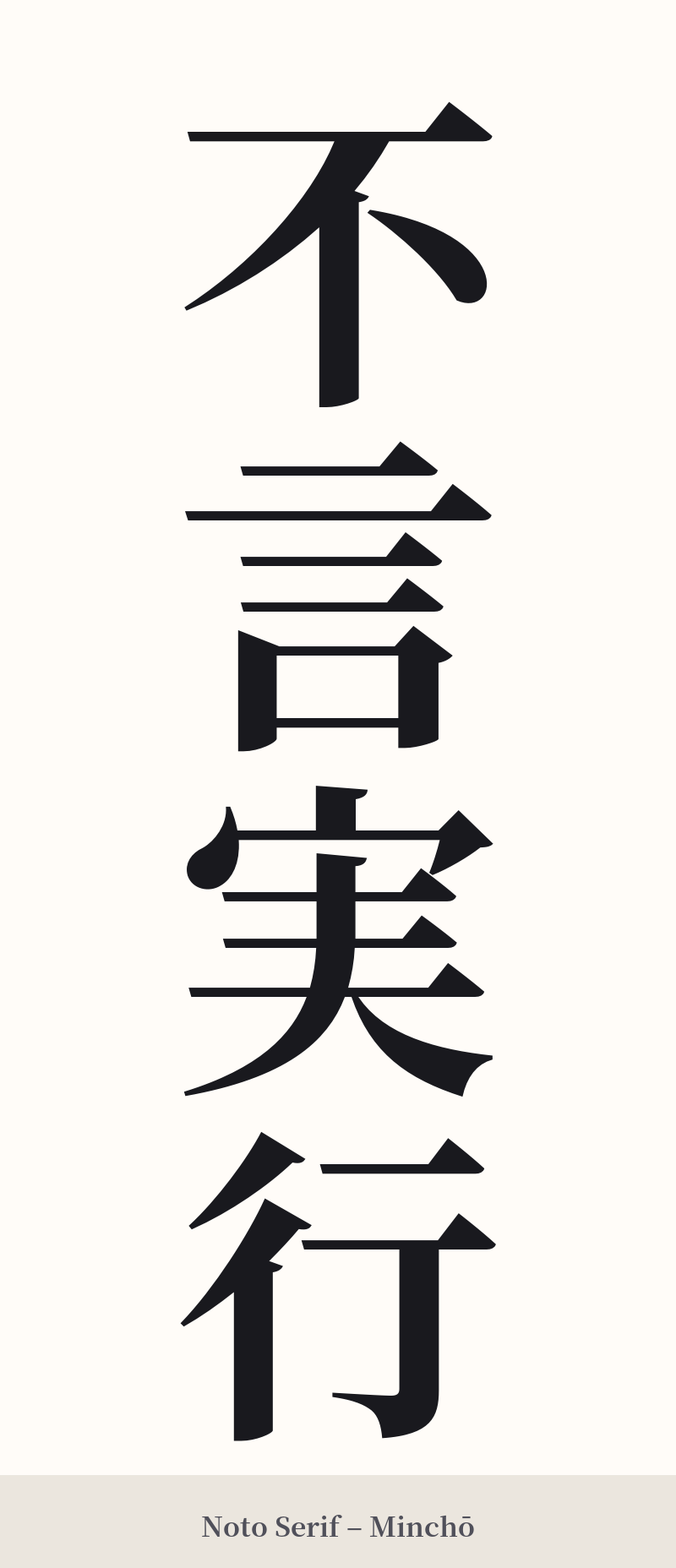
🖌️ Font Styles for 不言実行
The same kanji can look dramatically different depending on the calligraphy style. Choose a font that matches the mood you want for your tattoo or design.
🎨 Tattoo Suitability
📐 Tattoo Design Guide
The four-character structure of 不言実行 offers great design flexibility and a strong visual presence.
– Placement: A vertical orientation is traditional and striking. It works perfectly along the spine, forearm, or calf. A horizontal layout is also powerful, fitting well across the chest, upper back, or along the inner bicep.
– Font Style: The choice of script can dramatically alter the feel. A strong, clear Kaisho (block) script emphasizes the deliberate and unwavering nature of the principle. For a more fluid and dynamic look that captures the 'action' element, a Gyōsho (semi-cursive) script is an excellent choice. Sōsho (full cursive) can create a highly artistic and personal piece, though legibility might be reduced.
– Visual Tips: Given its philosophical nature, keep accompanying imagery minimal to let the characters shine. An Enso circle could be a fitting complement, symbolizing the totality and simplicity of the concept. Avoid overly complex backgrounds that might detract from the powerful statement of the kanji itself.
Comments