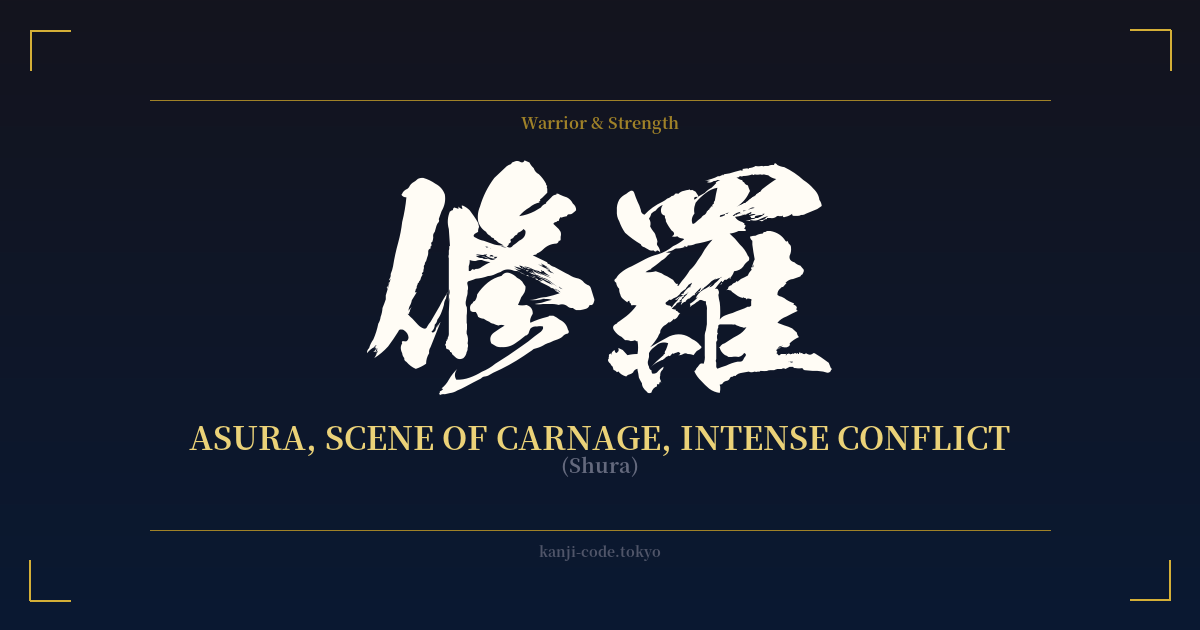
✍️ 修羅 (Shura) — Cultural Context
The word 修羅 (Shura) is a gateway to a world of myth, conflict, and profound human struggle. On the surface, it is the Japanese name for the Asura, a type of demigod or titan originating in Hindu and Buddhist cosmology. But its meaning runs much deeper, permeating Japanese culture as a powerful metaphor for a state of relentless, all-consuming conflict.
The mythological Asura are powerful, warlike beings, often depicted with multiple faces and arms. They are defined by their eternal war with the Deva (heavenly beings), particularly Taishakuten (Indra). This conflict isn't born of simple good versus evil; it stems from pride, jealousy, and an insatiable desire for power. The Asura were once gods themselves but were cast out of the heavens, and their existence is a tragic cycle of battle, rage, and suffering. They are mighty, but they are never at peace.
This tragic nature is key to understanding the nuance of Shura. To walk the "path of Shura" (修羅の道, shura no michi) is to choose a life defined by constant fighting, where one's humanity is sacrificed for the sake of victory or revenge. It is a lonely and agonizing existence, devoid of tranquility. In this sense, Shura represents the internal and external battles that consume a person entirely, leaving no room for peace or joy.
From this mythological foundation, the Japanese language created the term 修羅場 (shuraba), which literally translates to "a scene of Shura." This phrase is commonly used in modern Japanese to describe any scene of intense conflict or chaos. It can refer to a literal battlefield littered with casualties, a messy and violent argument, a chaotic workplace environment during a crisis, or the dramatic climax of a love triangle. A 'shuraba' is a situation where emotions run high, reason is lost, and the atmosphere is thick with tension and hostility.
This potent concept has made Shura a popular motif in Japanese pop culture. In manga, anime, and video games, characters who embody the Shura spirit are often tragic anti-heroes or formidable antagonists driven by an unending quest for power or vengeance. A famous example is in the game Sekiro: Shadows Die Twice, where the "Shura" ending is the darkest outcome, representing the protagonist becoming a mindless killing demon, consumed by his bloodlust. This modern usage reinforces the word's core meaning: a powerful but ultimately destructive force.
🖌️ Font Styles for 修羅
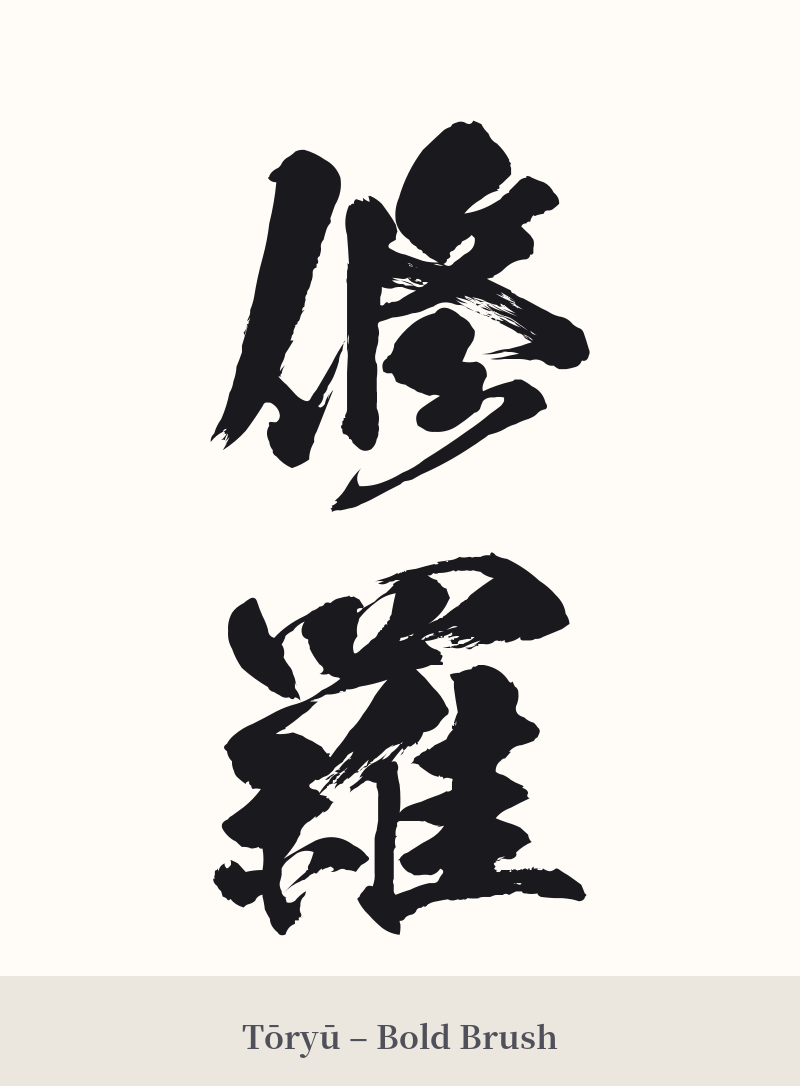
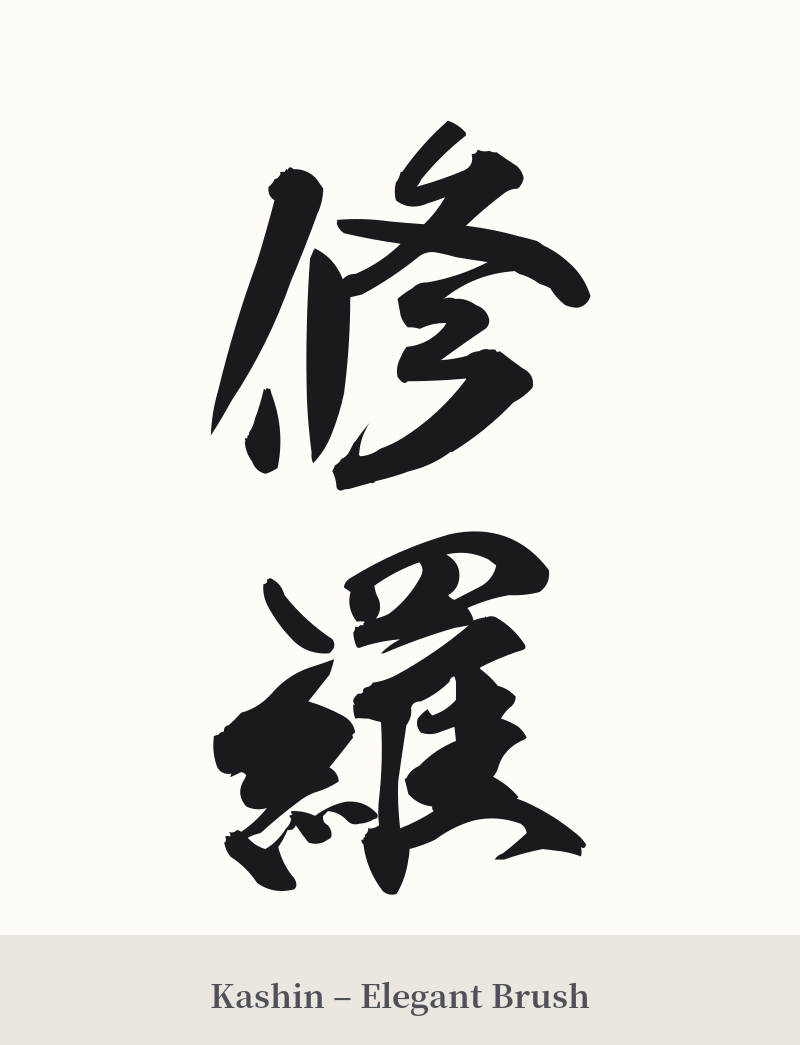
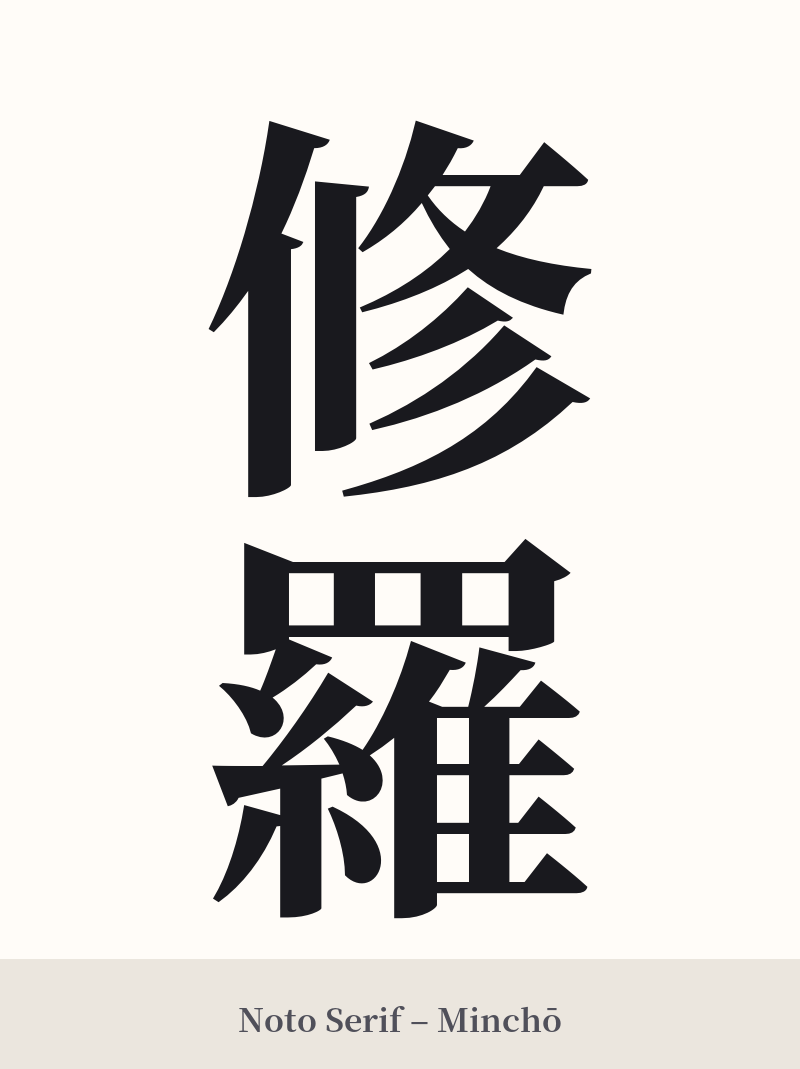
The same kanji can look dramatically different depending on the calligraphy style. Choose a font that matches the mood you want for your tattoo or design.
🎨 Tattoo Suitability
📐 Tattoo Design Guide
The kanji 修羅 (Shura) is a visually powerful choice for a tattoo, but its complexity demands careful consideration of design and placement.
– Placement: Due to the intricate strokes, especially in 羅 (ra), this design works best on larger, flatter areas of the body. The back, chest, or the outer thigh provide ample space to ensure the details remain clear over time. A vertical orientation is classic and emphasizes the flow of the characters.
– Font Style: The font can dramatically alter the mood. For a raw, chaotic energy, a dynamic cursive (Sosho) or semi-cursive (Gyosho) style is excellent. For a more imposing, solid, and formal look, a bold block script (Kaisho) works well. Custom-designed fonts with a 'battle-worn' or 'flaming' aesthetic can also powerfully complement the meaning.
– Visual Tips: While the kanji is strong enough to stand alone, it can be paired with symbolic imagery. Consider incorporating elements from the Asura myth, such as flames, broken weapons, or storm clouds. Juxtaposing it with a lotus flower, a symbol of purity and enlightenment in Buddhism, can create a powerful visual contrast between conflict and the potential for peace.
Comments