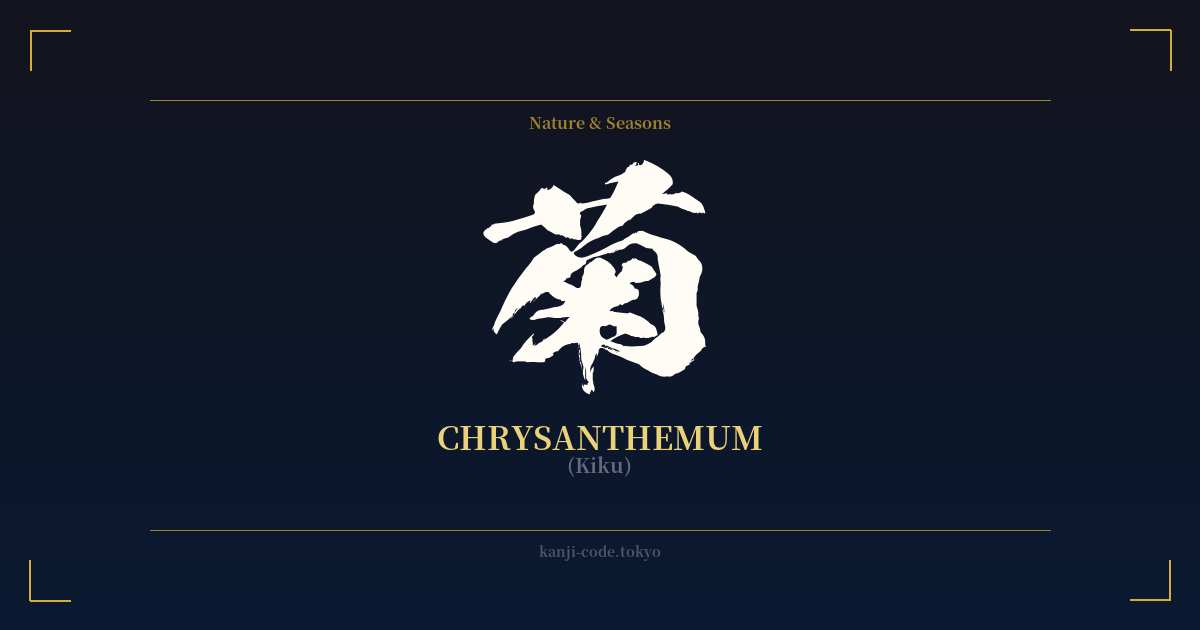
✍️ 菊 (Kiku) — Cultural Context
In Japan, the chrysanthemum, or 菊 (Kiku), is far more than just a beautiful autumn flower. It is a symbol steeped in centuries of history, representing longevity, rejuvenation, and most notably, the authority and dignity of the Imperial House of Japan.
The flower's most significant role is as the Imperial Seal of Japan, known as the 菊花紋章 (kikukamonshō). This emblem, typically a stylized 16-petal chrysanthemum, is exclusively associated with the Emperor and the imperial family. Its use was officially adopted during the Meiji period, but its connection to the throne dates back to Emperor Go-Toba in the 12th century, who was said to be particularly fond of the flower and used it on his personal effects. Today, you can see this powerful symbol on the cover of Japanese passports, on certain high-ranking medals like the Supreme Order of the Chrysanthemum, and at Shinto shrines linked to the imperial lineage.
Beyond its imperial connections, the chrysanthemum is also a potent symbol of a long and healthy life. This belief originated in ancient China, where the flower was prized for its medicinal properties and was thought to contain the elixir of life. Legends tell of entire villages achieving immortality by drinking from streams where chrysanthemum petals had fallen. This association with longevity carried over to Japan, where the flower became one of the “Four Gentlemen” (Shikunshi) in art, representing autumn.
The Chrysanthemum Festival, or 菊の節句 (Kiku no Sekku), also known as Chōyō no Sekku, is one of the five ancient seasonal festivals in Japan. Celebrated on the 9th day of the 9th lunar month, it is a time to appreciate the flower and pray for longevity. During this time, people might drink chrysanthemum-infused sake or place a piece of cotton over the blossoms overnight to collect the dew, which is then used to wipe the skin for health and youth.
The kanji character 菊 itself reflects its botanical nature. The top radical, 艹 (kusa-kanmuri), is a common component for characters related to plants and grasses. The bottom part, 匊, contributes the phonetic sound 'kiku' and originally meant to scoop or gather with both hands, perhaps evoking the image of the flower's tightly gathered petals. Together, they form a character that is instantly recognizable as the revered autumn bloom, a symbol of endurance, nobility, and the quiet beauty that marks the end of the growing season.
🖌️ Font Styles for 菊
The same kanji can look dramatically different depending on the calligraphy style. Choose a font that matches the mood you want for your tattoo or design.
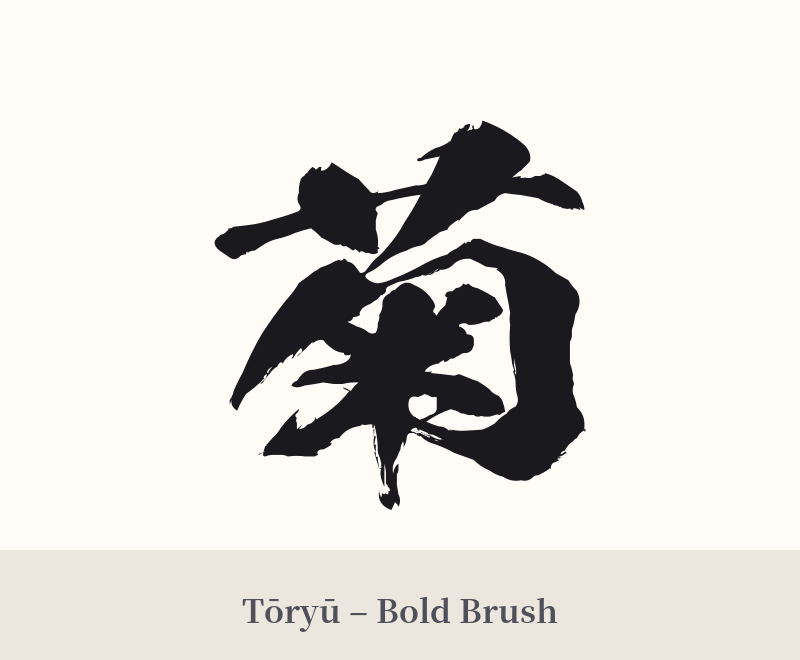
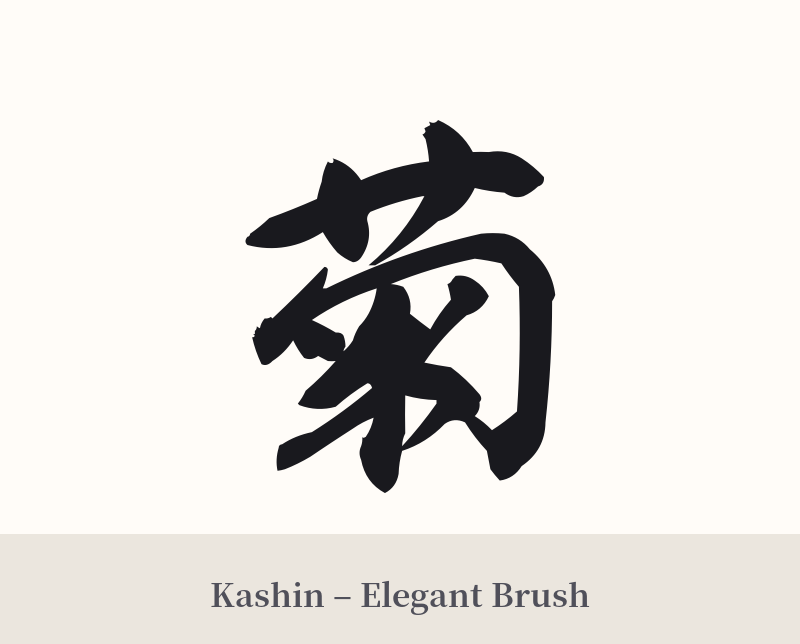
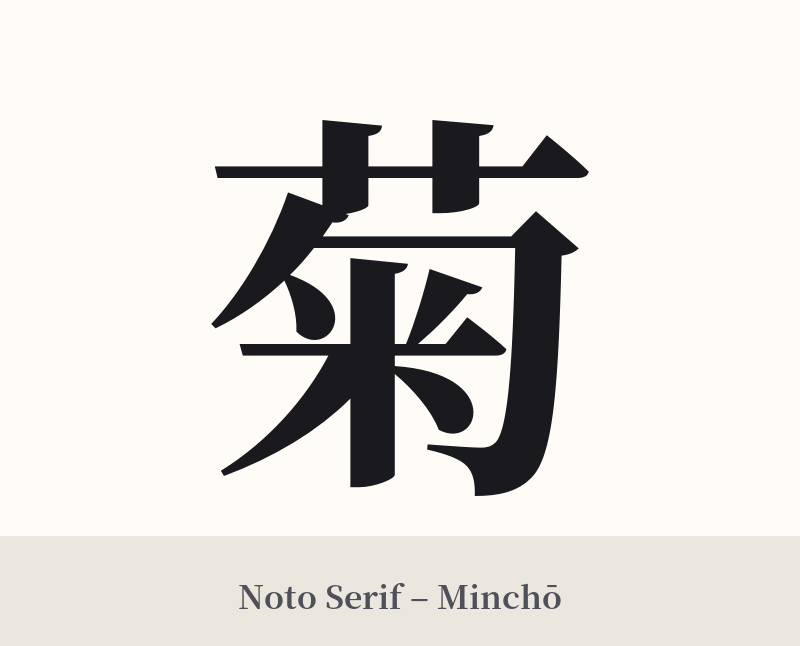
🎨 Tattoo Suitability
📐 Tattoo Design Guide
The kanji 菊 (Kiku) offers a design that is both elegant and meaningful. Its balanced structure and cultural significance make it a versatile choice for a tattoo.
– Placement: This character works well on areas that allow its details to be appreciated, such as the forearm, calf, back of the shoulder, or alongside the ribs. Its vertical symmetry makes it suitable for narrow placements.
– Style: For a traditional and powerful look, consider a bold calligraphy style like Kaisho (block script). For something more fluid and artistic, Gyōsho (semi-cursive) can soften the character's lines, echoing the gentle shape of the flower's petals.
– Pairing: A popular and highly effective design choice is to pair the kanji with an image of a chrysanthemum flower. The character could be placed beside a realistic rendering of the bloom or even integrated within its petals. This combination removes any ambiguity and creates a visually rich piece that tells a complete story.
Comments