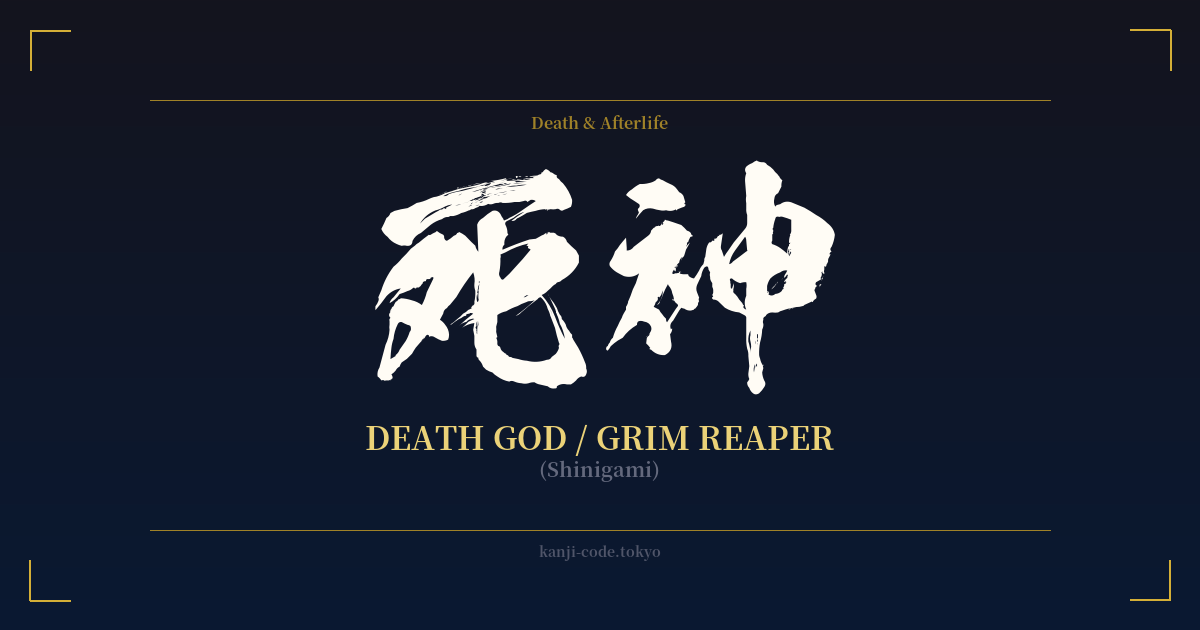
✍️ 死神 (Shinigami) — Cultural Context
The word 死神 (Shinigami) translates directly to “death god” or “god of death,” a concept that immediately brings to mind the Western image of the Grim Reaper. However, the Japanese Shinigami has a unique and surprisingly modern history that sets it apart from its skeletal, scythe-wielding counterpart.
Contrary to what many fans of Japanese culture might assume, Shinigami are not ancient figures from traditional Shinto or Buddhist mythology. While the pantheon includes deities of the underworld like Izanami or the great judge of hell, King Enma (閻魔), the specific term and concept of a “Shinigami” as a personified death spirit is a relatively recent development, emerging primarily in the Edo period (1603-1868).
These early appearances were often in literature and theater. The famous Chikamatsu Monzaemon play, "The Love Suicides at Amijima" (1721), features a line about being led by a “shinigami,” suggesting a spirit that invites the vulnerable towards their demise. The concept was further popularized by a classic Rakugo (comedic storytelling) piece titled "Shinigami," which itself was adapted from the Italian opera "Crispino e la comare" and bears a striking resemblance to the Grimm brothers' fairytale "Godfather Death."
In these contexts, Shinigami were not all-powerful gods but more like supernatural bureaucrats or even tricksters, whose job was to ensure souls departed at their predestined time. They were often depicted as invisible forces or spirits that would whisper temptations of suicide to those whose lifespans were ending.
However, the modern understanding of Shinigami has been almost completely redefined by manga and anime. Series like Death Note, Bleach, and Soul Eater have catapulted the concept into global consciousness. In these stories, Shinigami are no longer just vague spirits; they are complex characters with societies, rules, unique powers, and distinct appearances. Death Note's Ryuk is a bored, apple-eating observer, while the Shinigami of Bleach are a feudal society of soul-purifying samurai. It is this dynamic, stylish, and action-oriented version of the Shinigami that most people, especially in the West, now associate with the word. This makes the term a fascinating blend of folkloric roots and hyper-modern fictional interpretation.
🖌️ Font Styles for 死神
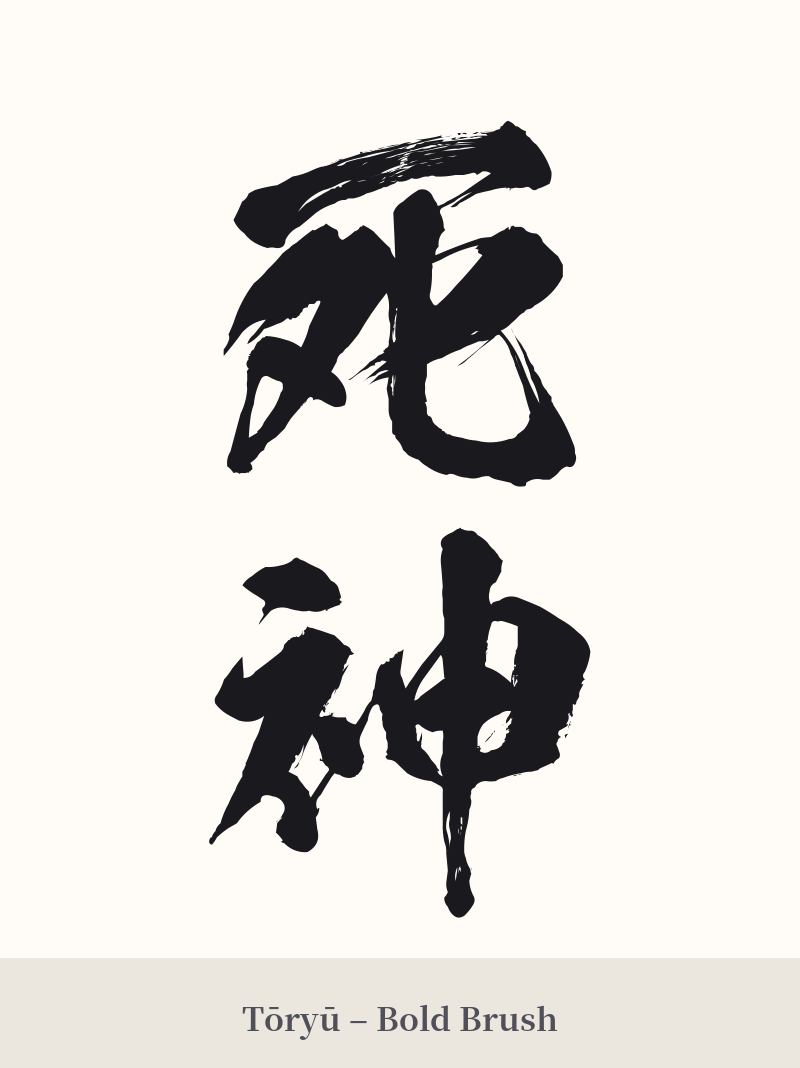
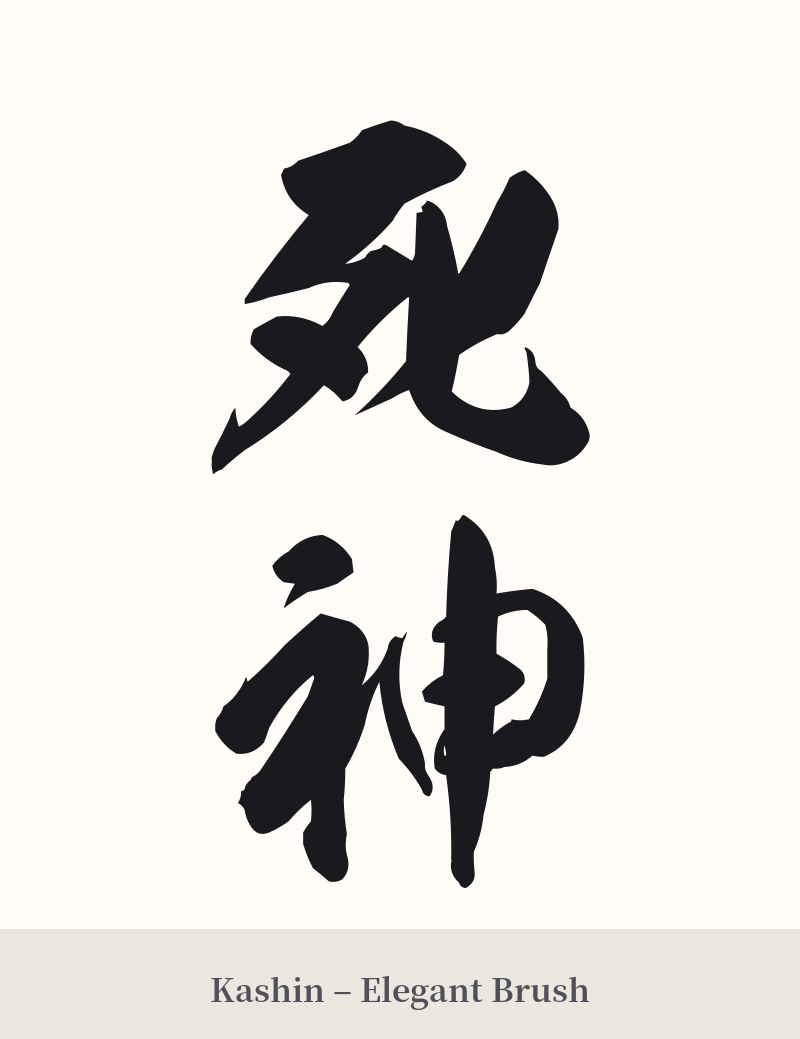
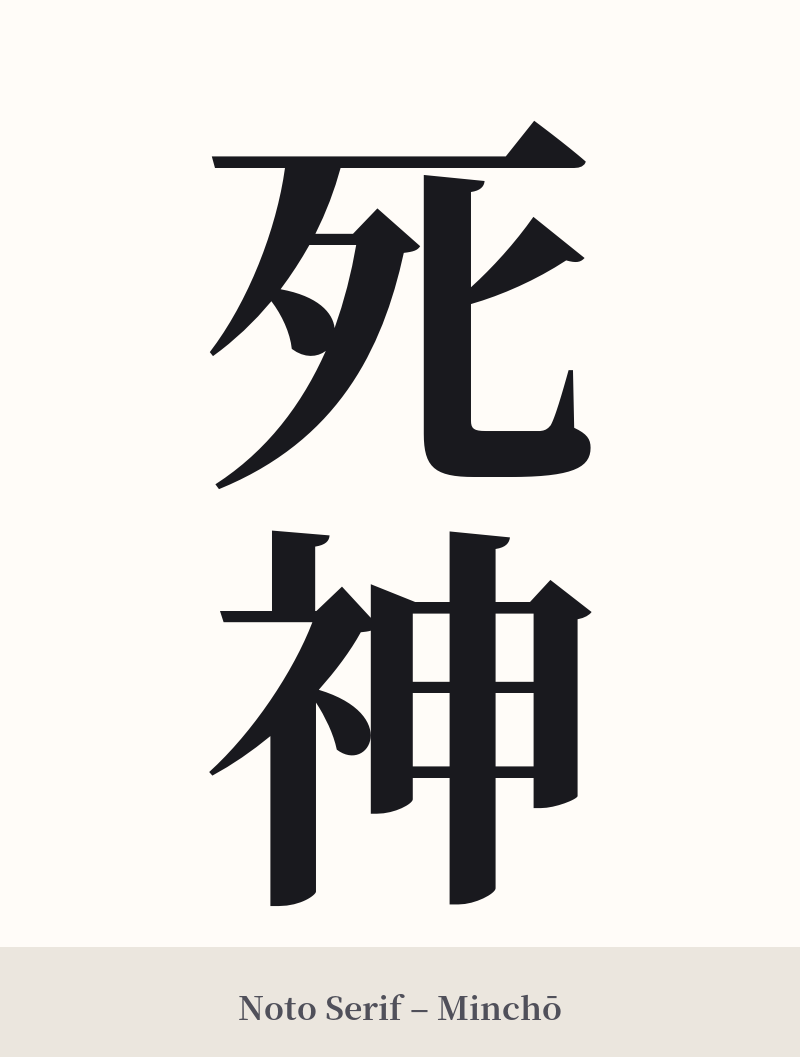
The same kanji can look dramatically different depending on the calligraphy style. Choose a font that matches the mood you want for your tattoo or design.
🎨 Tattoo Suitability
📐 Tattoo Design Guide
The kanji for Shinigami offers a bold, powerful statement that works well for a tattoo. Its dark and supernatural theme lends itself to a variety of dramatic styles.
– Placement: This two-character word is versatile. A vertical alignment looks fantastic running down the forearm, bicep, or calf. A horizontal placement works well across the chest, upper back, or below the collarbone.
– Font Style: An aggressive, semi-cursive brush script (Gyosho) can emphasize the chaotic and spiritual nature of the term. For a more modern and sharp look, a clean, angular Mincho or even a custom gothic-inspired font can be very effective.
– Visual Tips: Consider integrating the kanji into a larger image. The characters could be part of a background for a depiction of a specific Shinigami like Ryuk from Death Note (with his apple) or a Soul Reaper from Bleach (with a Zanpakutō sword). Other complementary imagery includes skulls, crows, wil-o'-wisps (hitodama), or a red spider lily (higanbana), a flower associated with death in Japan.
Comments