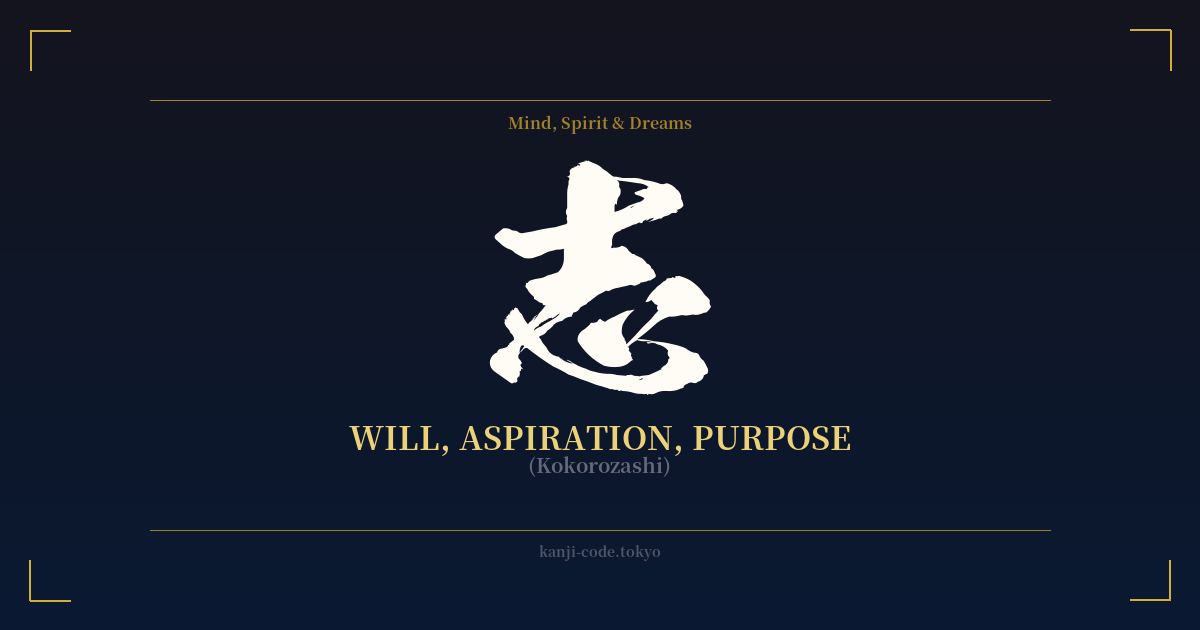
✍️ 志 (Kokorozashi) — Cultural Context
The kanji 志 (kokorozashi) is a powerful and deeply respected character in Japanese culture, embodying the concepts of will, purpose, and aspiration. It represents more than a fleeting wish; it is the core ambition that drives a person's life, the goal toward which their heart and mind are directed.
Its origin offers a beautiful visual metaphor. The character is a composite of two simpler kanji: 士 (shi) on top and 心 (kokoro) on the bottom. 士 originally depicted a scholar or a gentleman, and later became associated with the samurai warrior class. 心 means 'heart' or 'mind'. Together, 志 literally illustrates 'the direction of the heart' or 'the ambition of a noble person.' It suggests a purpose that is not just intellectual but deeply felt, a path guided by both conviction and spirit.
Historically, the concept of kokorozashi is inextricably linked with the samurai and the code of Bushido. For a warrior, having a strong kokorozashi was paramount. It was their life's mission, the cause for which they lived and were willing to die. This wasn't just about battlefield prowess; it was about loyalty to a lord, dedication to a principle, or the pursuit of self-mastery. This historical weight gives the character a sense of gravity and honor.
In modern Japan, 志 remains a vital concept. It's a word you'll hear in graduation speeches, see in company mission statements, and find in motivational texts. It's used in words like 志望 (shibō), which means 'wish' or 'ambition,' often in the context of applying to a desired school or company. The act of setting one's life course is called 立志 (risshi), 'to establish one's purpose.'
Unlike the word 夢 (yume), which can mean a 'dream' in both the sleeping and aspirational sense, 志 implies a more concrete and determined path. A yume can be a fantasy, but a kokorozashi is a plan of action rooted in one's deepest values. It is the conscious decision to dedicate oneself to a higher goal, whether it's mastering a craft, building a family, contributing to society, or achieving personal enlightenment. This makes it a profound statement of intent and a popular choice for those looking to symbolize their personal journey and unwavering resolve.
🖌️ Font Styles for 志
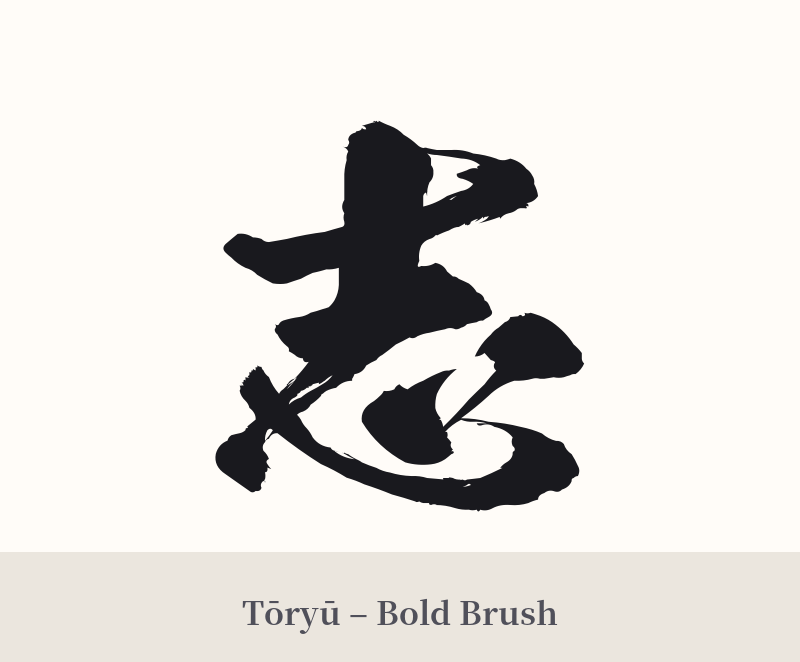
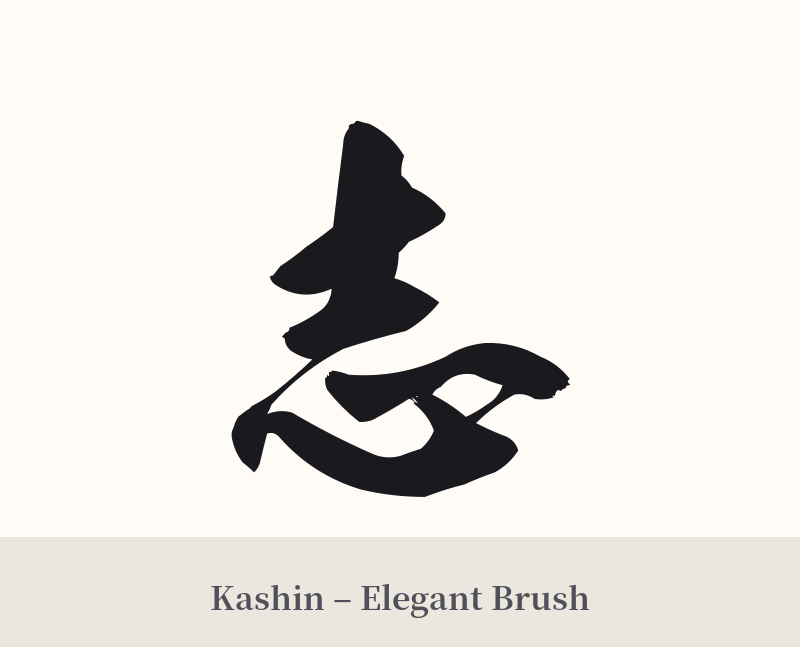
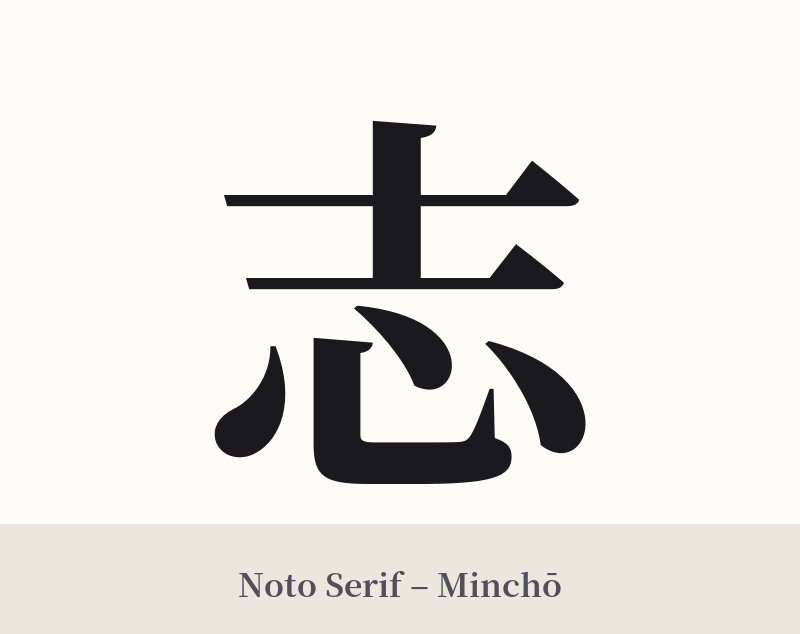
The same kanji can look dramatically different depending on the calligraphy style. Choose a font that matches the mood you want for your tattoo or design.
🎨 Tattoo Suitability
📐 Tattoo Design Guide
The kanji 志 is a statement of personal conviction, and its design should reflect that. It is versatile enough for various placements and styles, but a few considerations can help enhance its meaning.
– Placement: For a deeply personal meaning, placing it over the heart or on the inner forearm makes it a constant, private reminder of your purpose. For a more public declaration, the back of the neck, the calf, or across the shoulder blade are strong choices that provide a good canvas.
– Font Style: The style of calligraphy dramatically changes the feel. A strong, angular Kaisho (block script) emphasizes determination and structure. A flowing Gyosho (semi-cursive) or Sosho (cursive) style can represent a more personal, fluid journey and the passion behind the purpose.
– Visual Tips: While 志 is powerful enough to stand alone, it can be paired with symbolic imagery. Consider placing it within an Ensō circle to represent the pursuit of purpose within the grander scheme of the universe. It could also be the start of a larger piece, with elements like a dragon (strength), koi fish (perseverance), or a compass (direction) complementing its theme.
Comments