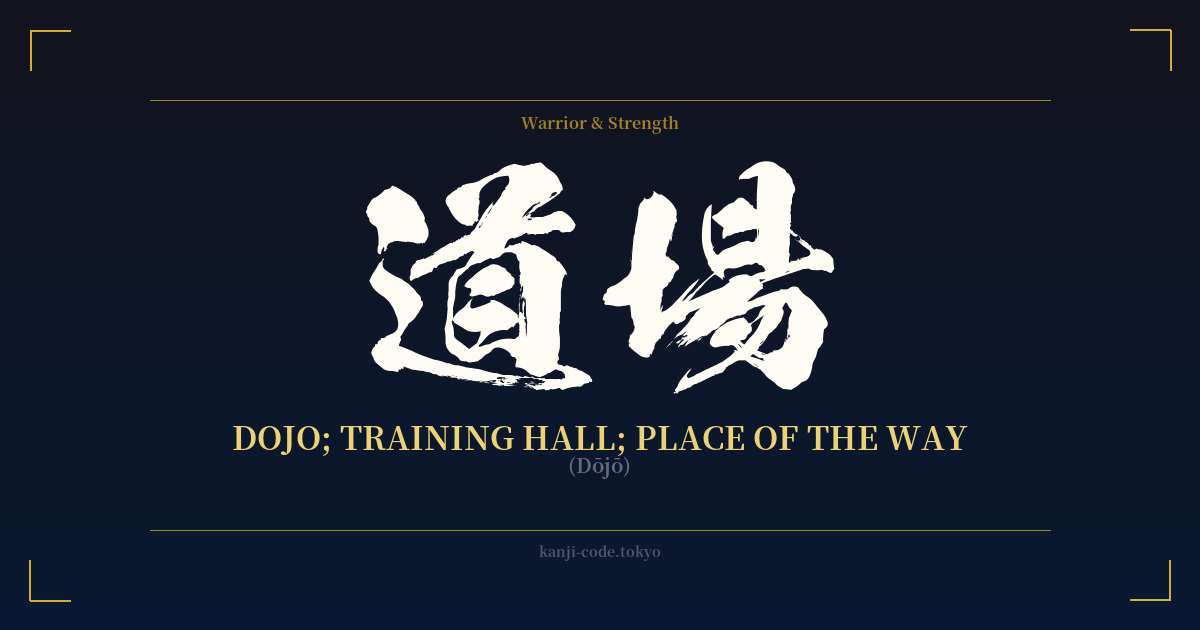
✍️ 道場 (Dōjō) — Cultural Context
The word 道場 (Dōjō) is known globally as the training hall for Japanese martial arts like Karate, Judo, and Aikido. However, its meaning runs far deeper than just a room for practice. To truly understand the dōjō, one must look at its spiritual origins, which are rooted in Zen Buddhism.
Literally translated, 道場 means 'Place of the Way.' The first character, 道 (dō), signifies a path, a road, or more philosophically, a 'Way' of life or spiritual journey. The second character, 場 (jō), simply means 'place.' Thus, a dōjō is not just any place, but a specific, consecrated space for pursuing a 'Way.'
Originally, the term referred to the sacred space in a Buddhist temple where monks practiced meditation and sought enlightenment (satori). It was the designated location for realizing the 'Way' of the Buddha. This sacred context was later adopted by the warrior class of Japan as they integrated Zen principles into their martial disciplines (budō).
For the samurai, combat training was not merely about learning to fight; it was a form of moving meditation, a path to self-mastery, and a way to confront life and death with a clear mind. The training hall, therefore, became a dōjō—a place to forge the spirit, not just the body. It transformed from a simple training ground into a hallowed space demanding respect and total commitment.
This reverence is reflected in the strict etiquette observed in a traditional dōjō. Students bow upon entering and leaving, showing respect for the space, the instructors, and the art itself. The act of cleaning the dōjō (sōji) is often part of the training, symbolizing the polishing of one's own spirit. The dōjō is a world apart, where ego, status, and the distractions of daily life are left at the door.
In modern times, the term has expanded. While its primary association remains with martial arts, you might hear of a 'zazen dōjō' for meditation or even a 'coding dōjō' for intensive programming workshops. In every case, the word retains its core essence: a serious place for focused, immersive learning and self-improvement. It is a space for transformation, where one walks a path of discipline to achieve a higher level of skill and understanding.
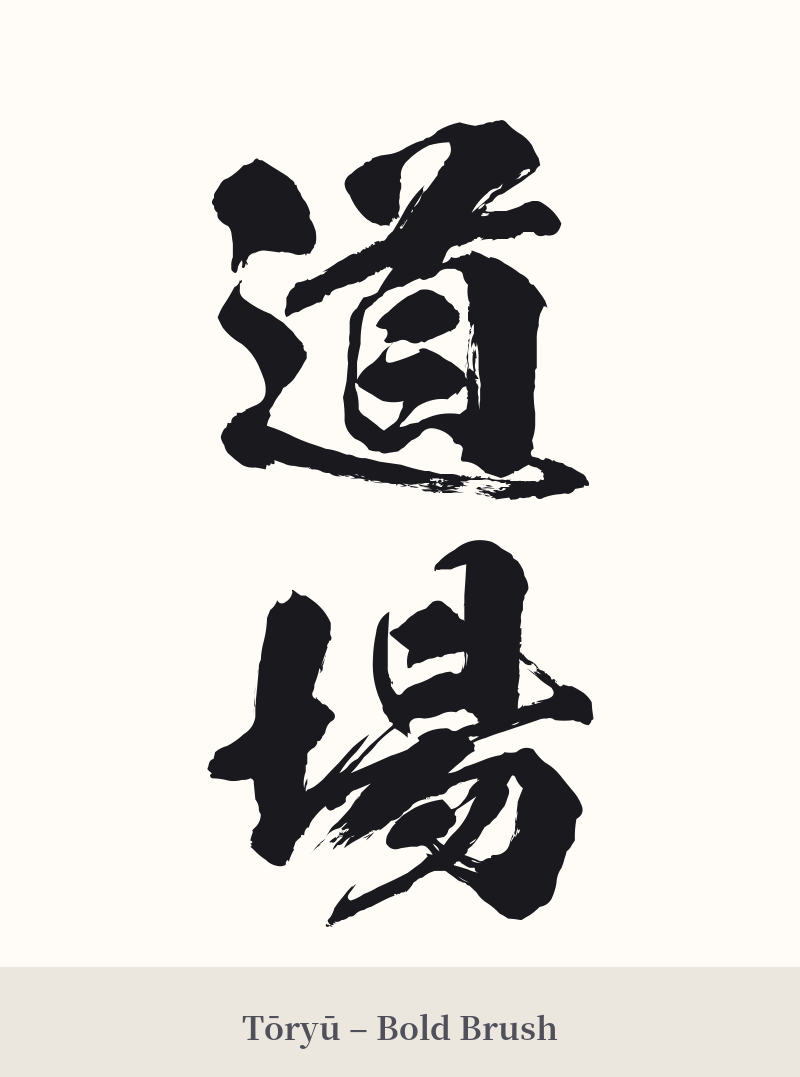
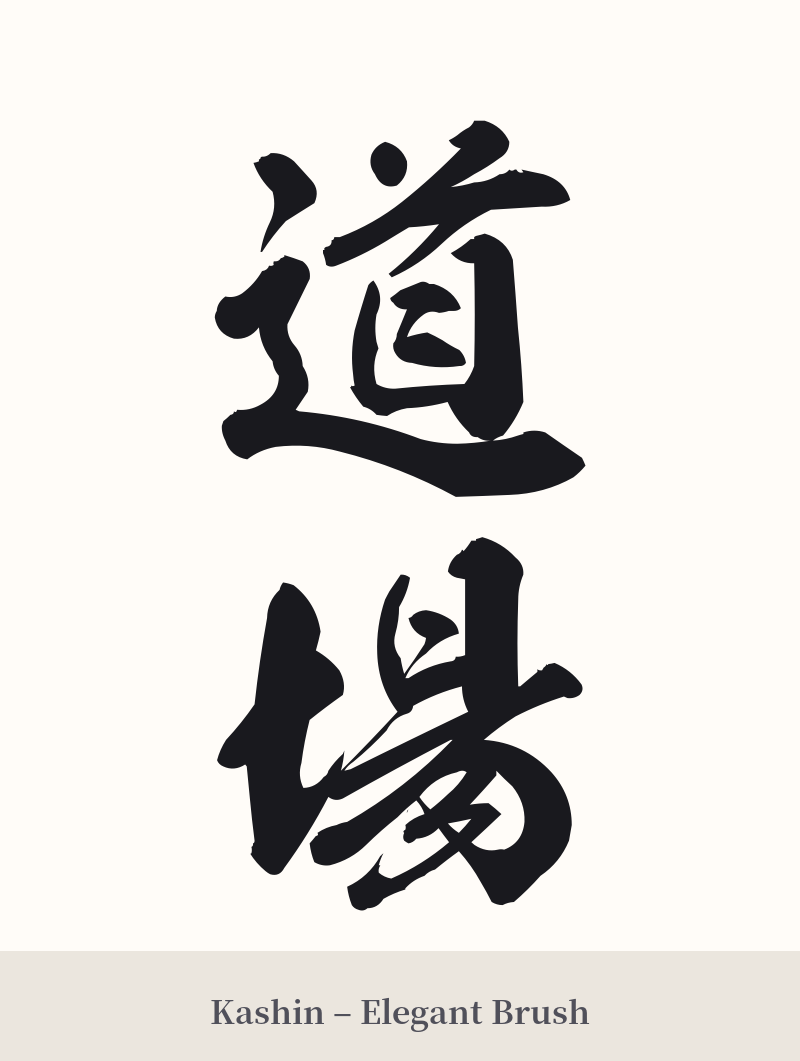
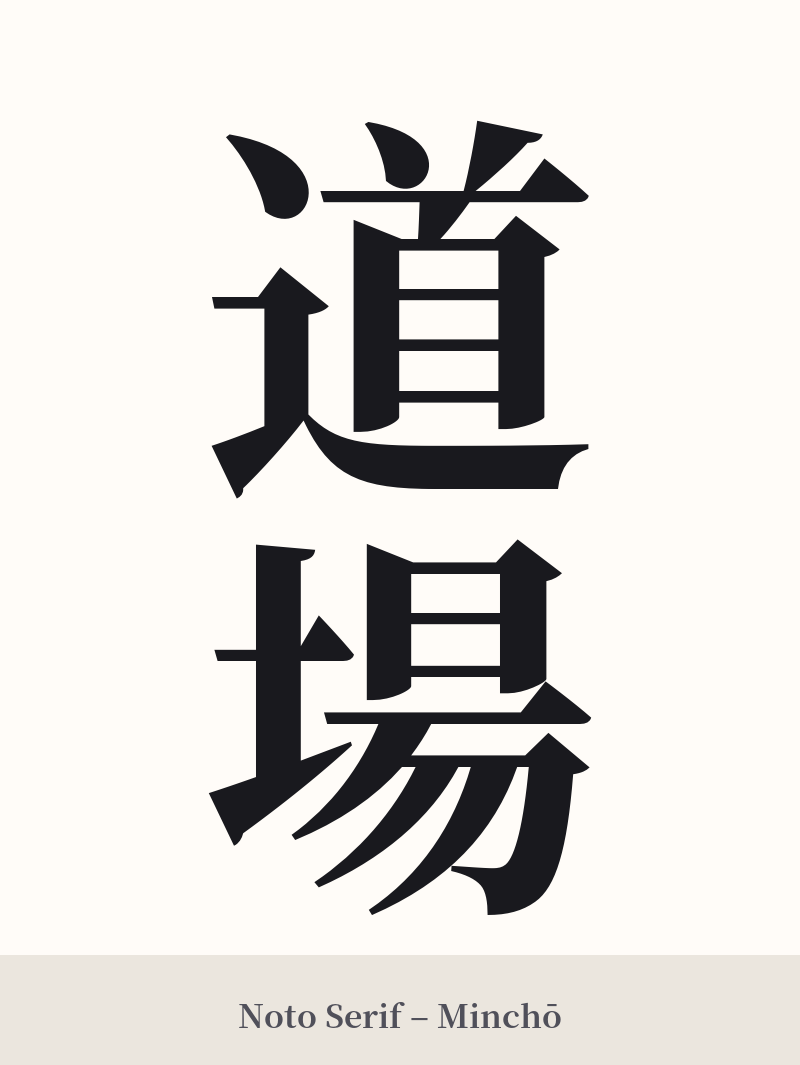
🖌️ Font Styles for 道場
The same kanji can look dramatically different depending on the calligraphy style. Choose a font that matches the mood you want for your tattoo or design.
🎨 Tattoo Suitability
📐 Tattoo Design Guide
For a 道場 (Dōjō) tattoo, the design should reflect the discipline and tradition it represents.
– Placement: A vertical orientation along the spine, forearm, or calf works exceptionally well, mimicking the way it would be written on a scroll or sign. Horizontal placement across the chest or upper back can convey a sense of stability and strength.
– Font Style: Traditional calligraphy styles are highly recommended. A strong, clear Kaisho (block script) emphasizes formality and structure. For a more fluid and dynamic feel, Gyosho (semi-cursive) is an excellent choice. A powerful, energetic brushstroke (shodō) style can capture the spirit of martial movement.
– Visual Tips: Consider the design's context. A simple, unadorned 道場 is powerful on its own. It can also be paired with a related symbol, such as an ensō (Zen circle) to highlight the Buddhist connection, or the emblem of a specific martial art to personalize its meaning.
Comments